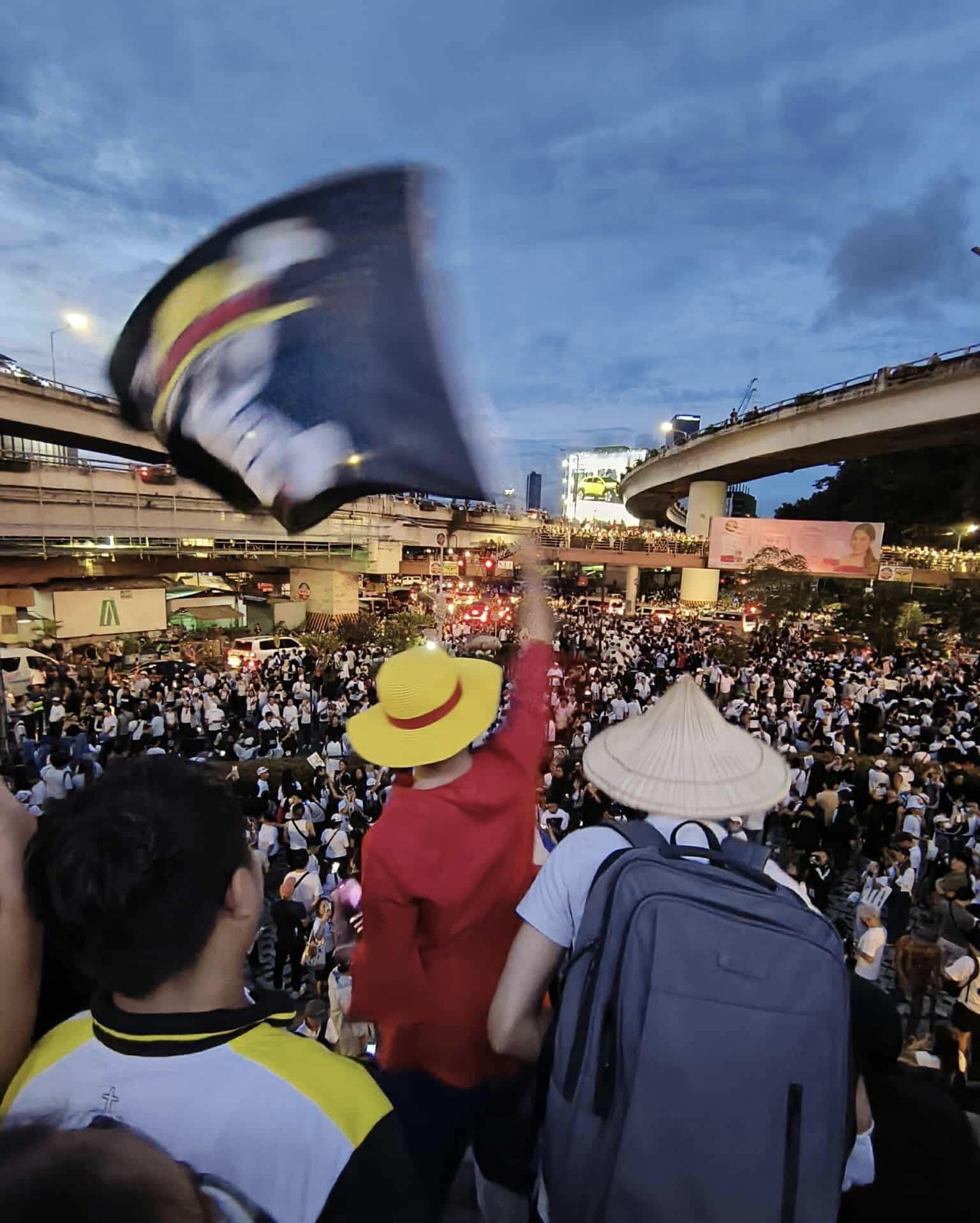
On 21 September, a pirate named Josh Tagle sailed through a sea of people. Standing on the back of a truck in downtown Manila, he and his crew waved a flag—a skull wearing a straw hat—and chanted “Mga kurakot, ikulong na yan!” (“Jail the corrupt, already”) with thousands of others on the streets.
Mr Tagle isn’t a real pirate. He’s a cosplayer who dressed up as pirate captain Monkey D Luffy from One Piece, the popular Japanese manga and anime franchise by Eiichiro Oda, during recent demonstrations in the Philippines.
One Piece follows Luffy and his pirate crew as they attempt to find legendary treasure. The series is known for its anti-government and anti-corruption themes, as Luffy and his allies fight oppressive world leaders—a lesson that has resonated with many young protesters across the world.
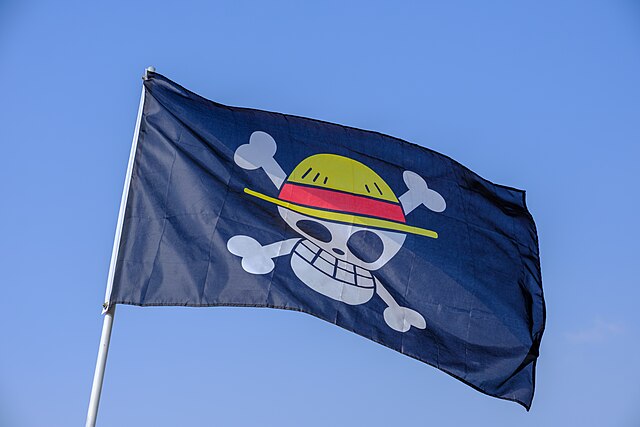
The One Piece pirate flag. Photo: Wikimedia Commons.
The recent Philippine protests stemmed from a flood control scandal that was exposed during the 2025 typhoon season. It was discovered that many projects were poorly built, failing to protect people and their properties from flooding.
When it was revealed that the taxpayer money meant to fund these essential projects was instead allegedly going towards the lavish lifestyles of some contractors and politicians, it triggered a major scandal. A formal investigation into the flood control projects is still ongoing.
September’s mass demonstrations coincided with the Philippines’ National Day of Protest and the anniversary of former president Ferdinand Marcos Sr’s 1972 declaration of Martial Law.
It drew students and adults from all walks of life. Among them was Bien Crescini, a 57-year-old from Metro Manila. Mr Crescini was 18 years old in 1986 when he attended demonstrations in the lead-up to the anti-Marcos People Power Revolution.
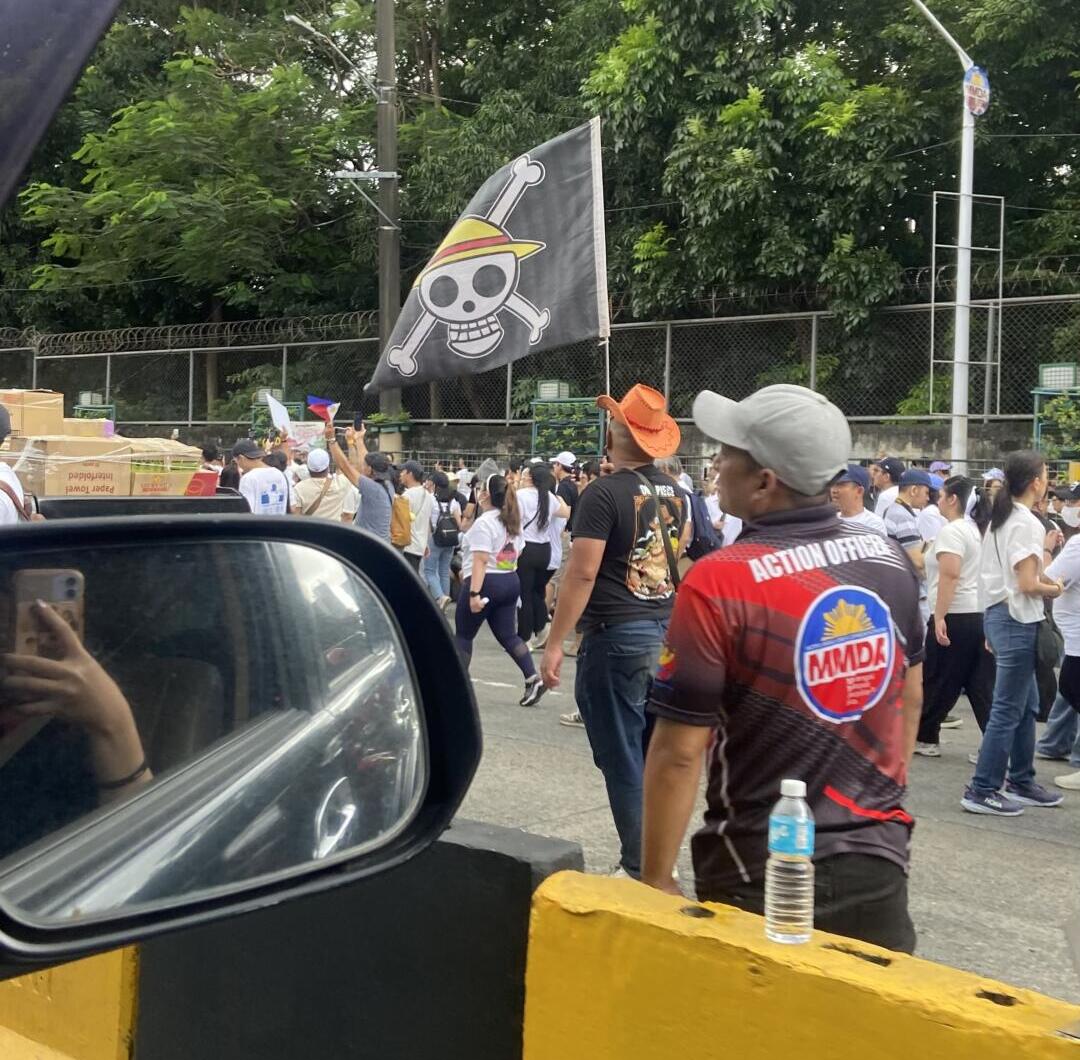
One Piece flag spotted in Luneta Park, Manila. Supplied by L Ayla Rana.
Attendees on social media said the recent protest served as a warning for a potential revolution. However, Mr Crescini said the 2025 situation was different.
“If we’re going to go back to history and we look at People Power One, for example, all of the people are angry with just one person, which is Marcos,” he said. “[Today] there are multiple groups organising the event and pushing their agenda.”
Across the globe this year, Gen Z protesters have rallied through the streets, waving the One Piece flag. In Nepal this September, an image of the flag in front of the burning Parliament House went viral after five days of protests. Madagascan President Andry Rajoelina fled in October because of similar youth-led protests, with many carrying the flag as a symbol of their frustration.
Mr Tagle said he believed pop culture played a major role in the surge of youth-led protest movements, thanks to anti-corruption messages in One Piece and other media.
“There are thousands of other shows, thousands of music that’s doing the same thing,” he said.
“Pop culture is a medium that has helped us open our eyes.”
“Because without that, we’d probably be less informed, less vocal. Kids were able to think for themselves.”
The Philippines’ Presidential Palace issued a statement in early September calling for calm, with Palace Press Officer Claire Castro stating that “concerned agencies and law enforcement units have been instructed to maintain peace and order”.
Protest organiser Francis Aquino Dee, the grandson of former president Cory Aquino, said he doesn’t want to see the streets turn into a place of conflict. Instead, he thinks the ballot box is the best way to make things better for the Philippines.
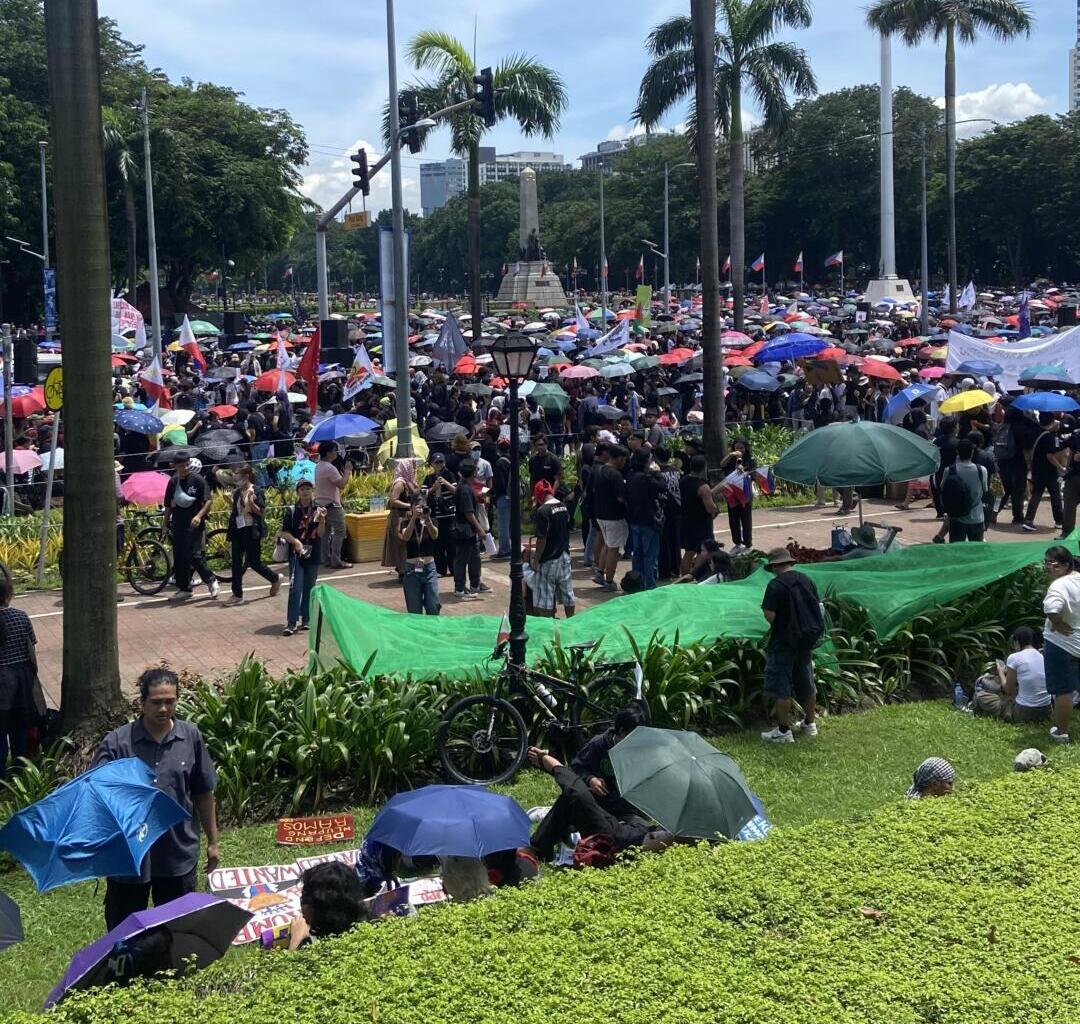
Protesters at Luneta Park, Manila. Photo supplied by L Ayla Rana.
“The thing that we can do immediately is kick them out in 2028,” Mr Dee said. “Defeat them wherever they’re running, whether it’s for senator, for a district, or party. I think, at least on our end, the Nepal model isn’t exactly something we wanted to emulate.”
Mr Tagle plans to return as Luffy once more, as another protest is scheduled to take place on 30 November. He agreed that the scheduled 2028 elections could drive change, but warned that a revolution could happen if corruption continues.
“If inside those three years, if there is no change, if there is no president—the right president—that is elected, I’d say yes, I think it is very possible,” Mr Tagle said.