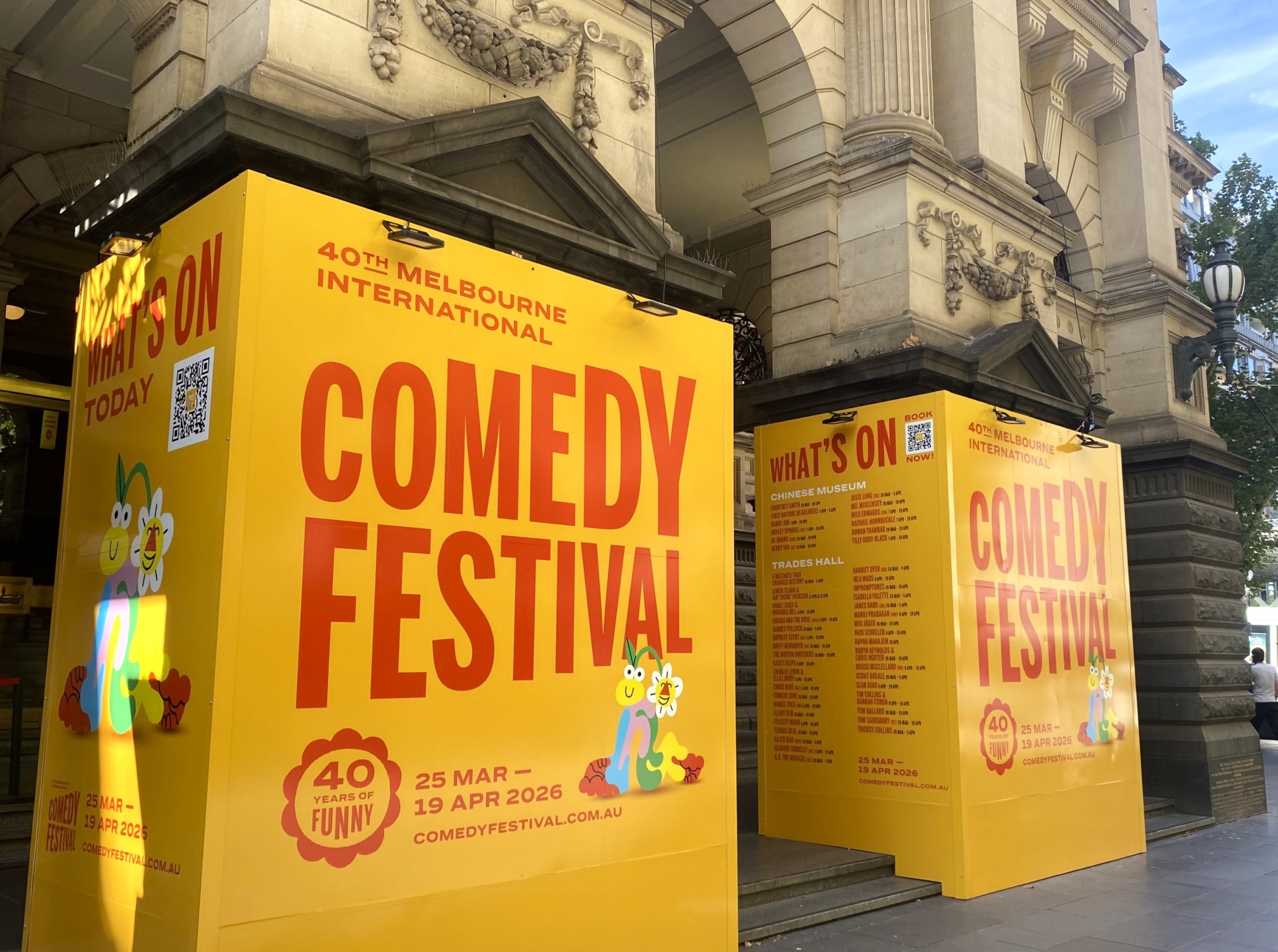
Michelle Brasier is officially a big deal. She is a host of this year’s ‘Upfront’, a one-night-only-show, the pinnacle of the 40th Melbourne International Comedy Festival.
Held in the main room at Town Hall, more than 1000 people can be seated for the show, with adult tickets going for $49. For many, this is what MICF is about: big names in a big room, for a big night out.
For Brasier, however, the magic of Melbourne’s comedy happens in far smaller venues, at smaller prices.
“A small club is infinitely cooler than a large one,” she says. “No one wants to see a comedian in an arena, it’s embarrassing.”
Unlike large theatres, Melbourne’s independent and small venues have a year-round mission to exhibit new Australian talent. In these rooms, ticket holders sit intimately close to the act—where no one is safe from crowd work.
“I came up in places like Comedy Republic and the Butterfly Club,” Brasier says.
“I think small rooms are the most important thing that we have.”
Jorge Menidis directed the Sydney Comedy Festival for two decades. He spends MICF transforming the classrooms and offices of Melbourne’s Greek Centre into comedy rooms.
As current director of Century Entertainment, Menidis says it’s those tiny rooms that generate “buzz.”
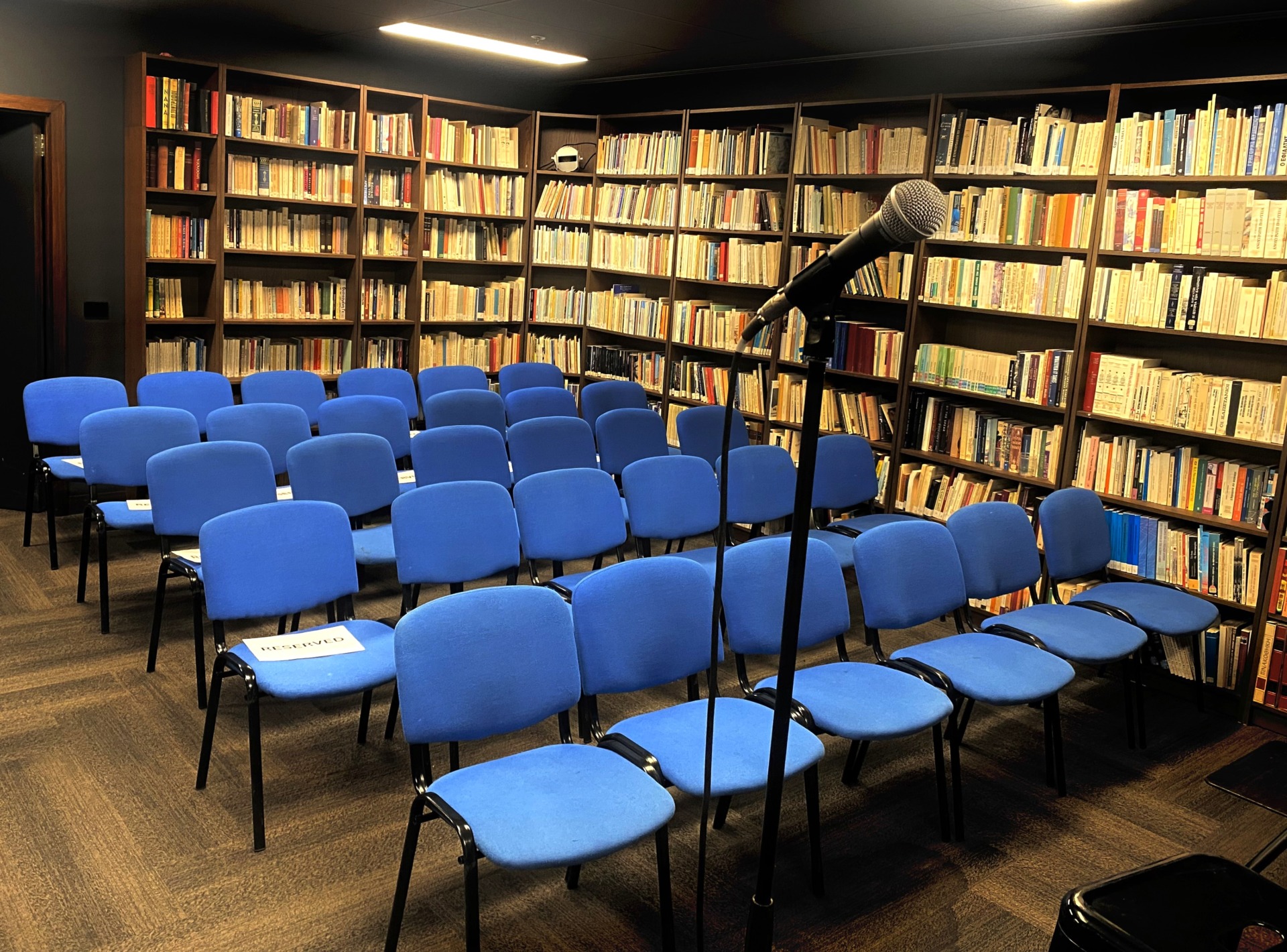
At the Greek Centre on Lonsdale Street, classrooms become intimate venues for a month. Photo: Grace Gooda
“The big thing we offer is this opportunity for voices to be expressed and to be heard, to be found and discovered, and eventually, to be the stars on those bigger stages,” he says.
Menidis says the experience you can get for “not a lot of money” in a converted library or the basement of a pub is unique.
“They won’t find it anywhere…cheap chairs, clearly seeing it’s a classroom,” he says. “I love the interruption of daily life.”
MICF relies on word of mouth generated by those filling the smallest rooms. Menidis says once “the hot show” starts filling 50-seat venues, they will move to a bigger room. This is how Australia finds its comedic voices.
“Everybody has to start somewhere,” he says.
Menidis’ memory is a showreel of Australia’s greatest acts. “I remember seeing Ronnie Chen in a line-up show,” he says. “And Rhys Nicholson started out in a really dilapidated 30-seat room, which I’m sure was used to store napkins for the rest of the year.”
The challenge, for some venues, is”the rest of the year”.
Adam Kangas founded The Improv Conspiracy in 2011. Most of the shows here occur in a 35-seat room.
For Kangas, comedy is more than the big-ticket items.
“What not everyone knows about the festival is that it’s open access,” he says. “Even though there are dozens of really big-name acts…they will let literally anyone who can pay registration do a show.”
He says this approach to new talent is the beauty of festivals like MICF.
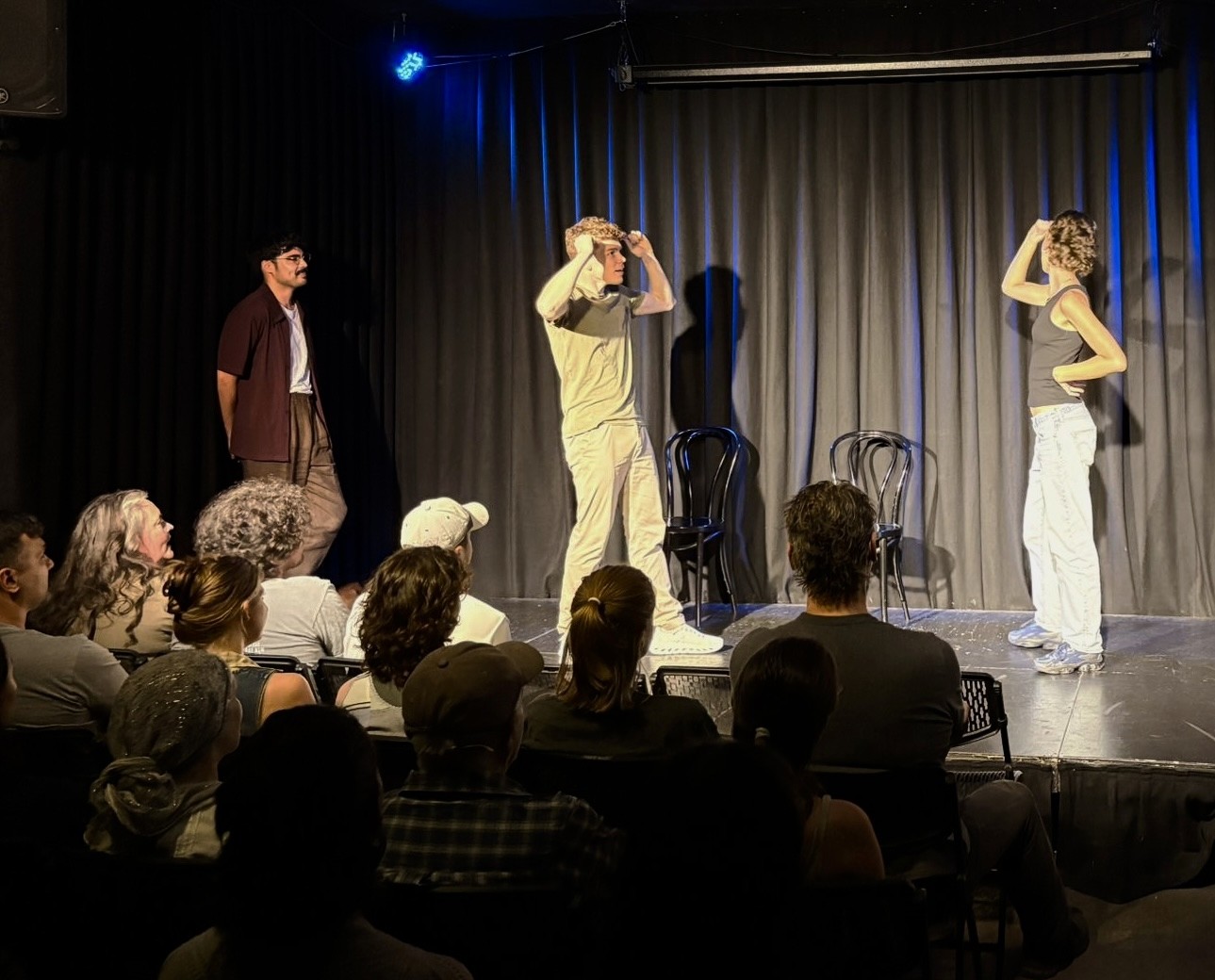
The Improv Conspiracy runs back-to-back shows in a 35-seat room for students and experienced performers alike. Photo: Bella Soccio
“Those people need places to go,” Kangas says.
During the festival, Melburnians can visit small venues like The Improv Conspiracy for something intimate, then “run to Town Hall for a big name,” he says.
“Then come back to us for the late-night stuff!” he laughs. “It makes the whole city just feel really alive.”
Last year set a new benchmark for the festival, with the official program making $22.9 million in ticket sales. Kangas says his hope is that Melburnians remember his improv theatre after MICF has come and gone.
“Many people might think comedy only exists during comedy festival, but it’s here,” he says. “Whether our venue or other venues, people are doing good comedy all year ‘round.”
The Improv Conspiracy runs up to eight back-to-back shows a night. There are more than 800 shows happening in Melbourne until April 19, many of which where you can sit knee to knee with a stranger and thank the comedian themselves on the way out.
In office spaces, conference rooms, libraries and cafes, talent has come to Melbourne.
Melbourne International Comedy Festival is big, but it is also very, very small.