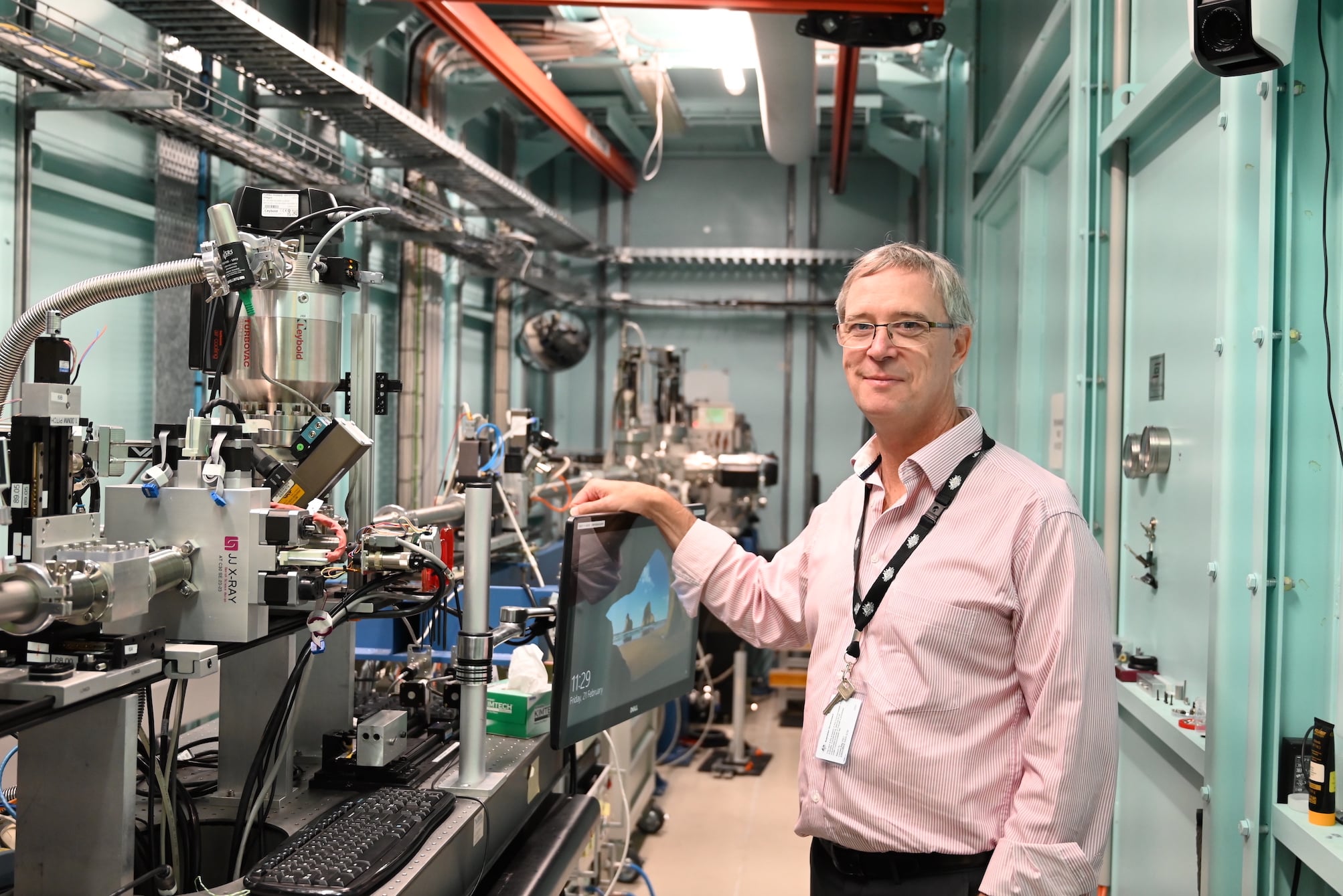
The Australian synchotron sits inside a stadium-sized building, a giant metal ring surrounded by a maze of pipes carrying beams of light into a network of laboratories. It looks looks like something out of The Matrix, not something you might expect to find in suburban Clayton.
It can generate light about a million times brighter than the sun. But is has so many capabilities, “that’s kind of tiddlywinks” says Australian Synchrotron director, Professor Michael James.
The synchotron, which opened in 2007 at a cost then of $220 million and is operated by the Australian Nuclear Science and Technology Organisation (ANSTO), remains one of the country’s most valuable scientific assets.
There are about 70 synchrotrons in the world, and the competition isn’t standing still. New “fourth generation” facilities are replacing single large dipole magnets with arrays of smaller magnets to better focus the electron beam. This results in a smaller, more intense beam, producing between a hundred to a thousand times more synchrotron light, as the electrons are made to move more efficiently
James explains, “We’re starting our thinking to determine how to deliver fourth-generation technologies and capabilities for Australia, but this is for much later down the track.”
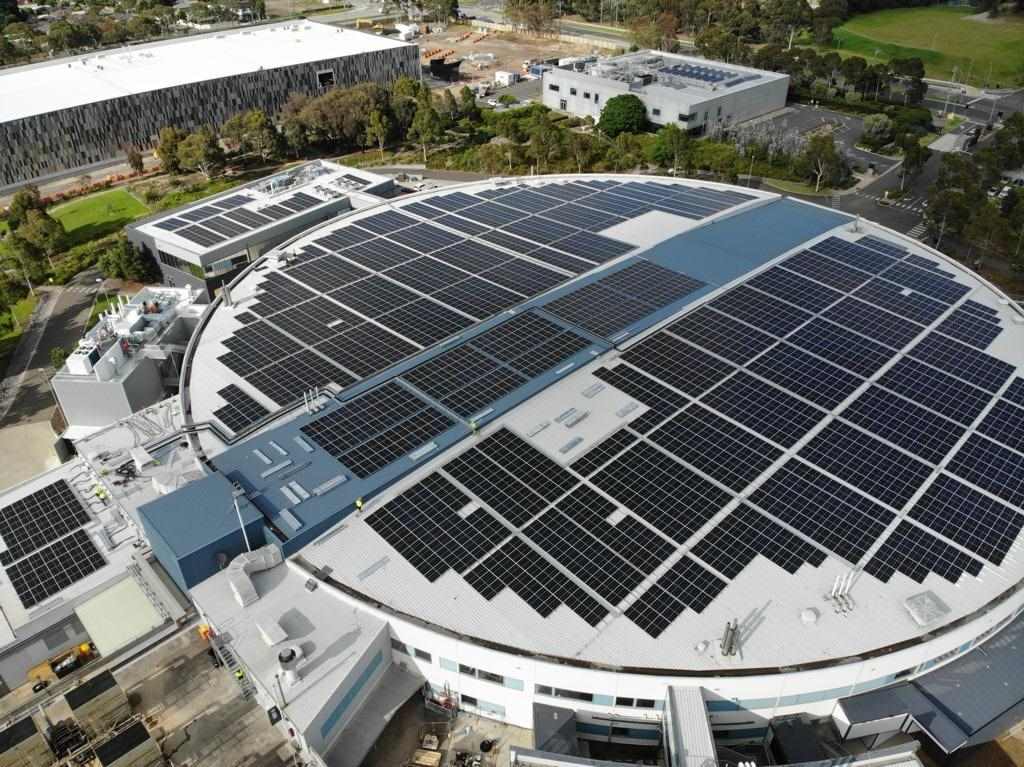
Australian synchrotron in Melbourne. Photo: ANSTO
How does a synchrotron work?
The Melbourne synchrotron is a particle accelerator that propels electrons to near-light speed inside a 216m circular vacuum chamber. Powerful electromagnets control the electrons’ path. As their trajectory bends, they emit energy in the form of synchrotron light, which has a wide energy spectrum, from infrared light to hard X-rays. This light is guided into workstations via “beamlines,” where studies are conducted.
“The accelerator guys hate it when I say this,” James admits, “It’s a light bulb — an insanely powerful, insanely bright light bulb that’s got all these wonderful properties to be able to generate light, predominantly x-rays, to do science”.
This extraordinary “light bulb” provides incredible clarity, revealing the molecular and atomic structure of a wide range of materials —from decoding the composition of ancient fossils to showing how certain plants can absorb heavy metals from soil.
Advancing breast cancer detection
One of the projects underway at the Australian Synchrotron relates to breast cancer detection. This initiative brings together researchers from ANSTO, Monash, Melbourne, and Sydney Universities, as well as ANU, CSIRO, and clinical experts from Monash Health and Breast Screen Victoria.
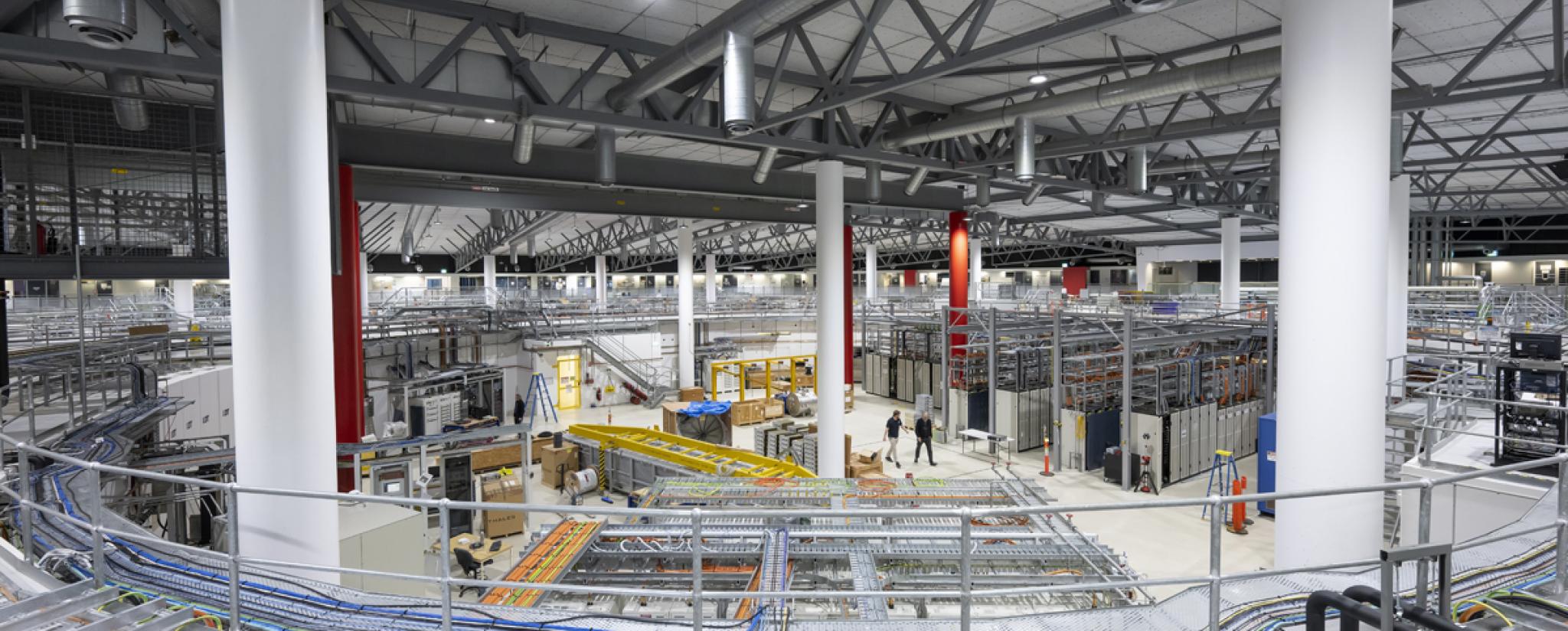
View of ring Photo: ANTSO
The Breast Computed Tomography (BCT) Project is using mastectomy samples to test a new imaging technique that can detect cancer using a lower radiation dose than conventional hospital methods.
With 1 in 7 women diagnosed with breast cancer in their lifetime, early and accurate screening is critical. However, current mammography techniques often produce poor-quality images, especially for patients with dense breast tissue, increasing the risk of missed diagnoses. According to the American Cancer Society, mammograms miss about 1 in 8 breast cancers.
At the Imaging and Medical Beamline (IMBL), researchers are moving towards human clinical trials of phase contrast-based breast computed tomography (bCT). This delivers exceptional image clarity, revealing “exquisite details of soft tissues,” James explains, which can “detect breast cancer much better than you would if you went to a conventional hospital to do it.
“No one else does this around the world”.
If successful, this research could lead to safer, more accurate breast cancer detection, with the potential for integration into everyday hospital imaging systems.
Project Bright and The Global Race
Despite its success, the Australian Synchrotron faces a significant challenge: demand far exceeds supply. The synchrotron is a user facility established for the benefit of Australia and international partners. However, with more than 2,500 research applications annually, beamlines are perpetually oversubscribed. The least popular beamline operates at 120%–130% capacity, while the most sought-after beamline sees demand exceed 500%.
To address this, Project Bright is underway. Since 2018 work has been underway to expand the synchrotron’s capabilities by adding eight new beamlines. Four are already operational, and a fifth (MX3) will open in May.
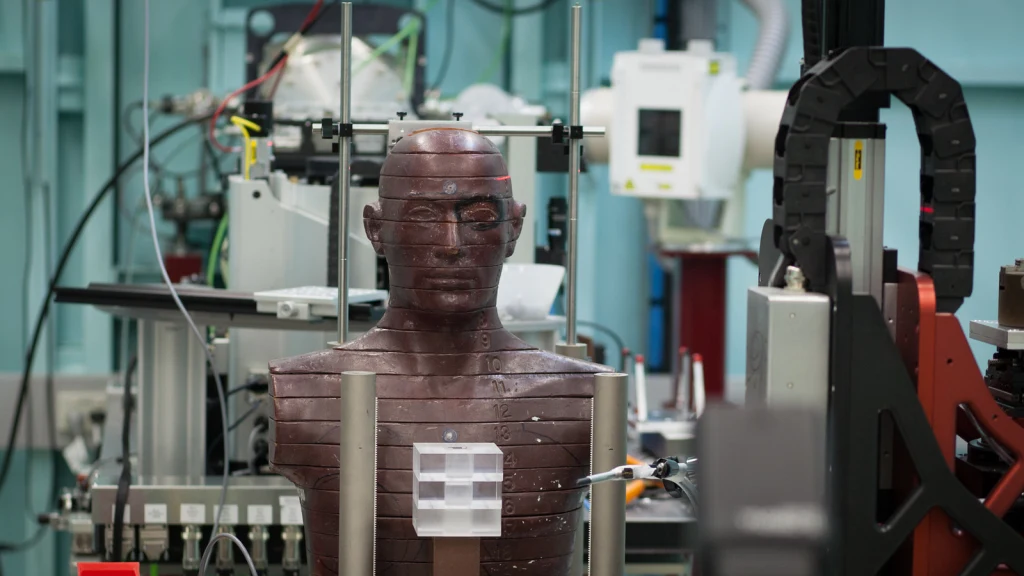
Imaging and medical beamline Photo: ANTSO
Running a world-class facility comes with its fair share of challenges — not least a hefty annual electricity bill of $3 million. Staffing is another major hurdle, with the demand for highly specialised expertise far outpacing supply. Many professionals with the necessary skills opt for better pay in the private sector. James has remained at the helm for years.
When asked why he stays, he says simply:
“For the love of science”.
“If you asked me what’s awesome about the synchrotron… they’re doing environmental research, they’re looking at the types of batteries, they’re trying to work out how to cure heart disease, solving cancer… and the rest of us are trying to build these instruments that never existed in Australia and won’t exist anywhere else in Australia to be able to do this sort of stuff”.
This story is co-published with Cosmos online – ‘The Science of Everything’.