
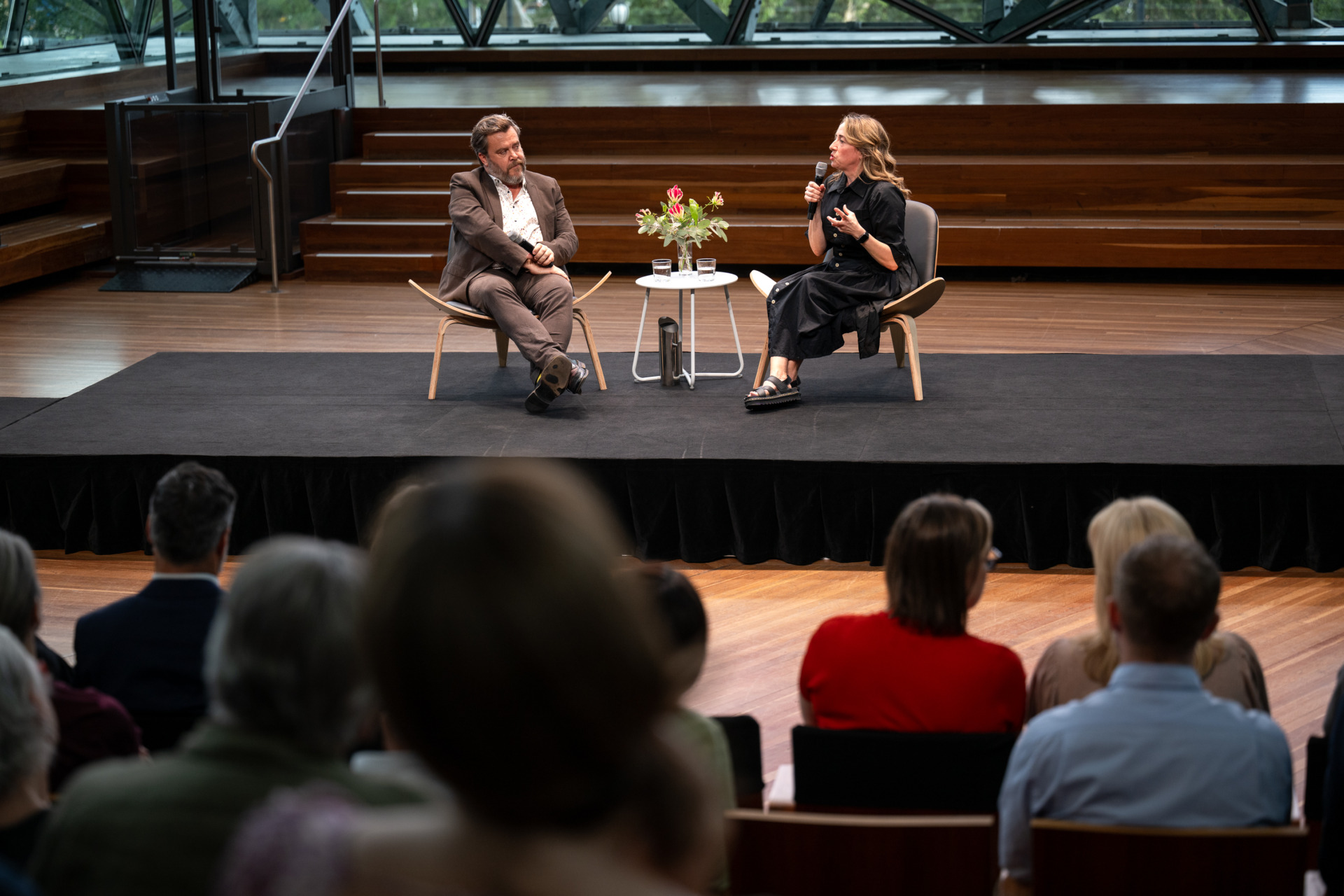
Since 25 October last year, when The Washington Post’s billionaire owner Jeff Bezos pulled the plug on the paper’s planned endorsement of Kamala Harris for President, a surge in new readers has flowed to The Guardian websites, a clear sign of the public appetite for independent journalism, said the media organisation’s global editor-in-chief, Katherine Viner.
Bezos’ intervention, which cost the Post 300,000 subscribers, “shows to people why you don’t want a big, billionaire, powerful owner who is going to try and use news organizations as his plaything, and as a way to curry favour,” Viner told an audience of Guardian Australia donors and subscribers in Melbourne on Wednesday evening. Her comments came shortly before news broke that the Post’s opinion editor had resigned after Bezos announced the paper would no longer publish viewpoints opposing “personal liberties and free markets”.
Speaking on the threats and challenges posed by the Trump era to journalists and media organisations in the United States and beyond, Viner said the response in newsrooms had to be “to face it head-on”.
“We’re going to call it out for what it is. We’re still journalists, we’re not activists, so we’re going to be based in facts… but we’re not going to shy away from it,” Viner said.
Confronting misinformation in this context “may seem radical … but really, it’s just committing to the truth”.
“There’s a certain bit of media worldwide which is obviously ecstatic with what’s going on. It’s thrilled that they think they’ll have smaller taxes and get rid of anyone it classes as DEI (diversity, equity and inclusion).”
But more concerning, she said, were media organisations “that are really hedging it. They’re sort of saying… ‘don’t worry too much, Trump is not that scary, we’re cooler than that’. And I just think that’s a huge mistake. We’ve got to take everything he says seriously.”
Amid growing concerns for press freedom following US President Donald Trump’s re-election, Viner said global political and cultural shifts were increasingly undermining journalism’s ability to report fairly and accurately. She described his effect on the world as “contagious, and people are already feeling empowered to behave in certain ways they would never have done six weeks ago”.
At one level were actions like the Trump White House banning Associated Press access to the oval office and other presidential events because – in line with its strict fact-based reporting protocols – it continued to refer to the Gulf of Mexico after the president renamed it the “Gulf of America”.
“But there is a whole litany of things that could happen to news organisations,” Viner warned, referencing statements by the new FBI director Kish Patel that he was going to “go after journalists very specifically”. That was already obvious in legal pressures being brought to bear on media organisations, who were “settling with the Trump administration in ways they really wouldn’t need to”, and in media owners like Bezos “bending the knee to Trump in a very literal way, to the great detriment of their journalism”.
This was where Guardian group’s ownership model, founded on the nearly 90-year-old Scott Trust and guaranteeing independence, demonstrated its strength, she argued. The group has grown from the printed British daily to an internationally distributed Guardian Weekly and websites in the UK, US and Australia.
“We’ve got no other reason to be here than to tell you what’s happening. We’re not going to make someone rich”,” said Viner, who was the founding editor of The Guardian Australia when it launched in 2013 and has been global editor-in-chief since 2015.
In 2016, the masthead committed to a no-paywalls, voluntary contributions model in which readers are asked to pay what they can and want to, while access to the site is free from a paywall for those who can’t or won’t pay.
“This is not a transaction,” Viner said. “It’s not ‘you give us money, we give you journalism’. It’s that we’re going to give you journalism that’s going to inspire you.”
“I call this clarity and imagination. So, give them the facts they need to understand the world, the ideas they need to try and find a way out of this. Those two things together. In the words of Rebecca Solnit, drive hope,” Viner said.
“We’ve got to have faith that good journalism and good information and knowledge will get us out of this.”
The Centre for Advancing Journalism is a partner with Guardian Australia in the Guardian Civic Journalism Trust.

