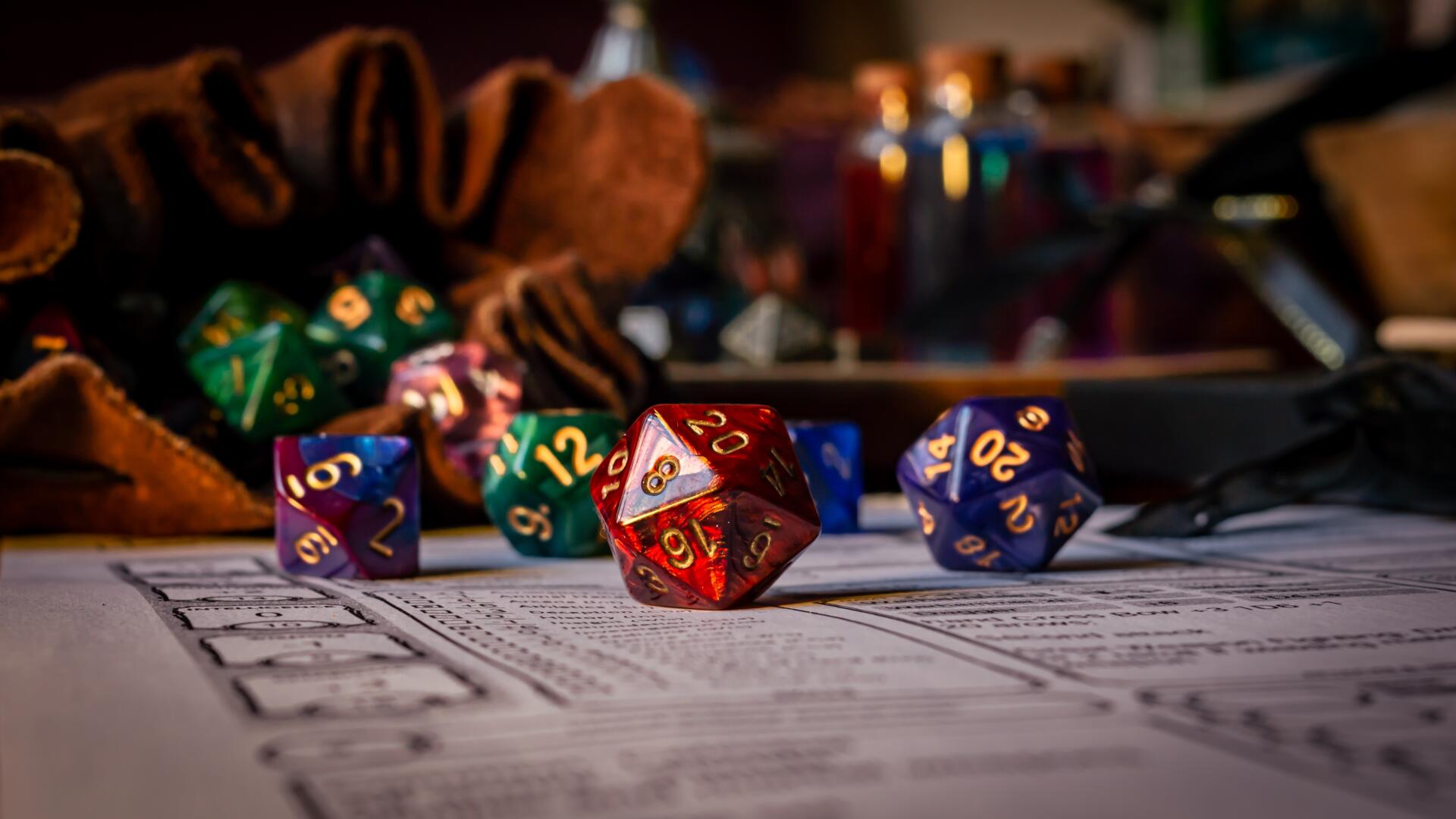
A troupe of hapless adventurers trudge down a bracken-suffocated path, propelled forward by today’s quest. One, keen ears pricked, perceives what the rest do not. A growl, low and thunderous, rolls from the surrounding brush a split second before its source tears into view.
It is a hulking creature with the ferocious stature of a bear but the head and plumage of an owl. Its scraggly feathers puff outward as it emits a screeching roar, serrated beak gnashing with rage.
“What would you like to do next?”
The calm question does not come from the forest path, but from behind the cardboard screen where a Dungeon Master is orchestrating this encounter, peering expectantly at the players gathered around the table.
In response, there is a wild flurry of movement. Dice ricochet out of trays and across the table, spellcasters rapidly run their eyes over printed character sheets while a half health barbarian chuckles at the frantic cleric who is loudly cursing the party for failing to take a short rest at the last town over.
Dungeons and Dragons—fondly known as D&D—is a fantasy tabletop role-playing game that, according to toy giant Hasbro, has been played by 50 million people.
In the 50 years since its inception in 1974, D&D has endured as a cult pastime in home garages, libraries, community hubs and pubs around the world.
Because of its widespread appeal, and its purported capacity to foster creativity, collaboration and empathy beyond the fantastical allure of dragons and undead spellcasters, D&D has begun to attract the attention of mental health researchers looking for ways to engage clients less receptive to the usual methods of psychotherapy and community engagement.
In clinical allied-health settings, TTRPGS have been integrated into cognitive behavioural therapy, narrative therapy and group psychotherapy as complementary interventions to support the treatment of depression, anxiety, trauma and neurodevelopmental conditions such as Autism Spectrum Disorder (ASD).
The design of such games is critical. When run by trained and accredited professionals and structured around clear clinical outcomes, role-playing games like D&D can be an effective psychological intervention and bring about positive behavioural changes.
Counsellor and art therapist Manda Kirk uses telehealth role-playing games—with one counsellor per participant, tailored to each individual’s therapy goals—as part of the Minds Support Network, which specialises in gaming and interactive telehealth services.
“D&D enables us to recreate a unique scenario in a safe way that can build resilience, especially in the trauma-informed approach to healing,” says the Australian Counselling Association (ACA) registered counsellor.
Kirk recounts one participant who had developed severe anxiety about snow after an accident that occurred during snowfall, and refused to go anywhere where exposure to snow might occur. She said gaming was useful as a tool to assist with desensitisation.
She says a similar approach could be used in D&D where “a fighting character may be asked to complete a quest in finding a lost child that disappeared from a local village. The clues point to the snow-covered mountains and the fighter may then come across a treacherous foe.
“The battle is with the foe, and not with the snow.”
Kirk says gaming can be an effective mode of desensitisation because it offers participants a sense of safety and autonomy.
The advantage of Dungeons & Dragons compared with other forms of social play, Kirk explains, is that goals and struggles are safely contained within the story itself and game masters can introduce themes such as overcoming obstacles in subtle, practical ways.
These small narrative-based actions can mirror real-world challenges, such as difficulties with eating or personal hygiene, while remaining emotionally safe. Although characters often reflect aspects of the participant, they still provide enough distance to make exploration feel manageable.
Role-playing games have also been found to foster social skills development, community engagement and personal wellbeing in non-healthcare settings such as education-based and community-run TTRPG groups . Community program participants reported experiencing reduced anxiety, improved social competence and increased creative expression after playing, according to research published in 2024 in the peer-reviewed Games for Health Journal.
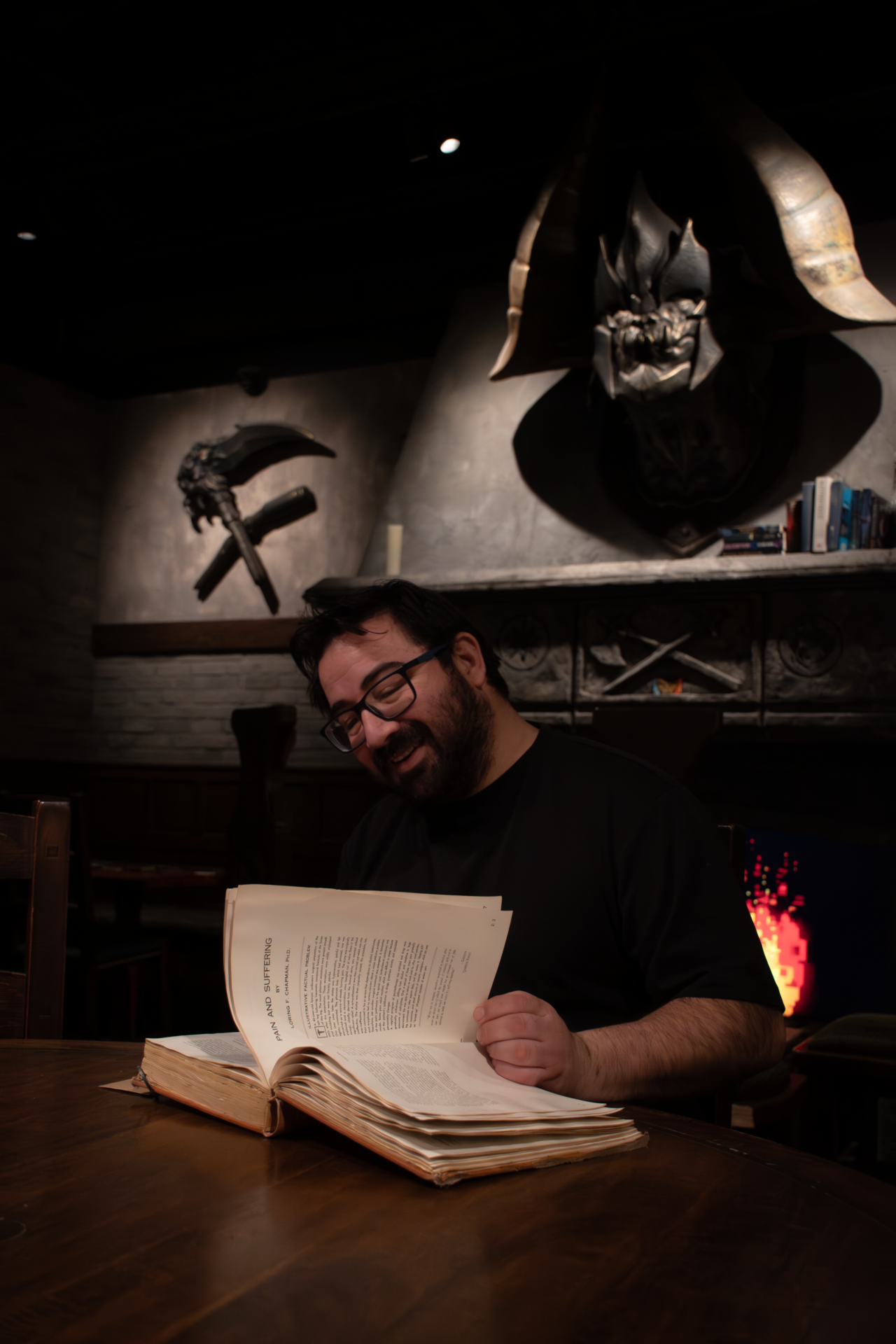
Melbourne specialist support teacher Dan Machuca has run community games since 2020, and describes Dungeons and Dragons as “consequence free, while providing a framework for consequences”. Photo by Ashleigh Wyss.
Melbourne Primary School specialist support teacher Daniel Machuca runs a D&D social skills group for local neurodivergent teens, using role-playing games in what he describes as a safe, low-pressure environment to practice social collaboration and communication.
“Just like with a football player who might have some natural abilities, but they still have to go to coaching if they’re going to get into the AFL, these games provide a safe space for these children to practice their social skills,” Machuca says.
“It’s fantasy, yes, you’re fighting against this amazing dragon or multi-eyed being from another dimension, or the King’s guard with a massive golden sword. People can visualize these terrible creatures and what’s happening to them, but they also see their little character at the front standing and being ready to potentially either fight back or run screaming depending on what character they have.”
South Australian ACA-registered counsellor James Paget says, despite being fantasy heavy, D&D’s “clearly defined rules set” mirrors the norms of real-world social interaction, acting as a “cushioning pillow” for safe engagement.
“Society is governed by a lot of social norms, but not all of those, in fact, hardly any of those are kind of written down … whereas that’s not the case in D&D,” Paget says.
Paget conducts group D&D sessions from his private practice in fortnightly sessions which are made up of five participants between the ages of 15 and 17. His goals are to improve participant confidence, reduce anxiety, and foster a greater capacity for efficient and engaging social skills.
In his sessions, his participants might have to negotiate with an innkeeper suspicious of the party’s appearance or status, whether it be by persuasion, bribery, or arson.
Paget adds in the latter case more chaotic or “murder hobo” playstyles, where players are inclined to seek fast solutions through violence, theft and other brash actions, tend to decline as players get more immersed and emotionally invested in the game’s story and their own characters.
Paget says “there’s not inherently a right answer” to how a scenario might play out, and he will routinely debrief with his participants after sessions and in follow up appointments.
“The game provides an inherent skills aspect because you have to work together as the party.” he says. “You know everyone who’s playing is on the same team.”
Paget says D&D helps players develop social empathy, the capacity to be more understanding of people, and a bit more flexibility in thinking, which is something he sees as a particular challenge for some neurodivergent individuals.
“We do get a huge amount of benefit from hearing the stories of others and trying to understand why they act in certain ways,” Paget says.
Game therapy still has a long way to go in terms of consolidating its legitimacy as a sound and ethical practice in mental health and disability support, however. Despite an emerging evidence base, more robust research is required.
Prior to the turn of the century, D&D was framed as a form of maladaptive escapism to the extent that individuals would forget how to cope with reality. On a more extreme level, academic research and the media saw links between D&D and deviance, fuelling a moral panic over TTRPGS proliferating violence and satanism.
Prior studies, dating back 25 years, have also been limited by small sample sizes, anecdotal evidence or reliance on monocultural demographics with most research focusing on Autism Spectrum Disorder (ASD) above other neurodivergent conditions, neurodevelopmental or psychosocial disabilities.
In Australia, questions regarding the D&D’s utility in mental health support and therapy are compounded by recent sweeping reforms to disability policy.
The rapid growth of the National Disability Insurance Scheme (NDIS)—now supporting more than 717,000 Australians—has raised concerns about the scheme’s long-term sustainability.
With the federal budget predicting NDIS costs will rise from $48.5 billion this financial year to more than $63.4 billion by 2028-2029, the Albanese government has committed to major reforms to slow its annual cost growth.
As part of this clampdown, the NDIS tightened its list of approved supports in October 2024, explicitly excluding “game therapy” as an approved support warranting funding. The move followed mounting criticism of unqualified providers billing for loosely defined therapeutic services without clinical training or oversight.
The changes proved polarising, particularly where the boundaries between therapy, social participation and recreation are blurred. While the NDIS maintains that game therapy is “not evidence-based”, it allows gaming and play-based activities to be used as therapeutic tools when delivered by appropriately qualified allied health professionals as part of a structured, goal-directed intervention.
Delays in the rollout of the federal government’s long awaited “foundational supports”, and the announcement of a new national framework, Thriving Kids, have exacerbated confusion for a number of Australians seeking access to programs no longer supported by the scheme.
Thriving Kids is designed to support children under nine with developmental delay and disability who do not meet NDIS eligibility thresholds. The model for the program was released by the federal government in February, ahead of its commencement in October.
In a statement announcing the model, Thriving Kids advisory group co-chair Professor Frank Oberklaid said he was confident Thriving Kids “provides a sound framework for how best to support children and their families to achieve the best possible opportunities for children to thrive”.
But not everyone feels supported by all of these changes. Machuca suspended his community D&D sessions following the 2024 reforms. A parent of a NDIS recipient himself, he says the changes created uncertainty about how families could legitimately spend their allocated funds.
“It moved away from parents having that choice,” he says.
While some providers continued to claim gaming programs under social participation funding—a bucket not available to all participants—many families who had previously relied on NDIS funding may be forced to pay out of pocket. For those who do receive social participation funding, it remains unclear whether this can be spent on an unapproved support.
The closure of the Machuca’s D&D program was a major loss to his players, including one participant who had attended every single session.
“That was her only real social thing that she did regularly,” he says.
Machuca says many of his participants who had struggled with school attendance or peer interaction found a rare sense of belonging and routine through the weekly game.
He hopes a clearer framework can be established setting out who can and cannot deliver game-based support under NDIS guidelines. He argues stronger regulation would protect both participants and families without discarding programs altogether.
Kirk, a registered allied health practitioner whose practice was unaffected by the 2024 reforms, says these changes are necessary. What caused real harm, she says, was a single “blanket statement in 2024 that lumped qualified professionals in with people who capitalised on NDIS funding”.
She argues that while social programs using game therapy can be beneficial, vulnerable participants require tailored, professionally-led support.
“There’s a difference between therapy and therapeutic activities,” Kirk says. “Talking at social group is not the same as talking with a psychologist.”
As the Thriving Kids program moves toward its October implementation, she warns that relying on lower-cost universal programs risks undermining both participant safety and public trust in disability supports.
“We are seeing less funding for alternative professional, registered and qualified therapist facilitation and more funding for super low-cost social groups, sometimes run by people with no qualifications or experience in allied health,” she explains.
“There should be a minimum quality of service based in ethics, education and experience of the facilitators.”