The thousands who rallied in Melbourne as part of the nationwide anti-immigration “March for Australia” on 31 August this year were motivated by a wide spectrum of political grievances and ideologies, according to on-site reporting by The Citizen.
Protesters concerned about housing and job security found themselves marching beside conspiracy theorists and neo-Nazis—all waving the Australian flag.
A middle-aged woman, walking quickly down Swanston Street to arrive early at the Flinders Street Station meeting point, told The Citizen she felt “oppressed” because of her patriotism and was distrustful of media.
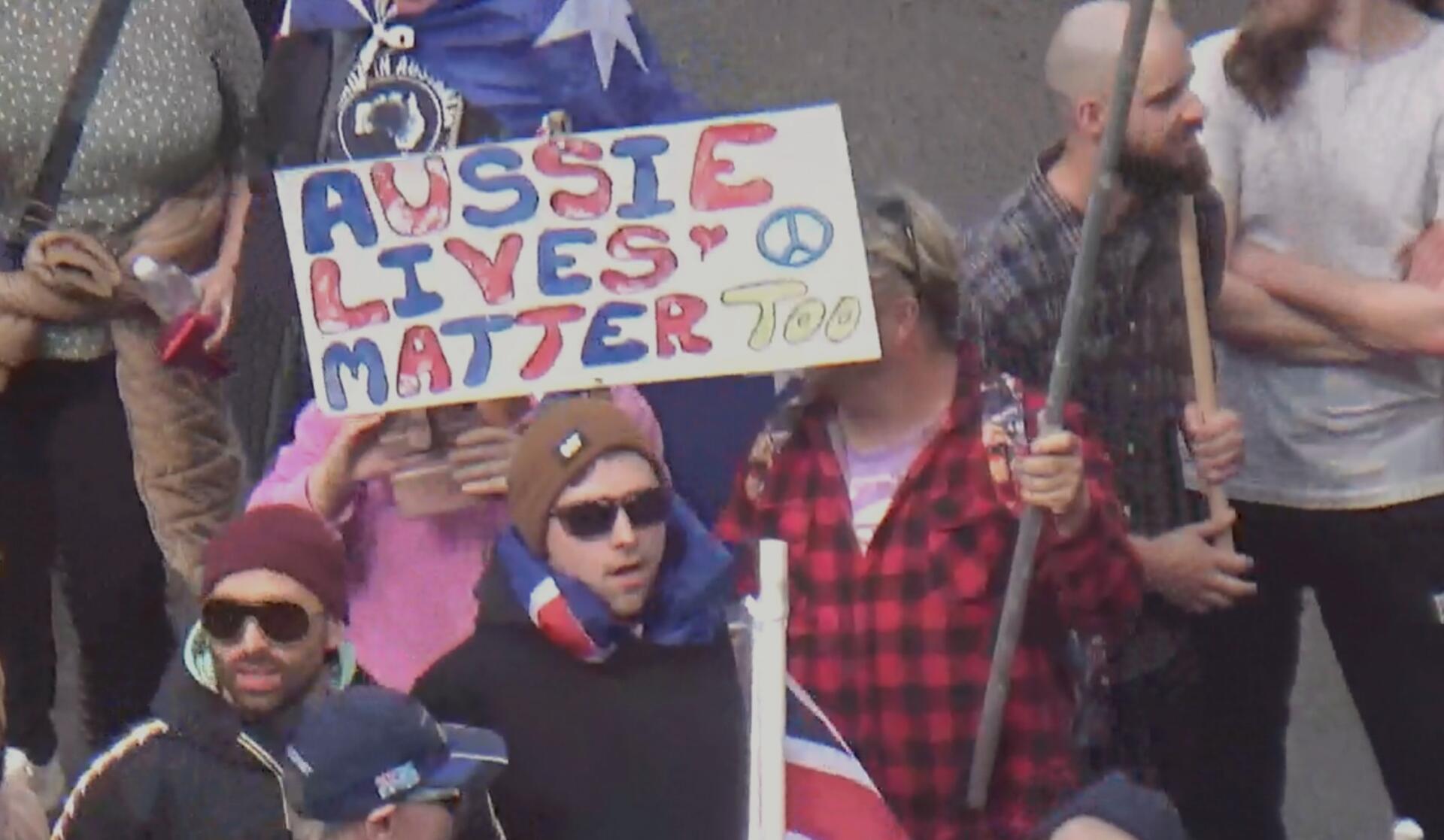
Rally attendee brandishing “Aussie lives matter too” sign. Photo by Alexandra Nevill.
The woman, who did not share her name, said her attendance was in response to footage she had seen online of an Australian flag being burnt. She added that she was concerned about “Antifa” (a loosely organised anti-fascist movement opposed to far-right politics).
The woman said she had tried to help a homeless man get into social housing with no success and believed it was a result of immigrants. “When you’re full, you’re full,” she said.
One young mother, standing outside Flinders Street Station breastfeeding her baby, told The Citizen she and her partner had attended because of their anxieties around knife crime in the outer suburbs. The couple, who did not share their names, said they felt Australian “values [were] being eroded and diluted”.
The University of Melbourne’s Dr Liam Gillespie is an expert on far-right extremism. Dr Gillespie said nationalism was a concept that can bring together “different and disparate types of individuals under one banner, despite the fact that they adhere to different forms of knowledges or conspiracy theories”.
Many rally attendees, with their signs and in response to questions, shared concerns about taxes and sufficient public infrastructure. Others were deep down algorithmically-driven rabbit holes of culture war and conspiracy.
Vanessa, who had travelled in from the Yarra Valley, voiced a variety of concerns. She told The Citizen she worried about chemicals being injected into meat, the “spare bedroom tax” (a proposal to raise taxes on households with unused rooms), Bill Gates’ connection to US food technology company Apeel, and the government spraying fire ants.
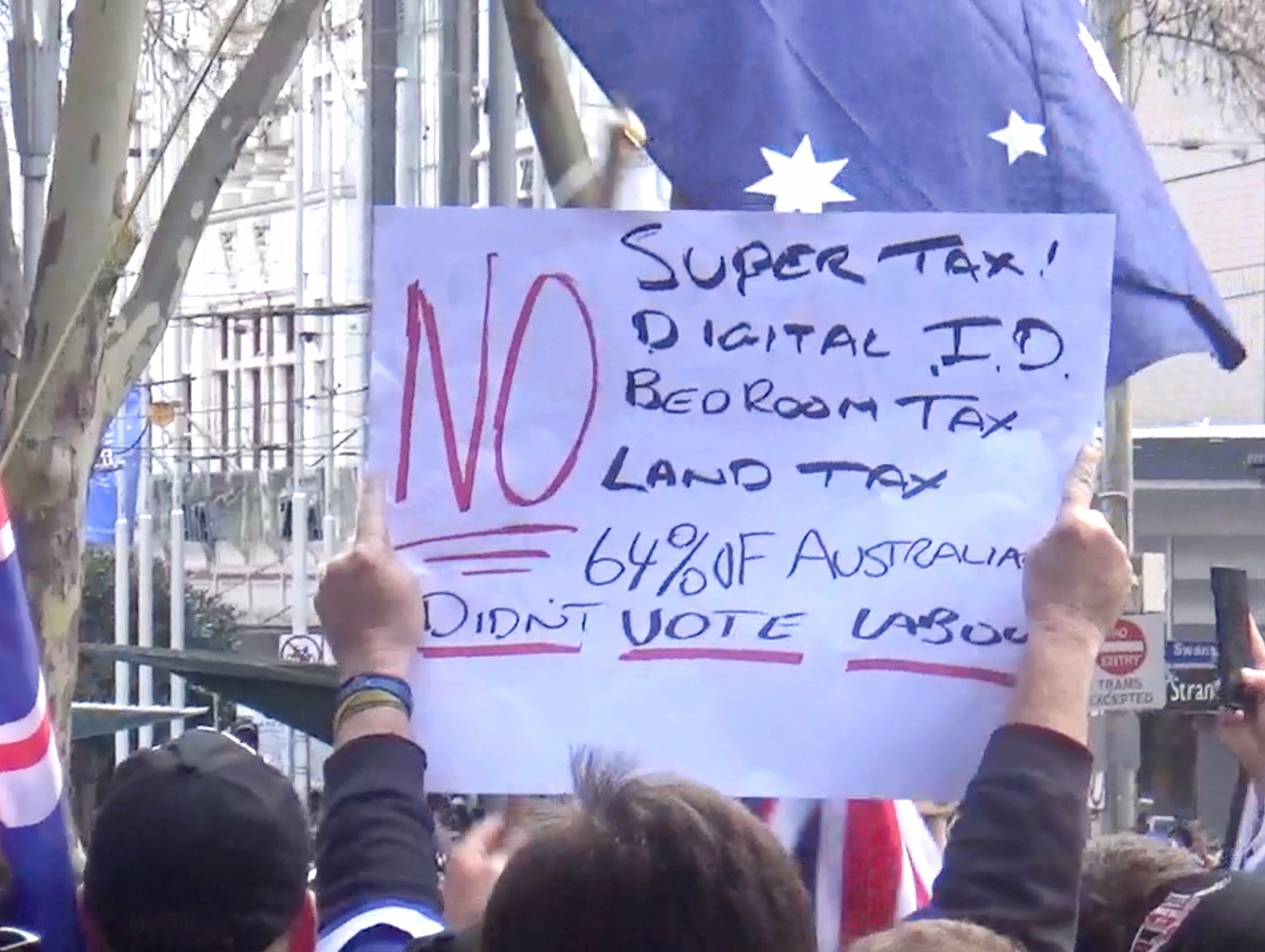
March for Australia demonstrator with protest sign. Photo by Alexandra Nevill.
A 2023 report by Associated Press Fact Check debunked online misinformation about Apeel Sciences, a California-based company which “markets that its plant-based solution can keep fruits and vegetables fresh and at their prime longer”. AP found that the company received “early development support from the Bill and Melinda Gates Foundation”, but that “social media posts are distorting the safety of that product, known as Edipeel, by conflating it with an unrelated cleaning product that shares a name with Apeel”.
The Invasive Species Council (ISC) was forced to issue a warning earlier this year about “fire ant eradication disinformation, similar in character to climate change denialism or anti-vaccination movements”. “These conspiracy theories are dangerous because they undermine the effectiveness of national eradication efforts and put Australians at risk,” ISC Advocacy Manager Reece Pianta stated in the February media release.
Dr Gillespie said there was an “extremely long history of conspiracy theories being mobilised by social movements” and “weaponised by authoritarian, totalitarian or fascist actors”.
“Conspiracy theories merely give a narrative explanation to feelings of persecution,” he said.
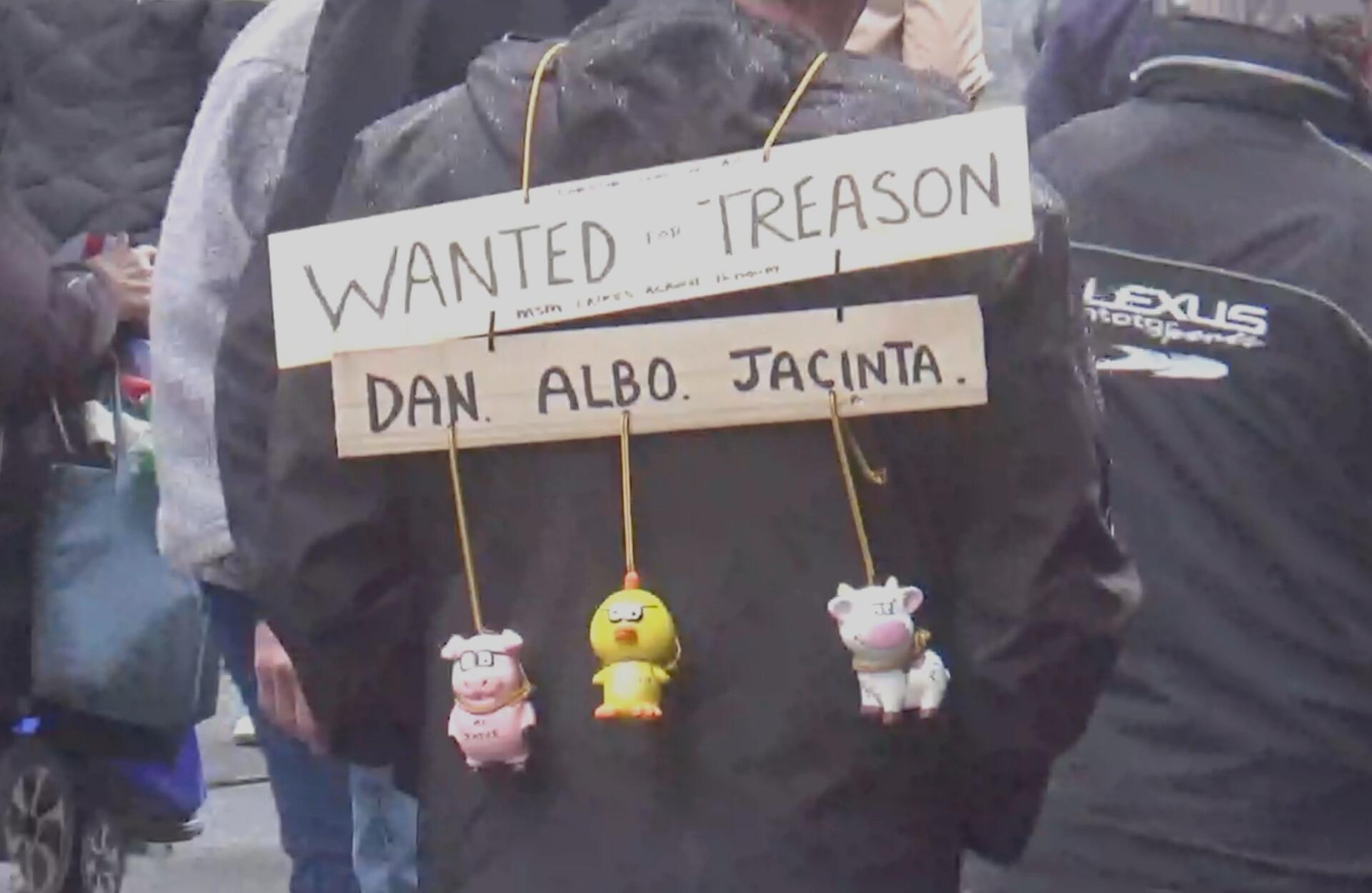
Attendee referencing former Victorian premier Daniel Andrews, current PM Anthony Albanese, and current Victorian premier Jacinta Allan. Photo by Alexandra Nevill.
Attendee Brian, draped in an Australian flag, told The Citizen it took him “ages” to get a house in Berwick, but that his attendance was about “reclaim[ing] our country” and “hatred against the Jews”.
An older man handing out pamphlets on the Flinders Street Station steps—claiming climate change and COVID were hoaxes manufactured by the WHO and Rockefeller Foundation—said he worried about global population numbers and governments “raping the planet”.
The man said that he got into “alternative information” after researching global warming.
The basic idea of Australia that is “predicated on an inclusion/exclusion dynamic”, Dr Gillespie said, was “broad enough to be able to accommodate within it all sorts of movements”—even those whose beliefs are seemingly contradictory.
“The idea of the nation can be imagined differently by different people,” Dr Gillespie said.
“It’s something into which people can invest themselves.”
With no singular organisation promoting the event as their own, March for Australia attendees were mobilised by vague online messaging—to “put Australia first” and “defend our culture”—that was ambiguous enough to spread and resonate with both mainstream and extremist corners of the internet.
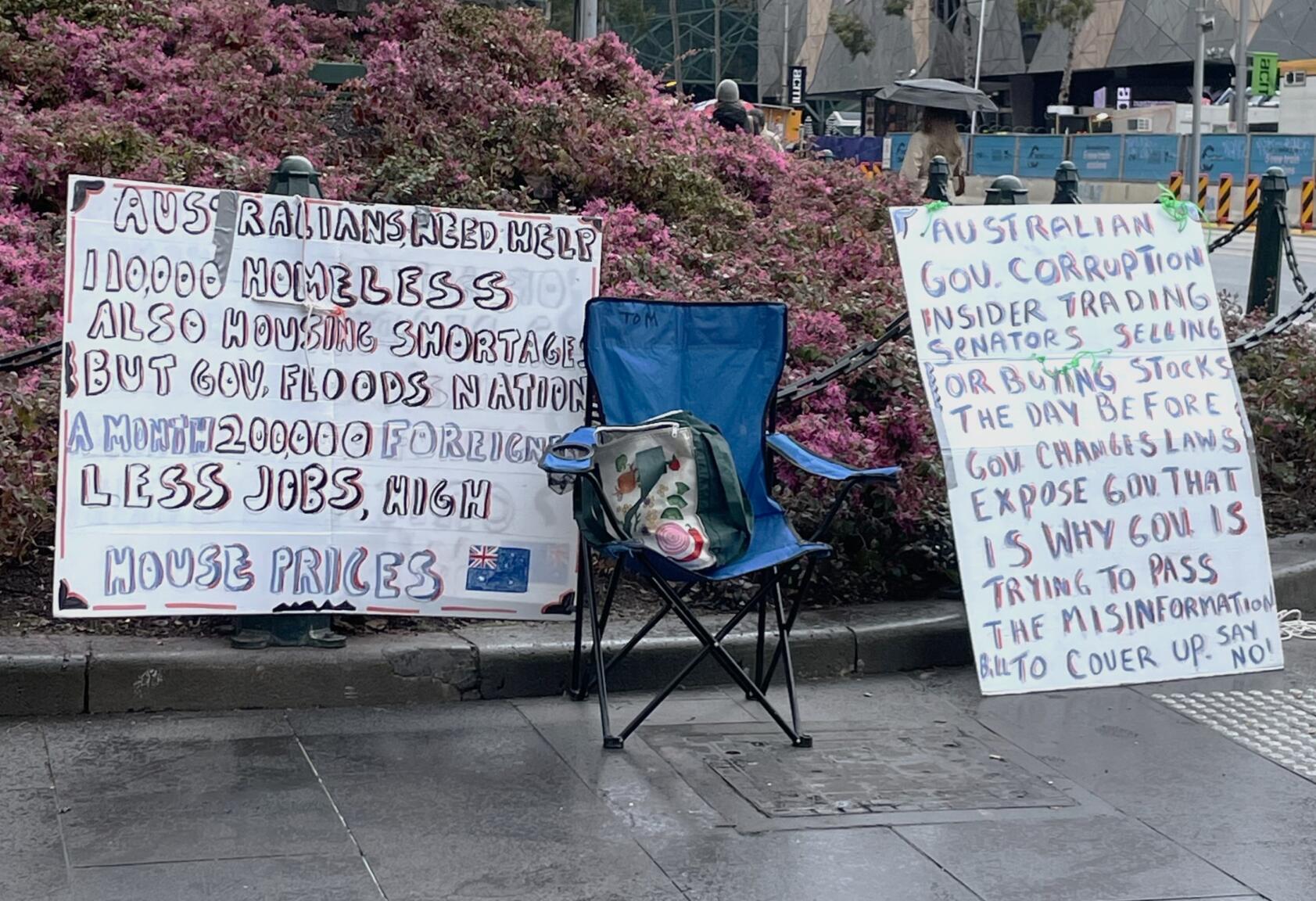
Placards from protesters at the March for Australia rally. Photo by Alexandra Nevill.
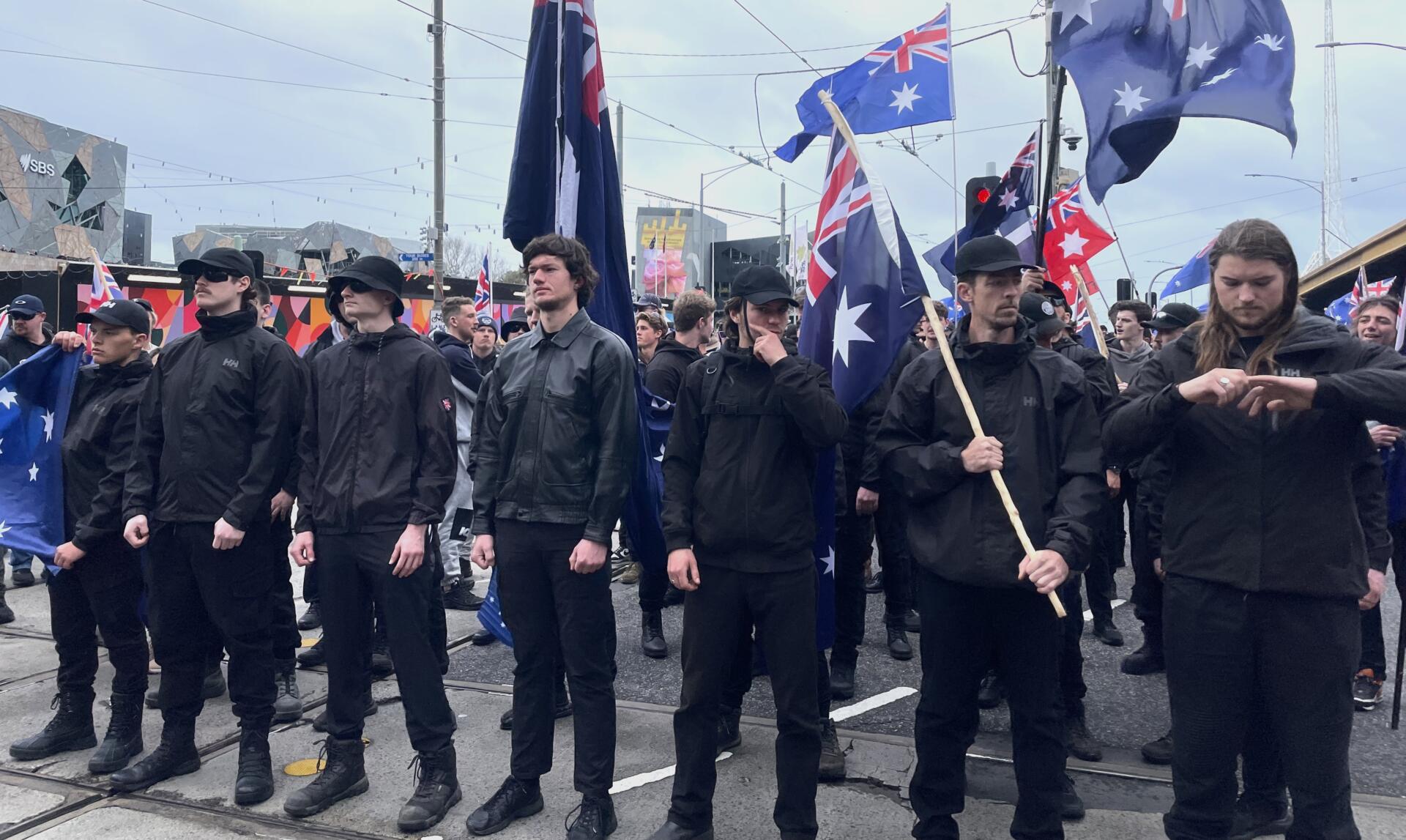
A more radical agenda became clear on the day, however, as members of the neo-Nazi organisation National Socialist Network (NSN) arrived largely unchallenged.
A small number of counter-protesters evaded police separation and confronted the group, but they were quickly pushed to the margins and removed by police.
As members of the NSN gathered in formation at the centre of the demonstration, an older man wearing a Trump 2024 hat spoke over his megaphone in an American accent: “Hey, these guys are Nazis”.
Another attendee shouted “we don’t want you here”, before being drowned out by chants of “Aussie Aussie Aussie, Oi Oi Oi”.
“If they’re Nazis, they can do whatever they want if they’re standing up for Australia,” one attendee was heard saying.
The rally, which travelled along Flinders Street, Elizabeth Street and up Bourke Street to Parliament, was led by the NSN and met counter-protesters, separated by police, on multiple street corners.
At Parliament, 21-year-old online commentator Hugo Lennon, who goes by the moniker ‘Auspill’, was among the first to speak.
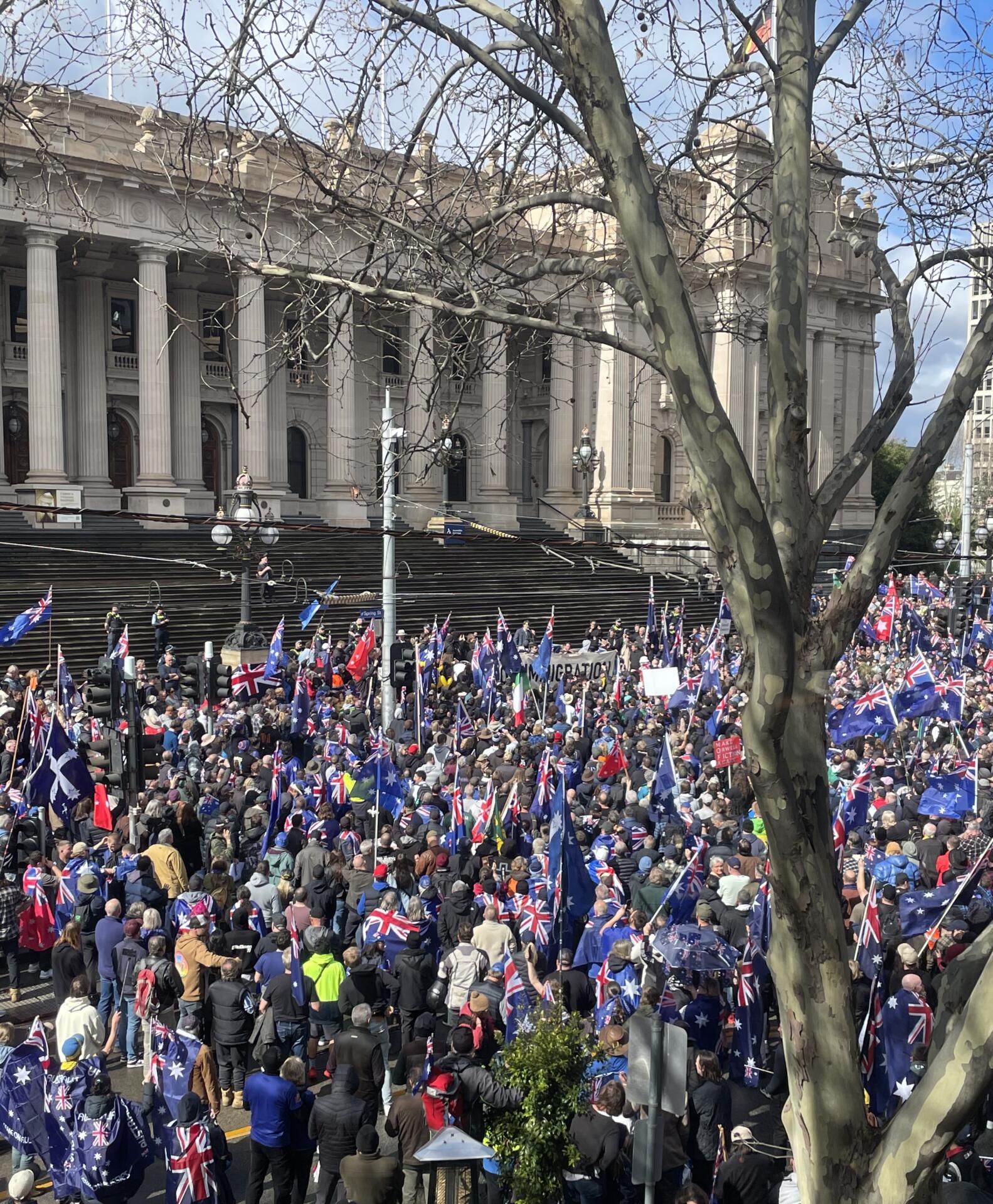
Rally attendees gather at the step of Victoria’s Parliament House. Photo by Alexandra Nevill.
Lennon, who was identified in a news.com.au report earlier this year as the grandson of the multi-millionaire former chair of one of Australia’s largest real estate development companies, has gained a significant online following blaming immigrants for the housing crisis.
Audibly competing with counter-protester chants of “all Nazis are terrorists”, Lennon spoke about the 26 January Invasion Day protests, inciting cheers as he yelled “we will take [Australia Day] back”.
The next speaker was Harrison McLean, a key organiser of the Melbourne Freedom Rally. McLean referenced the unifying symbol of the crowd as he shouted into the microphone, “we are gathered here under one big, blue, beautiful Australian flag”.
The Melbourne Freedom Rally forms part of the broader Freedom Movement. According to communication and extremism researcher Dr Gerard Gill—writing for the Global Network of Extremism and Technology—the movement originated in response to COVID-19 lockdown measures and vaccine mandates, but had since grown to include “QAnon-esque concern with Satanic paedophiles, sovereign citizen practices, anti-trans rhetoric, and general conspiracist fodder”.
Echoing Lennon’s talking points, McLean spoke of Australia’s housing crisis and “the ongoing and international war of the West versus the mass immigration policies”.
“The Albanese government has done nothing for too long about Australia’s housing crisis,” McLean said, prompting chants of “Albo must go”.
McLean—who was identified in a 2021 Guardian investigation, drawing on leaked Telegram messages, as engaging with several far-right and white supremacist groups—strictly stuck to topics of immigration and housing.
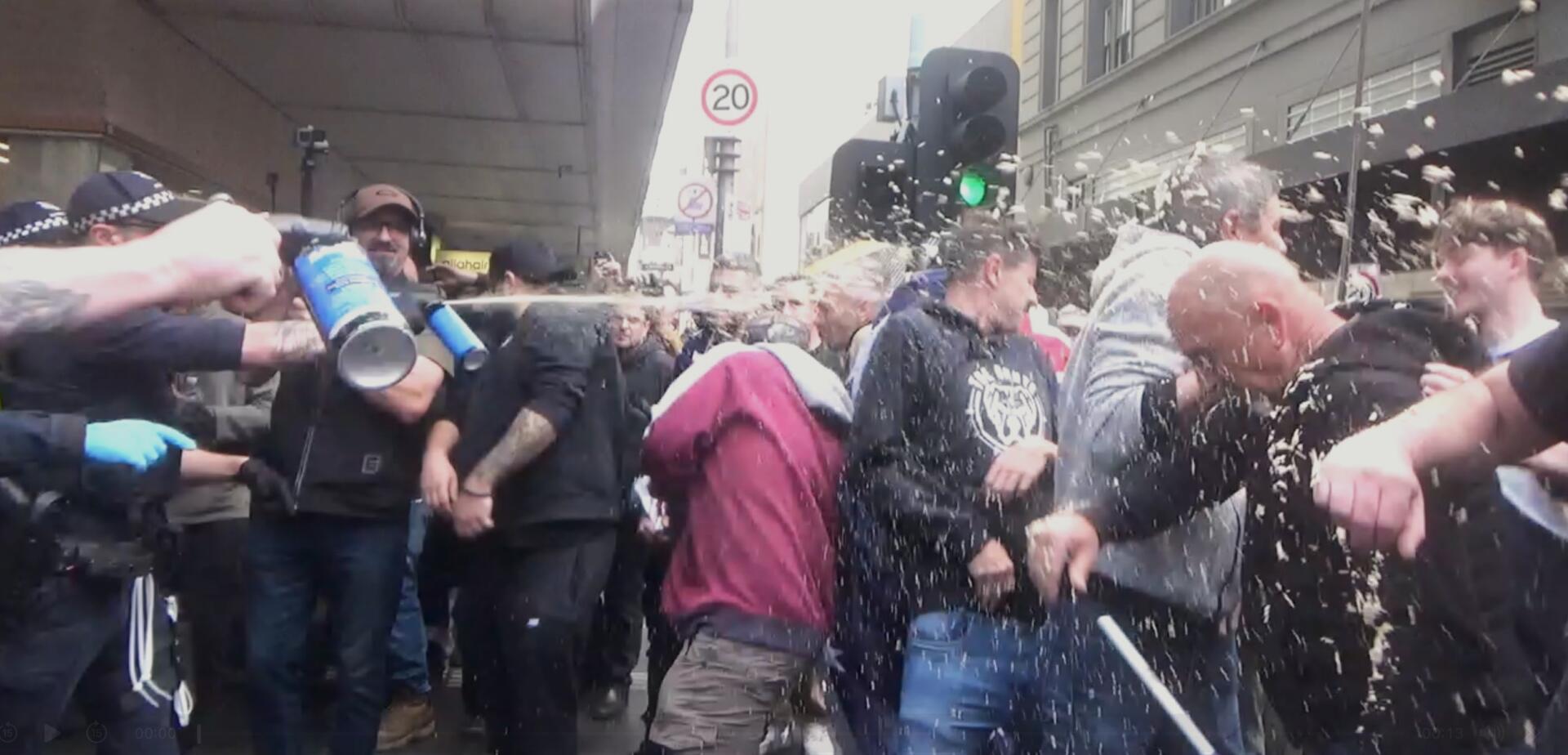
Police deploy OC spray against March for Australia protesters. Photo by Alexandra Nevill.
In the leaked Telegram messages reported by The Guardian, McLean—under the username Dominic D—reportedly said: “We have a LOT of very NORMIE people coming in from banners and [Facebook] groups that are not ready for the JQ [Jewish question] yet, and may attack us as highly anti-Semitic and stop promoting us all together.”
While McLean’s rally speech contained no antisemitic references, he was immediately followed by Thomas Sewell, self-proclaimed neo-Nazi and leader of the NSN.
Sewell avoided overtly Nazi-related terms, beginning his speech with “you might not like a guy’s favourite colour or his particular opinions of history but … sometimes you have to learn to make friends”.
He appealed to the many shades of anti-establishment sentiment in the crowd, stating that he was “aware … that [NSN] are a controversial and antagonistic group to the government” and claiming that the media, academics, banks and system “hate” them.
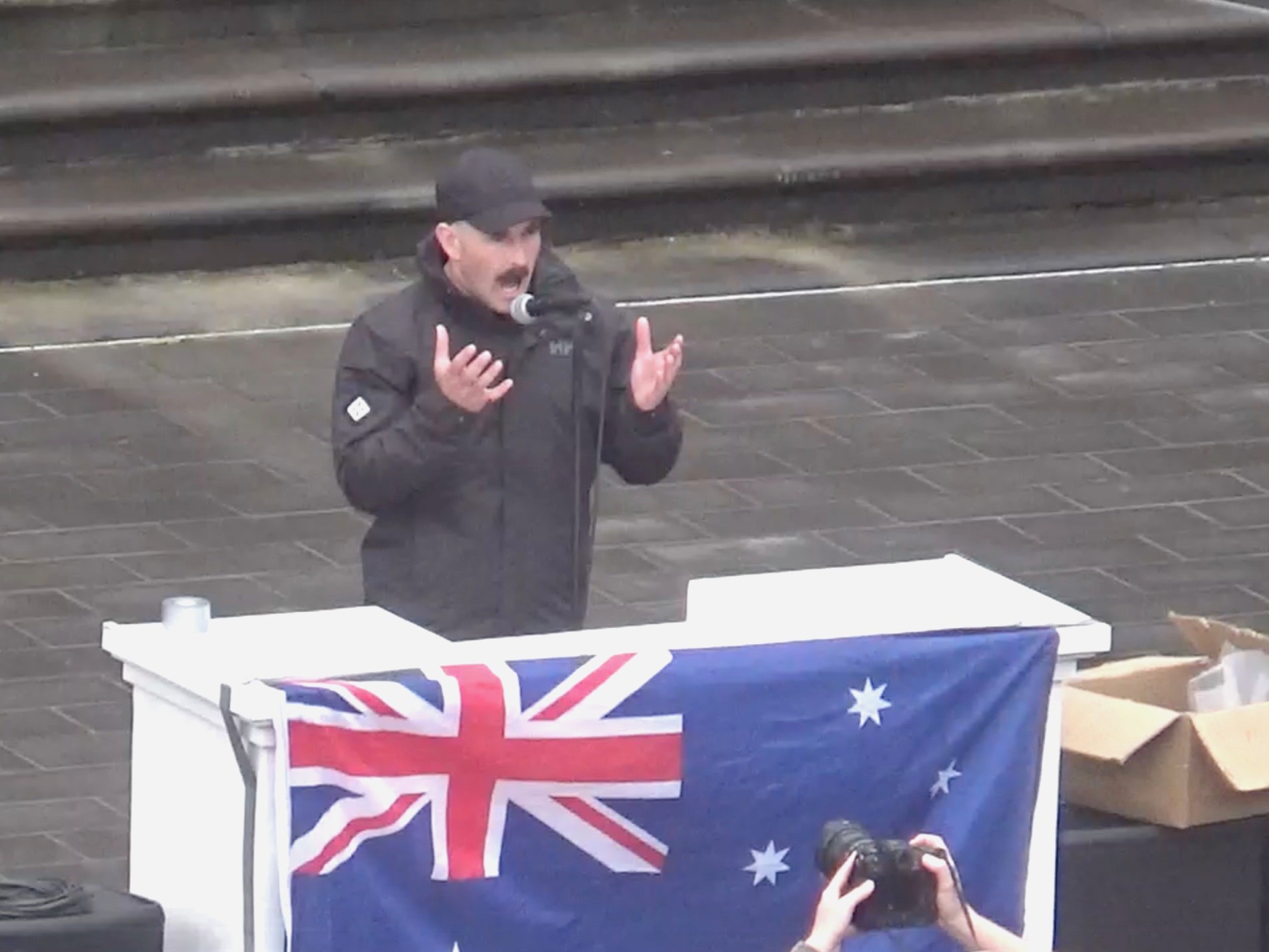
National Socialist Network leader Thomas Sewell addresses the rally from Parliament steps. Photo by Alexandra Nevill.
Key words like “thoroughbred” and an insistence that “demographics” must be maintained, paired with his followers leading the march in all-black Helly Hansen attire (a Norwegian sportswear label whose HH symbol has been co-opted by neo-Nazis for its “Heil Hitler” connotations), were the only overt indications of Sewell’s extremist views.
At the rally that afternoon, thousands of people, whether they knew it or not, listened as a neo-Nazi related himself to the crowd, speaking of “our Australia, not their Australia”.
When Sewell first took to the podium on the steps of the Victorian Parliament, there was a mix of boos and cheers. By the end, the crowd was cheering the loudest they had all day.
Sewell, 32, is currently facing 25 charges following an incident at a First Nations camp in Melbourne’s Kings Domain after the August rally. Prosecutors allege he led a group of far-right extremists to attack occupants of Camp Sovereignty. He was granted bail on 13 November.