
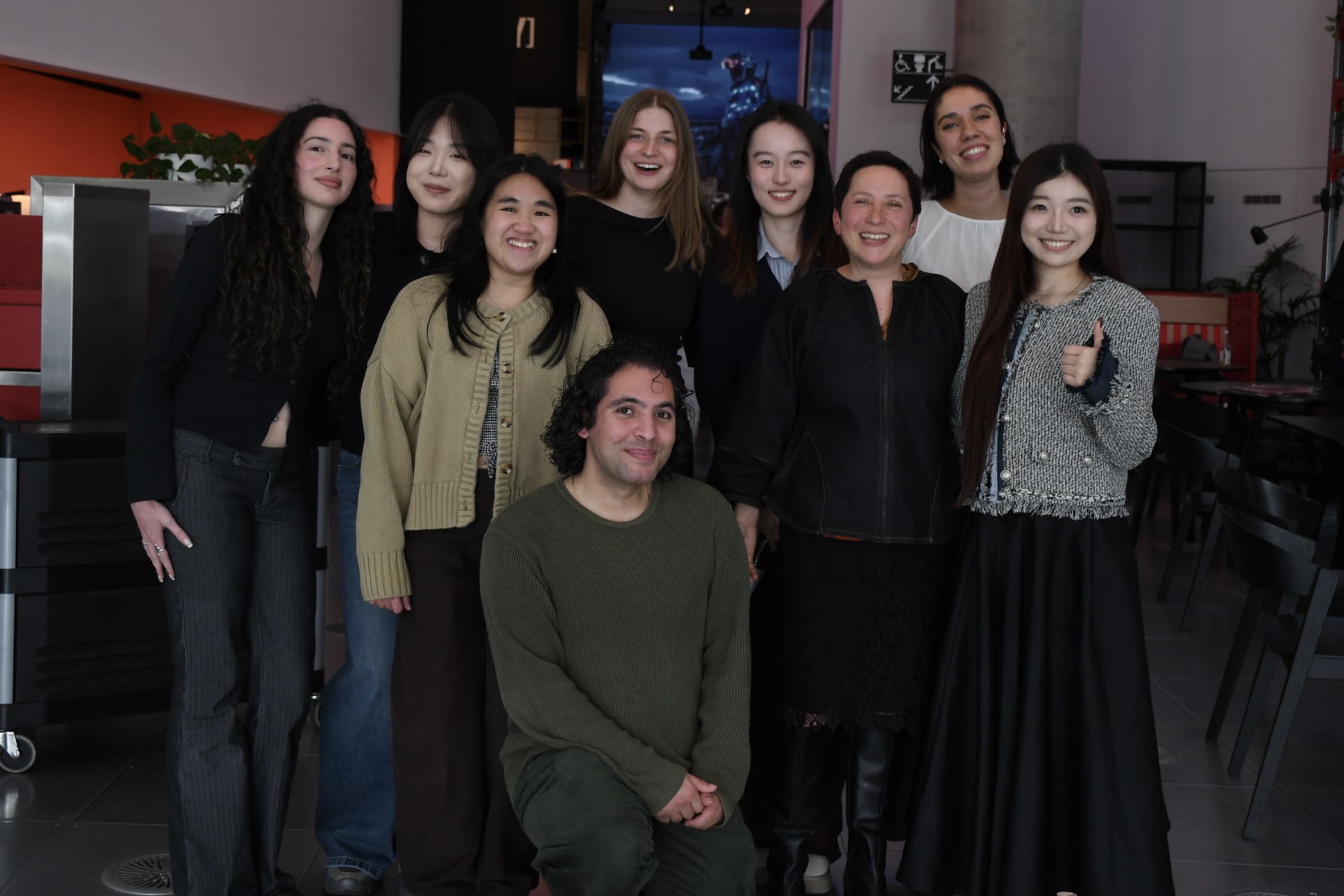
In 1856, the stonemasons building the University of Melbourne’s Old Quadrangle put down their tools and marched to the centre of Melbourne to demand an eight-hour day and made history.
The notion of eight hours work, eight hours sleep, eight hours recreation – the foundation of labor conventions across the Western world – “had its genesis here at the University of Melbourne”, said Associate Professor Louisa Lim, supervising producer of the Uncurated podcast.
Now, 170 years later, the university’s history of dissent is the subject of Unruly, the fourth season of Uncurated, a podcast made by students in the Centre for Advancing Journalism’s Advanced Podcasting subject.
Each episode is inspired by an object drawn from the university’s archives, which stretch across 25 kilometres of shelving. Pieced together, these artifacts tell stories of student and staff activism across generations, from labour rights and anti-war campaigns to anti-racism, women’s rights and gay liberation.
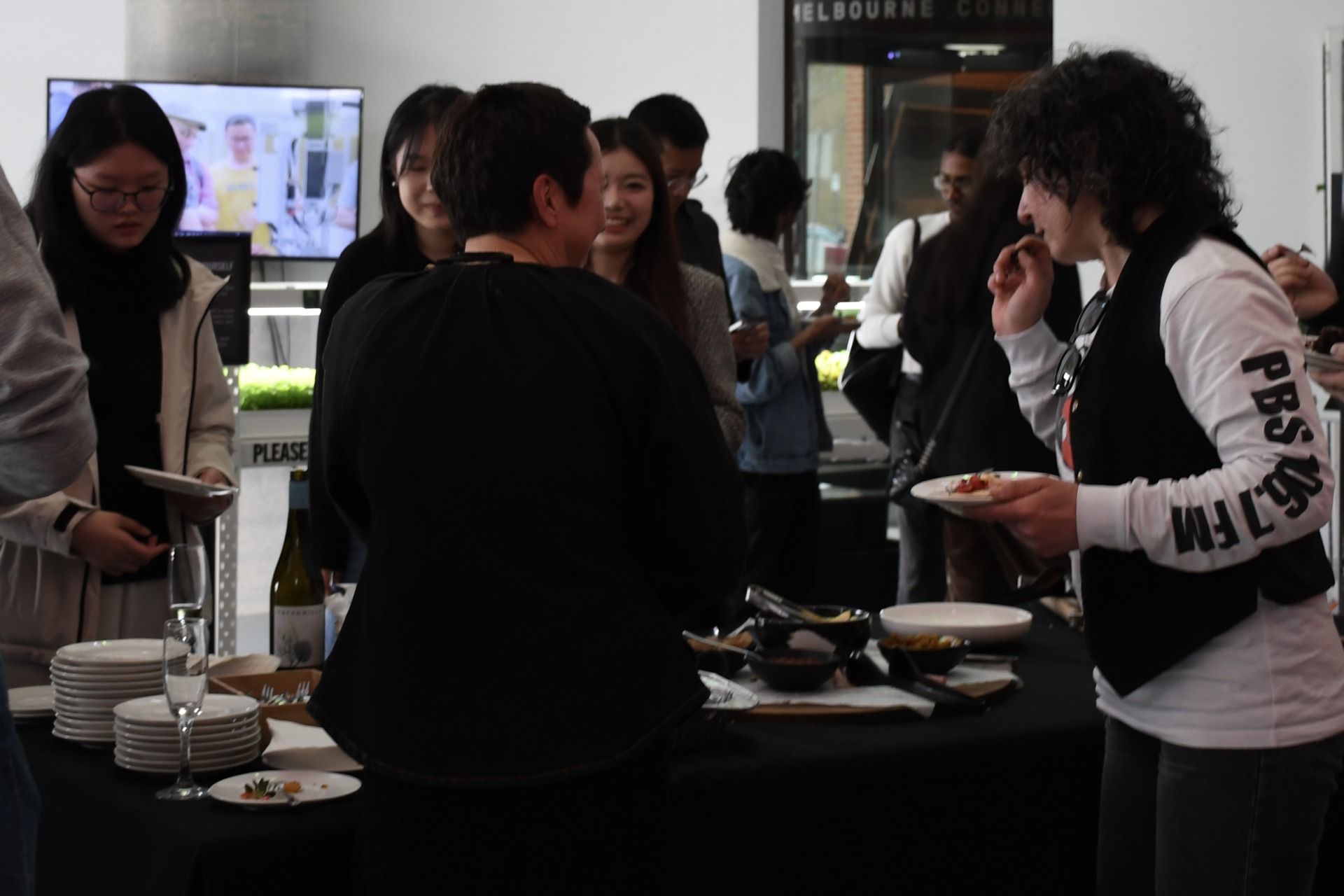
Guests at the launch of Unruly at Science Gallery Melbourne. Photo by Preeshita Shah.
Students, academics, archivists and podcast contributors gathered at Science Gallery Melbourne on Tuesday 13 October to celebrate the launch of the season.
“Right in the very first class, when we were talking about ideas, one of the students said, ‘we should do something that makes the university sweat’,” Lim said.
Yowhans Kidane, a teaching and learning archivist at the university, searched the collection for material relating to campus dissent and wheeled his findings into class on a trolley. That haul included photographs, notes, journals and a file with a large confidential stamp across the top.
“We each found an object that was maybe forgotten or a little bit unorthodox or just needed to be unpacked some more,” said the season’s host, Siena Kinkela.
When students showed each other an object and explained what it was, she said, “people would gasp and kind of lean forward and ask more questions”.
Kinkela described the stories that came out of these objects as “really messy and colourful and really human”.
Some of the protests they found were unruly in the plainest sense. In 1917, students threw Guido Baracchi, a socialist who had published articles protesting against Australia’s involvement in World War I, into a lake that was then part of the campus, a story Grace Gooda tells in the season’s first episode.
In the third episode, Kinkela follows students who pelted John Dedman, then Minister for War Organisation of Industry, with eggs and food near the end of World War II. But while the incident made headlines at the time, it left almost no mark on the university’s archives.
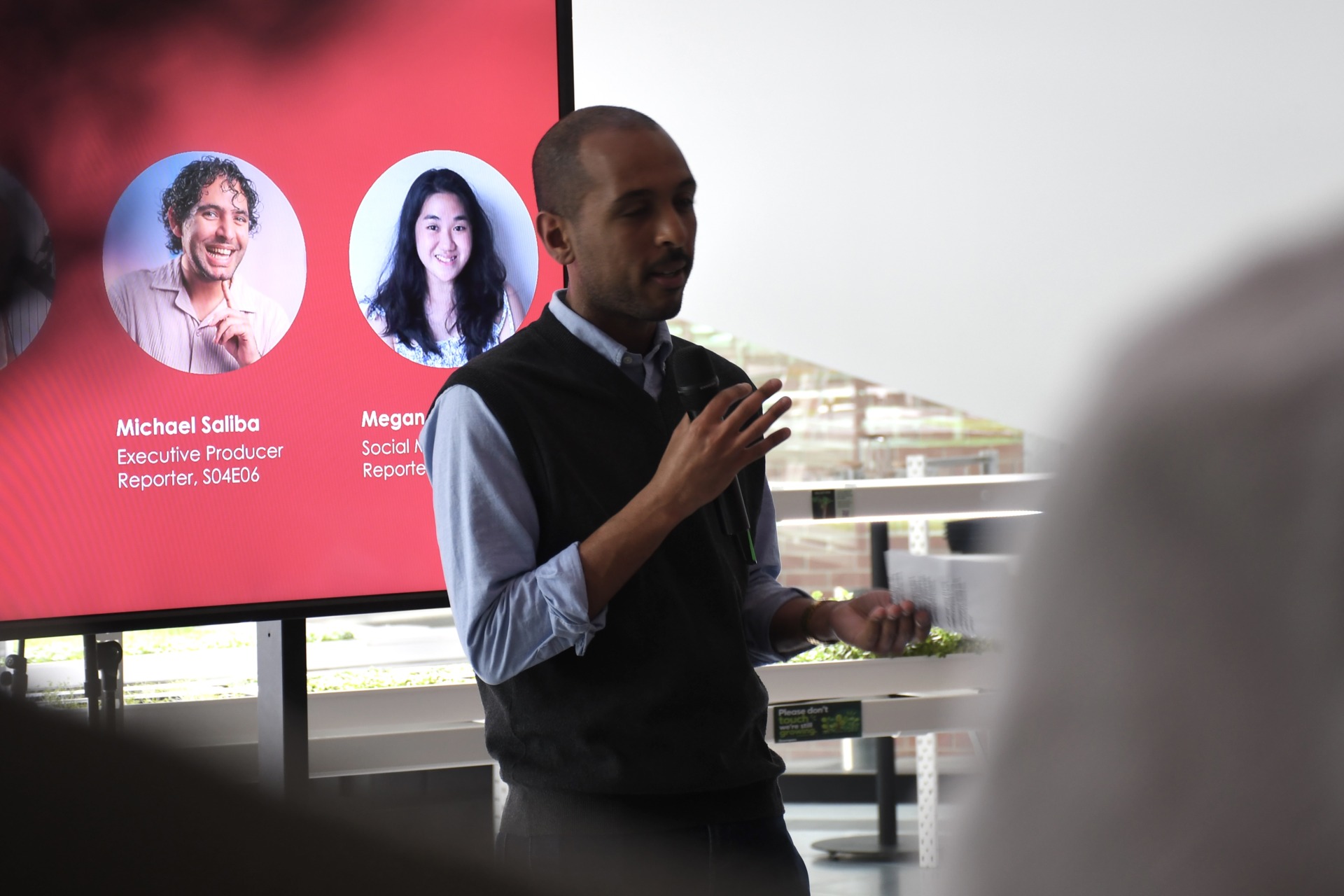
Yowhans Kidane, a teaching and learning archivist at the university, tells the crowd the students’ work is “particularly important and pertinent” given the season’s theme of protest at the university. Photo by Preeshita Shah.
Kidane said the only trace he could find was a Labour Club minute book holding a few newspaper clippings.
“Students discovered instances of protest where I’m like, ‘oh, I had no idea that this even happened’,” he said.
The gaps extended beyond the egging.
Megan Yin, the season’s social media producer, found photographs of a 1984 protest outside the John Medley building against the then Dean of Arts, Geoffrey Blainey, over his criticisism of Asian immigration, an act of dissent that ended in arrests. Beyond the photographs, however, the archivists could find no further record of what happened. Yin explores the incident in the seventh episode.
Some material had been kept out of view on purpose.
In 1979, Terry Stokes, a 26-year-old postgraduate student, kissed his boyfriend at an underground gay bar in Melbourne, at a time when homosexuality was still a crime in Victoria. After both men were arrested, Stokes was evicted from his student accommodation by its warden. Fellow students organised and rallied behind him.
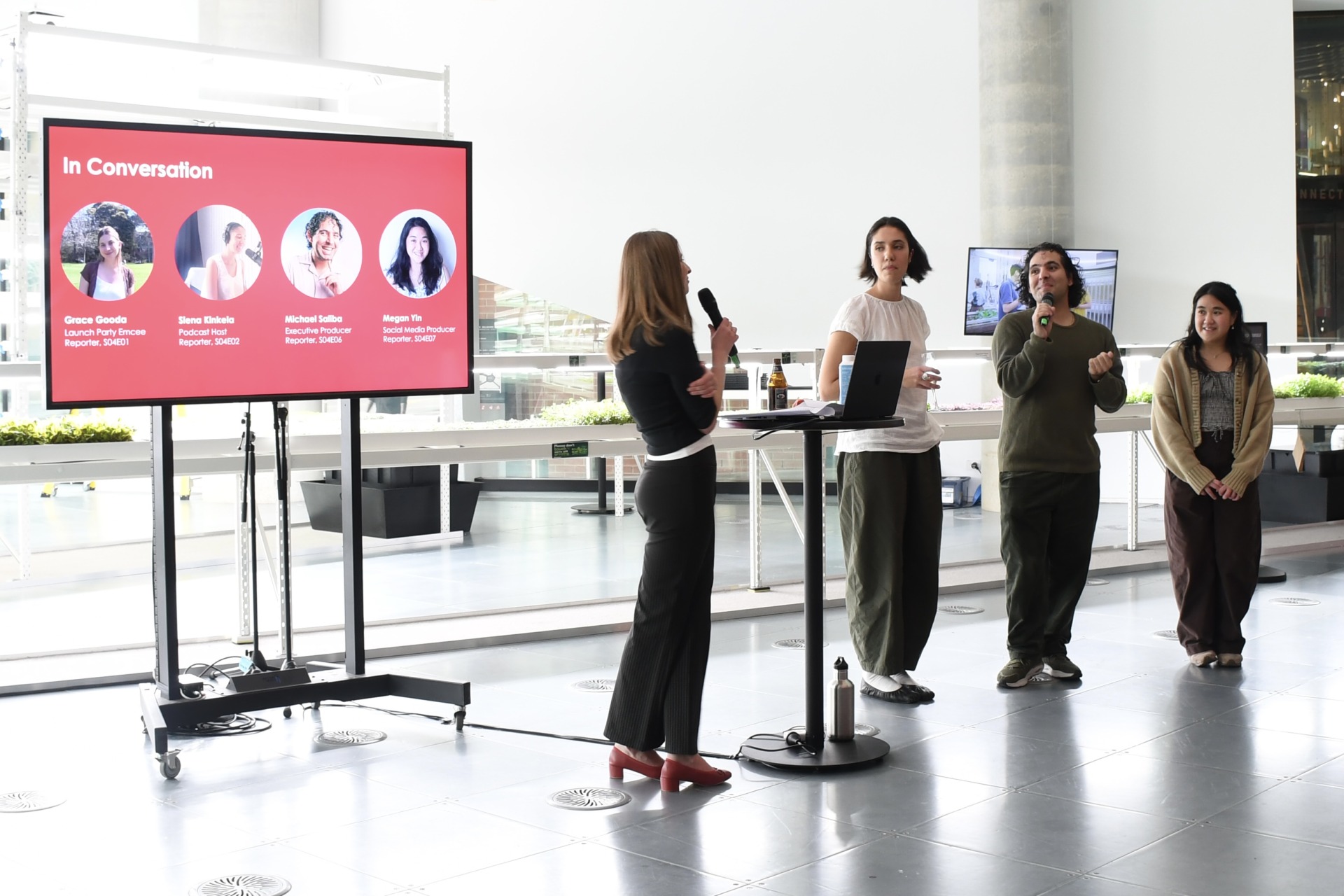
From left: Grace Gooda, Siena Kinkela, Michael Saliba and Megan Yin speak on a panel at the launch of Unruly. Photo by Preeshita Shah.
Michael Saliba, the season’s executive producer, tells Stokes’s story in episode six. He interviewed someone who was there the night of the arrest, and drew on a confidential university file that was only ever meant to be seen by the vice-chancellor.
“I unsealed it for my episode, and I reveal everything,” Saliba said.
At the launch, Saliba, Kinkela and Yin spoke on a panel hosted by Gooda. Kinkela said many students came into the project with memories of protests they had seen or joined during their degrees, and wanted to find the ones that came before.
“It’s pretty hard to either study or work on this campus for the duration of a degree, and to not either witness or participate in a protest,” she said.
Guests were invited to share their own. Whiteboards around the room asked, “What’s your most unruly memory of protest?” One answer read: “Everyone is too tame these days!!!” Another: “Protests are too regulated .. No chance for unruly protest.”
Not every student began the semester interested in protest. Xinnan Wang, whose episode on a 1961 Student Action march against the White Australia policy is released next week, chose her photograph because she was interested in immigration.
“My attitude to protest has changed during this process,” she said. “We need to fight for our rights and build a very equal and friendly environment together.”
For Kidane, the season raises “a broader question of what a university is, who it belongs to”.
“What the students have produced is not a dead history,” he said. “It’s a living issue and one that will no doubt remain relevant for a very long time to come.”
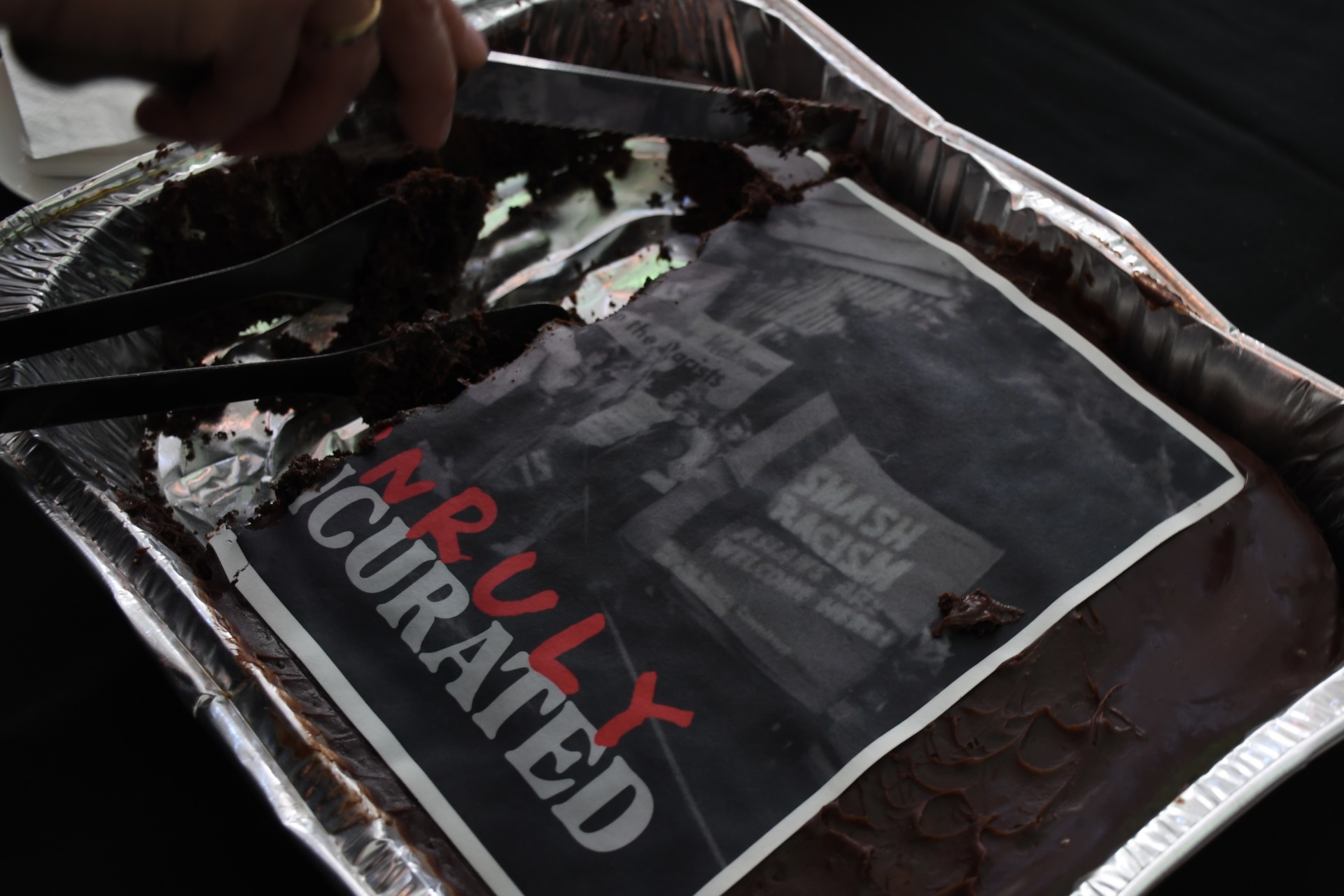
A cake at the launch is topped with the season’s cover art, an archival photograph of protesters holding placard, including one that says “Smash racism”. Photo by Preeshita Shah.
The first three episodes of Unruly are available now wherever you get your podcasts. The remaining five episodes will be released weekly. Listen here.
Previous seasons of Uncurated have won awards at the prestigious New York Festivals Radio Awards, the Australian Podcast Awards and the Journalism Education and Research Association of Australia’s Ossie Awards.


