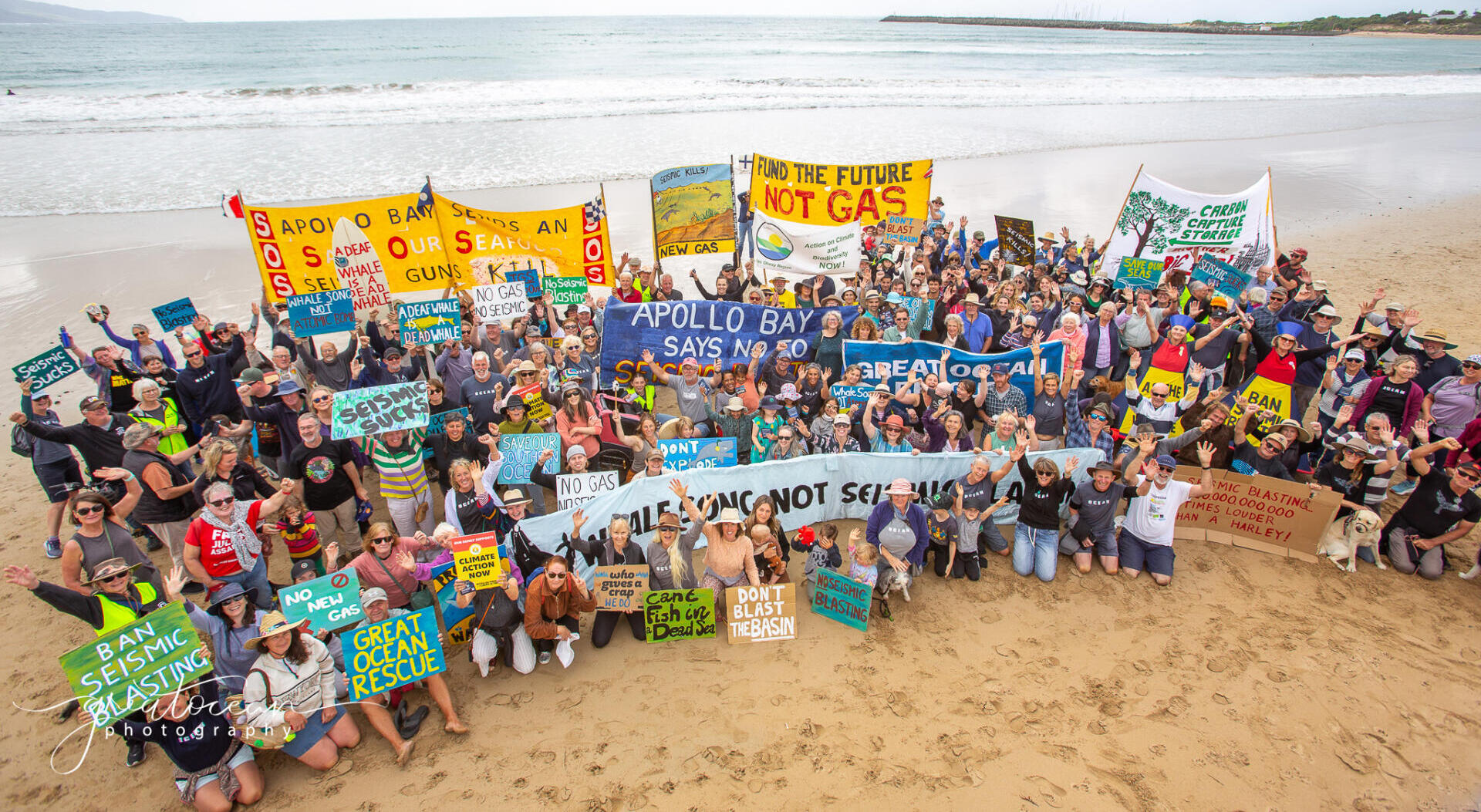
Two years ago, when multinational geo-tech company CGG* announced plans to seismic blast the ocean near her home in Port Fairy, self-described mum and music teacher Carli Reeve began digging into what this might mean for colonies of little penguins living along Victoria’s southwest coast.
CGG is proposing to conduct 60 days of seismic testing over three months and covering 2,750 kilometres of ocean between Port Fairy and Port Campbell, firing blasts of compressed air as loud as 250db — in the realm of a nuclear bomb explosion — every 10 to 15 seconds to map potential oil and gas reserves in the seafloor.
Alarmed at the lack of research or data available on the region’s little penguin populations, Reeve gathered all she could find from local penguin protection groups, assembling a submission arguing that CGG had failed to identify and assess five of seven known breeding colonies bordering its proposal. This oversight was cited by the National Offshore Petroleum Safety and Environmental Management Authority (NOPSEMA) in one of two decisions to delay approval on environmental grounds.
On June 20, the survey proposal was sent back to CCG for amendments for a third time after it failed to meet environmental requirements. The Citizen has learned, and the company has confirmed, that NOPSEMA’s latest letter references concerns about the impact of the blasts on whales and little penguins.
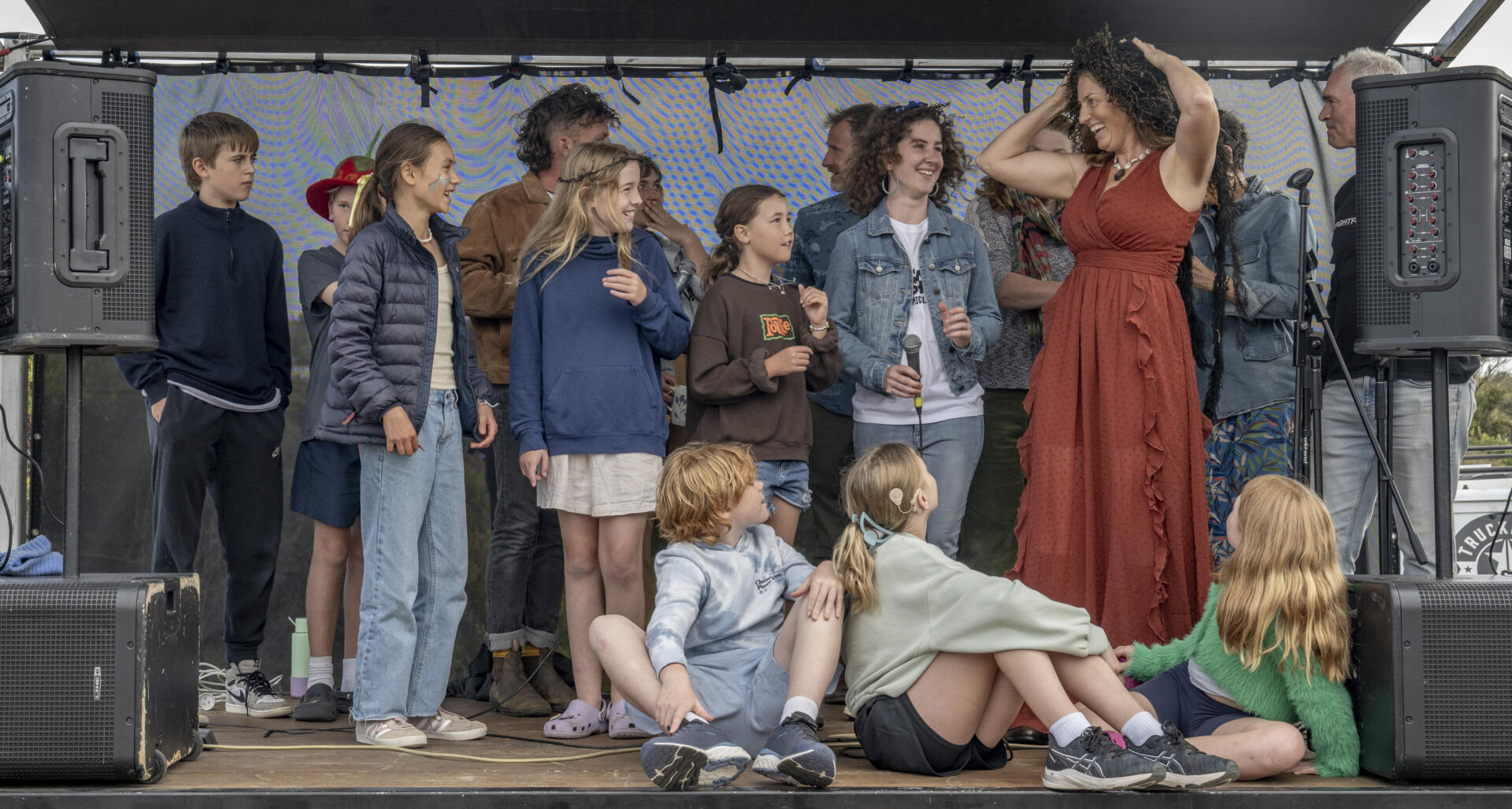
Port Fairy community member, Carli Reeve has forced geo-tech company, CGG, to reevaluate the impacts their seismic blasting proposal might have on little penguin colonies along the coast of western Victoria. Port Fairy, VIC. Supplied: Carli Reeve
Environmental groups and activists are relieved, with the decision throwing doubt on CGG’s current plan to begin the survey in September. NOPSEMA has asked the company to submit a modified plan by September 18, though CGG can apply for more time. The next potential start would be in April 2026.
“This rejection gives the precious marine life of the Otway Basin a reprieve, for now,” says Lisa Deppeler, founder of the Otway Coastal Environment Action Network (OCEAN).
“Increased awareness and scrutiny of this proposal by environmental groups and volunteers has put NOPSEMA and the whole practice of seismic blasting into the public spotlight. Gone are the days when these proposals are given the automatic green light.”
CGG said it would modify and resubmit its environmental plan, adding that “to build trust and ensure transparency”, it has published extensive assessment reports about the effects of sound on little penguins, which are publicly available in a document library.
Most of NOPSEMA’s concerns relate to “our effectiveness for detecting marine mammals, particularly southern rights and blue whales”, said Matt Smith, managing director of Klarite, a consultancy preparing CGG’s environmental plan. The survey area includes waters near Warrnambool, alongside eastern Australia’s only calving grounds for the endangered southern right whale.
Understanding seismic blasts
Seismic surveys — the first step in offshore oil and gas exploration — have been occurring in Australian waters for decades, with the industry pointing to a record of some 2,000 surveys since the 1960s. But a 2021 Senate inquiry, Making Waves, found gaps in scientific understanding, recommending “the Australian government significantly fund additional research to study the short-term, long-term and cumulative impacts of seismic testing on marine animals and the marine environment”.
While the recommendations of that inquiry languish, Carli Reeve is part of a grassroots movement gathering data, asking questions about the environmental implications of seismic surveys and urging a national moratorium on the practice. Last September, plans for the largest seismic testing survey in Australian history were abandoned after months of protests by community groups like OCEAN along Victoria’s south-west coast, and two revision requests from NOPSEMA.
“Not many people even know what seismic blasting is, let alone the impact it can have on marine ecosystems,” says Reeve, who, before becoming a music teacher, studied a bachelor of science, knowledge she’s now drawing on to help build understanding and awareness of western Victoria’s little penguins.
“The more that we look into CGG’s environment plan, the more problems and concerns we’ve found for different marine species. Seismic blasting is a destructive and disruptive stressor to all kinds of sea creatures. The little penguins are one of them.”
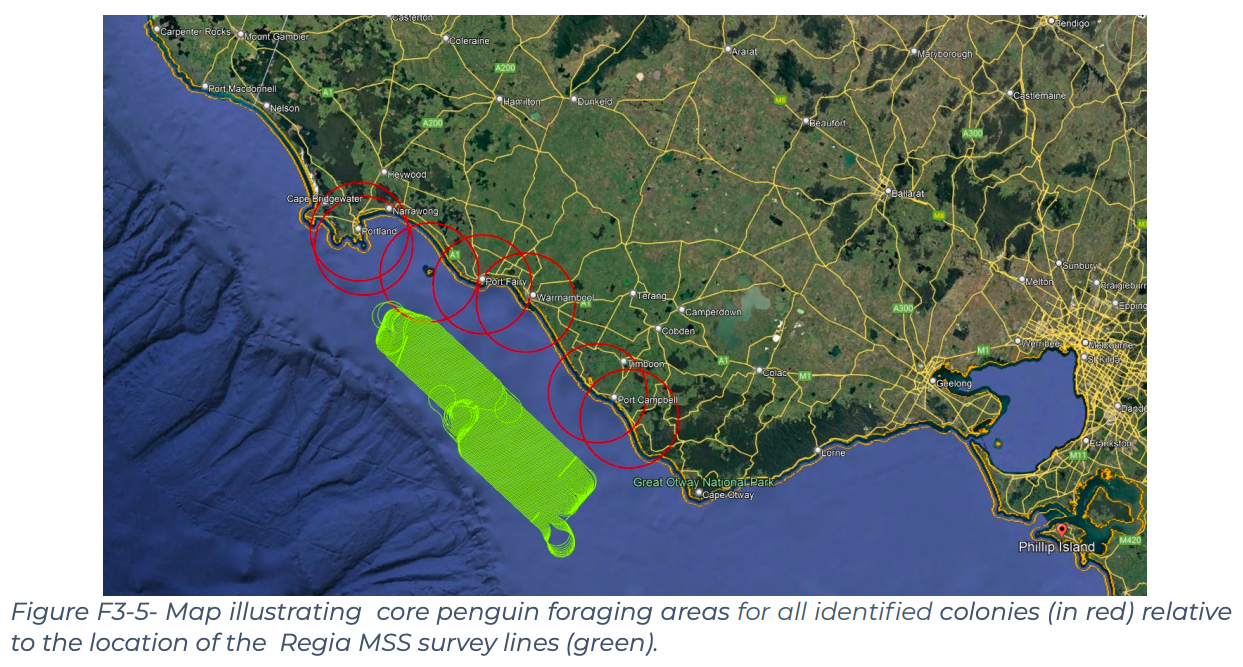
CGG’s plans provide a 20km buffer zone (red circles) for all penguin colonies except for the Deen Maar Island colony, which has a 17km zone, in which seismic activity will not take place. Source: CGG’s Environment Plan, Appendix F3, p 29.
CGG’s proposed survey zone intersects with waters within 30 kilometres of all seven colonies, and its latest intention to operate between September and November will fall right in the heart of the penguins’ breeding season. A delay until April next year also risks overlapping with potential breeding activity in June.
The only study to date examining the impact of seismic blasting on penguins found that African penguins – more than twice the size of their Australian cousins – strongly avoided the noise, altered their foraging patterns and travelled further away from their colonies when seismic activity occurred within 100 kilometres.
The CGG environment plan states that these penguins quickly reverted to normal foraging behaviours after seismic activity stopped, which it said suggested “a relatively short-term influence of seismic activity on these birds’ behaviour and/or that of their prey”.
“But in the life of a penguin chick … you only need a few days without being fed and you’re stuffed,” says Reeve.
Her submission argued that disruptions to prey availability, shrinking foraging zones, increased competition and higher energy demands due to seismic activity could all have unknown knock-on effects. These would potentially compound existing environmental pressures, threatening the long-term survival of both chicks and their parents.
Responding directly to Reeve’s report, CGG wrote that this concern relies on “speculation and opinion” that is not backed up by scientific evidence.
Nonetheless in February this year, NOPSEMA requested CGG revise its plan partly in light of Reeve’s concerns, noting its impact assessment “does not demonstrate that little penguins are thoroughly assessed commensurate to the magnitude of impacts and risks arising from the activity”.
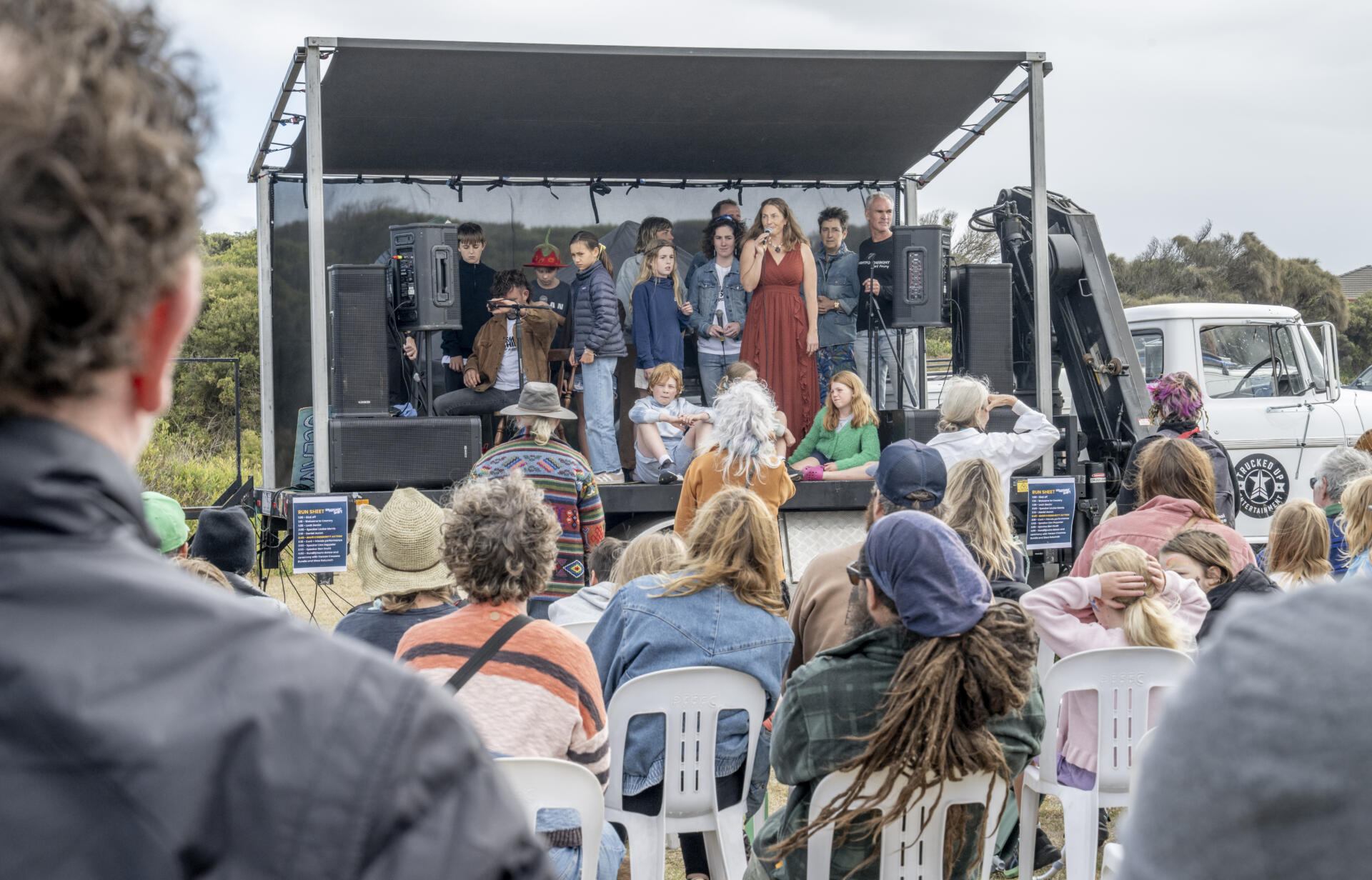
Carli Reeve leads a protest song she wrote after CGG’s first community consultation session at a rally calling for a national moratorium on seismic blasting in March this year. Warrnambool, VIC. Source: Rodney Harris Photography
To Reeve, though, CGG’s rebuttal goes to the heart of her deeper concerns.
“A lack of published scientific research that proves harm to penguins from seismic blasting is not a green light to proceed,” she says.
“Yes, it’s happened in the past, but nobody’s actually been checking to see what the effect is.”
Her sentiment echoes a key theme of the 19 recommendations of the shelved 2021 Senate inquiry around gaps in the science, which has recently resurfaced amid renewed pressure from environmental groups and some federal MPs calling for a national moratorium on seismic blasting until the inquiry is addressed.
“We need this government to enact this moratorium now to get our facts and our science together,” says Louise Morris, fossil fuels campaign manager with Australian Marine Conservation Society (AMCS).
Morris is concerned that the recent approval to extend Woodside’s North West Shelf gas plant out to 2070, and what that might signal for future gas expansion into the Browse Basin, northwest of Broome, underscore the urgency of the moment.
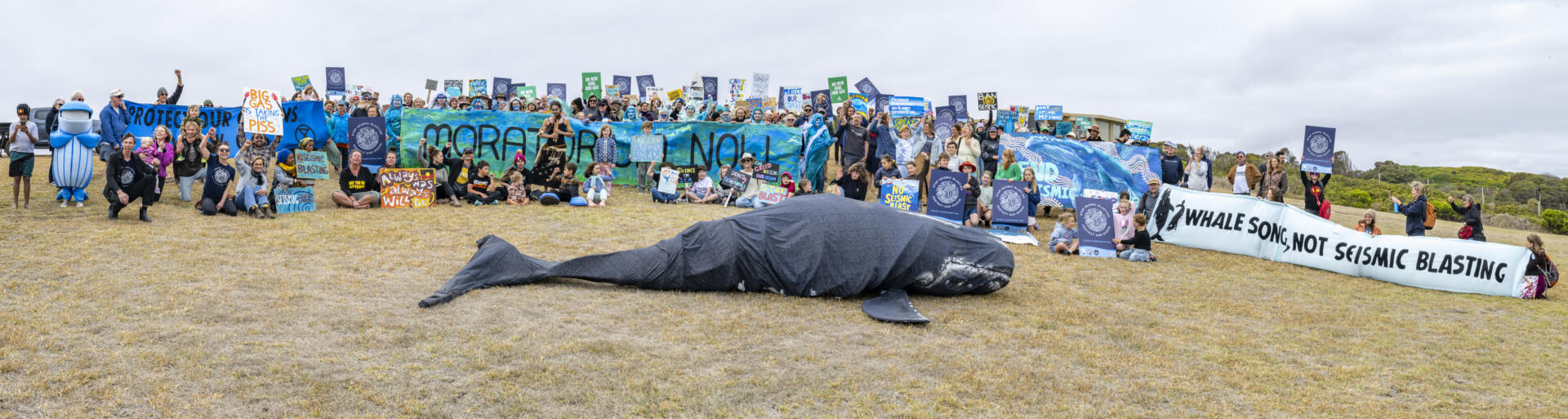
A rally demanding a national moratorium on seismic blasting was held in March this year at Logan’s beach, where Southern Right whales nurse their calves between May and October almost every year. Warrnambool, VIC. Source: Rodney Harris Photography
“The Browse project proposes seismic blasting as part of exploring for gas to drill up to 50 gas wells near pygmy blue whale feeding grounds,” says Morris.
“Until we understand how bad this is, we need to stop doing it.”
*French-headquartered multinational CGG rebranded as Viridien in 2024, but its western Victoria submissions and communications with stakeholders has continued under its former name, which The Citizen has also retained for consistency.
This story is co-published with Crikey.com