
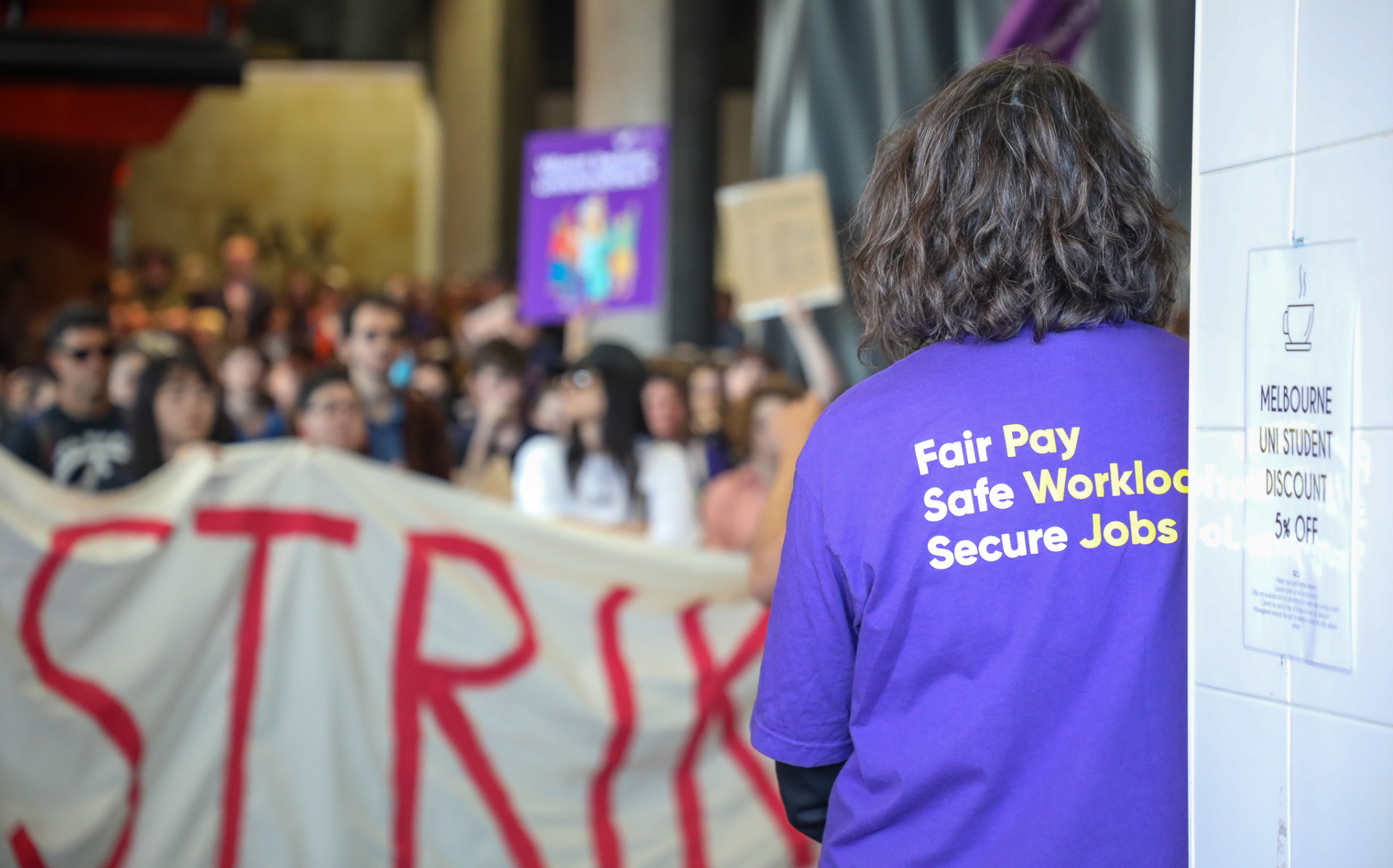
With two weeks left in the teaching semester, many lectures, tutorials and workshops at the University of Melbourne won’t go ahead next week as union staff take industrial action after negotiations over pay and conditions broke down.
Members of the National Tertiary Education Union (NTEU) will hold a 24-hour strike on Monday 12 October, followed by a teaching ban until Friday 16 October. The union’s claims include a 20 per cent pay rise, career pathways for education-focused staff, strategies around the use of artificial intelligence, and academic freedom protections.
“We just got no’s to our major claims,” said Liz Strakosch, incoming president of the NTEU’s University of Melbourne branch and a senior lecturer in public policy and politics.
Since the strike was announced, union and management representatives have met for three hours every day, Strakosch said, with “much more engagement” on some claims, but not on the largest.
The strike occurs one week into Professor Carolyn Evans’ tenure as vice-chancellor. There is intense speculation on how she will handle the dispute, in light of her controversial history managing a pay deal with staff at Queensland’s Griffith University in 2022.
Evans, as Griffith’s vice-chancellor, put a pay offer directly to all staff without the union’s endorsement. “The NTEU only represents a minority of our staff, and it is important to give opportunity to all staff to have their say,” Evans wrote to staff at the time, Times Higher Education reported.
Academic staff later voted the offer down. When they did, the Griffith administration went back to the table to negotiate with the NTEU, as it said it would, “to their credit”, said Michael McNally, Queensland division secretary of the NTEU, who bargained with Griffith at the time.
McNally negotiated the revised academic agreement directly with Evans. He said Griffith’s original offer would have weakened protections for academic freedom, and that the union won them back, along with a better pay rise.
Evans did not respond to questions sent to her office by The Citizen, including on her position on academic freedom protections being sought by the union.
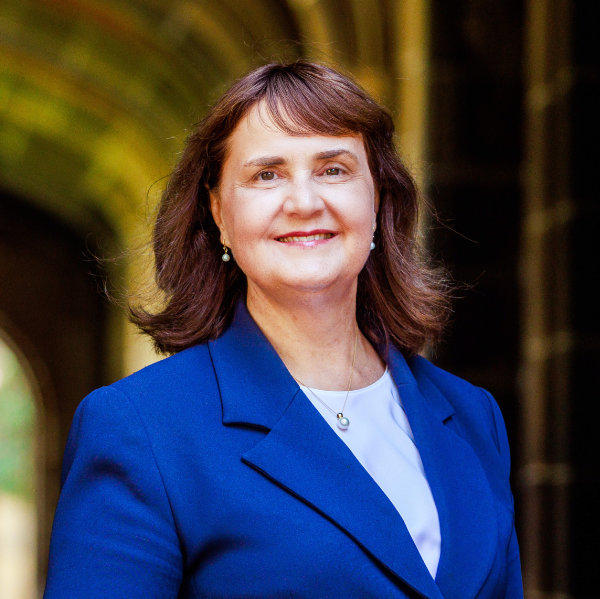
Professor Carolyn Evans started as vice-chancellor of the University of Melbourne on 5 October. Photo supplied by University of Melbourne.
She is a legal scholar whose work includes a focus on academic freedom. She is co-author of Open Minds: Academic Freedom and Freedom of Speech in Australia, a 2021 book that argues academic freedom includes the right of academics to criticise how their university is governed.
Evans was also president of the Australian Higher Education Industrial Association (AHEIA), which represents university employers in industrial relations, from 2021 to 2025, and which McNally describes as “the bosses’ union”.
In early 2023, a leaked AHEIA strategy document advised universities to consider putting pay offers to staff without union backing. The association said at the time there was “unequivocally no ‘secret plan’” to drive down wages in the sector.
While union membership of staff in universities is presently at a historic low of an average 19 per cent, according to Dr Piper Rodd, a lecturer in Education at Deakin University and former president of Deakin’s NTEU branch, the University of Melbourne has a “very politically active” workforce. This is why its bargaining is seen as setting a precedent for the sector.
“It would be pretty extreme for [Evans] to try to circumvent the union there,” Rodd said. “If she does try that, it’s going to be a very bad indicator for the rest of us.”
“We have been very aware of Professor Evans’ history of running non-union ballots, which we would regard as quite an aggressive move, especially if she was to do that in the first couple of months of her tenure as VC,” Strakosch said.
She said the union was not afraid of a ballot. “We know that staff would understand the stakes of that and we’re confident it would be defeated.”
There is no legal requirement for university management to reach agreement with a union before putting a deal to a staff vote, said Professor Shae McCrystal, a University of Sydney labour law expert and co-author of Strike Ballots, Law and Democracy.
At Melbourne, the NTEU has about 2,500 members. The agreement it is negotiating will cover between 11,000 and 12,000 staff, according to the NTEU.
“What the union will say is they should not ballot the staff until the union has agreed. That’s where the dispute comes in,” McCrystal said.
Strakosch accepted that management putting an agreement directly to staff was “definitely within their powers, but it is quite aggressive”.
Rodd said the industrial system limits when staff can speak publicly about their conditions. “This is by design,” she said. “It creates a power imbalance. The only time workers can talk publicly about their conditions is during industrial action.”
Speaking to The Citizen, some teaching staff who are not active unionists indicated that they found the industrial campaign distressing.
A PhD student who tutors a first-year cultural studies subject will keep working. Both of the subject’s coordinators would be taking part in the ban, but as the tutor was not a union member and they could not lawfully join the action.
“I’m caught in between,” said the tutor, who did not want to be named. “I don’t want to be a traitor.”
Without lectures, they said, there will be no new content to teach, so they plan to use their classes for “feedback on assignments”.
Marking, assessment and consultations will continue during the ban, according to the union’s guidance.
“It will not impact the progress of students through their classes, through their courses and subjects,” Strakosch said.
The university said it was focused on minimising the impact on students. “If this industrial action affects the delivery of subjects or other teaching material, alternative arrangements to enable students to continue to have access to content will be made,” a university spokesperson said in a statement.
“I would say the students are the actual victim here,” the tutor said. “They’re not the ones who are putting this workload on teaching staff, but they are the ones who’re going to be impacted the most.”
The University of Melbourne Student Union (UMSU) is backing the strike and has urged students to join Monday’s rally. “When our staff are overworked, underpaid, and denied a meaningful say over key decisions at the university, our education suffers,” said UMSU President Lushy Chinganya.
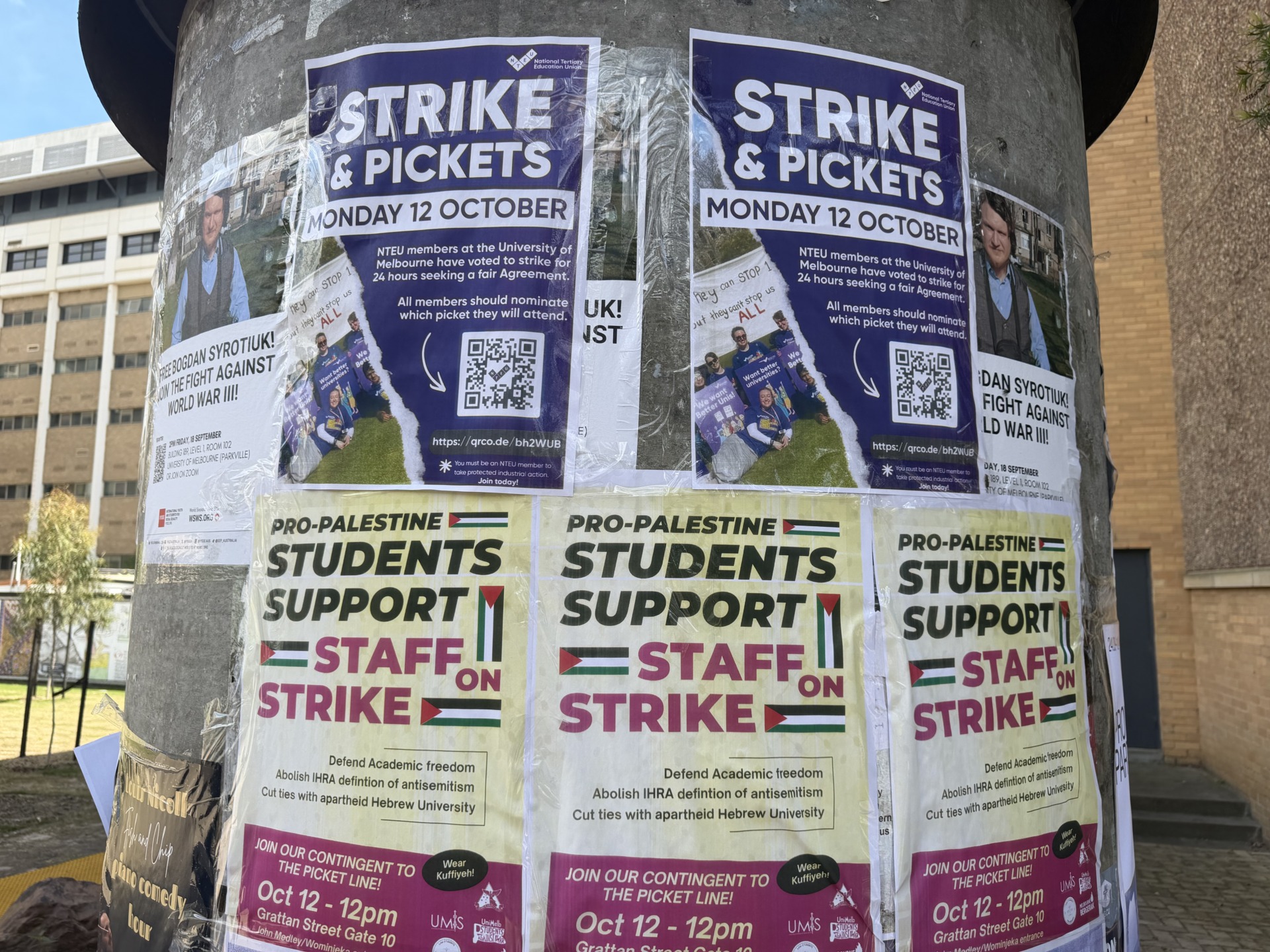
Posters for Monday’s NTEU strike sit alongside student posters calling for a contingent to join the picket line, on the University of Melbourne’s Parkville campus. Photo by Preeshita Shah.
On r/unimelb, a Reddit forum for University of Melbourne students, one student wrote that they didn’t know how to feel about losing classes in Week 11. “It just feels like a very detrimental week,” they wrote, though they added that their tutors and lecturers deserved better.
Not all students are sure the cost is fairly shared. “The consequence is inflicted on a party that has 0% control and 100% stake riding on every decision,” another student wrote on the forum.
“Then give us our money back,” said a Master of Global Media Communication student, who did not want to be named, of the classes students have paid for.
Students have pushed for refunds before. After strikes in 2023, more than 340 international students at the university joined an appeal for refunds for lost classes. Students who spoke to The Citizen this week said they were considering similar action.
“I think it’s about actually solving a bigger systemic issue of workload,” said Flynn Slater, secretary of the UniMelb Greens Club, “to make sure that you don’t have to miss out in Week 11, because you’ll be getting feedback throughout the term.”
The club is encouraging members to email Evans to “welcome her to the University but also let her know that we’re standing in solidarity with staff”, Slater said.
The university said it respected the rights of staff who chose to take part in lawful industrial action “and those who choose not to”. It said it would “continue to work collaboratively and constructively with the unions to reach a new agreement which is fair to staff, recognises the value and contribution staff make to our institution, and positions the University for long-term sustainability and success”.


