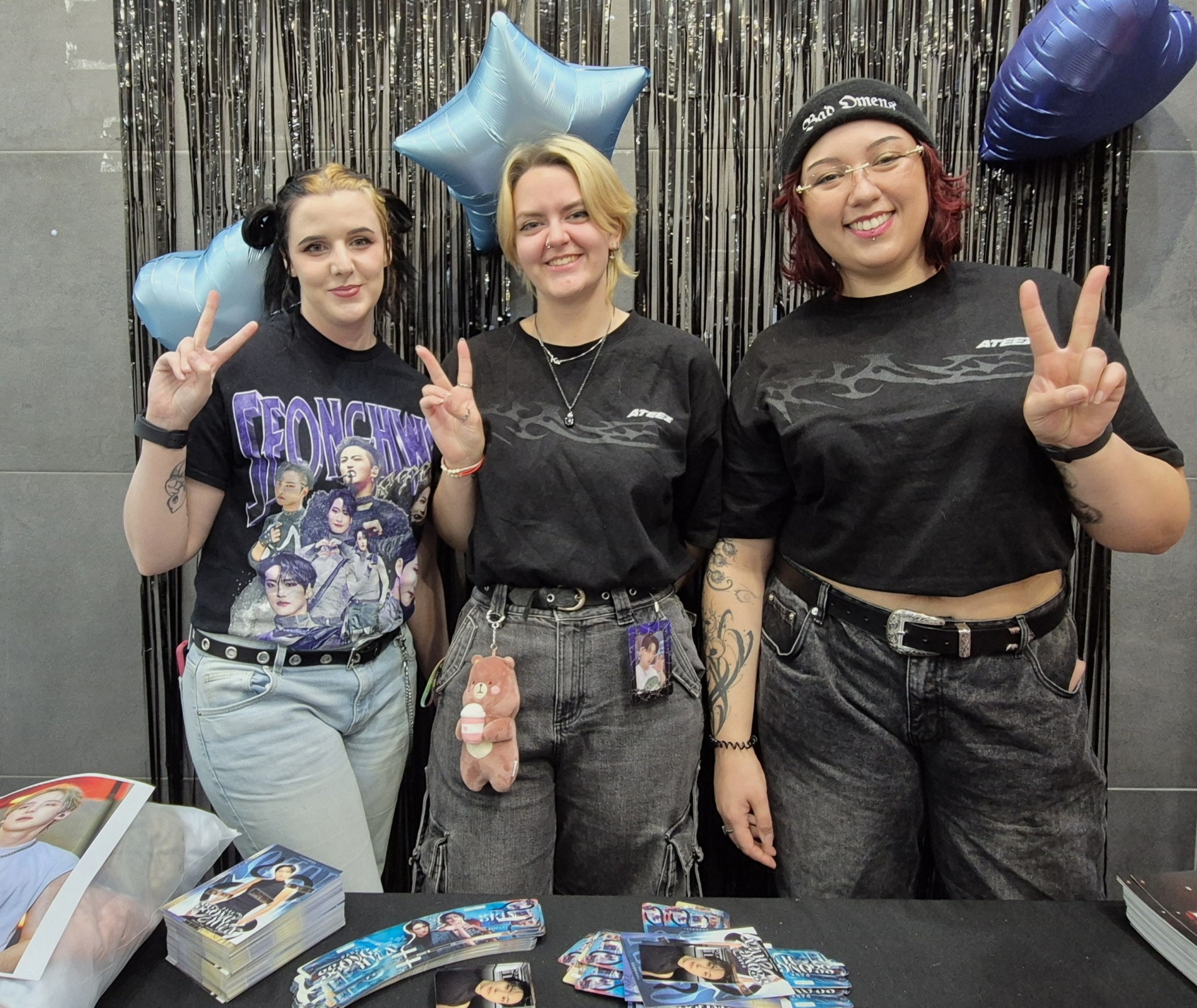
Inside a small café in Melbourne’s CBD, K-pop fans gather with drinks and homemade freebies—cupsleeves, photocards, and stickers featuring their favourite idols.
Pop music fills the space, photo walls glow, and strangers quickly become friends.
These are K-pop cupsleeve events, fan-led gatherings that celebrate their idols’ birthdays, group anniversaries, and album releases.
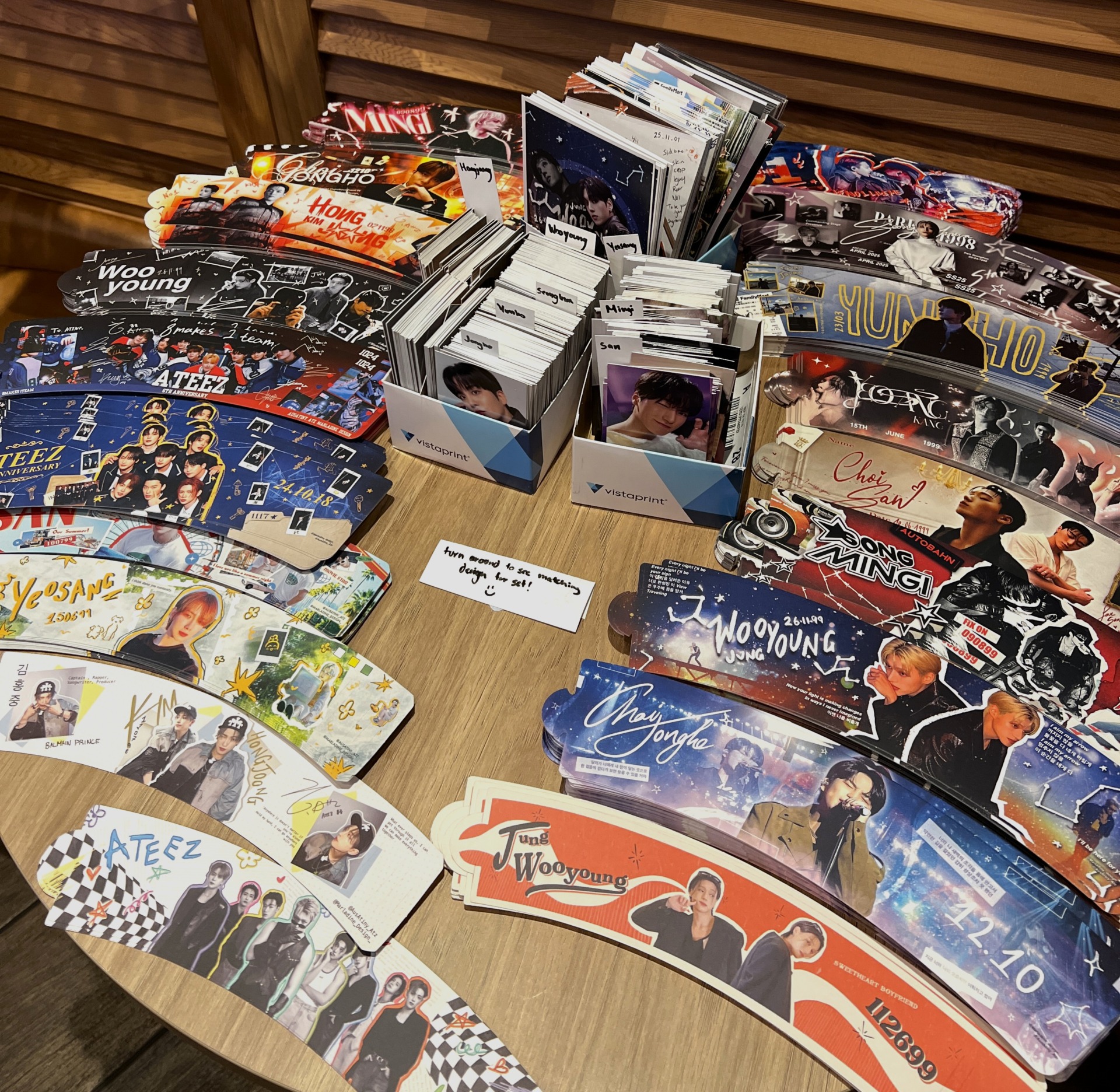
Fan-made cupsleeves and photocards. Image: Ying Xin.
Originating in South Korea, these events have spread globally, offering fans a space to connect through shared interests and creative expression.
Unlike the high costs associated with supporting idols in the K-pop industry, the only “entry fee” here is a drink, making these events accessible to a wide range of fans. The fee goes to the host café, enabling fandom groups to run events without venue fees.
In Australia, official K-pop fan groups regularly hold cupsleeve events and promote them on social media. Alongside event details, they also share another vital tidbit—what freebies will be available.
In Melbourne, many of these events are typically held at Happy Town K-pop Café in the CBD.
Local K-pop fan Brie Fisher said she attends as many cupsleeve events as she can.
“I enjoy spending time here with other fans,” she said. “I’ve made many friends here—we share news about the group and hang out afterwards.”
Brie carries a notebook decorated with images of K-pop idols. At events, she invites fellow fans to sign it and write messages.
“These events make my notebook meaningful,” she said.
Brie said cupsleeve events were a welcome “third space”—a social environment separate from home and work/school.
“It’s hard to find a supportive and safe environment these days,” Brie said. “So, I truly value these events that offer that space.”
Despite the low-cost community vibe that cupsleeve events bring, K-pop fandom still exists within one of the most highly commercialised pop industries in the world.
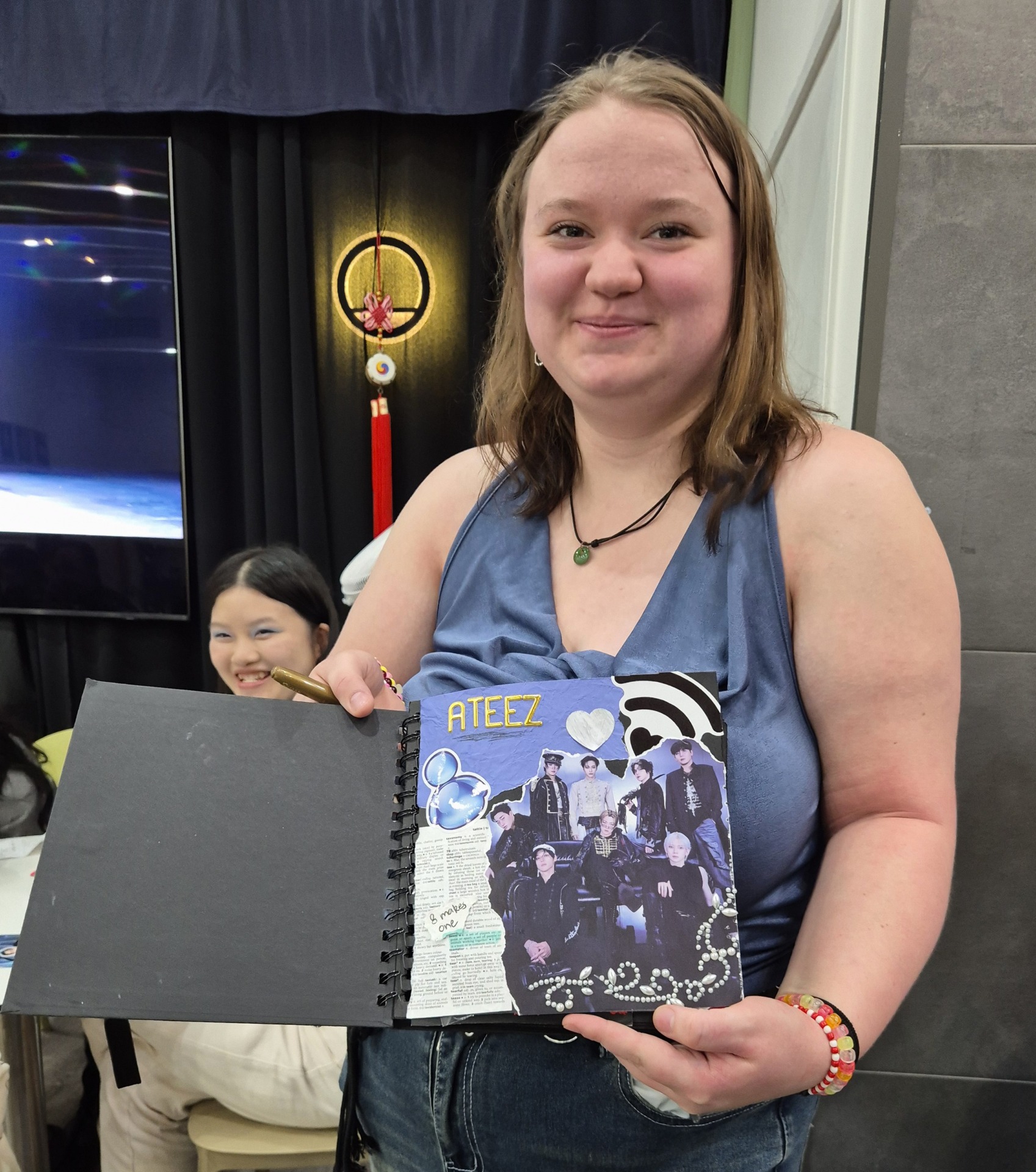
Brie Fisher at a cupsleeve event with her notebook. Image: Ying Xin.
The K-pop industry has become a major economic force for South Korea, generating billions through music, merchandise, and global fan engagement.
K-pop firm HYBE Corporation reported 2.65 trillion South Korean won (AUD $2.50 billion) in revenue in 2025, up 17.5 per cent from the previous year.
Fans across the world regularly fork out $200 on viral photocards, $20 a month for idol messaging subscriptions, or purchase multiple albums—typically priced between $20 and $70—for a chance to win a video call with their idols.
Apparel can be even pricier. T-shirts on the official store for girl group BLACKPINK cost $75-$90, with jackets at $280.
In this context, cupsleeve events stand out as a quiet resistance, driven not by profit, but passion.
Maddy, who asked not to use her full name, leads the official Australia and New Zealand fandom for ATEEZ, an eight-member South Korean K-pop group known for their high-energy performances. She began organising cupsleeve events in 2022.
Maddy’s team has since grown to 35 volunteers across cities including Melbourne, Sydney, Brisbane, Canberra, Adelaide, and Perth.
Over five years, she estimated she has spent “well over $1000” of her own money and dedicated hours each week to organising events.
“The biggest challenge is finding cost-effective ways to produce materials,” she said. To reduce costs, Maddy designs all freebies herself, which she said was common among organisers.
Initially, Maddy charged a small fee to cover expenses, but soon stopped.
“I realised people might not be able to afford extra on top of a drink,” she said.
“People can enjoy and engage without stress. It’s about sharing love and appreciation with like-minded fans—creating a community that everyone can be part of.”
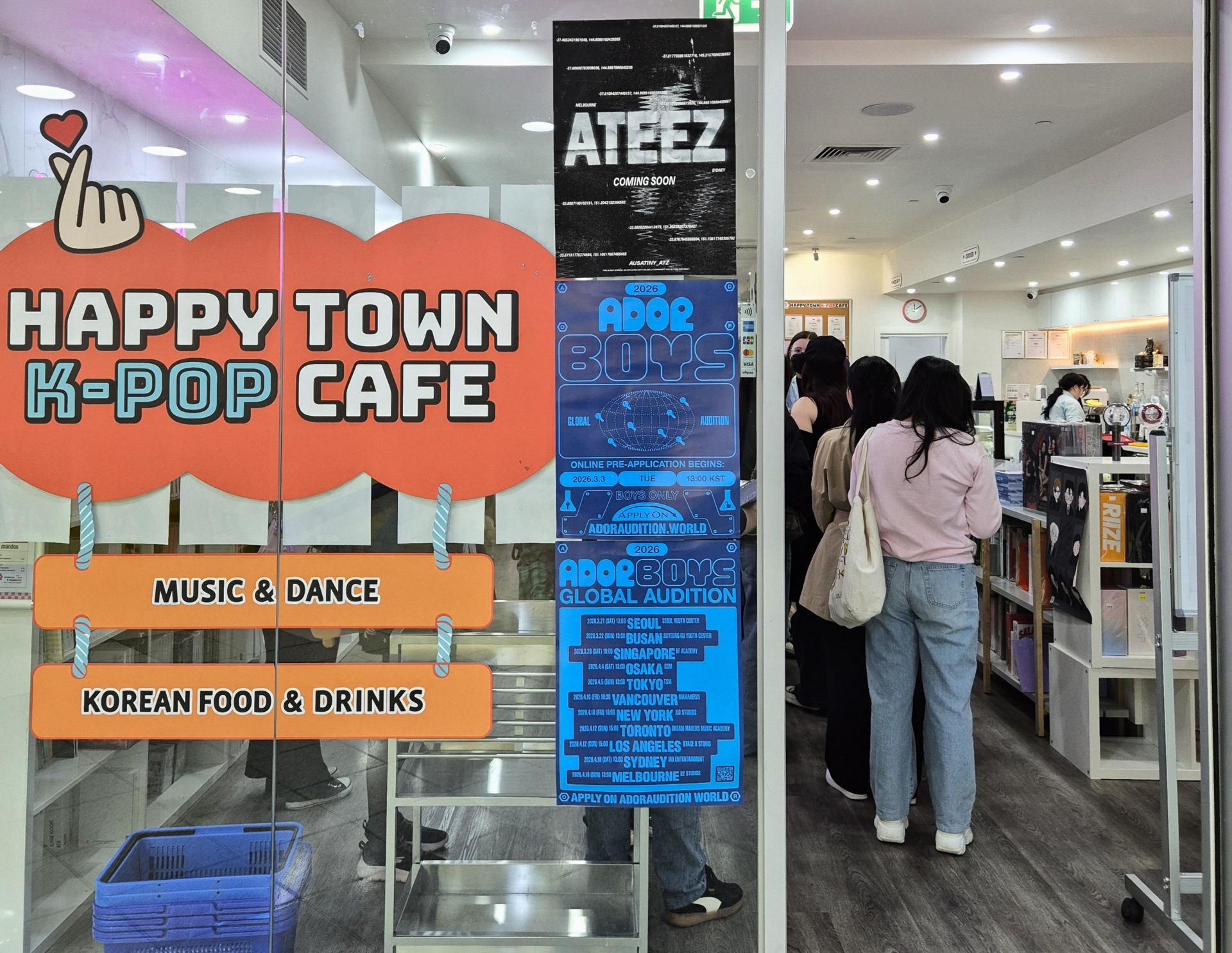
Happy Town K-pop Café, in inner-city Melbourne. Image: Ying Xin.
Melbourne ATEEZ fandom volunteers Keeley and Siv help set up events. They receive materials from Maddy, decorate venues, and contribute around $50 each annually.
“We don’t do this for money,” Keeley said. “We just want to build a community for people who might not otherwise have that opportunity.”
At a recent event celebrating ATEEZ member Jeong Yun-ho’s birthday, fans gathered with drinks in hand, chatting and singing beneath screens playing music videos and in front of carefully curated photo walls.
Siv greeted attendees and handed out freebies non-stop.
“This is why I love volunteering,” she said with a smile.
“It’s the best way to make friends. We connect so well and share so many interests.”
Associate Professor Patrick Williams is a cultural sociologist at Singapore’s Nanyang Technology University. He explained these volunteering actions through French sociologist Pierre Bourdieu’s theory of cultural capital.
“People create things that fulfil them,” Williams said. “These are forms of cultural capital—benefits that go beyond money.”
He noted that volunteers gain emotional, social, and cultural capital through participation.
“They are surrounded by like-minded people, their contributions are recognised, and they earn respect within the community,” he said.
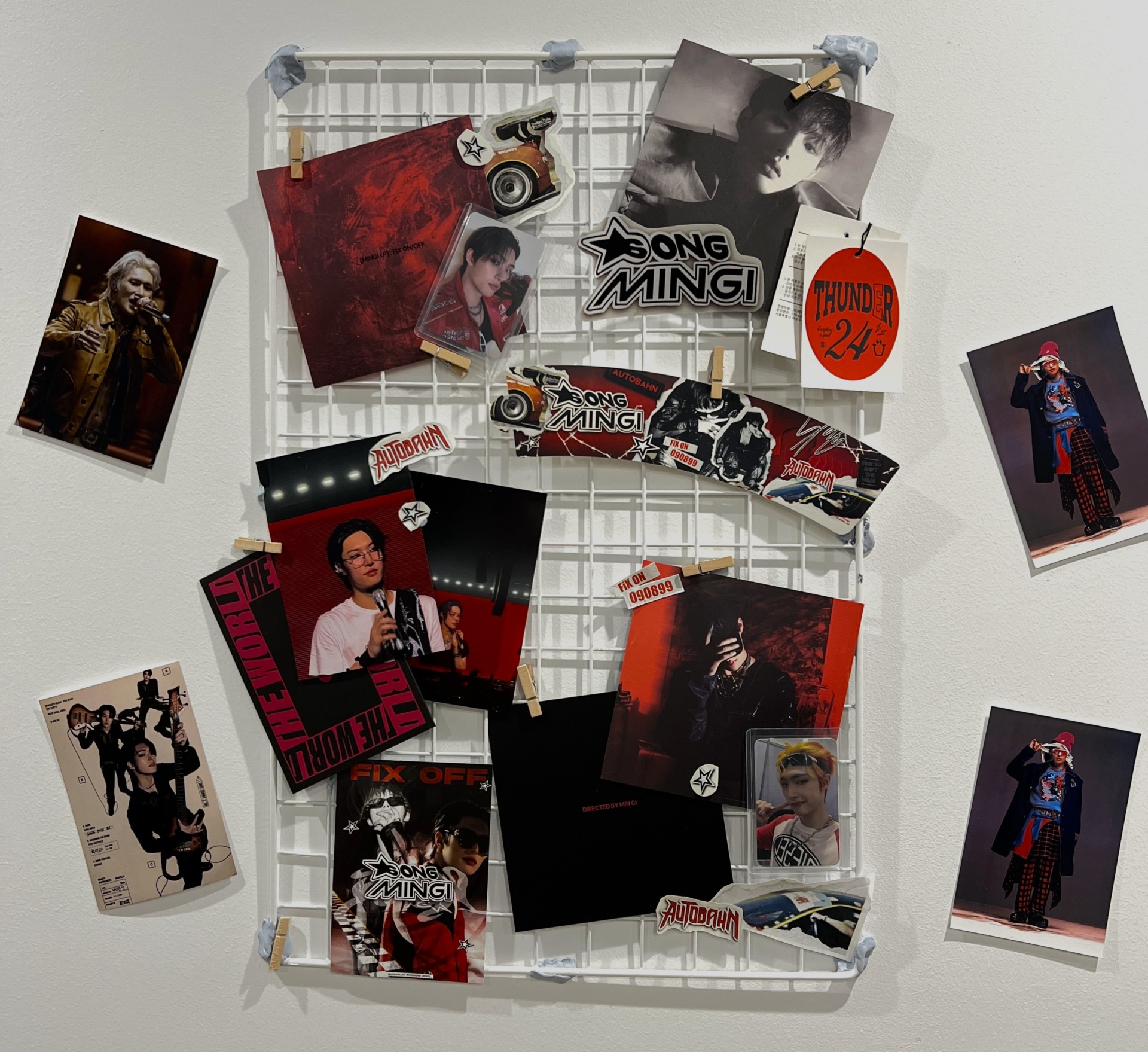
Some of Maddy’s personally-designed K-pop freebies. Image: Ying Xin.
Williams added that contributing labour can serve as an alternative to financial support.
“If fans are not supporting a group financially, they may support it through effort to demonstrate authenticity,” he said.
Commercialisation has turned K-pop into a global industry. Cupsleeve events, however, offer an alternative where participation is built on connection rather than consumption.
BTS member Kim Seok-jin reflected on this community spirit in a recent interview with Audacy Music.
“Seeing long-term fans who’ve been on this journey with us help new fans settle in makes me feel so proud, and touched,” he said in the interview. “Our fans really are such amazing people.”
Maddy agreed.
“To me, it’s a way of not only supporting the artist but sharing the love and appreciation with like-minded fans, creating a community and experience that all can enjoy,” she said.