Filipino-Australian filmmaker and photographer James J Robinson has been booked and blessed since his debut feature film, First Light, premiered at the 2025 Melbourne International Film Festival, where it won the Blackmagic Design Best Australian Director Award. Starring Ruby Ruiz as Sister Yolanda, First Light follows a nun in a rural town in the Philippines who discovers a criminal conspiracy that challenges her faith.
Robinson and his film have been on what he calls “a full world tour” ever since, gaining momentum and acclaim on the festival circuit.
“It’s been a really fun journey, if not exhausting,” he said. “There’s an endless well of excitement for me with the film.”
Fresh off a screening at the Sydney Opera House as part of the 2026 Sydney Film Festival, Robinson spoke with The Citizen’s Michael Saliba about First Light, faith, and the state of the Australian film industry.
MS: Take me back to when you thought of this idea and knew this was something you were actually going to pursue. What was the first big pitch that you had to do?
JJR: I was coming in as a director who had done two shorts, but never really dived into the shorts thing as much as others have. And so, I was pitching to production companies with a pretty crazy script, being like, “I want to make this with an Australian production company, but we’d be shooting all in the Philippines, fully in Tagalog with a full Filipino cast”. So, it was a difficult pitch.
And then I landed with my producer, Gabrielle Pearson at Majella. Together, our first big pitch was with Screen Australia to secure development financing. We approached it with the very helpful attitude of “look, let’s try, and if it doesn’t get funded, we’ll stop—I’m sure we will have met a lot of people along the way”.
Going into it with that mindset, we were very open to feedback and went with the flow. So, the pitches were scary, but we were also like, “if we get a no, it’s fine, how great to pitch at all”. But we just didn’t get nos, and all of a sudden we’re making it.
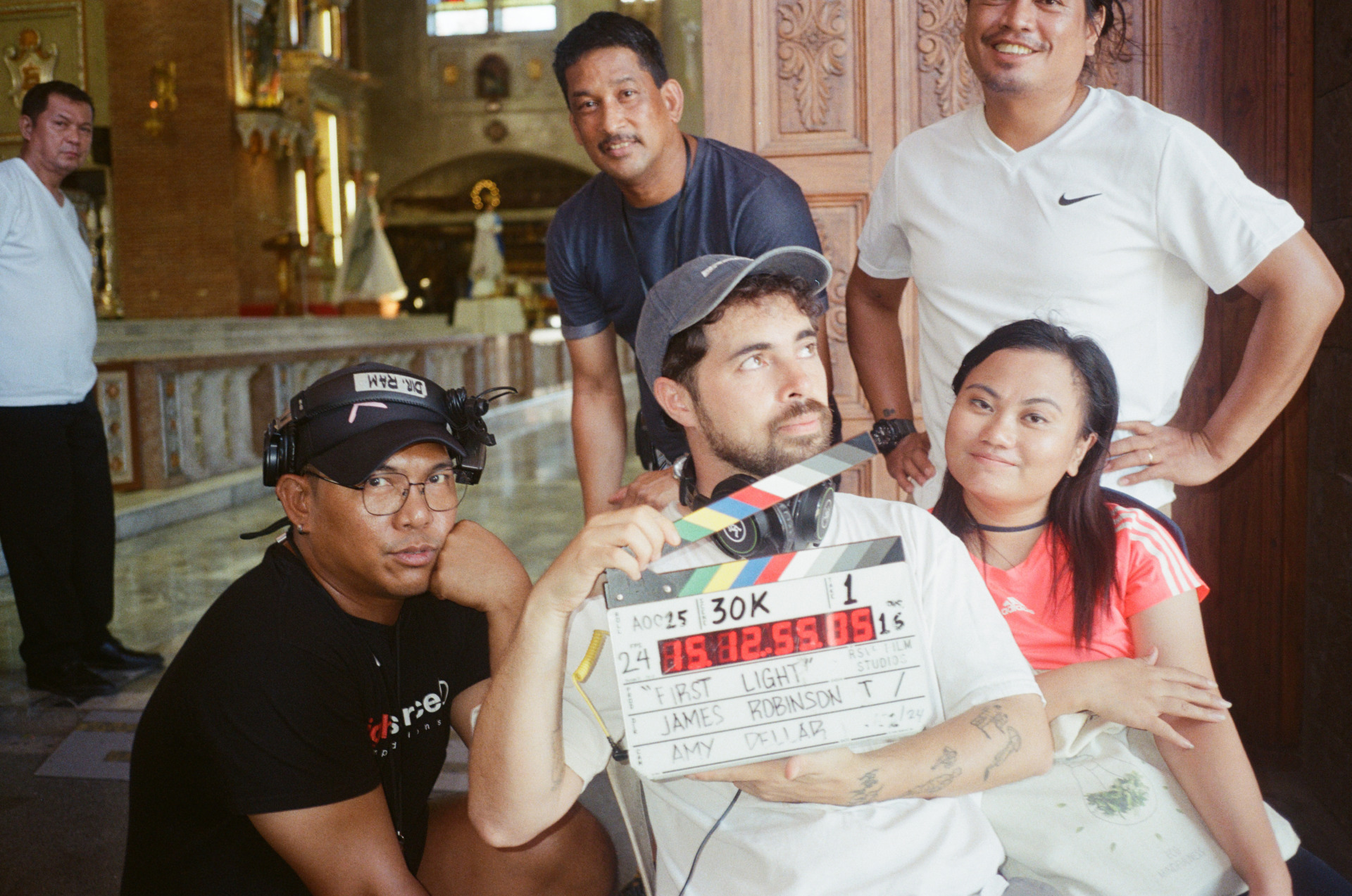
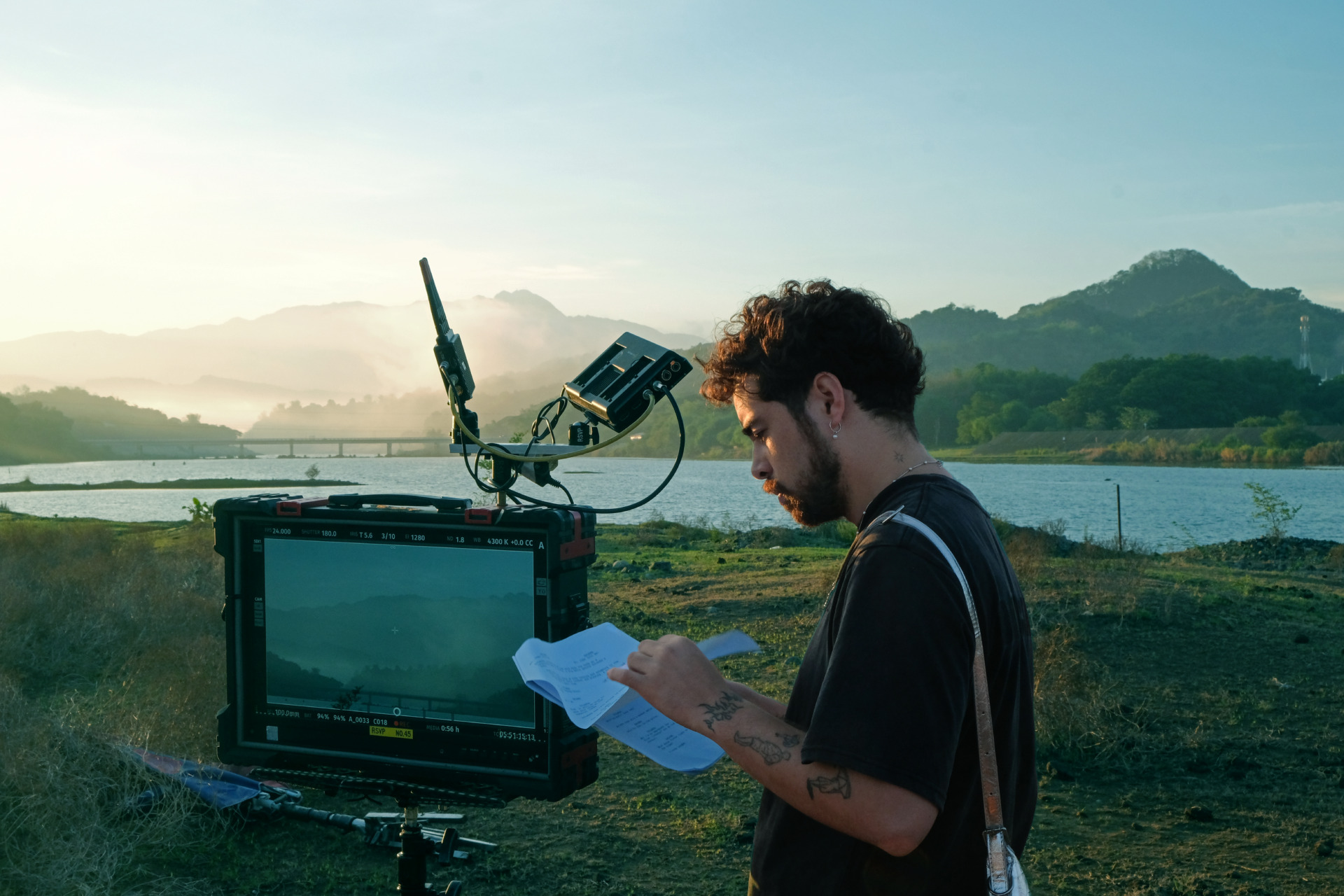
First Light (2025) director James J Robinson on-set with crew. Supplied.
MS: You’re also a photographer who’s worked with some of the biggest, most influential stars. Did that experience help with your confidence in being on set?
JJR: Having worked with some of those bigger names definitely made me go in with a lot of confidence. I knew people trusted me more going onto that set because they knew the background that I have. So yes, it made me relax a little bit more and not feel the imposter syndrome come up. But it’s funny, when funding the film, certain financers that we spoke to were like, “oh my God, the people you’ve worked with, would you try and cast like Sydney Sweeney for this film?”
MS: What? No, let’s not put Sydney Sweeney in this movie, please.
JJR: It was crazy! And then in the meetings, I’m like, “Yeah, cool, I can definitely reach out to her team”. But like, obviously not…
But that was a conversation that had come up a little bit, of “why don’t you leverage the access that you have to certain celebrities to make your first film with a celebrity?” Yes, it is one way to get a film off the ground as a first-time director, but I really needed to hold onto what felt right for this story, and I think seeing too many recognisable faces for some of these roles would have been distracting.
It was my first time directing actors on this scale and diving into character, so I really wanted to work with a cast who I knew I could trust. It was really beautiful being able to work with some of these actors, whose work I had come across having grown up in a Filipino household, to actually sit down with them and have their expertise. I just approached it as much as possible as a student, in that everything was always a question. They’ve been working for so many decades, so it was such a blessing working with them because I really got to learn a lot.
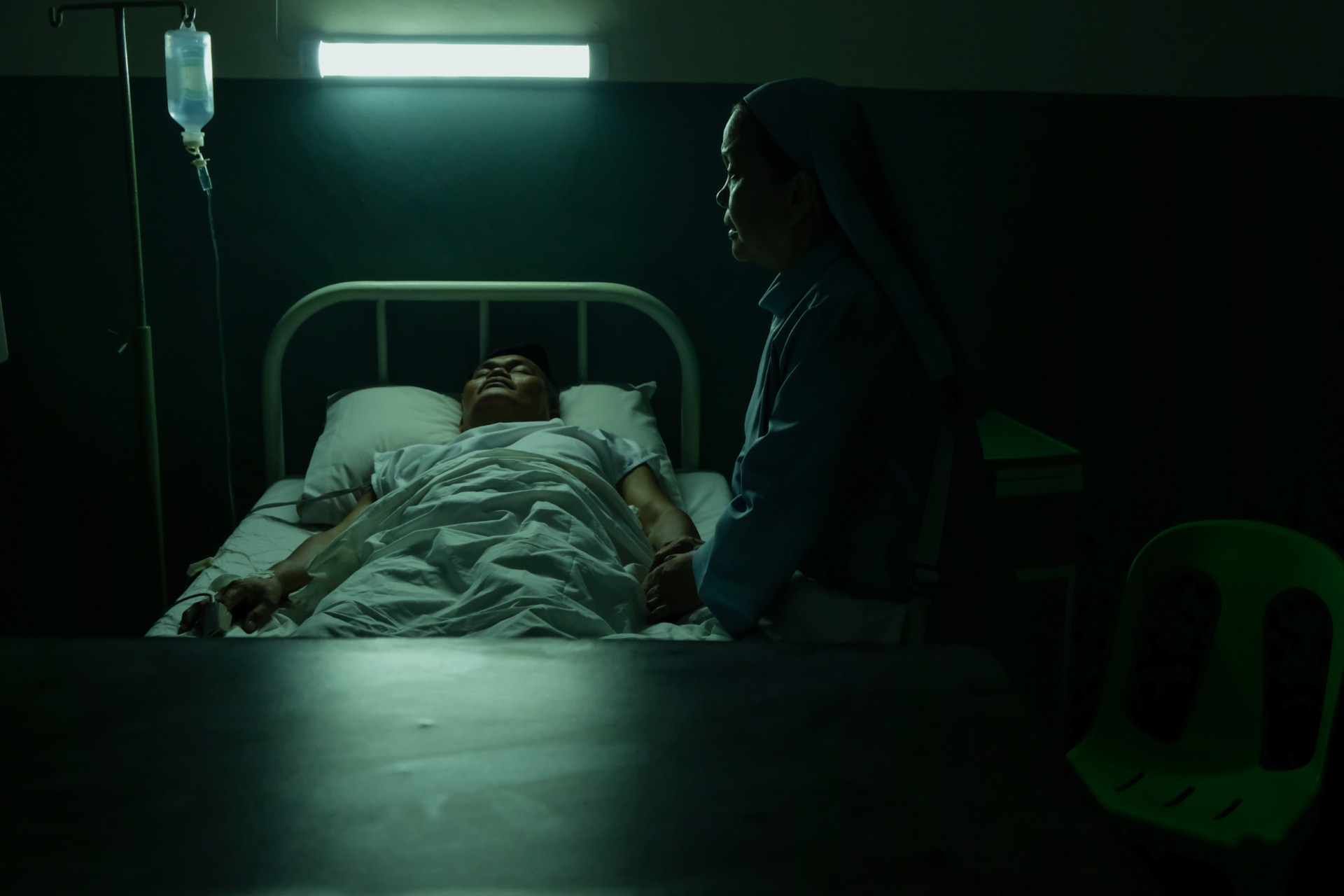
Ruby Ruiz (right) as Sister Yolanda in First Light (2025). Supplied.
MS: You’ve described writing this film as very cathartic. I also grew up queer in a Catholic family, so I wanted to ask you about one moment that caught me off guard. It was when one character, after a serious accident, asks Sister Yolanda “Am I going to hell?”, and she responds “I don’t know”. That really struck a chord for me, as it seemed like there was a lot more going on beneath the surface. What was it like writing that scene?
JJR: That was the hardest scene. It was the scene that we were writing up until even when we had to shoot it. That was a hard one, and I’m so glad you pointed that out, because I haven’t actually spoken about that line specifically. But yeah, that’s obviously where it came from. That fear of hell and retribution and punishment is the foundation of all Catholic trauma therapy as queer people. And I think that was the point of difference when I was younger, where I was just like, “Oh, whoa, I’m going to hell, and I haven’t done anything wrong, just for being who I am”.
It was very cathartic to write that sort of stuff and also hard to write it because, in this ideal world, I want Sister Yolanda’s character to be like, “No, you won’t”. But I also have to understand that there are these belief systems and while I don’t believe in them anymore, someone who’s a nun obviously does. And so I need to be really careful about how I characterise that sort of stuff.
But I think in that moment, seeing that hesitation and that doubt is really interesting. And my lead actress, Ruby Ruiz, had a queer brother as well. And so she also had this queer understanding of Catholicism that was really unique and difficult to find in someone from that generation. So writing that scene, yeah, it was hard and ultimately cathartic in the sense that when I got it out on the page, it felt like—without being too corny—that’s a more experienced version of myself kind of comforting this younger one that is terrified about hell.
I do describe this as a really personal film. Obviously, I’m not a nun living in the mountains in the Philippines, but something like that scene, that is an internal conversation that happens within two sides of myself put onto screen through the metaphor of a nun and a young child dying.
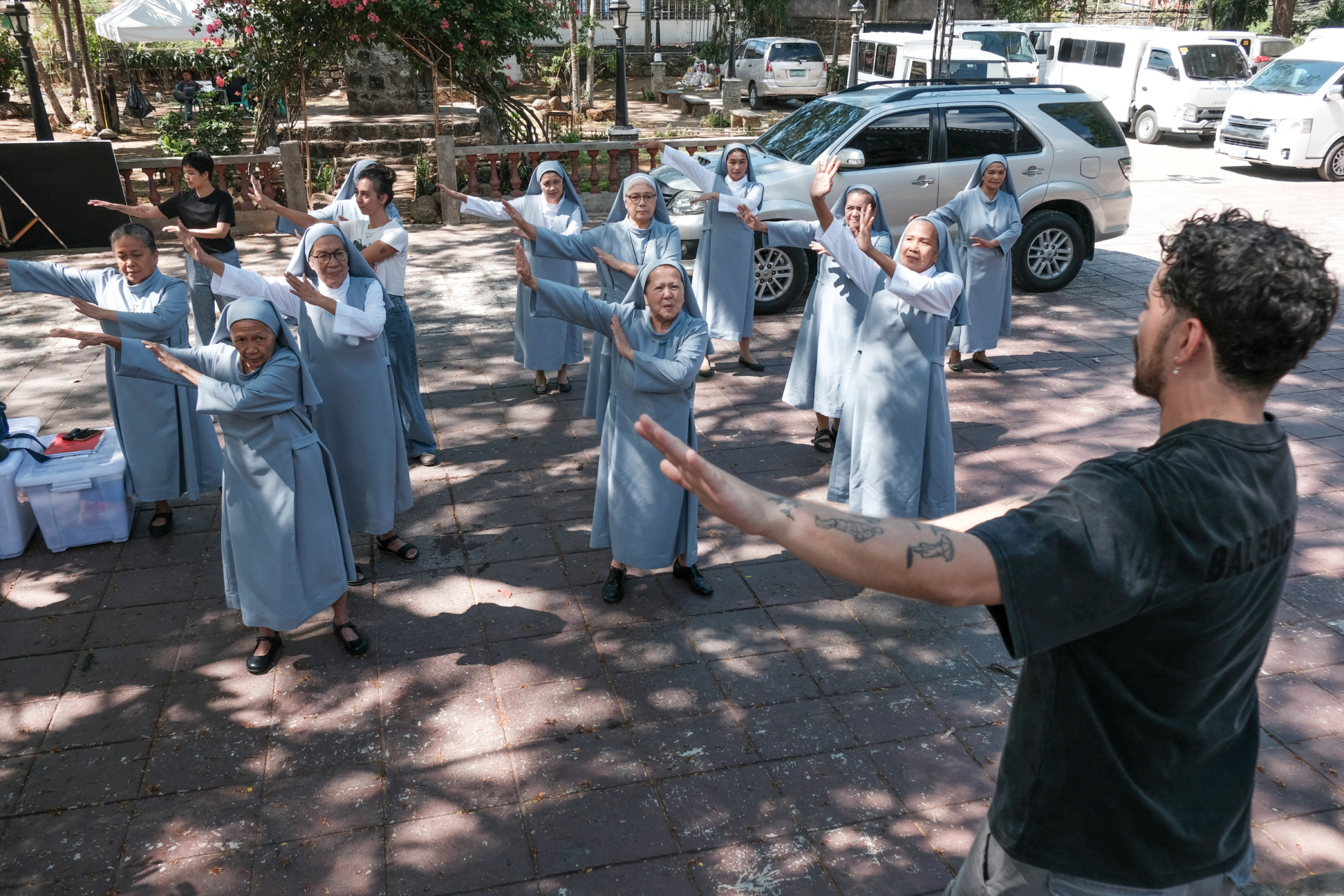
First Light (2025) director James J Robinson on-set with cast members. Supplied.
MS: Congratulations on winning the Best Australian Director Award at MIFF, which came with a $50,000 cash prize and $28,000 camera from Blackmagic. What does winning that prize allow you to do creatively that was previously out of reach?
JJR: There has been a perception that I’m a photographer who’s trying out directing for the first time, but really directing and film is what I studied from the beginning. I’ve been writing screenplays since well before I started taking photos. And I think what has really helped with that award is maybe a level of validation that I’m actually a director, and it hasn’t been a stepping stone or something.
But beyond that, it has been so much easier to get future projects off the ground now than it was with the first one. I mean, I was being a bit crazily ambitious with the first one, wanting to shoot everything overseas, but it’s been a lot easier to raise financing for that kind of stuff.
And also, as an artist, I very rarely have savings. I do disability support work as well to make up for the periods when I’m not making money. To actually just be afforded the time to take a bit of a break and write slowly, that’s something that award has done.
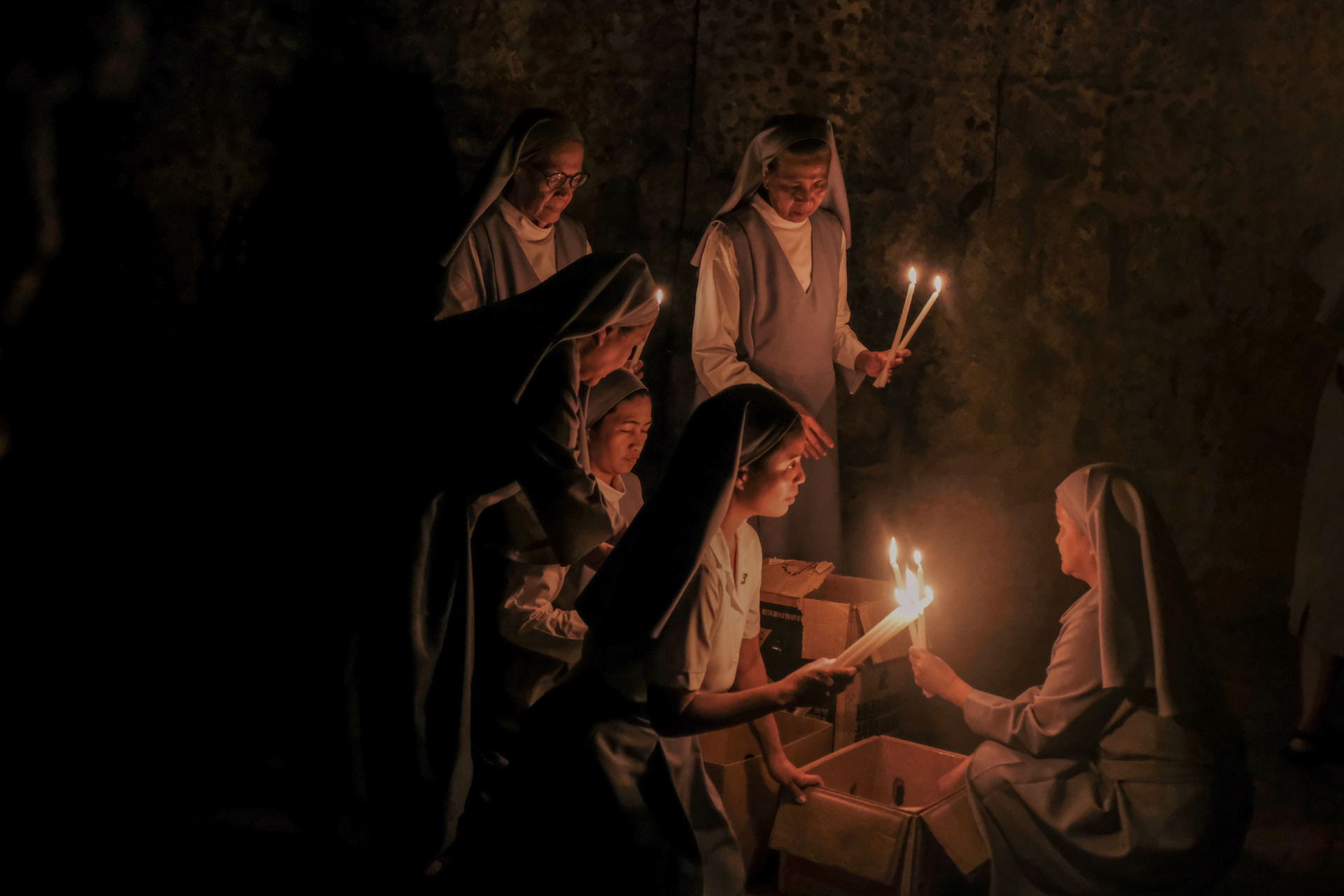
Production still from First Light (2025). Supplied.
MS: A current conversation in the Australian film industry is that Australia has a disconnect between film as art and film as a product, with the industry being seen as a business that you can track using spreadsheets. Do you have any thoughts or reflections on that?
JJS: Yeah, I think there are two sides to it because the purest side of me is very much like “vive le cinéma!”—keep it art house and keep it wild and crazy. But at the same time, the unfortunate reality of living in a capitalist world is that there needs to be a financial interest in getting these things off the ground.
While it’s easy to sit on one side of the fence and be like, “I don’t think I ever want to direct a blockbuster”, at the same time, I understand that that side of the industry needs to exist to fund taking risks. My film was hard to get off the ground, and I think that, had the people who supported it not had success with other films in the past, it wouldn’t have ever been taken up.
But there is this other thing as well, where people are being like, “original cinema is dying” and “these films aren’t making enough money,” but there is something very actionable that we can do as audiences, which is just make sure that we go out and support independent filmmaking.
But yeah, I think there does need to be a balance. There have been so many great Australian films in recent years. My favourite Australian film last year was Pasa Faho, and it wasn’t a blockbuster film either. Stories are starting to come out of Australia in more unique ways. Every day, I hear about a new friend getting something financed, so there’s no part of me that’s worried about the industry’s future.
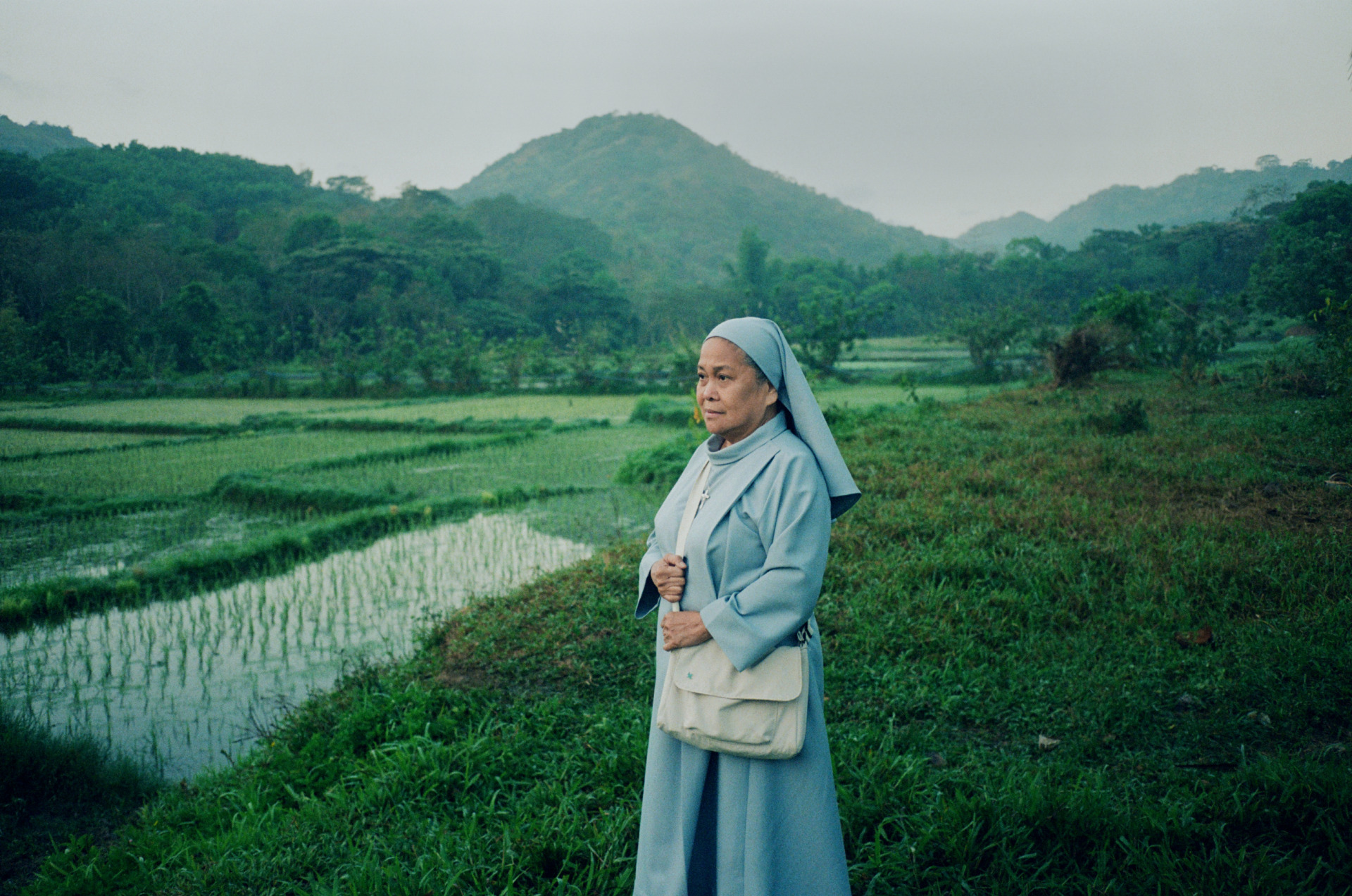
Ruby Ruiz as Sister Yolanda in First Light (2025). Supplied.
First Light is screening in select cinemas from 9 July 2026.
* Some responses have been edited for length and clarity.