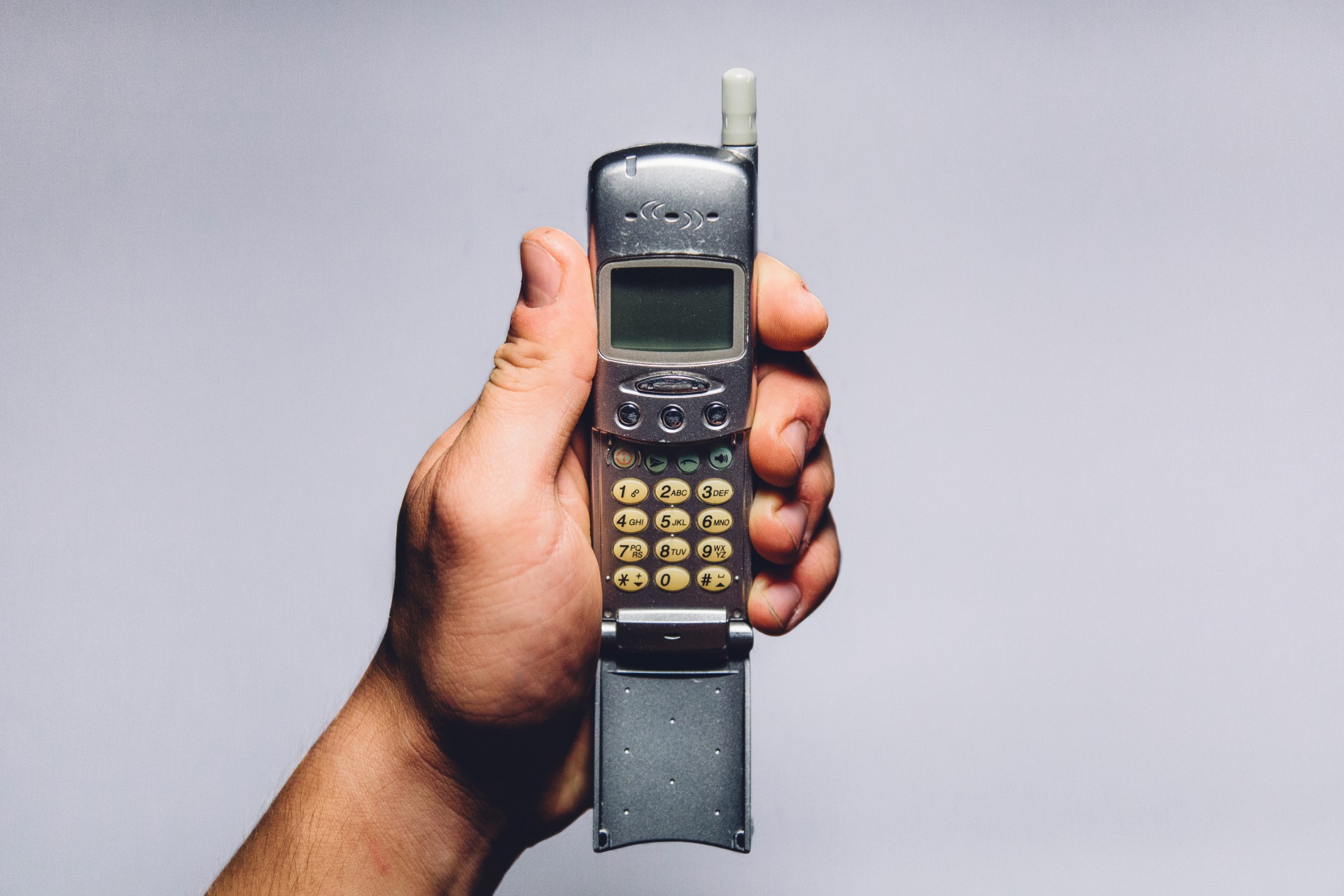
The mobile phone. Once the weight of a small brick, now a pocket-sized electronic multi-tool at your disposal. A constant fix of blue light and dopamine hits, frequently compared to a bump of cocaine.
None of this is a new revelation—phone addiction has been discussed for the past decade, and the conversation is only getting louder. Just this year, a woman was awarded $US6 million in damages from Meta and Google when the companies were found liable for intentionally building addictive social media platforms that harmed her mental health.
Blue light glasses to help with screen-induced eye strain are now a common add-on when picking up new lenses. The intertwining of tech and people has been building for years: AI girlfriends, 24-hour Twitch streamers. Some countries are now responding with tougher restrictions to help break the habit, including Australia’s under-16 social media ban.
But as more of life becomes embedded within technology, a section of society is looking to unplug.
Their reasons vary, but the movement is becoming increasingly popular. If you find yourself at a house party in any left-leaning suburb, you’ll likely be in the company of a Nokia-bearing 20-something who has opted into the “dumbphone” movement.
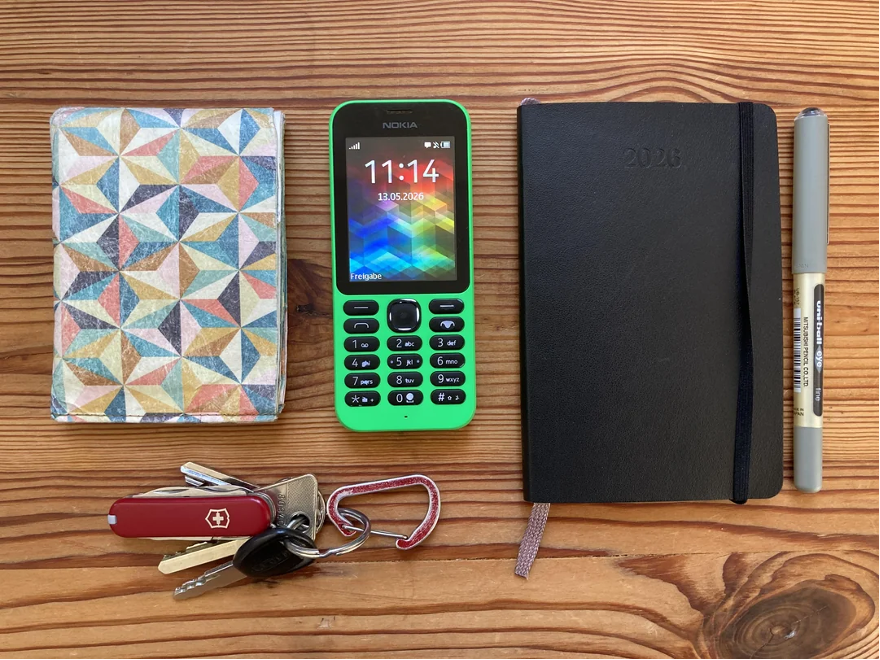
Reddit user u/menguinponkey’s everyday carry, shared to r/dumbphones. Source: r/dumbphones
The Reddit forum r/dumbphones is a mecca of information and how-to guides for those considering the transition. The page brings in 180,000 weekly viewers and upwards of 2,500 weekly contributors.
It is no longer a niche corner of the internet, but a genuine community of people actively working out how to want less from their phones. Users frequently share their EDC (everyday carry) layouts of their dumbphones and replacement devices that keep them unplugged or disconnected from the modern media world.
The word dumbphone resists a clean definition. It can mean a basic handset capable only of calls and texts. It can mean a keypad device running a stripped-back version of Android. It can mean a smartphone deliberately hollowed out, social media deleted, notifications silenced, grayscale screens. What the name reflects more than one device is the intention: to have a phone do less.
David Soraeur, a Sydney-based dumbphone user who runs a website reviewing devices for an Australian audience, has watched the space steadily grow.
He traces a turning point to the COVID-19 pandemic, when screen time became on par with sleep time, and the costs became harder to ignore.
“It definitely appears to be growing—there’s a lot more people interested,” Soraeur says.
He says few people make the switch in one straight leap. Most land somewhere in the middle.
“People try to live a somewhat normal life and get some sort of hybrid where they can have the basics,” he says.
“They can function every day but not make it too appealing to use.”
University of Melbourne digital ethicist Marc Cheong says the dumbphone movement is part of a broader cultural shift.
“The trend of going back to ‘the way things were’ is part of a move away from the always on, hyperconnected digital world in which we live,” Cheong says.
He says switching to a dumbphone can “help with mindfulness and focus, especially when faced with a barrage of notifications daily”.
The scale of that distraction is measurable: “A recent study found participants receive up to 90 notifications per day,” Cheong says.
Everyone has their own reasons for making the leap. Reddit users have expressed concerns about their data, with some only wanting to use dumbphones that run on much older servers that aren’t linked to larger tech companies. Others have chosen to adopt dumbphones for much more personal reasons.
Minnesota 27-year-old Serina had been avoiding the screen time tab on her phone for months out of what she describes plainly as “shame”. When she finally looked, the daily average was only a few hours—but the arithmetic of it, compounded across a lifetime, landed differently.
“When you think about a few hours a day, every day, for the rest of your life, then it really added up,” Serina says.
What followed was a cycle she describes plainly. The wasted time made her feel behind. Feeling behind made her feel bad about herself. Feeling bad made her reach for the phone.
“I wanted to be on my phone less, but I didn’t have any self-control and so I hated myself for it, and then I’d turn to my phone while trying not to feel big emotions,” Serina says. “It just kept on going around and around.”
But opting out is not available to everyone equally. The dumbphone movement, for all its counter-cultural energy, carries a quiet privilege. It works best for people whose jobs don’t require constant availability, whose social circles will adapt, and whose lives have enough slack to absorb the resistance of doing things the harder way.
Serina has an answer for those who think it’s too hard, who say they need their phone for work emails, or banking, or music.
“Keep your smartphone at your desk, delete everything but work, and have a flip phone,” she says.
“Consider owning your own music again. MP3s and DAPs are pretty cool.”
She admits that switching to a dumbphone has come with some trade-offs.
“The biggest cost I’ve had to pay?” she says. “Learning how to remember directions again.”
Serina is clear-eyed about the political dimension of her decision.
“It is a deeply personal choice,” she says. “It is a political statement—going against one of the most common grains of society is a statement.”
Serina has been vocal about the damage social media has done for years, but her friends have largely shrugged.
“They see it as just another thing their ‘crazy’ friend won’t stop going on about,” she says.
Image by Sześcian from Pixabay
Opting out asks something of everyone around you, not just yourself. Serina’s answer to that issue is characteristically direct.
“The people I care about will call,” she says.
“If people don’t care enough to call, I don’t think they mattered much in the first place.”
For Australians wanting to make the switch, the options are narrower than they might expect. The 3G shutdown has left many imported devices blocked by local telcos. Soraeur imported one himself and found two out of three carriers simply refused to recognise it.
“The only phones that are safe are those sold here, from JB Hi-Fi, Officeworks, or Australia Post,” he says. “All the imported phones are very risky.”
For around $200, he says, you can get a feature phone running a stripped-back version of Android—enough for WhatsApp, a calendar, and a transit app. Not a pure dumbphone, but a start.
Soraeur’s unlikely hero of the movement is the flip phone. Not for nostalgia, but for physics.
“That action of actually opening up a phone to access the screen has a really massive impact,” Soraeur says. “You’ll end up using it 15 minutes a day, because it’s just that extra friction.”
In a world where saying the word “seriously” too loud or knocking a table will set your phone off, the concept of a hinge turns out to matter. Perhaps Gen Y was onto something with their wallet phone cases—though they potentially missed the mark when they started wearing their phones as crossbody fashion statements, forever leashed in the most literal sense to their device.
The dumbphone movement is not, at its core, about the phone. It is about what happens when people decide the cost of constant connectivity has finally outweighed the convenience.
For some, that looks like a $200 feature phone from Officeworks. For others, it looks like a Walkman, a Kindle, a digital camera, and a flip phone carried in place of the latest iPhone.
However it looks, the intention is the same: to make the phone less compelling. To put something—anything—between you and the screen.