When Chief Esau Kekeubata’s community in the mountains of Malaita, Solomon Islands, began working with Australian scientists to protect their forests in 2016, he says the ancestors objected.
Their grief went back to 1927, when Australia sent a warship to help British colonial authorities punish the Kwaio people for resisting a head tax. At least 60 Kwaio people were killed.
Kekeubata said the ancestors asked him: “Why you want to work with white people? Because white people are killing us. And there’s nothing done.” Work with scientists could not begin, they told him, until there was peace and reconciliation.
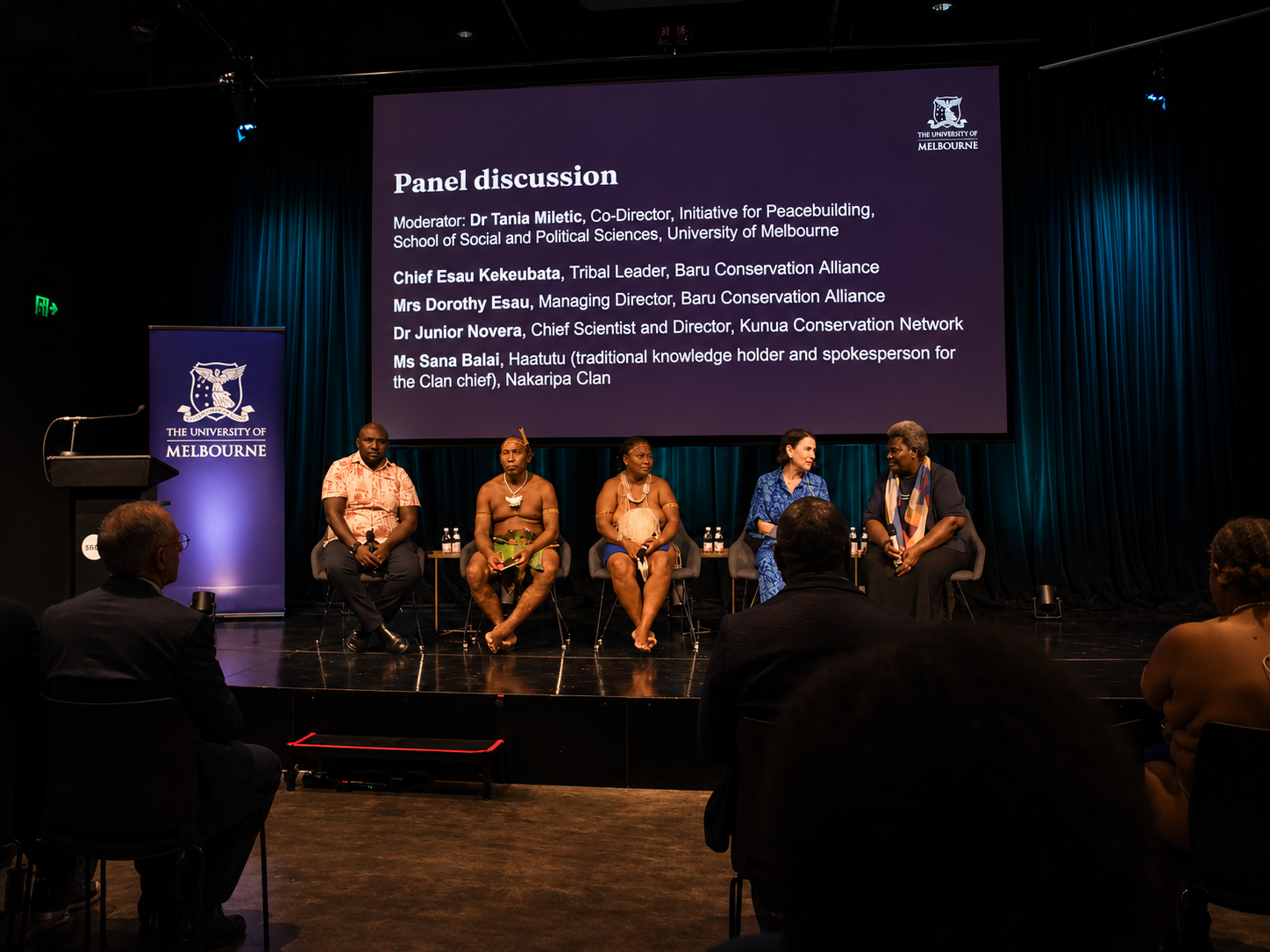
Kekeubata, who co-founded the Baru Conservation Alliance, told the story on Tuesday evening at the University of Melbourne’s second Oceania Institute oration.
The evening, at Melbourne’s Science Gallery, launched the Melanesia Bio-Cultural Network, which brings together 10 community conservation organisations across Papua New Guinea, Bougainville, Solomon Islands, Vanuatu and New Caledonia.
Leaders from Malaita and Bougainville, two places marked by conflict involving Australia, described how conservation and peacebuilding had become inseparable in their communities.
“Like 1927 for me, just like yesterday. Just like yesterday. It’s unsolved,” Kekeubata said.
Professor Tim Flannery, climate expert, mammalogist and 2007 Australian of the Year, first worked in Kwaio country in 1985. When he later raised money for conservation there, he said, the 1927 conflict stood in the way.
“We had to put an end to that war before we could do our community and conservation building,” he said.
The alliance surveyed 16 large villages and 10 mountain hamlets and found 95 per cent of people surveyed supported reconciliation. Kekeubata then wrote to the Australian and British governments.
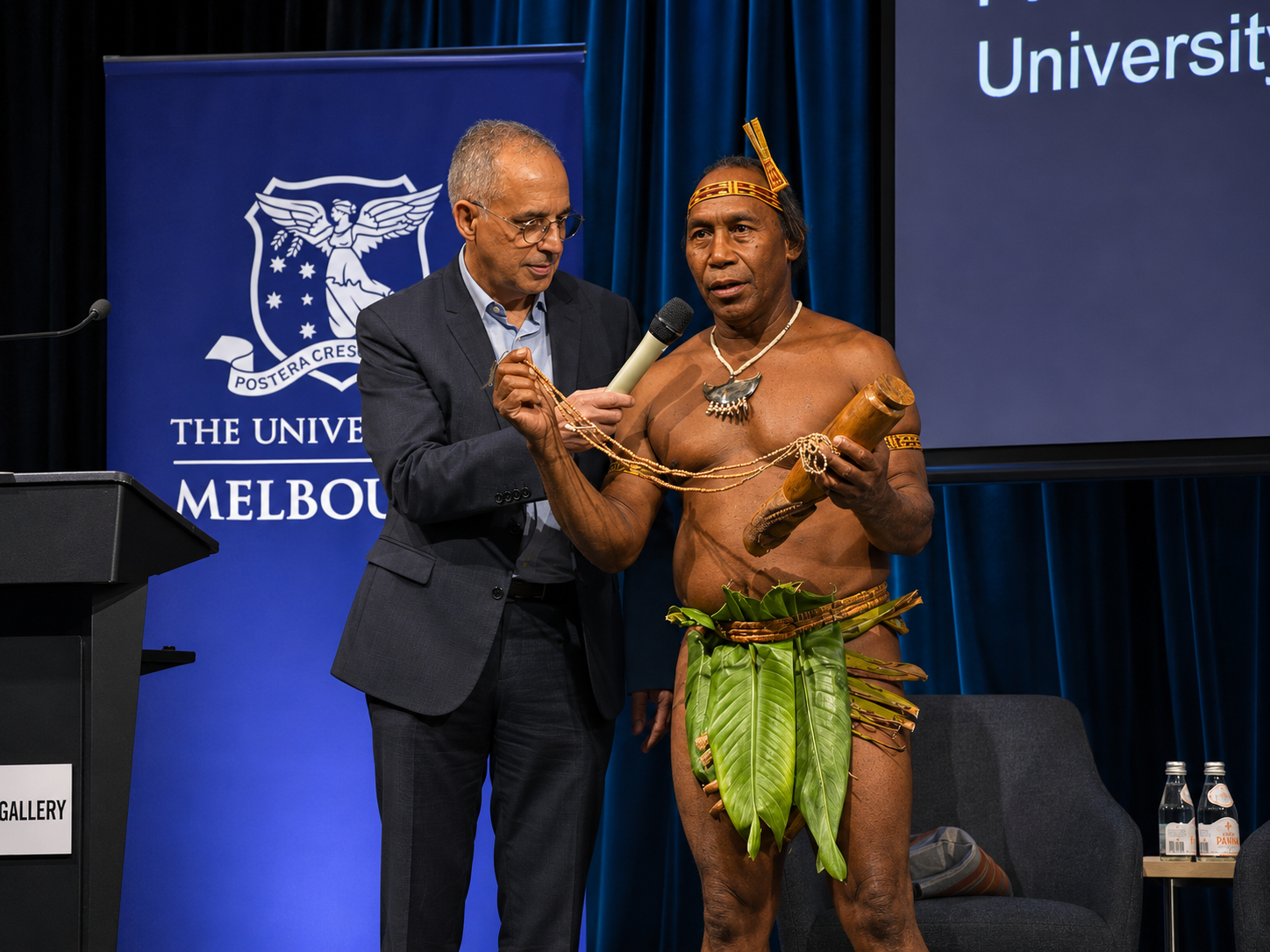
Chief Esau Kekeubata presents Kwaio shell money to Professor Frank Vetere, the University of Melbourne’s Pro Vice-Chancellor (Global), at the Oceania Oration. Photo: Preeshita Shah
The British response flatly refused any responsibility for making amends, said Kekeubata. But in 2018, an Australian delegation including Flannery joined Kwaio leaders for a reconciliation ceremony.
Dr Jeffrey Noro, who leads the new network, said that ceremony was what made real collaboration between Australian scientists and the Kwaio possible. Many research papers have come out of it since, he said.
In Bougainville, grievances over the Panguna copper mine helped fuel a decade-long civil war.
Mary-Louise O’Callaghan, a Gold Walkley-winning journalist who covered the war which raged from 1988 to 1998, showed a 1969 photograph of Rorovana women resisting colonial surveyors preparing their land for the Panguna copper mine.
“What the women were resisting was not simply the loss of a piece of land,” she said. “They were resisting the destruction of their relationship with the land.”
The Australian administration “created the legal and political framework that forcibly wrested control of the Panguna land” from its traditional owners, O’Callaghan said, and an Australian company, Conzinc Riotinto of Australia, now part of Rio Tinto, profited.
“We should also be clear as Australians about Australia’s historical role and ultimate responsibility in all of this,” she said.
She said grievances over pollution, land and revenue erupted into a war in which thousands died and a generation of children went without education.
“Peace cannot simply be understood as the absence of conflict,” she said.
Two of those children were on stage. Dr Junior Novera, director of the Kunua Conservation Network, was in grade two when his schooling stopped. He missed five years.
“I’m also doing conservation as a healing process for myself,” he said.
Noro was in grade nine when the war began.
“I was running around in the bush with a rifle at my back, fighting a war as a child,” he said, when he should have been in school.
Kekeubata, Dorothy Esau and other members of the Baru delegation opened the evening with Kwaio music and dance. To get to Melbourne, the group first walked two days down the mountains to the coast, Noro said.
For the Kwaio, protecting land also means protecting culture, said Esau, the alliance’s managing director.
Young people lose it when they leave for school in town, she said, so the alliance runs outdoor cultural education for students aged 12 to 18. One of the evening’s performers, who grew up in town, learnt the music there.
“Genealogy and culture, it’s not a separate thing. They always go together,” Esau said.
“In Melanesia, we are many people,” said Noro, who has built the network since 2024. “We speak many languages, but we have only one ocean.”
Closing the night, Noro said conservation is not new in Melanesia, and relationships “must come before research”.
“You cannot conserve a landscape that is at war in itself,” he said.
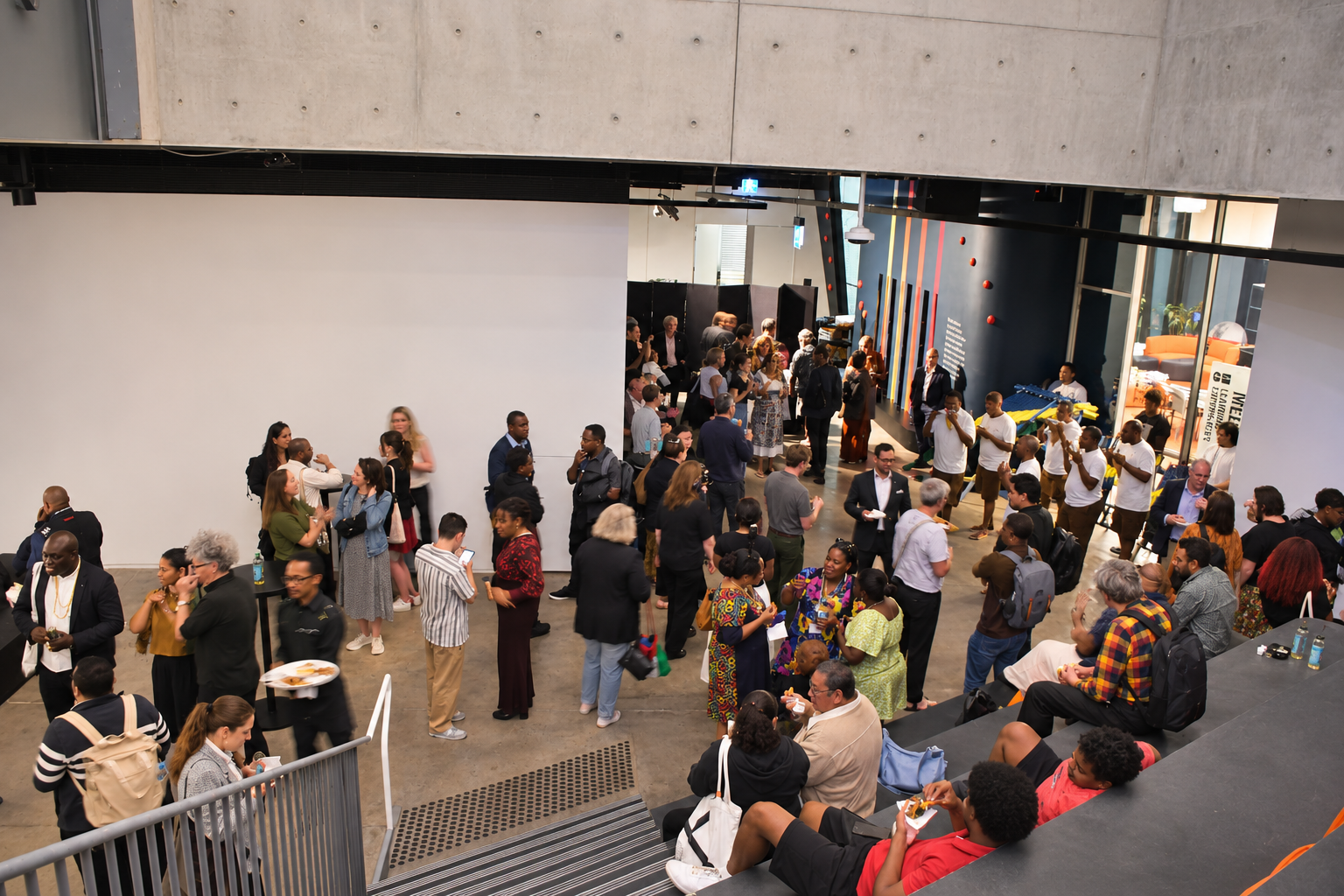
Guests stay on after the oration at Science Gallery Melbourne, as panpipers play on the right. Photo: Preeshita Shah