
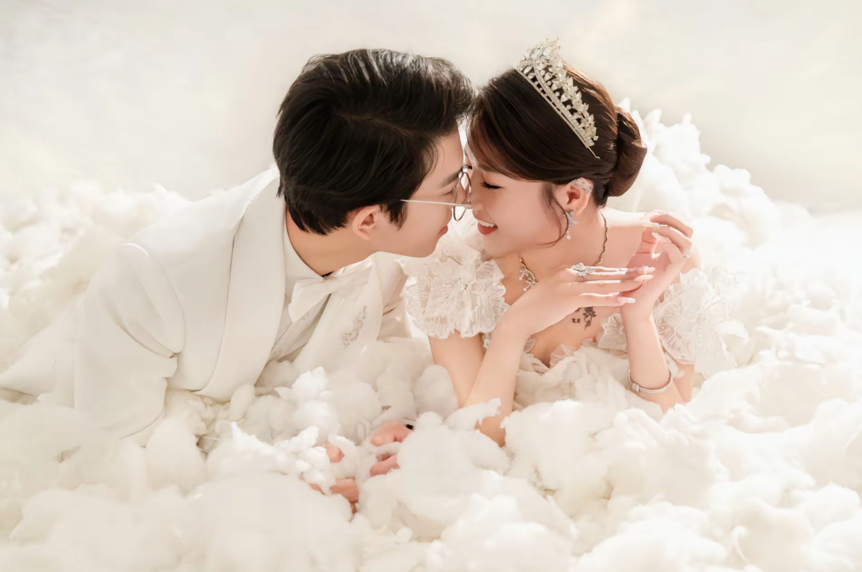
The groom waited for his bride with flowers in his hand. Unlike a traditional Chinese wedding, this groom was decorated with embroidered balls and red satin.
According to the customs of a matrilocal wedding, the groom needs to dress up more grandly. This is also reflected in the decorations, with every place at the wedding venue decorated with flowers, balloons, red lanterns and the double happiness decorations – ornaments that feature the Chinese character for “double happiness” (囍).
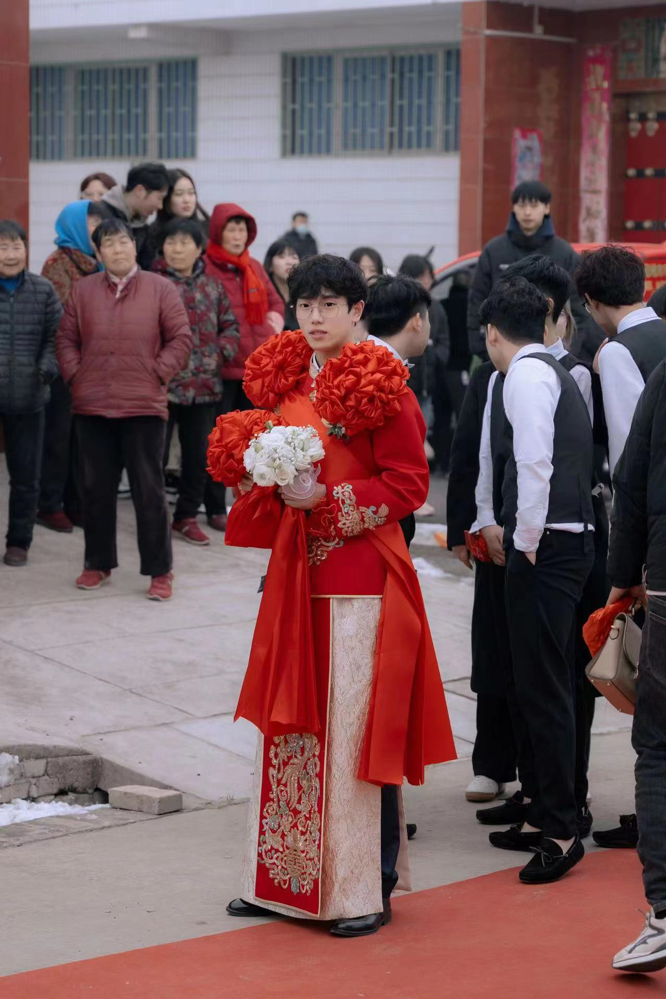
Gao Yibo waits for his bride
The groom, Gao Yibo, was led to his bride by the elders of his family. After the ceremony he and his wife Ma Kaige walked through the crowd holding hands.
A year ago, the couple made a decision that surprised their friends – Gao chose to marry into his wife Ma’s family and become a ‘live-in son-in-law’, also called “zhuixu”.
“I don’t think it (matrilocal marriage) is a sensitive topic. It is just a form of marriage. What’s more important is we can be together. We are not different to other ordinary marriages.”
– Gao Yibo
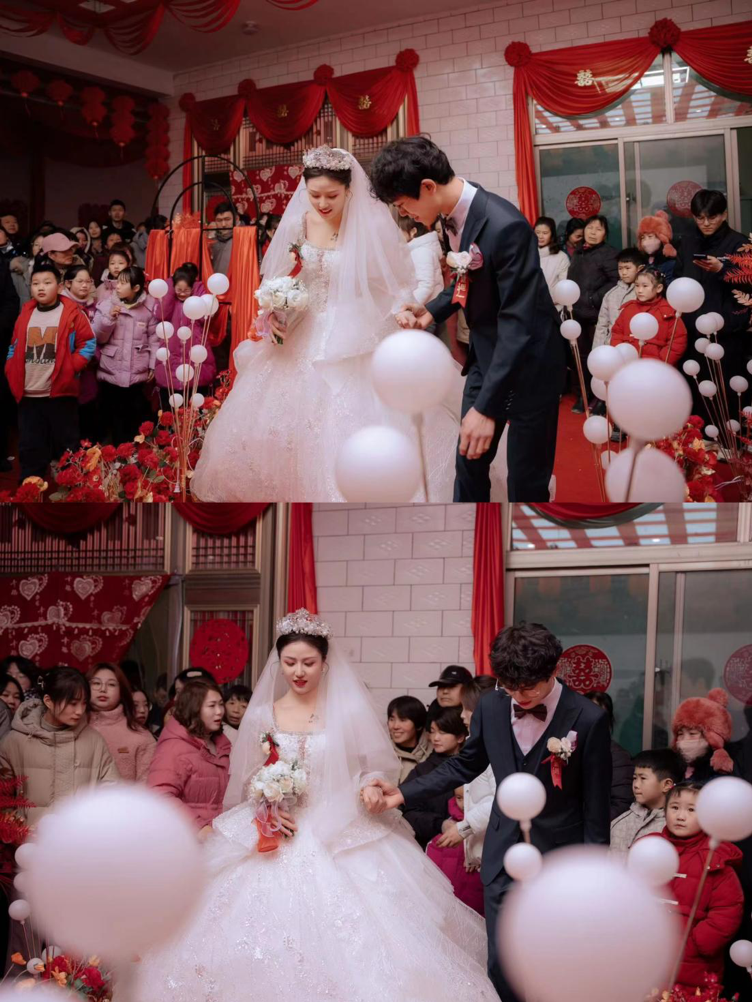
Gao Yibo and Ma Kiage on their wedding day
Changing gender roles in China
Traditionally, after marrying, a couple in China choose to live with the man’s family or the couple live alone. Much like in the western tradition, the children take the man’s name and inheritance is often thought the male line.
However, zhuixu are men who live with the woman’s family after marriage. Unlike the traditional Chinese marriage, their children usually take the wife’s family name and the men take more family responsibilities.
A matrilocal marriage signifies a change in the power between men and women. In economically developed areas of China, young people are increasingly viewing it as a modern and realistic marriage option.
Zijuan Meng is an expert on gender issues in China. She created the Borderless Spaces book community. An all-female community that focuses on women’s opinions and roles. Zijuan is interested in feminism in matrilocal marriages.
“Chinese society is undergoing rapid economic development and cultural change. The rise of matrilocal marriages shows the changing attitudes to marriage of the younger generation,” she said.
“Matrilocal marriages are beneficial in redefining the roles of men and women in traditional marriages. Men will devote more energy to the family. It helps to change the traditional division of labor between the man and the woman.”
“In such marriage models, the power between husband and wife also becomes more equal. Women in matrilocal marriages live with her parents. They are more easily to receive resources and emotional support from their original family.”
High property prices, cost of living pressures, rising awareness of gender equality and changing concepts of marriage are all factors that influence young Chinese people’s choice of marriage and have led to a revitalisation of this centuries old tradition of the matrilocal marriage.
Not everyone loves the idea
Gao Yibo and his wife, Ma Kaige, met in junior high school. They spent ten years together, from the time they fell in love to when they married.
They invited many relatives and friends to their wedding. They also posted their wedding photos and wedding video to Tik Tok, and unexpectedly gained 1.48 million likes.
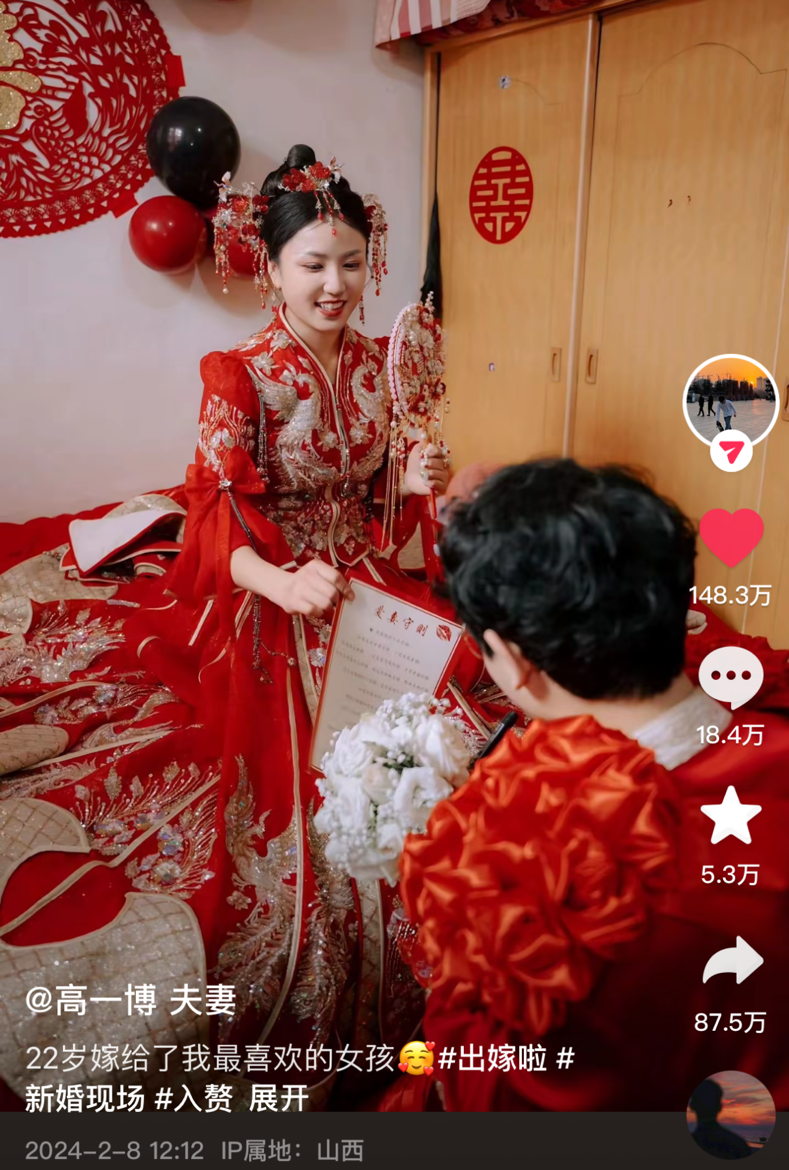
A screenshot of Yao Gibo and Ma Kiage on TikTok
Online discussion of zhuixu is becoming popular and, as a result of their wedding, more and more people are discussing this marriage model.
“We are surprised that our wedding has been seen by so many people,” Gao said. “The matrilocal marriage is not a traditional marriage. It conflicts with the traditional concept of marriage. People may think that zhuixu is very rare in modern society, which is the reason why it has such a high number of likes and views.”
“The comment section of the wedding video is full of blessings, many strangers followed us because of this video,” Ma said.
More than 180 thousand netizens blessed them through comments and private messages.
“Matrilocal marriages are a common marriage pattern in Shanxi Province., but people in other areas are not familiar with it. People are curious about our marriage.”
– Gao Yibo
However, this matrilocal couple also received some hostility.
In September, a netizen abused Gao through a private message, saying his marriage was a shame to all Chinese men and Gao’s marriage had caused Chinese men to be mocked on the Internet.
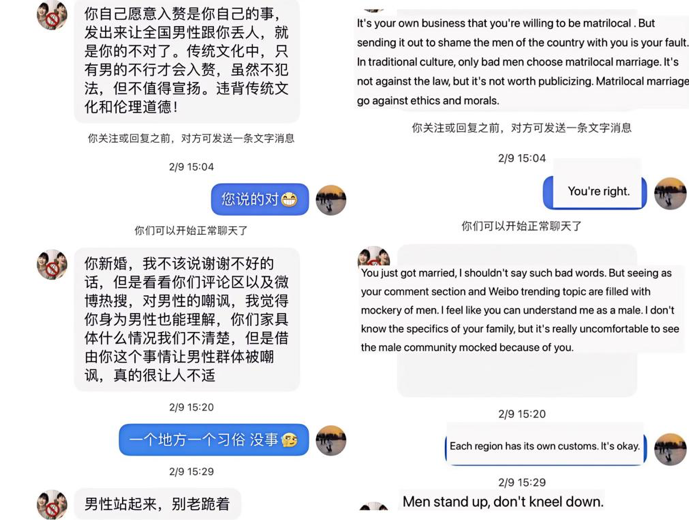
Some of the negative online comments Yao Gibo received
Gao and Ma chose not to engage with the negative comments online and found many more people supported their marriage in the comment section than opposed it.
For example:
“Entering a family and getting married are the same.”
“I love you guys are tolerant with matrilocal marriages.”
“These positive comments make us feel loved and empowered. No matter what form of marriage, loving each other is the most important. Love can overcome many difficulties.”
– Ma Kaige
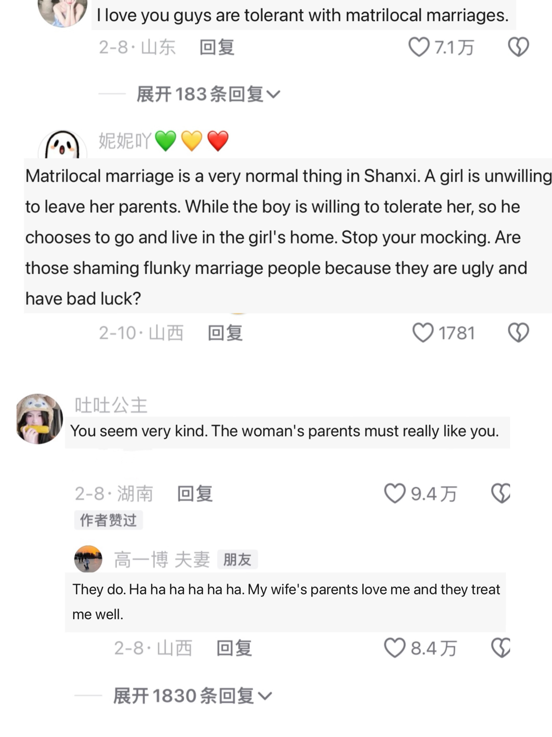
The couple also received many positive messages
The video of Gao Yibo and Ma Kaige’s marriage was reposted by the official Shanxi Province Tik Tok account and received a lot of attention.
Zhang Pinyuan, the leader of this official account, talked about the attitude to matrilocal marriage in Shanxi.
“Shanxi Province belongs to China’s northern cities. People’s minds are still relatively conservative and backward. So people do not show matrilocal marriages in public,” he wrote. “People don’t talk a lot about matrilocal marriages.”
However, he believes young Chinese attitudes to marriage have changed.
“For young people, it is sufficient that marriage brings them happiness. They don’t mind if they live with their husband’s family or their wife’s. In matrilocal marriages, men are willing and women are willing, only the netizens are not willing.”
– Zhang Pinyuan
Watch an interview with Gao Yibo and Ma Kiage where they discuss their ‘matrilocal’ marriage.
The history of matrilocal marriage
Matrilocal marriages in ancient China were more feudal, unlike the modern matrilocal marriages. A scholar from the School of Liberal Arts at Yangtze University, Yannan Wu, published a literature review of ancient Chinese matrilocal studies in 2019. In the literature, Yannan Wu introduced the history of Chinese matrilocal marriages.
Matrilocal marriage is an ancient form of marriage. Its origins can be traced back thousands of years in China. During the period of matrilineal society, the society was female-centred. Women were safer in gathering work and had the ability to reproduce. As a result, women dominated at this time, marriages were dominated by women, and family heirs were also women.
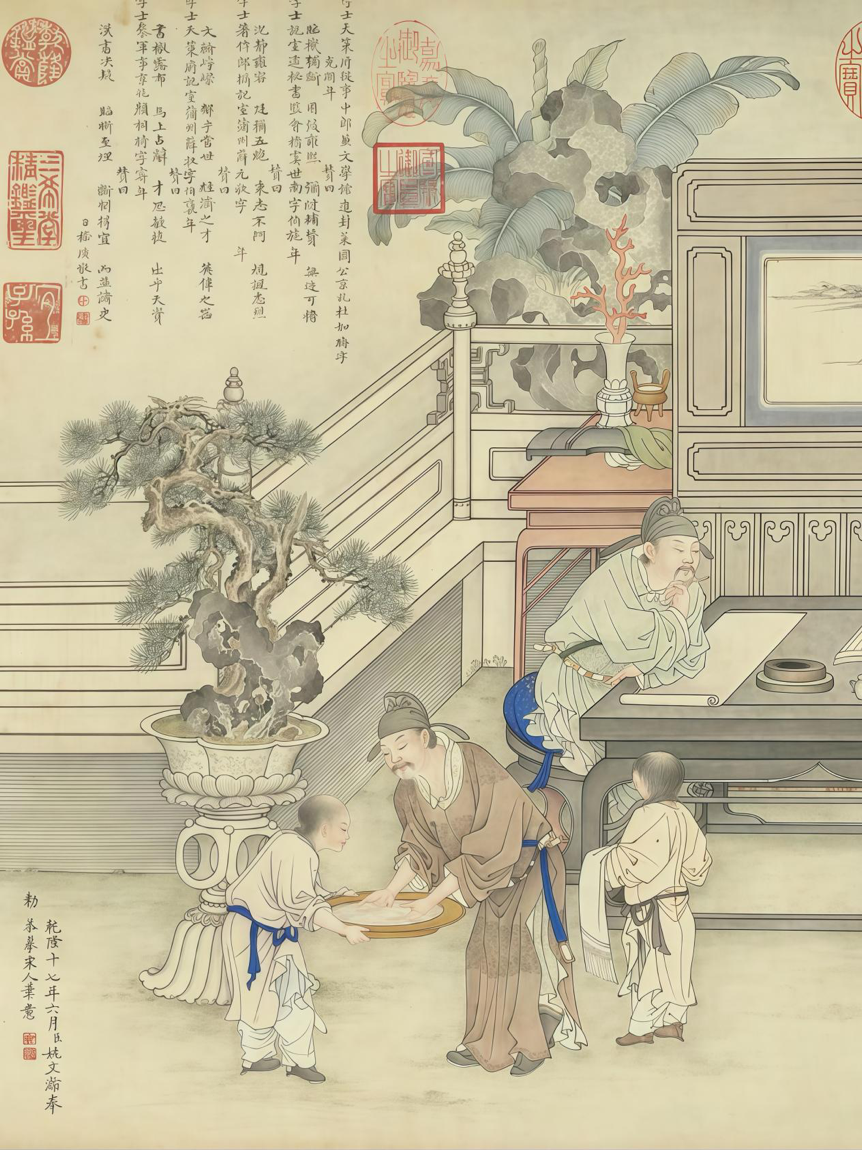
Between 960 A.D. and 1279 A.D., the political status of zhuixu was low. They were discriminated against and had no control of their marriages. It wasn’t until the Ming and Qing dynasties (1368 A.D. to 1840 A.D.) that matrilocal marriages became common. Although there was discrimination and bias among the people, there were still many families choosing matrilocal marriages.
Yannan Wu said men from poor families gave their labour as a bride price to marry their women. This is what the ancients called “以身为质”. And in the word zhui xu, zhui means “以物质钱”. It means that the man who married to his wife is a collateral item, which is redundant.
In general, the low social and political status of ancient zhuixu has led to their continuing discrimination in the modern society.
The revival of matrilocal marriage
In 1979, 30 years after the founding of New China, known today as the People’s Republic of China, the Chinese government implemented the One-Child policy, to control population growth.
“The One-Child policy has largely influenced the current demographic structure of society,” Chen Shizhi, a second-grade psychological counsellor in China, said.
Chen argues that the One-Child policy inadvertently led to a revival of the idea of matrilocal marriage.
“The policy stipulates that each family can only have one child. This has led to a large number of girl-only families starting to look for zhuixu,” he said.
“This society currently needs zhuixu and matrilocal marriages.”
The Chinese government cancelled the one-child policy in 2015.
Why is there so much controversy about matrilocal marriage?
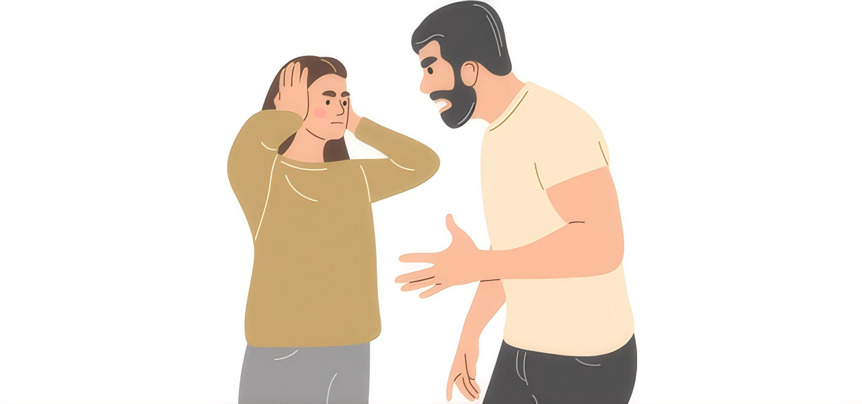
“Although the younger generation doesn’t value this idea as much as the elderly did, there are still a lot of people who unconsciously maximise the power of men when it comes to marriage-related topics,” Meng said.
“Chinese traditional marriage follows the idea that the men manage external affairs, while the women manage internal affairs. It means that man are supposed to work outside to earn money and women need to take care of everyone at home.”
However, with the development of society, more and more women are excelling in the workplace.
The Female Quotient is an international organisation promoting gender equality. It states that American women alone generated an economic benefit of $8.95 billion in 2023.
Xu Chuanlin, a lawyer specialising in matrimonial law, believes it is because of the popularity of gender equality that men accept modern matrilocal marriages.
“The law emphasised the freedom of marriage and gender equality,” Xu said.
Xu believes that matrilocal marriages are the choice of men for their own development and the family’s happiness.
“In the 70s and 80s, people generally considered matrilocal marriage shameful. But nowadays, many people have learnt about the concepts of gender equality and freedom of marriage. People have started accepting zhuixu and the zhuixu himself does not feel more guilty,” he said.
Economic development is also a factor that causes matrilocal marriages to be controversial. Zijuan Meng argued that class solidification exists in China nowadays. Wealth and resources are concentrated towards people at the top of the class pyramid, such as the elite.
“For many men, it (matrilocal marriage) is a platform to get a quick leap up the class ladder. Men can struggle for decades less. And they can directly use the resources of the woman’s family to develop their personal careers.”
– Zijuan Meng
In the economically developed regions of China, matrilocal marriages are more common. In these areas, many women have good incomes and family wealth and, as a consequence, more choice in marriage.
“Developed areas (such as Zhejiang Province and Shanghai) have rapid economic development and high pressure of living. Faced with the pressure of high property prices and the cost of living, some men choose to become a zhuixu in order to reduce their financial burden,” Xu Chuanlin said.
“Women in developed areas have a higher level of education. And the concepts of gender equality are more popular. People in these regions pay more attention to equality and respect in marriage, rather than sticking to traditional gender roles.”
Love is not the only thing in marriage. Values and economic factors are influencing the stability of matrilocal marriages. In addition, the stereotypical influence on zhuixu affects the marriages. These unstable factors contribute to the controversial nature of the modern matrilocal marriages.

The business of matrilocal marriage
Li Jiyan is the manager of the Hangzhou Golden Point Marriage Agency, a matchmaking agency, established in 1999 in Xiaoshan, Hangzhou, Zhejiang Province.
“We are very strict with the boys. We look for zhuixu who have their own jobs and are kind people. If a boy has a blood donation certification, he will be more popular. While, if they have tattoos on their bodies, we won’t introduce them to girls,” Li Jiyan said
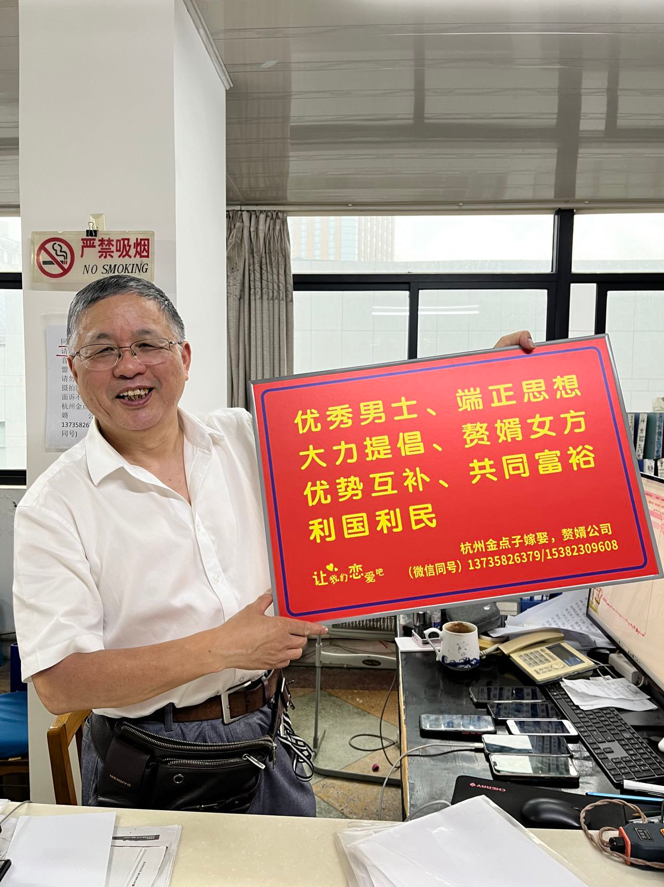
Li Jiyan displays their zhuixu sign
This marriage agency is famous in Xiaoshan. Recently the matrilocal marriage of Gao became popular on the internet, which led to Li’s marriage agency being known all over the country.
This marriage agency has a unique and professional matrilocal introduction service. Li helps match and introduce young people who want to choose matrilocal marriages.
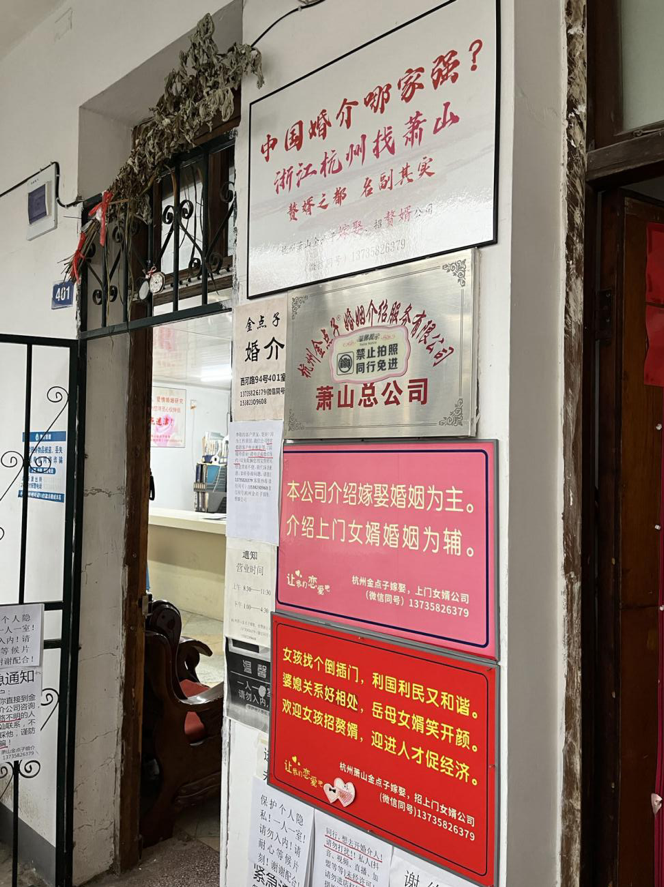
The entrance to Hangzhou Gold Point Marriage Agency
Every morning at eight o’clock, Li and his wife work on their cases in an office stacked with matchmaking files. They have a large number of female clients looking for zhuixu, as well as male clients from all over the country who want to become zhuixu.
As the first examiner to judge whether the matrilocal marriage will be successful or not, Li has strict requirements for the boys – including age, height and occupation.
“We have height measuring rulers at the entrance of our marriage agency. Boys below 170cm cannot be zhuixu, but if the boys are civil servants or work in public institutions, then they can be 2cm shorter. The minimum height is 168cm,” Li said.
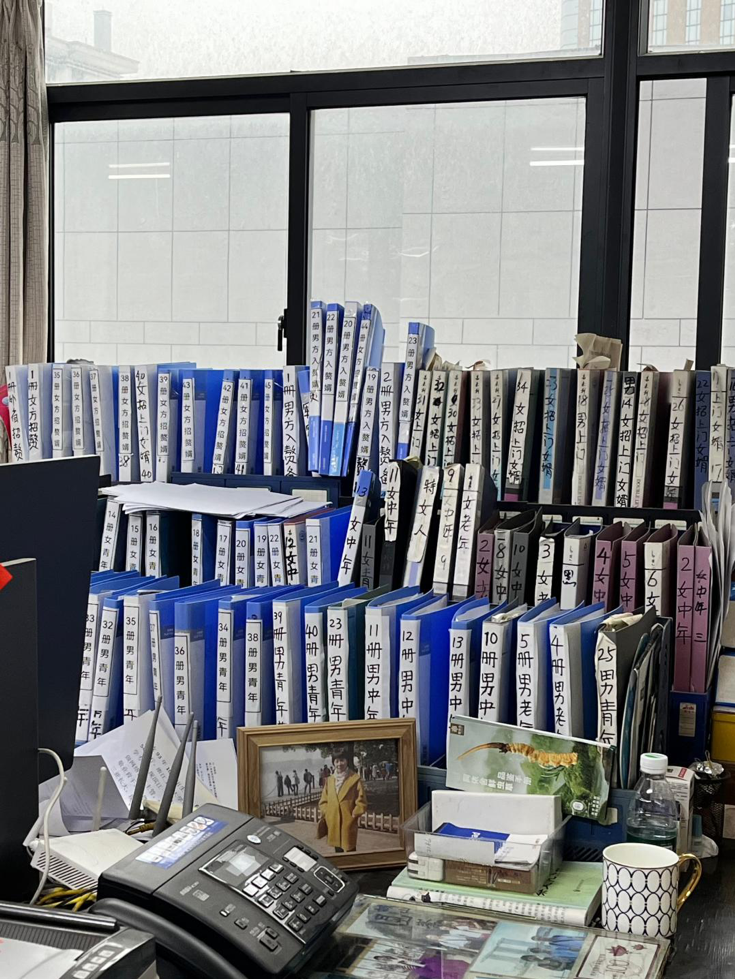
Li Jiyan’s matchmaking files
“The zhuixu we are looking for must not have criminal records or work in dangerous jobs. I just rejected a northern boy who was 186cm tall because he is a loan shark.”
There are also high standards for boys’ health and education. One client could not become a zhuixu, even though he had surgery to get rid of his bad odour. A boy who suffers from diabetes, infectious diseases, or other ailments. is also unlikely to have a matrilocal marriage.
“In the first half of this year, our requirements for zhuixu were a minimum of a college degree and an annual salary of over 100,000 RMB. But in the last few months, most of the boys we’ve accepted are now bachelor’s degree holders, and earn over 120,000 RMB a year,” Li said.
Wang Jun is a PhD student at Fudan University, in Shanghai. He is also a Tik Tok blogger. He posted a video on Tik Tok about wanting to become a Xiaoshan zhuixu and got more than 10,000 likes.
Wang Jun thought the modern matrilocal marriage reflected marriage diversity.
“Marriage diversity is good, it gives us young people more options. It would be too monotonous if there was only one model of marriage,” he said.
“I don’t think matrilocal marriages are humiliating. My parents are also very open-minded. As for my friends, they also want to become zhuixu.”
– Wang Jun
Xiaoshan, the zhuixu capital of China

Li explains that matrilocal marriages in Xiaoshan have existed for decades and claims Xiaoshan, a suburban district on Hangzhou Province is the capital of zhuixu in China.
Yin Xinyuan is a young girl from Xiaoshan, Hangzhou. She said matrilocal marriages are common throughout Zhejiang Province. Her uncle is a zhuixu.
“As long as I can remember, I’ve known about the tradition of finding a zhuixu in our hometown,” she said.
“I have an older sister. When I was in primary school, my parents told me that I needed to find a zhuixu as my husband. It is important to have a child with my family name.”
Li Jiyan said in Xiaoshan region, the custom of looking for zhuixu became more popular in the 1980s, in response to the One-Child Policy.
“At that time, people worked mainly in agriculture, and families needed men to be labourer. Many families were also affected by the one-child policy. There were families that did not have sons. As a result, families with only girls started to look for zhuixu,” he said.
With the rapid economic development of Hangzhou, more and more young men from other cities came to Hangzhou to work, and had the idea of living in here. Finding a zhuixu began to flourish in Hangzhou.
However, the most appealing is the economic reason. The Paper reported about Xiaoshan zhuixiu in May this year. It mentioned that according to the Land Expropriation and Housing Compensation Implementation Plan released by the Xiaoshan government. When the woman’s house is demolished and relocated, their husbands (zhuixu) will similarly receive 70 square meters of housing compensation. According to Zhejiang Province Family Planning Regulations, matrilocal families are allowed to have two children, and their two children will receive 140 square meters of housing compensation.
Li agrees this is an attraction for couples considering zhuixu.
“House demolition for women’s families can create a huge economic benefit,” he said.
“The cheapest house in Hangzhou is now 30,000 RMB (equivalent to AUD 6,200) a square meter. The government will give a zhuixu the equivalent of 2 million RMB (AUD 410,000) for a 70 square metre house. And the government will give another 2 million RMB after zhuixu having a child. After adding the wife and the second child, the matrilocal family will get 8 million RMB in total. This is money that one person cannot earn in a lifetime of working.”
In Chinese marriages, both families need to prepare money and gifts for the newlyweds on the wedding day. Traditionally, men give a bride price to women and the woman gives her dowry to the man. This traditional custom also exists in matrilocal marriages.
“In Hangzhou, a man from an ordinary family who wants to be a zhuixu needs to give 288,000 RMB as a bride price,” Li Jiyan said.
“The woman will give the man’s family twice as much money for the dowry, about 500,000 to 600,000 RMB. If the zhuixu doesn’t have that much money, then they only need to come up with 20,000 to 30,000 RMB as the bride price. This money is small but it’s an attitude. Then the woman will give the man a dowry of 288,000 RMB.”
“Usually the woman looking for a zhuixu has two or three houses in her family. Their bank saving are basically more than 500,000 RMB, and 1 million RMB is also very common.”
In the northern cities of China, this rule is also followed in the matrilocal marriages. Ma Kaige, the matrilocal couple from Shanxi Province, said: “Some zhuixu in my hometown will bring a car, some will bring 30,000 to 50,000 RMB. This is actually a kind of guarantee for the woman. What if the woman gives birth to a child but the man runs away?”
Ma added that there are many zhuixu who choose to run away after their wives give birth to the children. This behaviour is not only irresponsible for the children, but also results in the woman’s family losing the dowry money.
Moreover, manager Li mentioned another benefit of matrilocal marriages. Manager Li believes that in this model of marriage, the relationship between the zhuixu and his wife’s family is better handled.
“As the old Chinese saying goes, a son-in-law is worth a half son. When their daughter is happy, then the woman’s family likes the zhuixu even more,”
– Li Jiyan
In this interview Li Jiyan and his wife Sun Jimei talk about their at the Hangzhou Golden Point Marriage Agency.
Gender equality in matrilocal marriage
Li Jiyan believes matrilocal marriages offer more gender equality and are suited to modern times.
“Matrilocal marriages are the real meaning of gender equality,” he said.
“For thousands of years it was women who married men. In a matriloical family, man and woman work together to solve problems. This is a new trend in society. It’s also marriage diversity.”
Li’s marriage agency pays more attention to the suitability of the marriage between zhuixu and the woman’s family. Women in matrilocal marriages have more financial resources, which strengthens their voice.
However, this does not mean the man loses his role in the family. Li believes the matrilocal marriage is a co-operative relationship. In this marriage, both are expected to make joint decisions on family issues and recognize each other’s contribution.
Gender equality is also valued by Gao Yibo and his wife Ma Kaige. They believe that the modern matrilocal marriages is based on mutual support and trust, rather than being limited by traditional attitudes. Gao is not shamed as a zhuixu. He believes in their marriage, the man does not have to undertake all the financial responsibility and the woman has more security.
“Marriage is not decided by one person, but both sides work together,” said Ma.
On the sensitive issue of financial distribution, she said: “Our money is kept in my husband’s bank card. But the physical card is kept by me. We have mutual trust in each other.”
According to gender issues expert Meng Zijuan gender equality is related to the economic affluence of families.
“Working-class matrilocal families are easily achieving gender equality but this is not guaranteed in the wealthy matrilocal families,” she said.
“If the woman’s family has a family business, the zhuixu will definitely enter that business. The resources of the woman’s family will be tilted in his favour. Therefore, the matrilocal marriage may not change the traditional gender division of labour.”
Zijuan Meng explains this from the idea of female empowerment.
“From the perspective of feminist therapy, women need to focus on the body, the mind, the pursuit of values and relationships if they want to take control. Matrilocal marriages reflect women’s desire to be in control of their lives or their own marriages. This is an important reason for the existence of the modern matrilocal marriage,” she said.
In her mind, the ideal matrilocal family produces children who will be less trapped by gender roles.
“If matrilocal couples can achieve gender equality in their families, their children will grow up with a weakened sense of traditional gender stereotypes,”she said.
Will matrilocal marriage last?
Psychological counsellor Chen Shi Zhi is also a marriage counsellor. After interviewing a large number of matrilocal couples, she concluded that matrilocal marriages create the illusion of equality and happiness and are their recent popularity is tied to the current economic conditions.
“To be honest, these zhuixu are not happy in their marriages,” she said.
“Women who choose matrilocal marriages have a sense of security and control in their psyche. This initiative in marriage usually beats down the zhuixu.
“Women will unconsciously make men feel stressed in their marriages. In addition, the whole human society has higher expectations for men. When women enter into a marriage with higher expectations of men, where men are not as strong, their mental state are unbalanced.”
Chen argues that when the economy changes, people’s minds will change with it.
“The widespread popularity matrilocal marriages in southern cities is due to the long-term, one-child policy and economic excess. In the future, we may fuzzy the concepts of marrying, with two people living together equally,” she said.
Zijuan Meng agrees with Chen’s ideas about marriage equality in the future.
“In the future, matrilocal marriages will definitely exist, but with more and more people focusing on gender equality, it will move towards the Liangtou marriages,” she said.
Yin Xinyuan, a young girl from Hangzhou, introduced the Liangtou marriage.
“Many young people in Hangzhou choose the Liangtou marriage. This form of marriage means that after the marriage, both people leave their original families and live in a new environment,”
“They are not dependent on their parents’ resources and finances and they do not allow their parents to interfere in their lives,” she said.
Zijuan believes there high cost of finding a zhuixu – as much as 500,000RMB – might mean, in the future, women use sperm banks to produce offspring.
“At present, Chinese society does not realize the importance of gender equality. The vast majority of Chinese people insist a man is needed to build a family. People who are really concerned about gender equality have a more advanced concept of family. Their focus is on future generations,” she said.
Zijuan also sees disadvantages in matrilocal marriages.
“The essence of the matrilocal marriage is the idea of male dominance. Zhuixu enters his wife’s household to form a large family. But the role of father in this large family is assumed by the wife’s father. The father-in-law’s position in this family is very high. The patriarchal structure of the family system is not changed by the matrilocal marriage,” she said.
“When the matrilocal couple is ‘lucky’ to have a son, the entire family will do their best to support this child. The family’s finances and resources will concentrate on the son.
Thus, the matrilocal marriage is just an excessive object for the extension of property and resources. Where there is a patriarchal mind, there will be matrilocal marriages,” she said.
Zijuan also notes the offspring’s surname following the woman’s surname is not as progressive as it first appears.
“People think that families where the children take the mother’s surname are more open, but where does the mother’s surname come from? The offspring’s surname has nothing to do with their mother or grandmother, they carry on their mother’s father’s surname. The beneficiaries are still male,” she said.
“When we analyse it over a longer period of time, we find that over one generation, matrilocal marriages reflect gender equality and make a change. but when we analyse the impact over two or three generations, we find that matrilocal marriages have not changed anything.”
The children of matrilocal couple are usually raised by the wife’s mother.
Zijuan believes women in matrilocal marriages don’t realise they are sacrificing their mother’s rights by wanting to be in control of their own lives.
“Essentially, it’s a mutually supportive, exploitative and exploited relationship between two generations of women. Their husbands as well as their fathers are absent.”
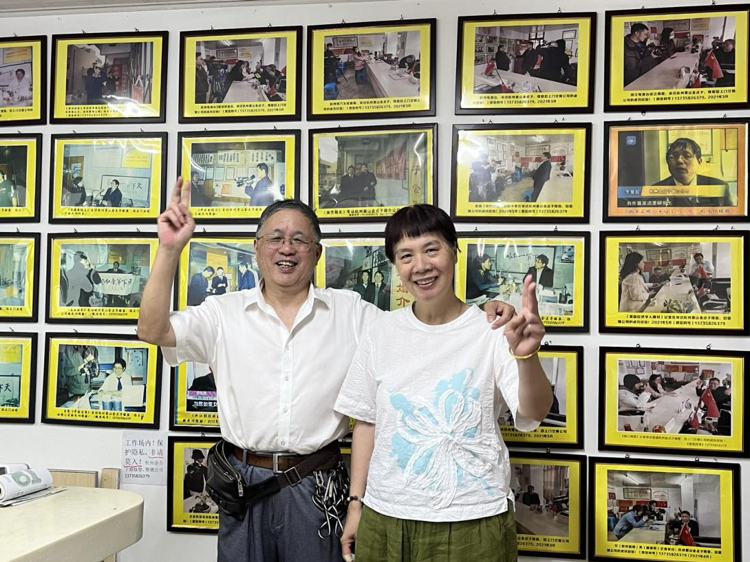
Li Jiyan and his wife Sun Jimei at their matchmaking agency
Li Jiyan, however, is still hopeful about matrilocal marriages.
“The divorce rate for matrilocal marriages is the lowest among all marriage models,” he said. “Since the inception of our marriage agency, not a single matrilocal couple introduced through us has divorced,”
“Matrilocal marriages are happier than any other marriages.”