Activists and advocacy groups are protesting the City of Melbourne’s new $1.75 million splurge on Community Safety Officers, claiming the program criminalises and punishes homelessness.
Homeless Persons Union co–founder Patrick ‘Spike’ Chiappalone said the Community Safety Officer (CSO) program was “another set of eyes that’s keeping vulnerable people under surveillance”.
The council’s 2026-27 budget allocated $3.75 million to the program, an increase of $1.75 million, and pledged to double the number of officers from 11 to 22.
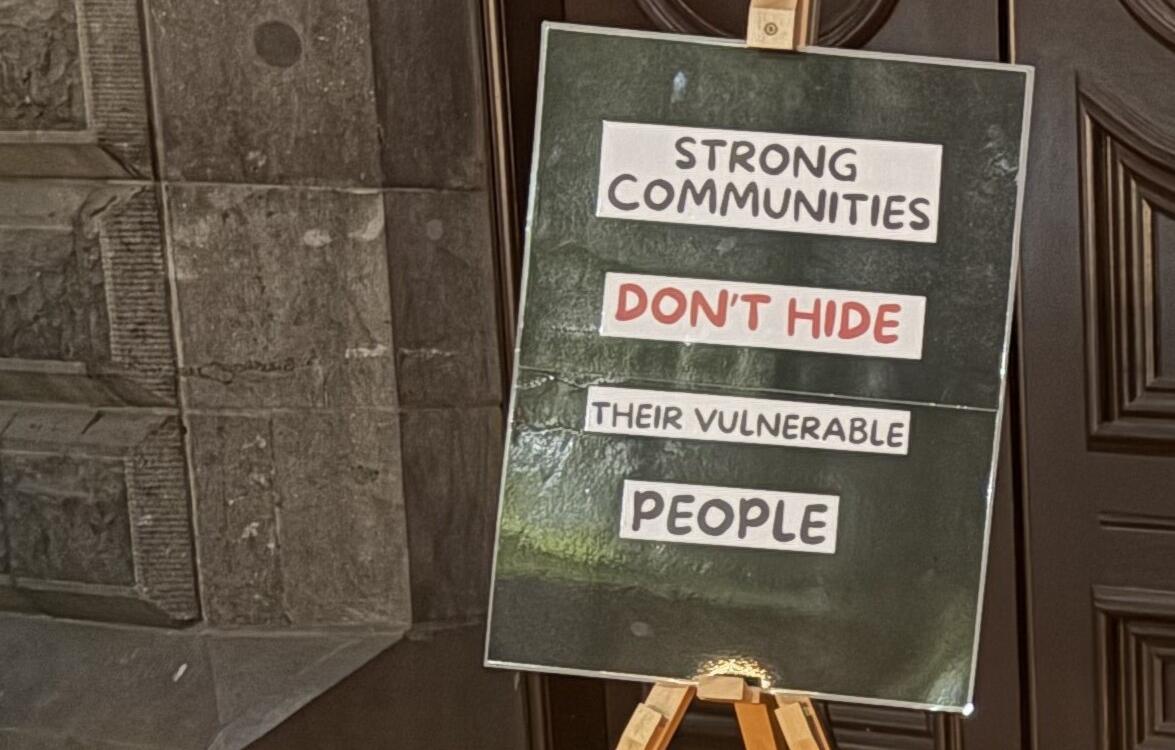
Protestors occupied the space in front of Melbourne Town Hall on 12 May in opposition to the move.
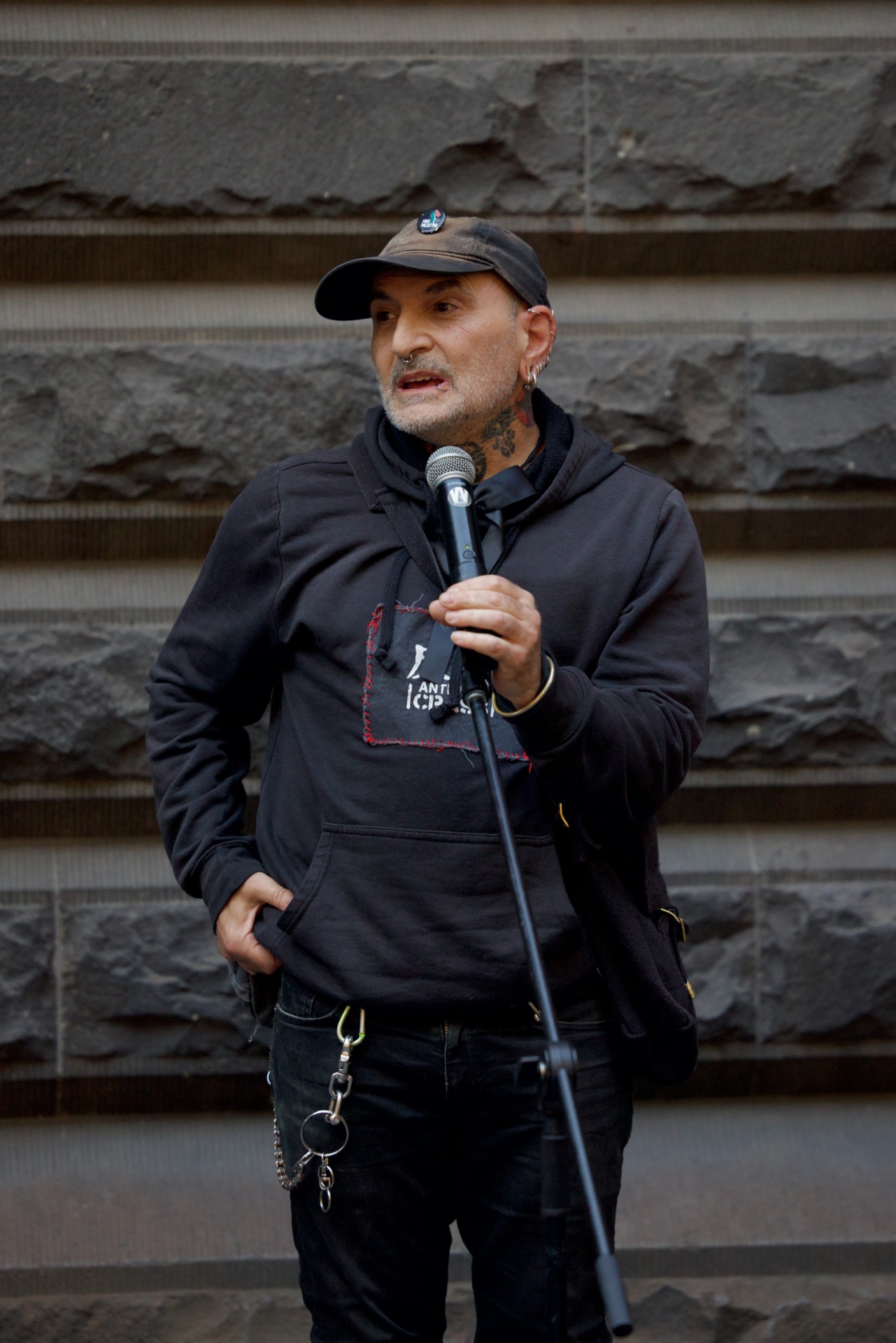
Homeless Persons Union co-founder Patrick ‘Spike’ Chiappalone speaking at the Big Lean protest. Image: Michael Reynolds.
Addressing the protest, Chiappalone said adding more CSOs “doesn’t make people feel more welcome and included”.
“It makes them feel more nervous, unwelcome and stigmatised,” he said.
The protest, dubbed the “Big Lean”, was organised by the union and other advocacy groups who have rallied against the council’s funding proposal.
It was followed by a community feedback session with the council, where the public was invited to express their thoughts on the budget.
Chiappalone said the union submitted a petition calling for the funding to instead go to outreach and support programs, which received 1,885 signatures.
Despite this push, a revised budget was handed down and passed 26 May, finalising the program’s expansion.
In a statement to The Citizen, Lord Mayor Nick Reece said that under the program, CSOs and homelessness outreach workers were “supporting vulnerable people while helping prevent antisocial behaviour and crime before it escalates”.
“We’re investing more than ever to support vulnerable people in our community—expanding outreach programs and funding more homelessness specialists across the city,” Reece said.
The council’s six-month evaluation of the CSO program stated that it aimed to “address issues which impact safety and the perception of safety in our community” and “respond to antisocial behaviour using de-escalation and negotiation techniques to keep people safe”.
According to the union, the council handed down the evaluation just two hours prior to the 12 May meeting.
Union member and activist Kelly Whitworth slammed the evaluation and its reasoning for the CSO program’s expansion.
Whitworth challenged the report’s claim that direct feedback from people experiencing homelessness shaped the program.
“At the last council meeting here, the manager of this program was asked very directly whether people experiencing homelessness had been spoken to,” she said.
“He admitted they had not. They [council] spoke to support agencies, many who are funded by the City of Melbourne itself.”
The City of Melbourne did not respond to questions regarding the alleged lack of direct consultation with people experiencing homelessness.
Chiappalone, who has experienced homelessness personally, questioned the council’s definition of “safety”.
“Whose safety are we worried about?” Chiappalone said. “Is it the person that’s sleeping on the footpath? Or the person that’s driving past in their Mercedes, or the person that’s going into town, nightclubbing, with their group of mates?”
He alleged CSOs could “confiscate people’s belongings” and move them on, among other powers.
“They can use violence, if they deem it necessary,” Chiappalone said.
“It leaves a lot of discretion to the individual officer. I’ve seen people that have been sleeping in alcoves, woken up and had their stuff thrown away.”
Chiappalone said there were real and obvious reasons behind why homeless people were often forced to move closer to the inner city.
“If you’re a homeless person, you stay in the CBD because it’s safer,” he said.
“If you’re genuinely homeless, that’s where you need to be. They get onto the street and the CBD where all the services are—where all the laundries, kitchens, and showers are—and the CSOs watch them there.”
The union and other advocacy groups have raised concerns that punitive policy approaches are being adopted more widely among inner city councils.
“What happened initially happened in Melbourne, now it’s happening in Port Phillip, Footscray,” Chiappalone said.
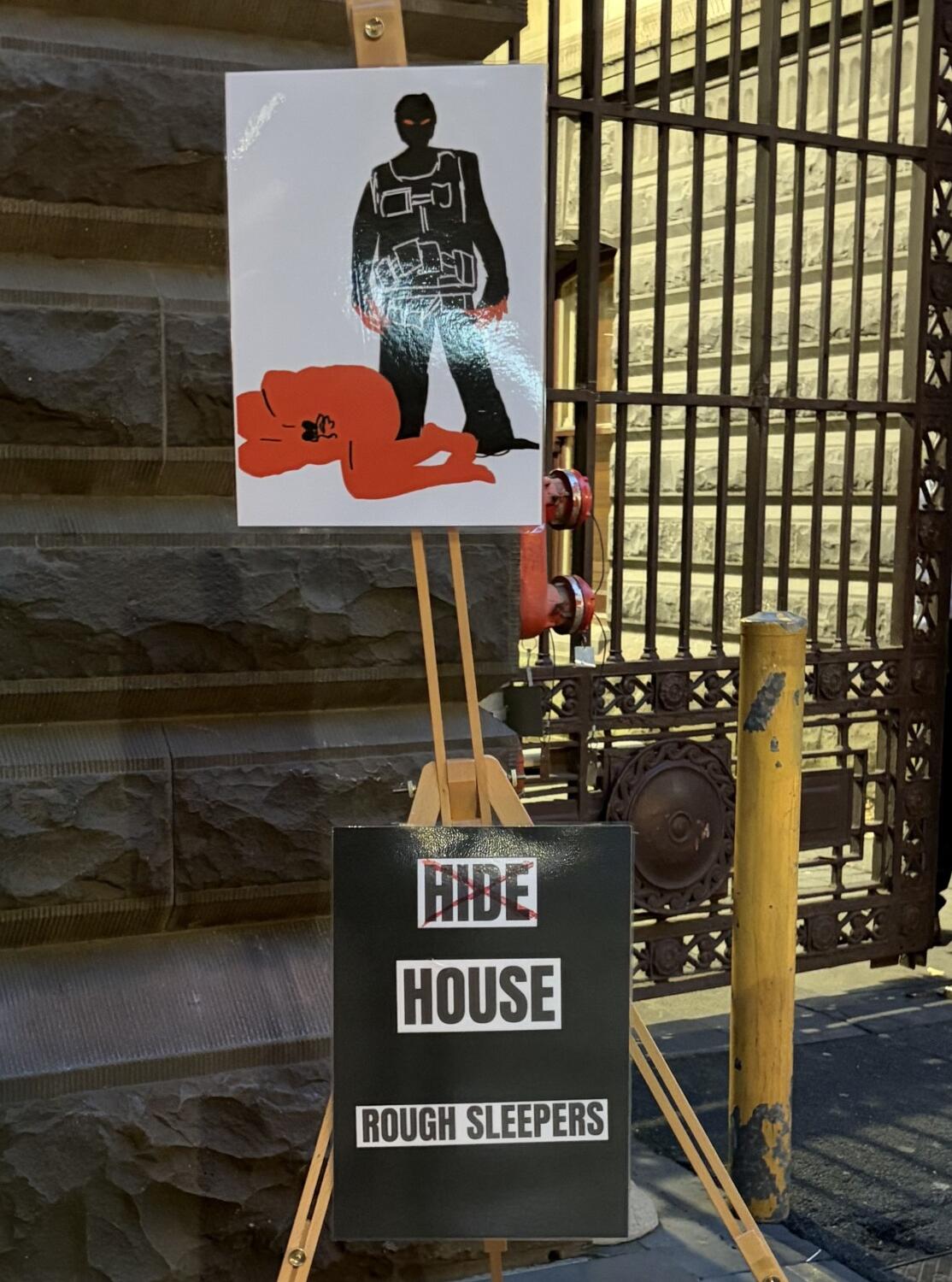
Activist posters mounted before the gates of Town Hall on 26 May. Image: Matt Melia
“We’re now hearing it’s happening in Wyndham and Dandenong. There’s a movement towards punishing and criminalising poverty and homelessness.”
Rory La Roche, activist and spokesperson for peer sex worker outreach organisation Vixen, agreed.
“What we’re seeing happen right now in the inner-city Melbourne suburbs is a calculated and coordinated attack on poor folks,” La Roche said.
“If it feels like the persecution of unhoused people is becoming more commonplace in Melbourne, that is not unintentional. They’re currently coordinating their agenda, including a focus on safer communities.”
The Homeless Persons Union held a vigil outside Town Hall ahead of the council’s final vote to approve the CSO funding injection.
Union member and Deakin University anthropologist Maree Pardy said that the vigil’s purpose was to “call our attention to the people who’ve died while sleeping rough or who have nowhere to live”.
Pardy spoke to the crowd following the vigil.
“I think what you saw tonight and you heard tonight is that people are not going away,” she said.
“The campaign to expose the cruelty and callousness of the Melbourne City Council’s approach will galvanise people more and more to campaign against this.”