
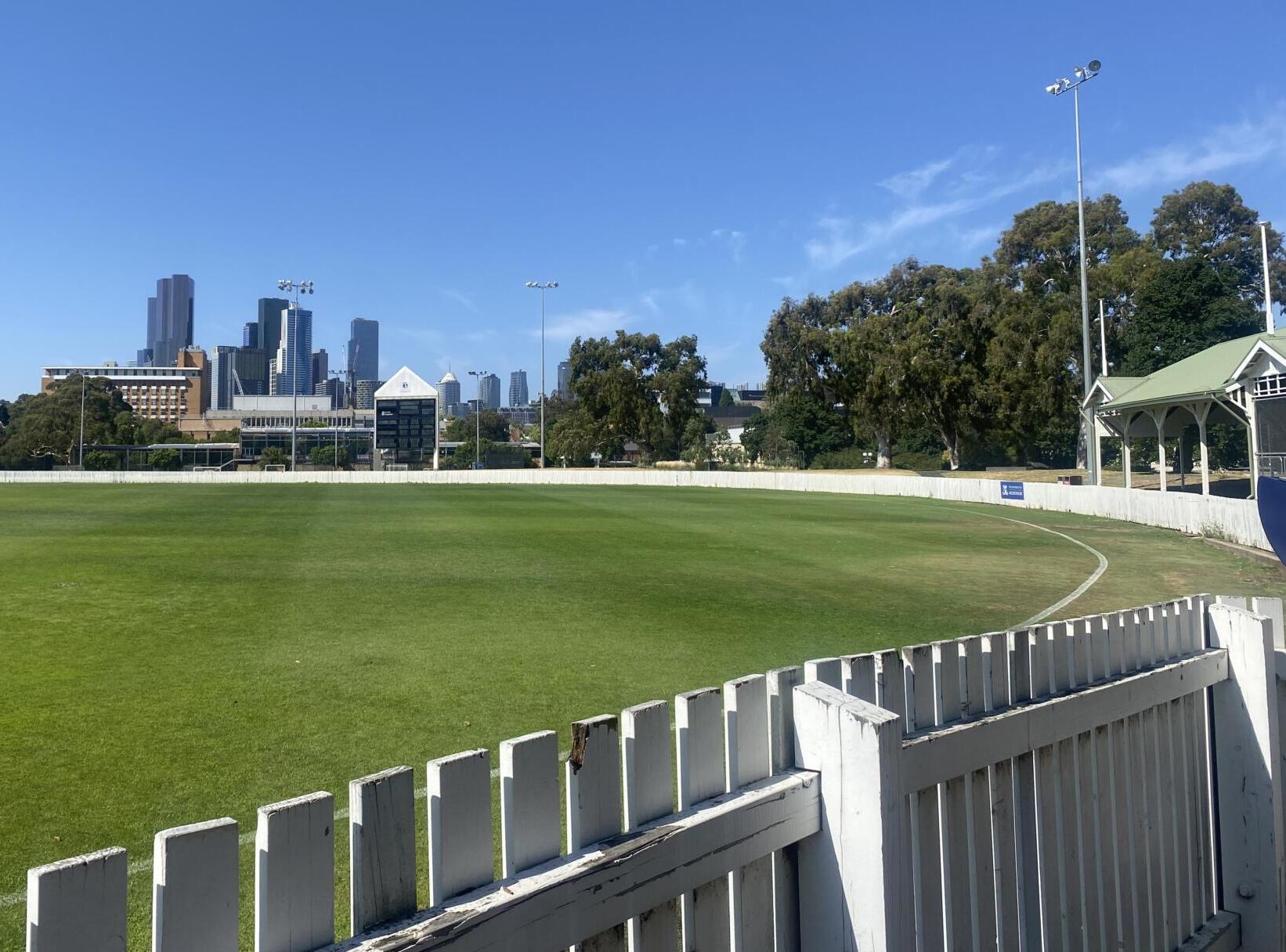
Each year, as the footy season looms and coaches at clubs across the suburbs finesse player lineups and game plans, presidents and staff from the Victorian Amateur Football Association (VAFA) weigh priorities and obligations around serving their communities off the field.
Gone are the days when players, supporters and officials just showed up for the game, and welfare concerns were limited to injuries and match fitness.
Clubs are now a place for education and change, and at the annual all clubs’ conference in February, various programs and stakeholders pitch proposals ranging from injury prevention, to recycling for fundraising, to encouraging policies and awareness around mental health.
One of the programs offered from 2022-2024 was run by Relationships Australia Victoria (RAV).
Designed specifically to work with amateur clubs, the ‘Healthy Clubs, Healthy Relationships’ program offered the 60 VAFA clubs an opportunity to host workshops and conversations around consent, respect and gender equality.
The Citizen found that only three VAFA clubs ever signed up for the program, which has now been shut down.
Initiatives tackling gendered violence compete against crowded agendas of potential community and health programs, reflecting changing and growing expectations around the role of grassroots sport.
From elite, professional leagues right down to grassroots competitions, “sport has increasingly become a site of health promotion”, says Associate Professor Karen Lambert, a health and physical education specialist at Monash University.
While community sport, with its strong influence on Australian social life, provides a powerful opportunity to drive change on gender issues, Lambert acknowledges that this can be an onerous burden for officials, staff, and volunteers.
Despite ‘Healthy Relationships’ being backed by the Victorian government’s Preventing Violence through Sport funding program, the tepid response to the initiative raises the question of why so many clubs didn’t take up the opportunity to tackle an issue described by Prime Minister Anthony Albanese as a “national emergency” of violence against women.
The Citizen surveyed premier and first division VAFA clubs about their experiences with the ‘Healthy Clubs, Healthy Relationships’ program. Twenty clubs were asked about whether they participated in the program, and how often their club has conversations about gendered violence. They were also asked about barriers which stop them addressing gendered violence.
Only three clubs responded, none of which had taken up the program. Two clubs said issues like gendered violence were “rarely” discussed by their teams.
One premier division VAFA team responded saying that gendered violence was not an issue at its club. Another club said that it did speak about the issue, but financial and administrative barriers had prevented them from doing more in the space.
When the Victorian state budget was released in May 2025, the Preventing Violence through Sport funding was quietly cut after three years. The grant had handed out a total of $2.76 million to 12 different programs across Victorian sport.
The office for Women in Sport and Recreation was also defunded and shut down, provoking a petition by Women Sport Australia describing the cuts as “disastrous”, and stating that they threatened progress made toward safer, more inclusive sporting spaces.
The petition states a third of women who play community sport in Victoria have considered leaving their club due to inequitable treatment, and that women and girls across all sports speak about exclusion, silencing, harm and misogyny.
Lambert led a report on the impact of the Preventing Violence Through Sport funding produced by Monash University in 2025. Commissioned by Sport and Recreation Victoria, the final report—which is not yet publicly available—argued that damaging forms of masculinity can be challenged and contested through local sport.
“Sport becomes a mirror of society,” Lambert says. “If there are problems in there, then there are problems out here.”
But, she says, as clubs are recruited into social change and education programs, there are challenges for people in community sport who “are at all different stages and phases” in their own lives, “from kids in sports teams through to their parents, the people in the canteen and the board and funders, all different levels”.
A growing number of VAFA teams have chosen to focus on specific mental health policies. This includes the Hawthorn Amateurs FC ‘Wings’ program which has been promoting mental health awareness and services in the club since 2010.
Lambert says these sorts of programs are created in direct response to a greater societal trend.
Animal Justice Party MP Georgie Purcell is pushing to see funding restored to gendered violence programs.
She says it is ““imperative that the Victorian government dedicates time, resources and funding” to education around gendered violence at the amateur sport level.
Purcell says there is a need to address “the vile misogyny that is sadly entrenched in many community sporting clubs.”
The Healthy Clubs, Healthy Relationships program was originally planned to be delivered to players through multiple two-hour sessions, but it was later reduced to one session due to lack of resources and timing constraints.
Despite only three VAFA clubs participating, RAV learning and innovation manager Donna Plavljanic describes the program a success.
“The clubs we worked with obtained value from the content, and we were able to embed strategies to help [them] in becoming healthier clubs and embed more gender inclusive practices,” Plavljanic said.
Without dedicated funding, sporting clubs struggle to provide programs responding to social responsibility opportunities on a wide range of other issues where they might have leverage, including gambling, mental health and healthy attitudes.
Old Scotch Football Club was the only premier team to participate in the ‘Healthy Clubs, Healthy Relationships’ workshop.
Old Scotch FC president Will Strange says “this was one of many programs we offer to improve our culture and the culture of local sporting clubs and the expectations of its people”.
Strange acknowledges the role of a community sporting club to promote health and “different causes”, which he says rotate “based on our culture and what is needed [at the time]”.
As state grants like ‘Preventing Violence Through Sport’ recede, community clubs are left wondering who will step in to fill the gap.
AFL Victoria, meanwhile, maintains some investment in dealing with the issue of gendered violence at the professional level.
The AFL partnered with OurWatch, the national leader in providing violence against women, in 2023. It also recently awarded Lions skipper Harris Andrews the Jim Stynes Community Leadership award for his work in domestic violence prevention.
AFL general manager of corporate affairs Jay Allen says that the AFL “worked with OurWatch to deliver face-to-face gender equity and respect education”.
This education was concluded for the AFL and AFLW in September 2024.
Allen says the partnership “was successful in building the knowledge, skills, and confidence of players to recognise and address the gendered drivers of violence”.
This year, as Victoria’s amateur clubs gather for their annual pre-season conference, ‘Healthy Clubs, Healthy Relationships’ won’t be on the agenda. As organisers wait for another cycle of funding to come through, or for the national league to provide it, violence prevention programs are relegated until further notice.


