
Every time a FIFA World Cup rolls around, Australia’s love of football comes to life, with more than half the country tuning into SBS at some point during the first three weeks of the current 2026 tournament.
FIFA describes its World Cup as “the world’s biggest sporting event”, with 1.42 billion viewers engaging with the final in 2022.
But despite being Victoria’s most played outdoor sport, football receives less funding than other codes and Football Victoria’s 2026 State of Play report says communities are being left behind.
Australia’s football code wars and Victoria’s lack of investment have experts and players fearing that the hype generated around FIFA competitions is unlikely to manifest on the local pitch, where trainings are being cancelled and facilities are unfit for inclusive play.
Dr Aish Ravi is founder of the Women’s Coaching Association and a lecturer in health and physical education at the University of Melbourne.
Ravi, who is currently in Texas for the 2026 FIFA World Cup, says the success of this year’s tournament, and the temporary popularity of the Socceroos, does not represent the wider state of the game in Australia.
“The reality is, we care about soccer only during the World Cup, and then we forget to invest in it after,” Ravi says.

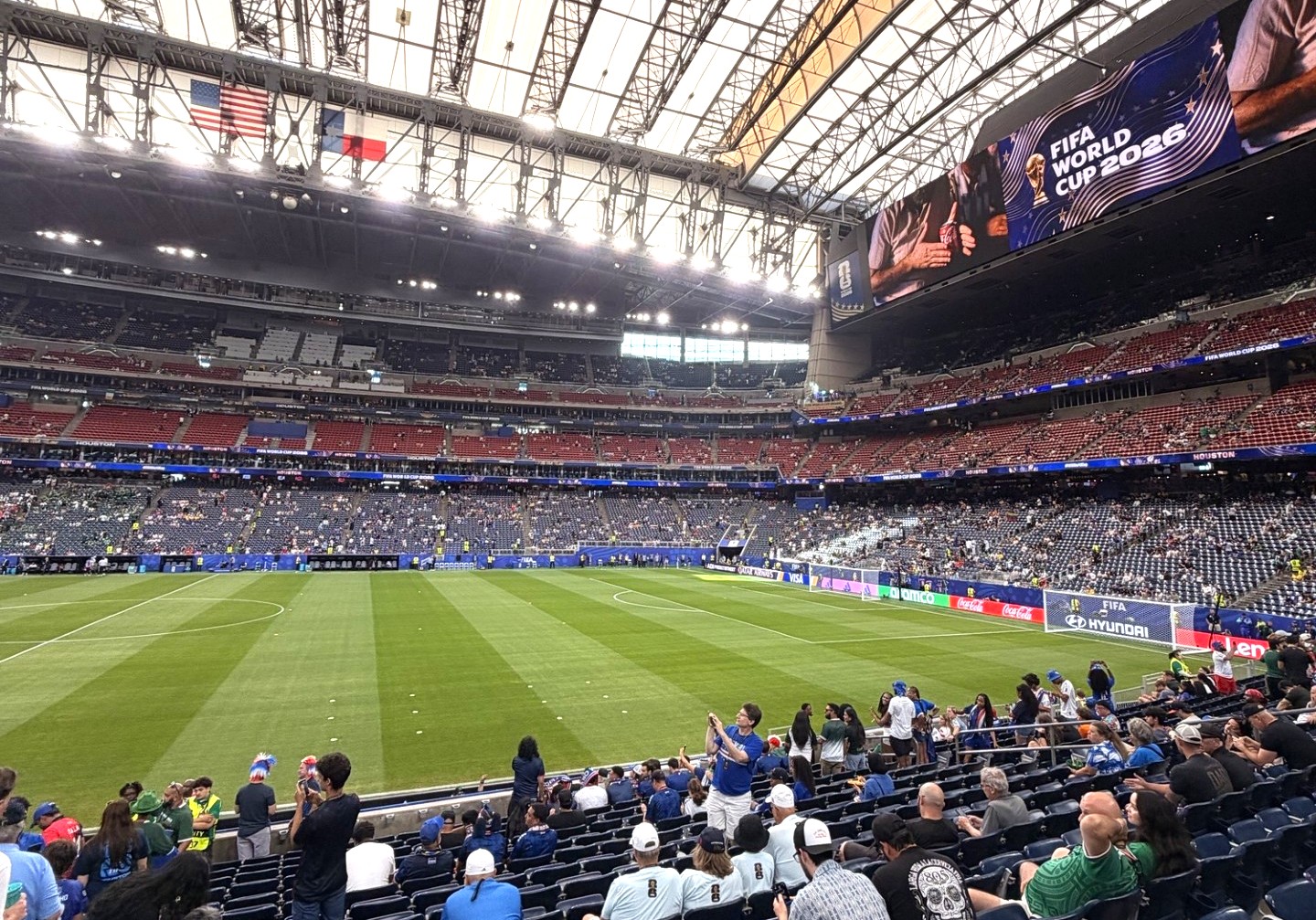
Argentine player Lionel Messi tells World Cup spectators that “Football unites the world”. Image supplied by Aish Ravi.
The numbers show that excitement is genuine. Football remains Australia’s most played team sport, with more than 1.9 million Australians participating in some form of the game in 2025, from casual futsal to community or professional competitions.
But, when it comes to finding the space to survive long-term, Ravi says the buzz rarely translates to better investment.
This is a pattern repeated after other major tournaments, she says, including the Matildas’ historic run at the 2023 Women’s World Cup.
“Right now, there is a hype and you probably will see a lot of footballers want to partake in the sport as a result of the Socceroos’ success,” she says. “But then it declines again.”
The problem, Ravi says, lies in Australia’s inability to convert moments of national excitement into lasting community participation.
Australians love the game, but there aren’t enough places for them to play
Football Australia’s post-2023 FIFA Women’s World Cup report estimates the sport faces a $2.9 billion community infrastructure shortfall, with only 40 per cent of facilities considered inclusive, particularly for women and girls.
The report identifies community infrastructure as the biggest barrier to continued participation growth which, according to Football Victoria, has increased by 60 per cent since 2021.
More than half of pitches in the state are rated as being in moderate, poor, or very poor condition. The report notes that the “mismatch between demand and supply” leads to pitches being overused, trainings cancelled and conditions that put players at risk.
Ravi says those shortcomings become most obvious immediately after major tournaments such as the World Cup, when local clubs suddenly receive an influx of new players.
“Sometimes we don’t have facilities and grounds to have teams,” she says.
“We don’t have coaches. We don’t have volunteers. They’re not well trained. People have negative experiences and then they leave.”
Many clubs also continue to share grounds with other sports, creating practical challenges that rarely make headlines—until disaster.
“A lot of [football] clubs play with a cricket pitch in the middle,” Ravi says, acknowledging the death of 27-year-old community Australian rules footballer Nathan Fitzgerald, whose head came into contact with a covered cricket pitch earlier this month. The ABC has reported that the incident is now being investigated by WorkSafe.
“It costs just to cover the cricket pitch, and local clubs could not afford that,” Ravi recalls from her own involvement in community football.
Geelong Rangers Football Club president Tim Santalucia says that playing space is a challenge, as is recruiting suitably qualified coaches.
“As a large community club, we have quite a few volunteers,” Santalucia says. However, he says, not all roles can be taken up by volunteers.
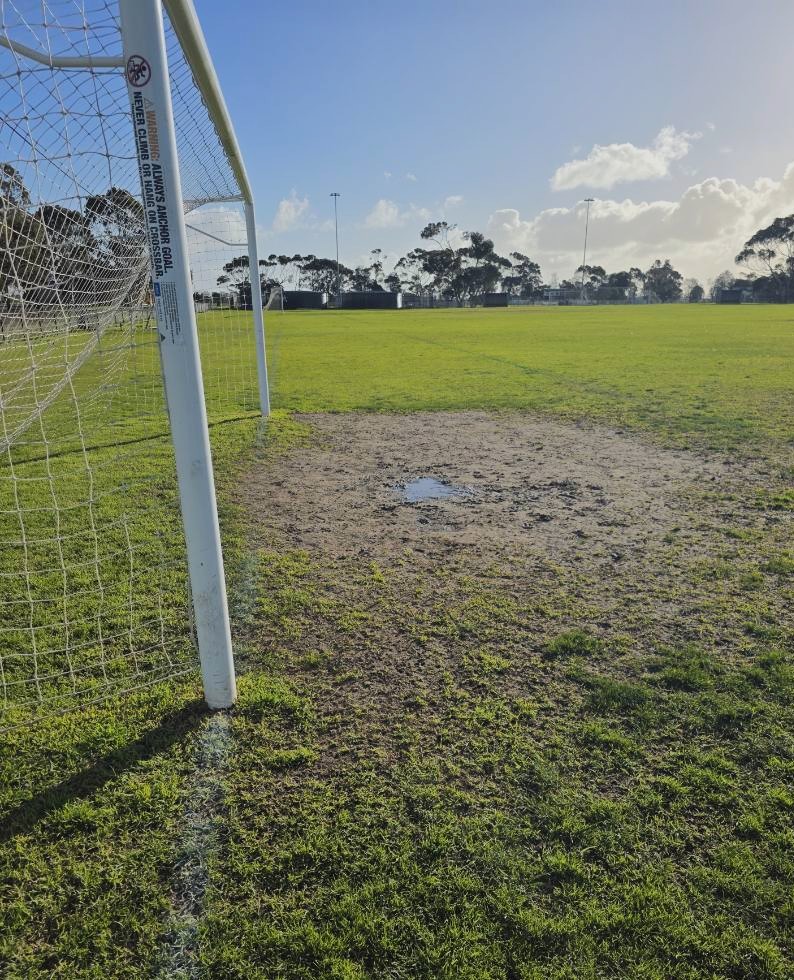
Geelong Rangers FC president Tim Santalucia says local pitches are in “extremely poor condition”. Image supplied by Tim Santalucia.
“It is of vital importance to have suitably qualified referees for all games that it is safe,” he says. “Far greater funding and encouragement needs to be applied to this.”
In terms of participation and inclusive facilities, Santalucia says his club is “shovel ready” to work on building efficient facilities for both men and women and “will begin lobbying state and federal members”.
He says the Geelong Rangers are also capping male players to make room for female participation.
Alice Townsend plays striker at Clifton Hill Football Club in inner-city Melbourne. She says support is harder to come by for metropolitan clubs, compared to regional ones.
“When I was playing at Wangaratta, because of the community involvement, there was a lot of community financing of grounds and club rooms were very high quality,” Townsend says.
“In the city, they rely very much on having a group of people that apply for funding through businesses, but because it’s not as close knit.”
Townsend says new and inclusive facilities are good for the sport as a whole.
“It helps to build community because if the facility is better, it’s a better kind of atmosphere for spectators,” she says. “Then more people come to watch and have a bit more investment.”
Experts say sustainable and inclusive football is not just about change rooms. Griffith University’s Dr Adele Pavlidis says that coach education and investment is also needed.
“[We need] a more substantial effort to ensure coaching pathways and leadership pathways are welcoming and safe for people who have not always been involved in football,” Pavlidis says.
“There are a few key things to focus on including prioritising safe and inclusive sport environments, investing in high-quality coach education … and planning for a whole-of-sport approach.”
Infrastructure needs do not stop at the local pitch. Ravi highlights the commercial and tourism success of the current US-held tournament, which is occurring at a time when there is no competition with other national leagues.
In Australia, the rivalry between different footballing codes means football often fails to get priority. During the 2023 Women’s World Cup, crossover with the AFL season meant Melbourne World Cup games were hosted in the 30,000-capacity AAMI Park stadium, rather than the 100,000-capacity MCG.
“That is one of the world’s largest sporting events, full stop, and we couldn’t even get the best stadiums,” Ravi says.
“AFL wouldn’t give us their ground or rugby wouldn’t let go of their ground.”
While the World Cup is currently popular in the US during the NFL and NBA offseasons, Ravi says if the codes were competing for stadiums, US fan attention, and TV airtime “it would be a different story”.
Football’s cost structure creates barriers for families
The average annual cost for children’s participation in football in 2024 was $415 including costs for equipment, uniform and transport, making it one of the most expensive team sports in Australia.
In emerging football powerhouses such as Japan, investments focus on creating a sustainable football culture rather than relying on major events.
The Japan Football Association’s (JFA) grassroots strategy explicitly prioritises participation, facilities, coach development and creating accessible environments for players of all ages.
Official JFA registration fees for youth players are relatively low, with junior categories costing only a few thousand yen ($AUD10-20), and U12 player registration fees removed entirely in 2022 as part of efforts to expand access to the game.
For Australians wanting to get into a semi-professional program like the National Premier League, Ravi says it can cost upwards of $4000, and that Australia’s reliance on expensive pathways means talented players can be excluded before they reach elite levels.
Following the success of the Matildas at the 2023 World Cup, federal and state governments pledged investment into football infrastructure.
The federal government’s $200 million Play Our Way program was announced that year to improve sporting facilities for women and girls across Australia. However, the funding was designed to spread support across multiple sports.
And money is tight elsewhere. Despite record revenue of $140.4 million in 2025, Football Australia had a $15.3 million deficit, with expenses exceeding revenue by almost $7 million.
Ravi says the issues reflect a broader challenge within Australian sport: reliance on bursts of government investment rather than creating a lasting funding model.
While the 2023 Women’s World Cup demonstrated the power of a major event to inspire new audiences, Ravi warns that inspiration alone cannot replace long-term planning, and Australia must look beyond hosting major tournaments and focus on the everyday experience of players, families and volunteers.
“We’ve got to figure out, in Australia, how can we make sport more sustainable and allow participants to have a more consistent experience,” Ravi says.
For her, that means addressing the basics: affordable registration, accessible facilities, trained coaches, and enough pitches for growing communities.
While major tournaments can introduce millions of people to football, Ravi says the legacy should not be measured by viewership or crowds in stadiums alone, but by whether children still have somewhere affordable and accessible to play years after the final whistle.


