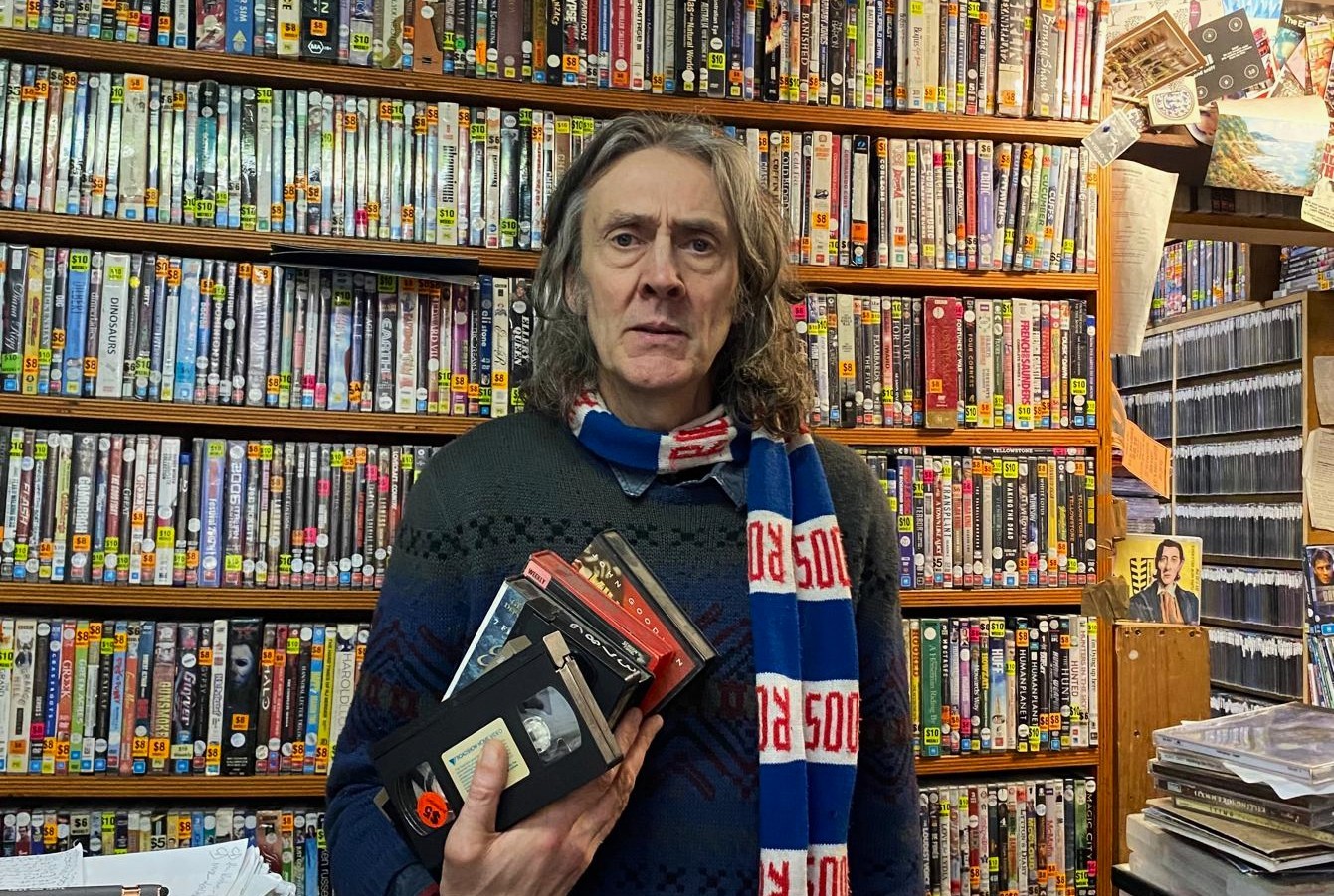
The parquet floor creaks under every step inside Richmond’s Picture Search Video and Vinyl.
From behind the counter, owner Derek de Vreught greets nearly every new customer with the same sentence: “This is the last video rental store in Melbourne.”
Upstairs, among shelves stacked floor-to-ceiling with DVDs, 20-year-old Arisa Meraji searches for Gregg Araki’s Mysterious Skin, a film she cannot find online.
“A lot of these films aren’t on Netflix or Amazon,” Meraji says. “Media online is very mainstream, it’s very cliché.”
In an era dominated by streaming platforms and algorithm-driven recommendations, Picture Search is attracting a new generation of young customers looking for connection and discovery in a digital culture that feels increasingly impersonal.
For de Vreught, Picture Search is more than a business: it is also his home. Above the maze of DVDs, he lives in the attic with his cat, Wombat.
De Vreught says the growing number of young people entering the store is a recent and unexpected shift.
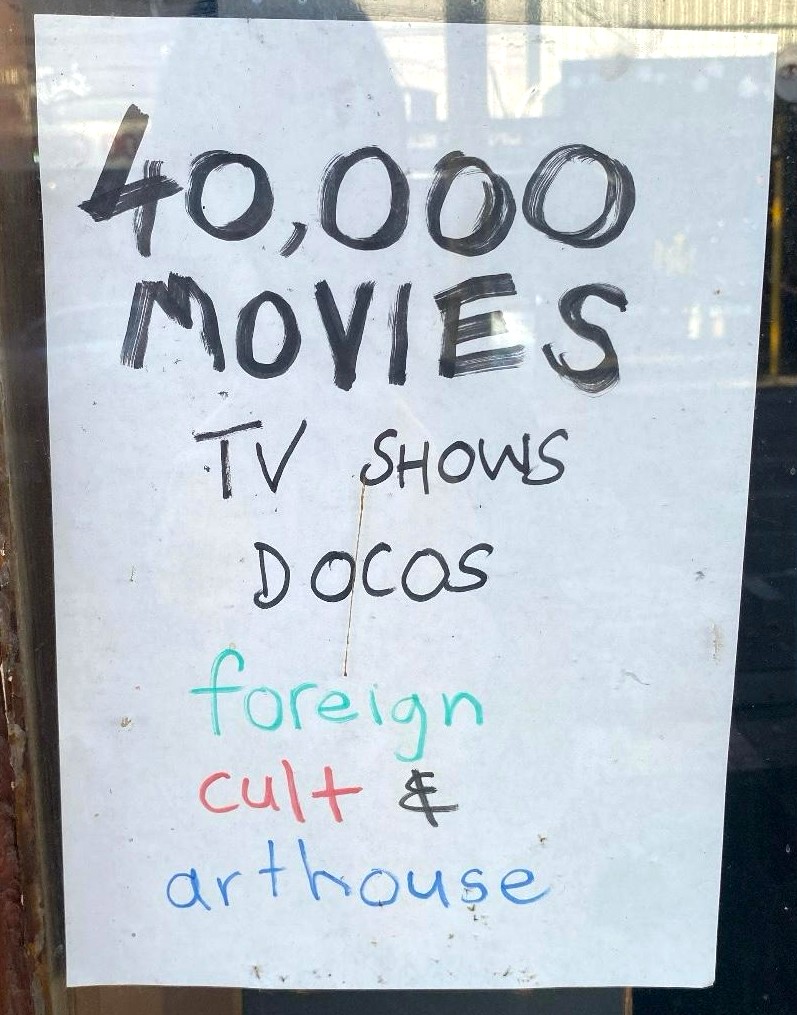
Everything about Picture Search is old school—even the signage. Image: Anna Raimondi.
“It’s not normal. It’s only now,” he says.
He believes much of the renewed interest has been driven by social media, where videos of the business have circulated widely
“Instagram has gone kind of viral,” he says. “There must be an interest out there for physical media.”
He’s not wrong—Gen Z consumers are buying DVDs, Blu-ray Discs and vinyl records at an increased rate, while remaining video rental stores are reporting a growing number of memberships.
According to de Vreught, more young customers are arriving with specific titles in mind, often films unavailable on streaming platforms.
Some titles were never licensed for streaming services, while others quietly disappear as digital catalogues constantly change from one platform or country to another.
“The list of movies people can’t find on a streaming service is building up in people’s brains,” he says.
De Vreught says most customers would never have discovered Picture Search on their own because video rental shops have largely disappeared from public consciousness.
“They don’t Google, ‘Where’s my nearest video store?’” he says. “Of course, you assume there is no video store anymore.”
For years, de Vreught says the store survived largely through vinyl and record sales as DVD rentals declined during the rise of the big streaming platforms.
But if the recent influx of younger customers continues, that may begin to change.
“Maybe video hiring does pay the rent,” de Vreught says. “It will be the first time in 20 years.”
The renewed fascination with physical media is becoming increasingly visible beyond stores like Picture Search. Melbourne’s ACMI, Australia’s national museum of screen culture, is currently presenting The Vinyl Factory: Reverb, an exhibition exploring vinyl culture and immersive analogue experiences through listening rooms, interactive DJ equipment, and physical media collections.
Cinema studies expert Andrew McGregor—who has received a film research accreditation from the president of the Cannes International Film Festival—says the appeal of Picture Search lies as much in the experience of browsing as in the films themselves.
“I think what they’re actually missing is the experience that Picture Search still offers,” McGregor says.
“It’s almost like a secret stash of rare gems that you can’t find anywhere else.”
Inside Picture Search, that sense of rarity and discovery unfolds throughout the afternoon, as a steady stream of young customers come in and sign up for memberships at the counter.
One customer, Jack Cummins, travelled from Frankston with a friend after discovering the store online.
“This store is the last one in the whole state,” Cummins says. “It’s just a sort of dying art.”
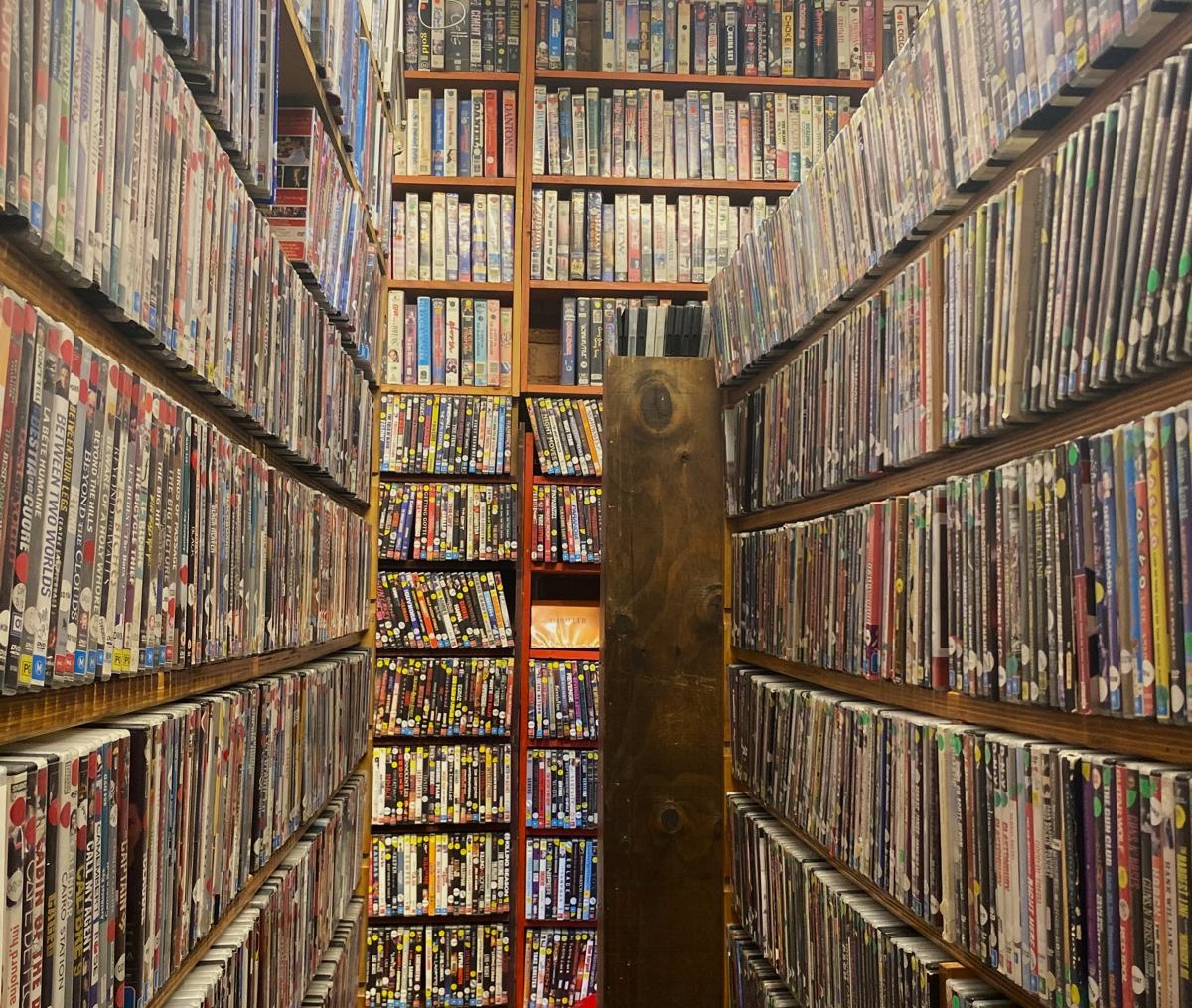
The shelves are a maze of forgotten gems and cult classics. Image: Anna Raimondi.
Arisa Meraji lives nearby and has been a member of Picture Search for years. On Friday afternoon, she arrives with a friend.
“The owner is very active in the community,” she says. “He just wants to help our community be entertained.”
Over time, Picture Search has became part of Meraji’s routine and identity, shaping the way she watches films and connects with the people around her.
“This place kind of changed my personality too,” she says. “I feel like I’m more active in the community.”
For Meraji, the experience has become a ritual in itself, from browsing the shelves to choosing a film to take home.
“It’s much better to come here rather than just binge something online,” Meraji says. “You have a sense of belonging here.”
University of Melbourne media scholar Scott McQuire says video rental stores were “decimated by the shift to streaming media” in the early 2000s, as platforms like Netflix transformed film distribution from physical rental to online streaming.
McQuire says the renewed interest in video rental stores reflects a broader resurgence of physical media, from vinyl records to analogue photography, for those who feel digital-only media “lacks ritual elements”.
“For a lot of people who’ve grown up with digital media, there’s an element that’s missing,” he says.
McQuire says stores like Picture Search offer forms of discovery streaming platforms struggle to reproduce, where recommendations come from conversations rather than algorithms.
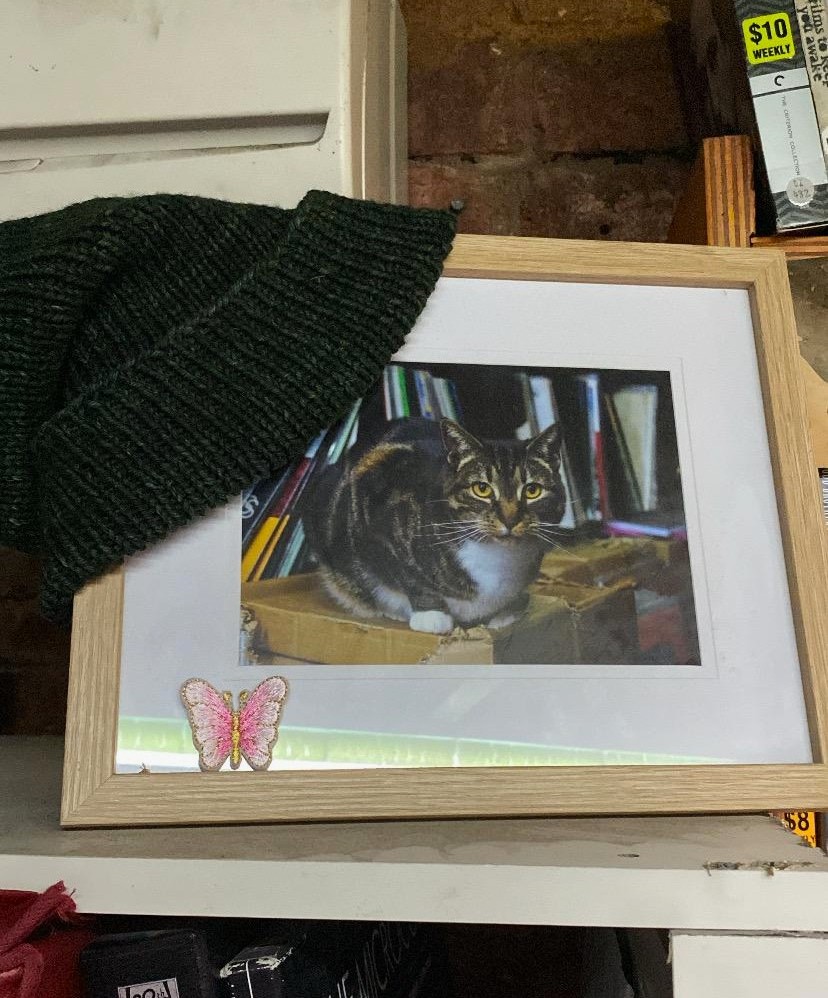
Picture Search’s resident cat, Wombat. Image: Anna Raimondi.
“A lot of people still like this process of having a conversation with someone about something,” he says.
Cinema studies academic, film journalist, and director Mark Nicholls says this renewed fascination with physical media is also connected to what he describes as the “materiality of film culture”—the attachment many film lovers still feel toward physically owning and collecting movies.
The curated nature of stores like Picture Search, where selections are shaped by staff and film lovers rather than algorithms, is another part of the appeal.
“You can have Netflix or the various streaming services, but that’s not everything,” Nicholls says.
For him, what a video library can still offer is a curated experience built around human taste and recommendation.
“Every film that is chosen for the collection is the subject of a definite choice,” he says. “It’s someone else’s choice who’s an expert in film or a film lover like you.”
For now, owner de Vreught continues protecting a world many assumed had already disappeared. His focus remains on keeping the collection alive.
When asked whether physical media still matters in the streaming era, de Vreught shrugs.
“I live here,” he says. “I live in a bubble.”
“So don’t ask me, because I never stopped buying records and CDs and cassettes.”