On Instagram, Dr John Valentine’s account, with over a million followers, showed the man in surgical scrubs giving medical advice from what looked like a clinic: “Soak your feet in hydrogen peroxide for 30 minutes each night,” he recommended, “and by morning your immune system resets.” After one week, chronic infections will disappear.
Dr John Valentine did not exist. He was an artificial intelligence avatar, created and shared by someone selling supplements.
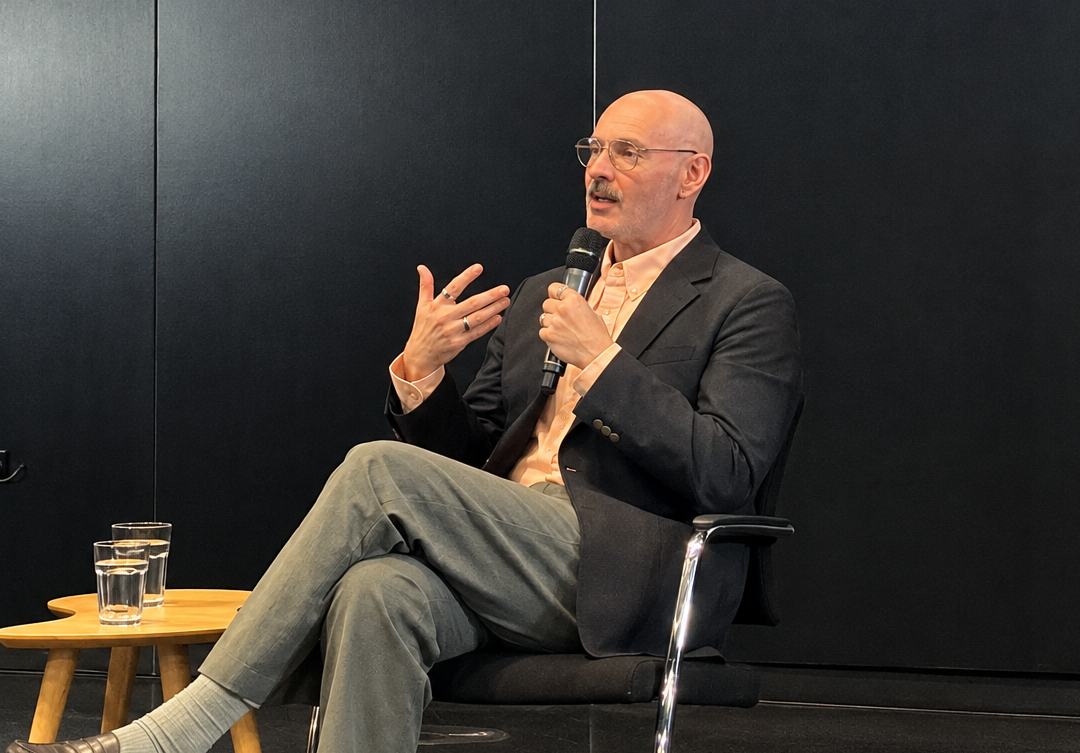
This was one example award-winning journalist Craig Silverman presented when he delivered the 2026 A N Smith lecture in journalism at the University of Melbourne last week. Silverman, co-founder of Indicator, a digital investigations newsroom, has spent more than a decade tracking how deception spreads online.
What he documented were not isolated scams but an escalation, what he describes as “the industrialisation of falsehood”, accelerated first by social media platforms, and now by generative AI.
“We are living through a second era,” he told the audience. “It’s being brought on by AI.”
The first era: when distribution was free
In the summer of 2016, Silverman travelled to a small town in North Macedonia to investigate young men who had found a lucrative business model. They had created Facebook pages devoted to niche topics: motorcycles, health, muscle cars. They accompanied those with sensational headlines, many of which were completely false.
And they earned their money from the clicks.
They expanded their business into politics when they saw the opportunities brought by the 2016 US Presidential election, creating pages that flooded Facebook groups with stories promoting Donald Trump that were, by their own admission, completely fabricated.
One of the men Silverman interviewed didn’t deny it.
“Yes, we know the blog’s bad, false, misleading,” he said. “But if it gets people to click on it and engage, then use it.”
The operation revealed something critical about how digital platforms work. “Social media took the cost of distribution to zero,” Silverman said, quoting social media and online manipulation researcher Reneé DiResta.
The Macedonian teenagers didn’t need printing presses or satellite transmission technology. They needed only Facebook and sensational headlines to reach millions.
What underwrote their activities was not an interest in politics but monetary incentives. They understood that the platforms rewarded whatever generated attention, rather than picking a political side.
“It democratised deception,” Silverman said, “because people realise these systems will reward whatever generates attention.”
The second era: when creation is free
Generative AI has not changed the structure of online deception. It has changed its scale.
“Social media took the cost of distribution to zero,” Silverman repeated. “Generative AI takes the cost of generation to zero.”
The Macedonian teenagers had to spend hours hunting for articles, writing headlines, crafting content. Prompting an AI system now generates thousands of words, dozens of images, or multiple videos in seconds. The work that once took weeks can be done in minutes.
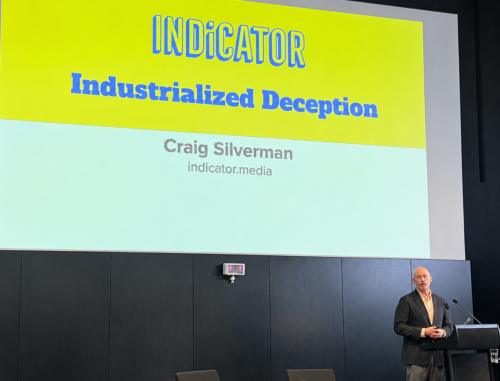
“We are living through a second era. It’s being brought on by AI”: Craig Silverman delivering the 2026 A N Smith lecture in journalism at the University of Melbourne. Photo by Louisa Lim.
“The barrier to entry has collapsed,” said Silverman.
The fake doctor was one of dozens of synthetic health workers Silverman found, each promoting dubious products. But the scope extends far beyond medical fraud.
He found completely AI-generated female influencers, recognisably synthetic women, posted to Instagram and TikTok wearing swimsuits, filmed with celebrities, directing engagement toward paid subscription platforms.
None of these accounts disclosed that they were synthetic, despite platform policies allowing, and in most cases, insisting on such labels. The disclosure, when it existed, was buried four clicks deep in a bio.
“The chances of somebody choosing to read her bio,” Silverman noted, “were relatively slim.”
What is perhaps most striking is that this deception is no longer marginal. At least one prominent venture capital firm has funded a bot farm company. Businesses openly advertise services for creating and managing synthetic identities.
An operator known as Dan sells a package of 30 pre-recorded reaction videos of women crying, laughing, or screaming to marketers for $159. Marketers pair them with product descriptions and drive engagement without disclosing that the emotional reaction is purchased and recycled.
Undisclosed influencer marketing has reached a scale Silverman described as “astronomical”.
Young people, primarily hired in Eastern Europe, post multiple times daily about study tools and productivity apps, but their bios contain no disclosure and their posts carry no labels. They appear to be relatable peers sharing genuine advice.
“It works because it reads as organic,” Silverman said. “It is paid, but the key is that it’s undisclosed.”
Verification under threat
The challenge for journalists extends beyond identifying what is fake. Verification tools are themselves becoming uncertain.
Satellite imagery, once a reliable form of evidence for conflict reporting, is now being altered with AI. CCTV footage, body camera footage, courtroom footage, media that audiences instinctively trust because they seem to come from neutral sources are now being synthetically generated or edited.
In conflict zones, manipulated satellite imagery is circula
ting on social media alongside real imagery. “They know that folks may be on guard in certain areas,” Silverman explained. “But if we start to put up fake satellite imagery, perhaps that’s going to be more effective.”
The problem deepens when AI systems themselves become part of the verification chain.
During the Israel-Iran conflict, AI-generated videos of missile strikes circulated widely on social media. Users asked X’s chatbot, Grok, whether the footage was real, and Grok confidently replied that it was authentic, citing news outlets that had reported on the actual conflict.
Hours passed before the chatbot was persuaded, through repeated argument from multiple users, that the video was synthetic. Thousands had already seen Grok’s previous false claims.
Similar dynamics emerged on Meta. Silverman showed an example of a false story about a Montreal Canadiens hockey player. Meta’s AI summarisation tool offered to read the post to users. Rather than pointing out that the story was false, the AI simply regurgitated the fabricated claim.
“Meta is short-circuiting it,” Silverman said. “It’s not asking you to think. It’s just telling you what the false story says.”
A decade earlier, a Meta executive had called this kind of content “the worst of the worst”. Today, platforms allow it. Silverman has flagged these pages repeatedly to Meta, but they remain online.
“The companies like Meta that provide the platforms for this content to spread are also building these models,” Silverman noted. “They want you using the models, which means they want the models giving answers, which can further perpetuate the worst of the information.”
Using AI to investigate AI
Yet Silverman’s position is not one of resignation.
He described a paradox. Indicator, his newsroom, is deeply conflicted about AI, but uses it constantly.
Craig’s co-founder at Indicator, Alexios Mantzarlis, used AI to analyse thousands of advertisements and identified approximately 11,000 ads promoting abusive “deepfake” technologies, apps that let users generate explicit images without consent.
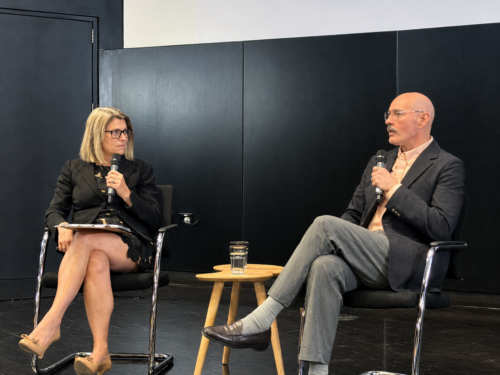
Craig Silverman in conversation with Professor Andrea Carson, director of the Centre for Advancing Journalism, following the 2026 A N Smith lecture in journalism. Photo by Fatemeh Mirjalili.
The investigation was only possible in days because AI accelerated the analysis.
“If we don’t understand how to use them,” Silverman said, “then we can’t understand how to investigate them, and we can’t understand their limitations.”
He also pushed back against the defeatist narrative that dominates conversation about AI and information systems. People hold the ability to choose what they give their attention to. They can pause before engaging. They can think instead of react.
“You absolutely have a choice over what you give your attention to,” he said. “That is a very powerful thing.”
Journalists, he argued, have particular responsibility to remain adaptive and persistent. The operations spreading false information are creative, motivated, and constantly evolving. The systems may be industrialised, but so must the response be.
“We have to be adaptive. We have to find persistence because they have it, and we need to find it as well.”
The 2026 A N Smith lecture in journalism is delivered by the Centre for Advancing Journalism at the University of Melbourne. A video link to the lecture will be available shortly.