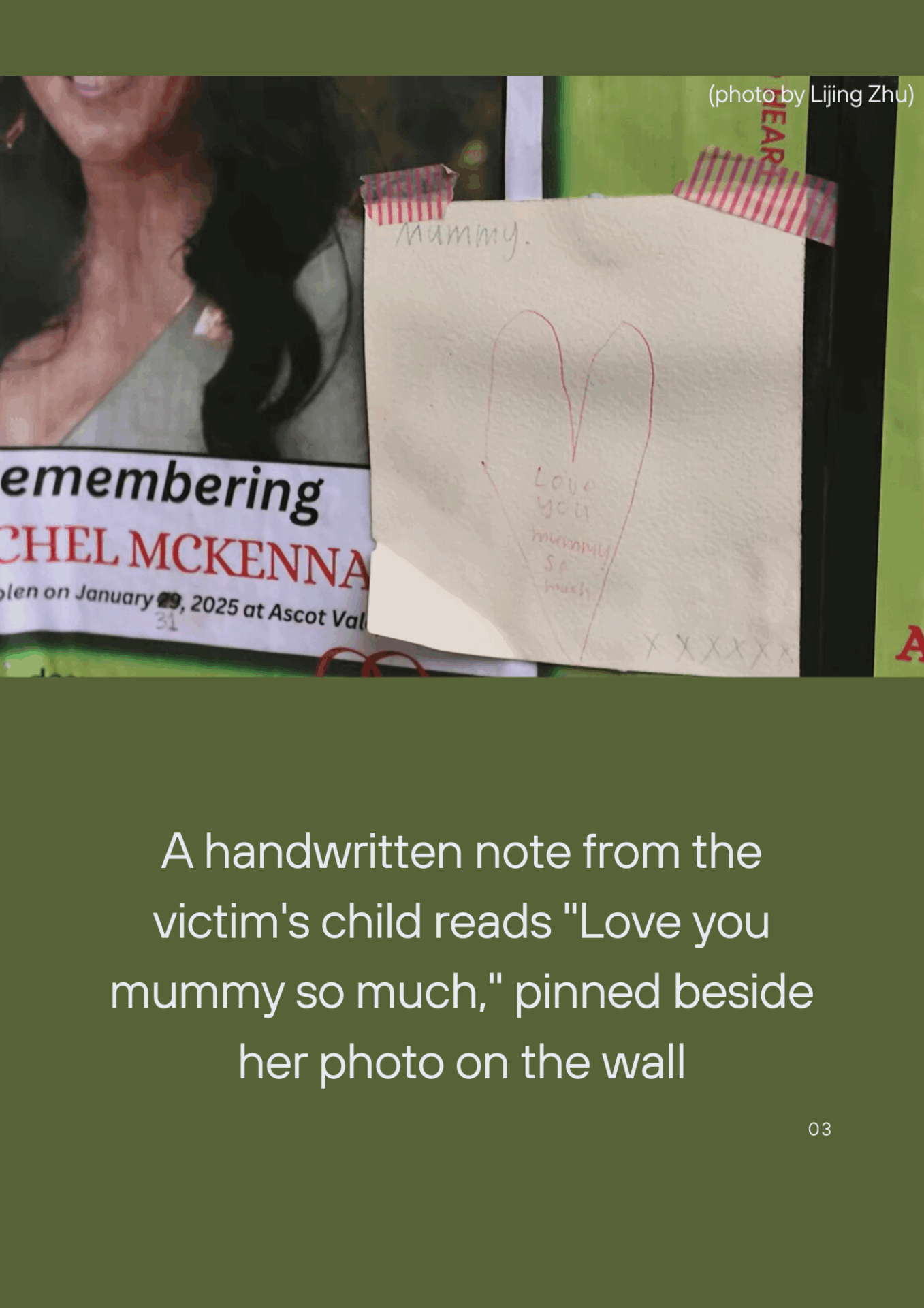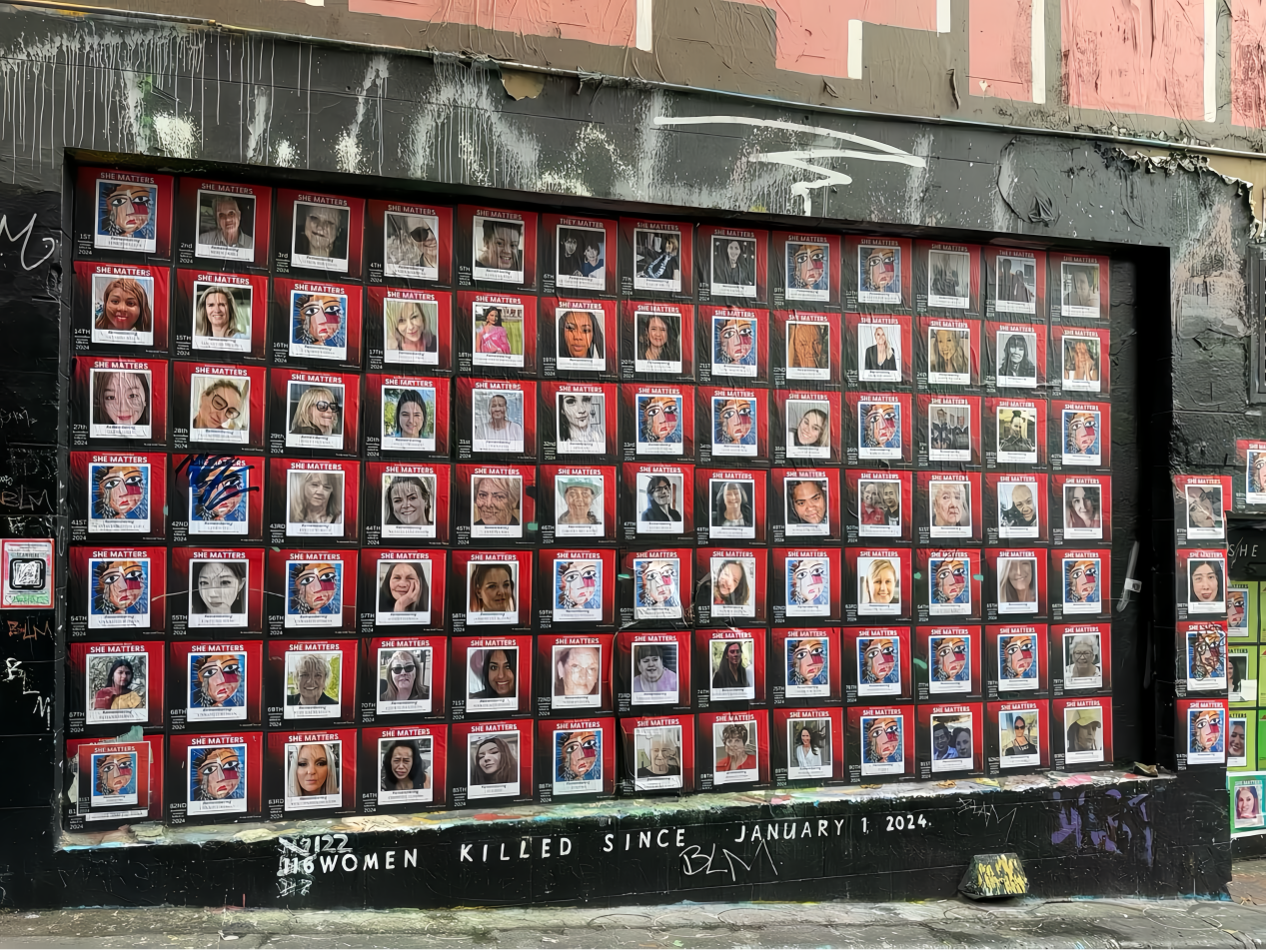
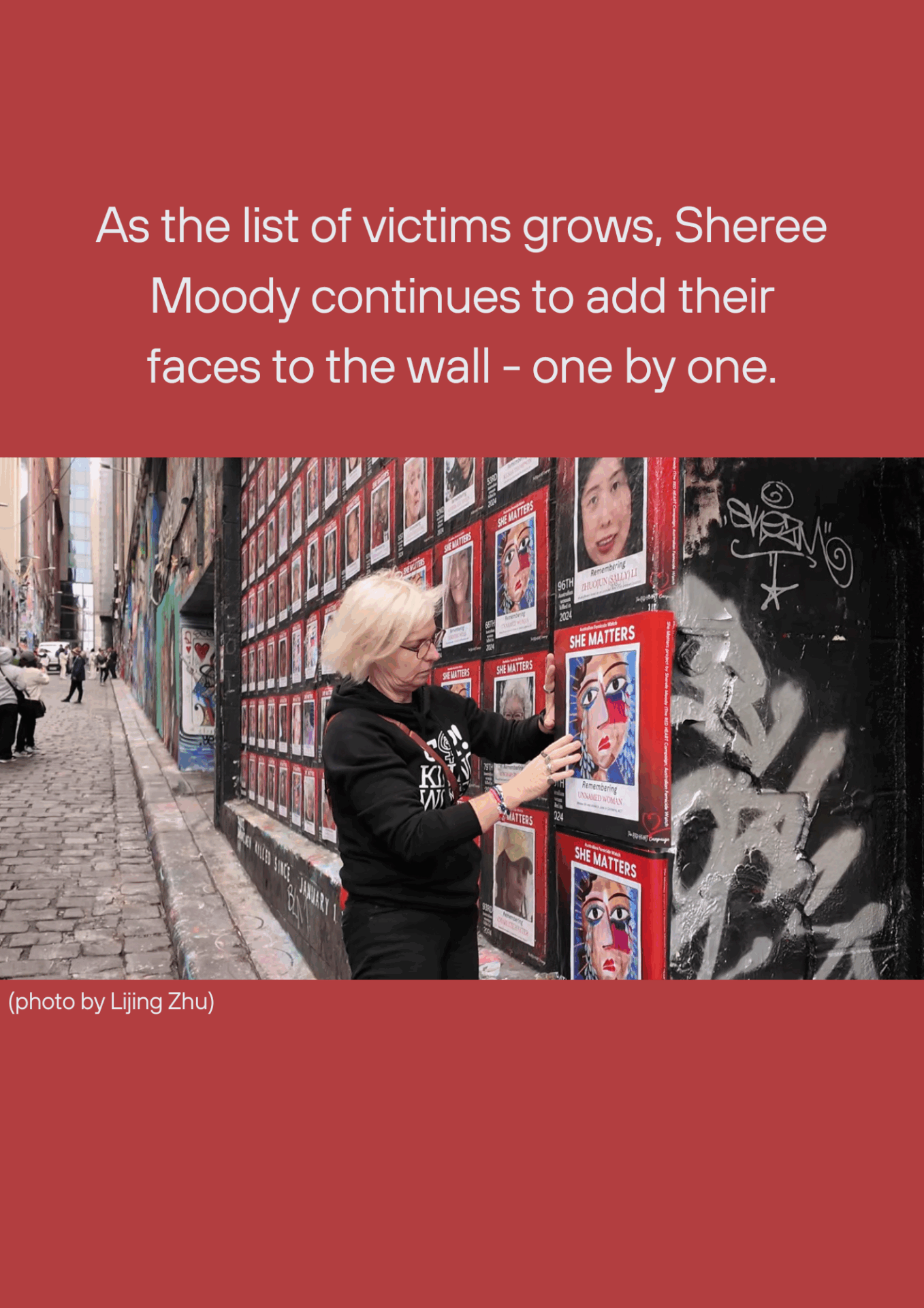
The person behind this wall, dedicated to women who’ve died from violent deaths, is Sherele Moody—a feminist activist and founder of the She Matters Campaign. For nearly a decade, Moody has documented cases of violence against women to ensure the victims are not forgotten.
“I have to do this,” she said. “I can’t let their stories go unheard. Putting their faces on the wall is the most direct way to make people stop and care.”
At the time of writing Moody had documented more than 120 cases of femicide in Australia, 60% caused by domestic and family violence. (This number had risen to 143 by 28 July 2025.)
Moody points out that by reclaiming public space, She Matters transforms grief into a form of protest that cannot be silenced.
“People don’t realize how bad violence against women is,” she explained. “The mural makes the scale of the issue visible. It’s harder to look away when the truth is staring you in the face.”
Moody believes art and activism are tools for prevention and change.
“The mural shares these women’s stories to help others recognize red flags in relationships.”
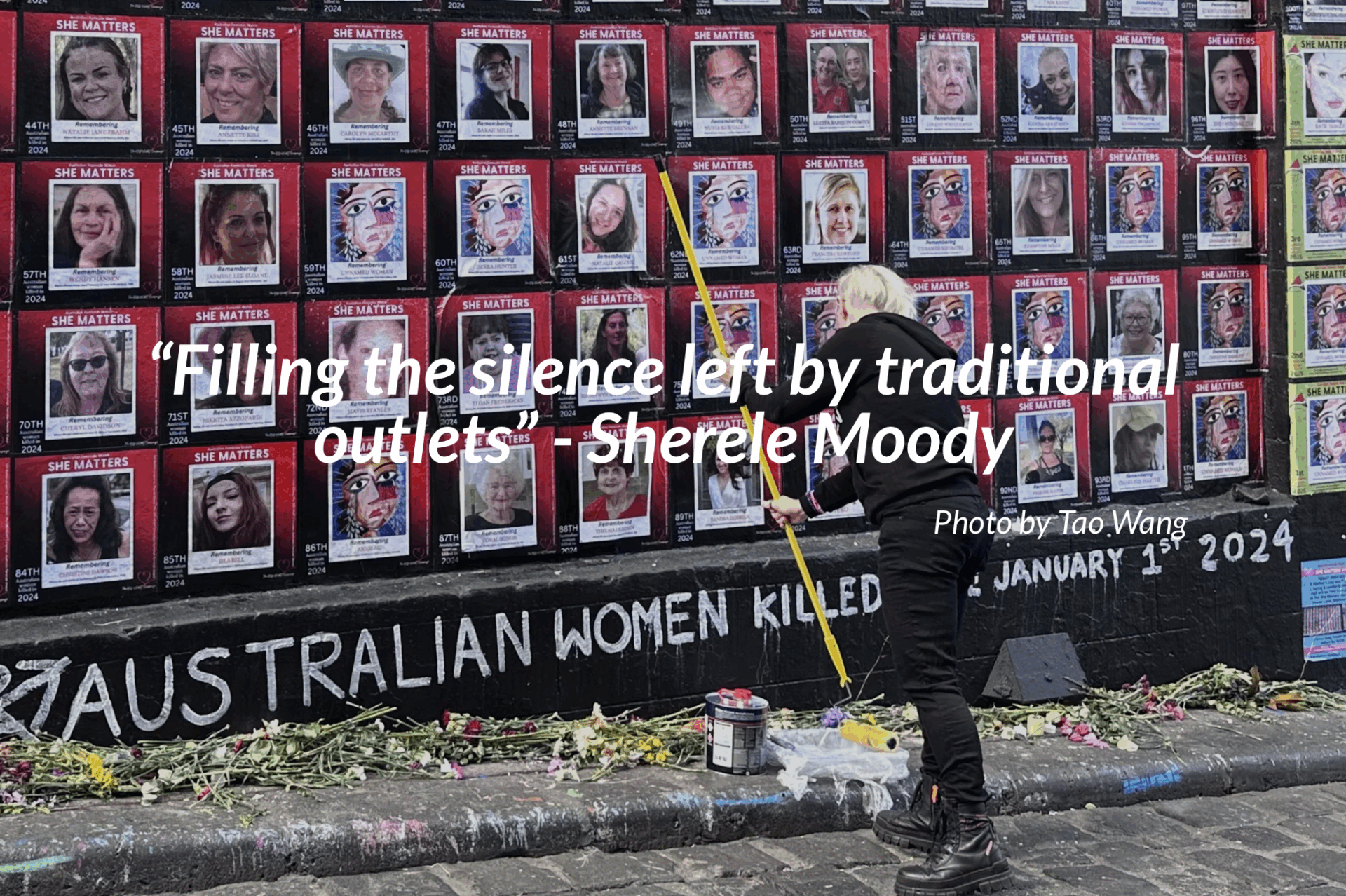
She hopes that by exposing those sad stories and their details, fewer women will reach the point of fatal danger. At the same time, the mural also functions as an alternative media source—filling the silence left by traditional outlets.
“The media rarely covers this issue—our work kicks back, offering facts and resources to the public and policymakers. I believe it can help drive real change,” she said.
Jani Rundall, the founder of the Stalking Justice Project, a platform that collects stalking-related data and offers resources to help female victims, was moved when she passed by Moody’s mural.
“Even for someone like me, who works with data and survivor stories every day, when you see a mother or an elderly woman murdered by a stalker—often a partner—it’s impossible not to be shaken,” Rundall said.
“That’s the power of art and activism—it breaks through emotional walls and makes people stop, feel, and think.”
Rundall added that the mural is a great platform to speak out for women and activism. These type of protests also provide a platform to spread women’s stories and let people know more about the dangers and inequalities women face.
“There are more and more platforms in society that can help spread women’s stories to fight for equality and justice. In fact, besides femicide, women face different types of difficulties, the more people understand, the stronger women’s voices become—and the fewer lives we lose.”
Art Galleries and Activism
Art galleries have also become a space for women’s rights advocacy. The Outsiders Melbourne, a street art gallery located right on Hosier Lane, embraces this role by showcasing works that reflect historical gender injustices or respond to femicide issues in current society.
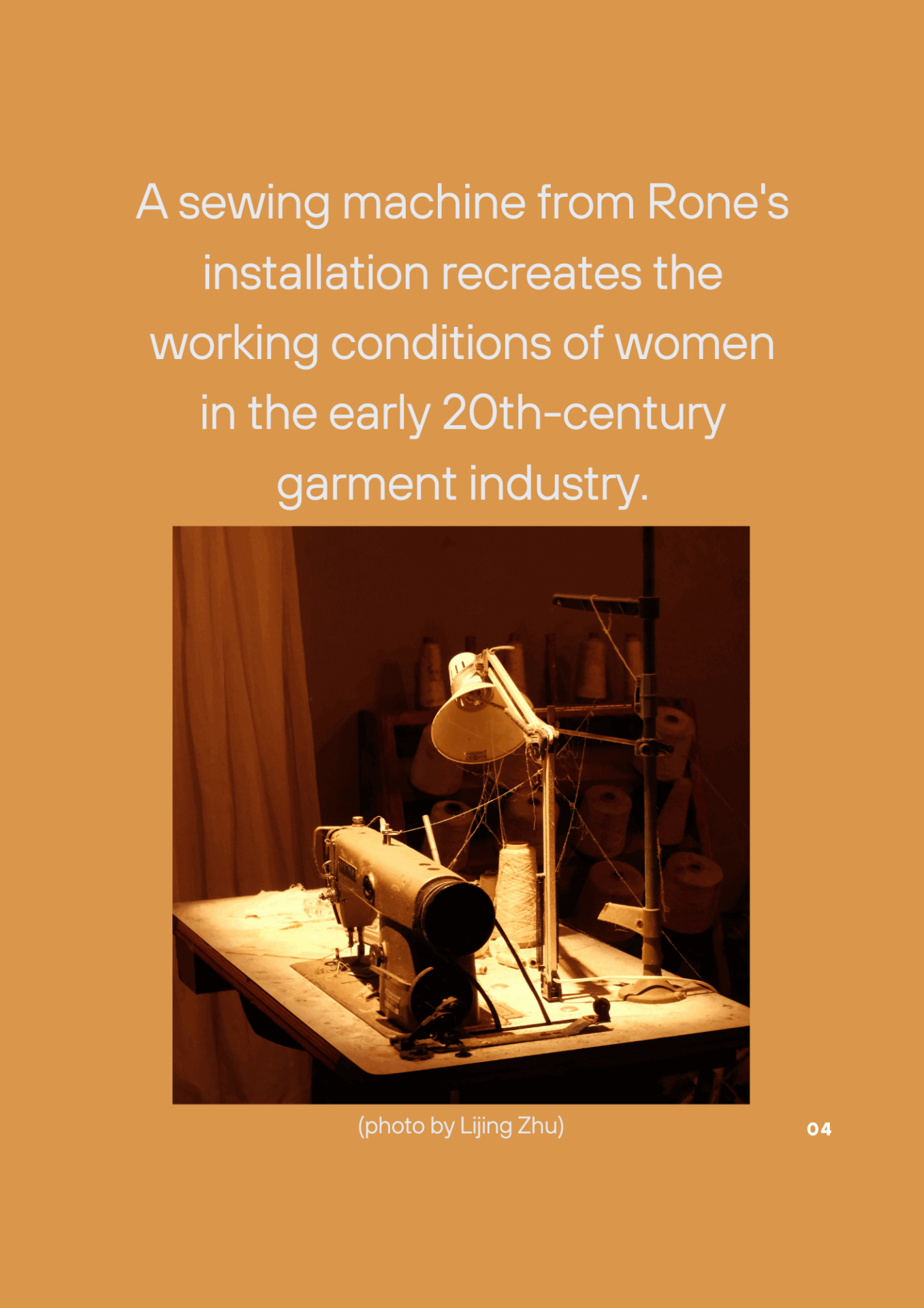
One of the gallery’s recent exhibitions, The Workroom by acclaimed artist Rone, reconstructs a 20th-century sewing factory to shed light on the often-invisible labor of working-class women. Inside the immersive installation, a portrait of a female worker gazes solemnly from the wall, surrounded by vintage sewing machines and scattered threads.
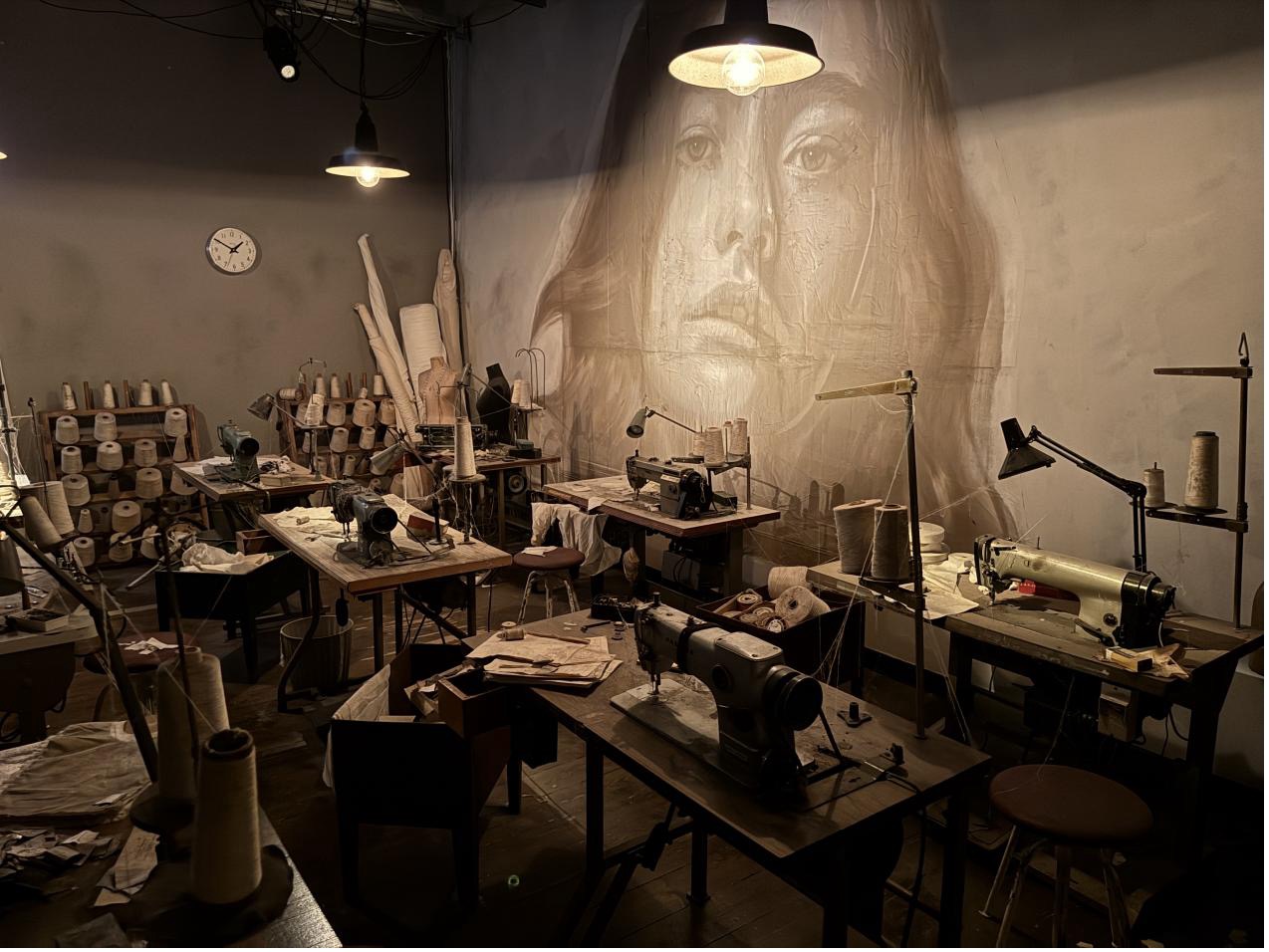
Rone’s installation artwork The Workroom, photo by Mingrui Li
“Back then, women made the dresses, but men sold them,” said gallery staffer Luke McDermott. “This installation reminds us how women’s labor was overlooked and treated wrongly in the past, and it brings their stories into focus.”
For McDermott, art and activism are closely intertwined. He views creative expression as a bridge between marginalized experiences and the public.
“They are accessible,” he explained. “They speak to everyone who walks by. That’s what makes it such a powerful way to share stories that often go unheard.”
McDermott believes that women’s voices are sometimes silenced, but art and activism are ways that can help.
“When you put women’s stories into artwork or forms of activism, they are impossible to ignore,” he said. “They can question gender gaps, expose injustice, and push people to think deeper. Then people can become megaphones amplifying the voice of women.”
This idea resonates beyond galleries. Brooke Gillard, a staff member at the Queen Victoria Women’s Centre Shop, emphasized that women’s stories are still being marginalized.
“Problems like femicide and gender gaps still exist, but news media and the government just want people to ignore them,”she said. “That’s why we collect and showcase every artwork that expresses women’s voices.”
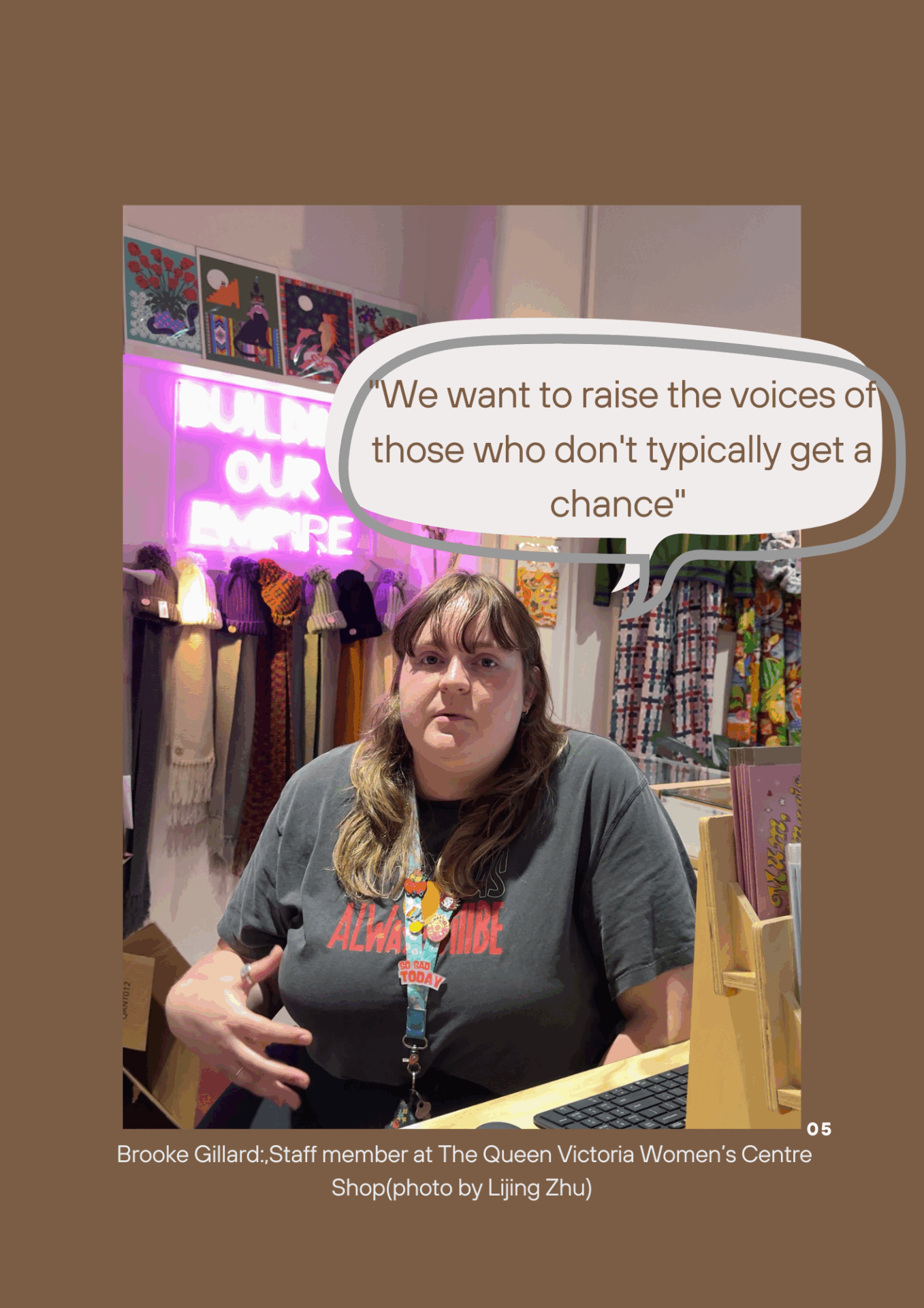
For Gillard, art and activism amplify women’s voices and bond different people together.
“The artworks connect women who’ve never met since they create a message that says: you’re not alone, and your voice matters,” she said. “This is a catalyst to bring people together and encourage them to march towards a common goal.”
Back in Hosier Lane, the women in the mural still looked at passers-by silently—but their stories are no longer silent.
As Moody puts it…
“These aren’t just works of art or activism—they’re acts of remembrance, resistance, and the beginning of change.”