Melbourne’s expanding data centre industry could require another 1,900 large diesel generators for backup power, potentially bringing the amount of diesel stored across the city’s facilities to about 40 million litres.
The estimates, presented by University of Melbourne atmospheric scientist Dr Robert Ryan, raise questions about the environmental and public health consequences of the industry’s rapid growth.
Ryan was particularly concerned about Melbourne’s western suburbs, where he said residents, many in lower-income communities, already face pollution from traffic and heavy industrial activity.
Melbourne already has about 300 of these generators, Ryan said. Victoria’s new planning requirements “definitely help”, but would not apply to existing developments or some projects already in the pipeline.
“That’s already a lot of stored diesel and a lot of diesel generators,” he said.
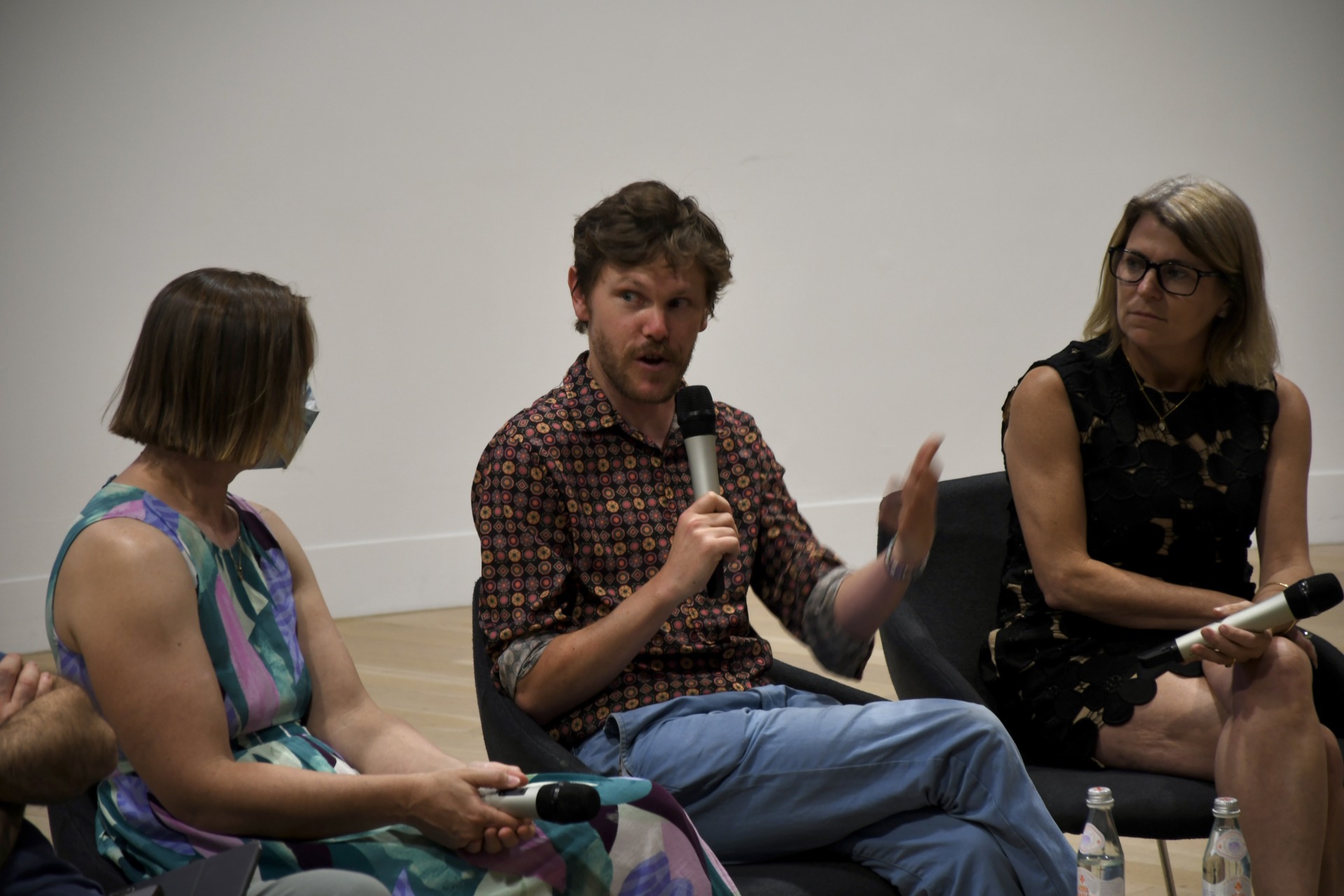
“I’m here to plead the case for the environment”: Dr Robert Ryan, who called on data centre operators to disclose generator numbers, testing schedules and the coolants they use. Photo by Preeshita Shah.
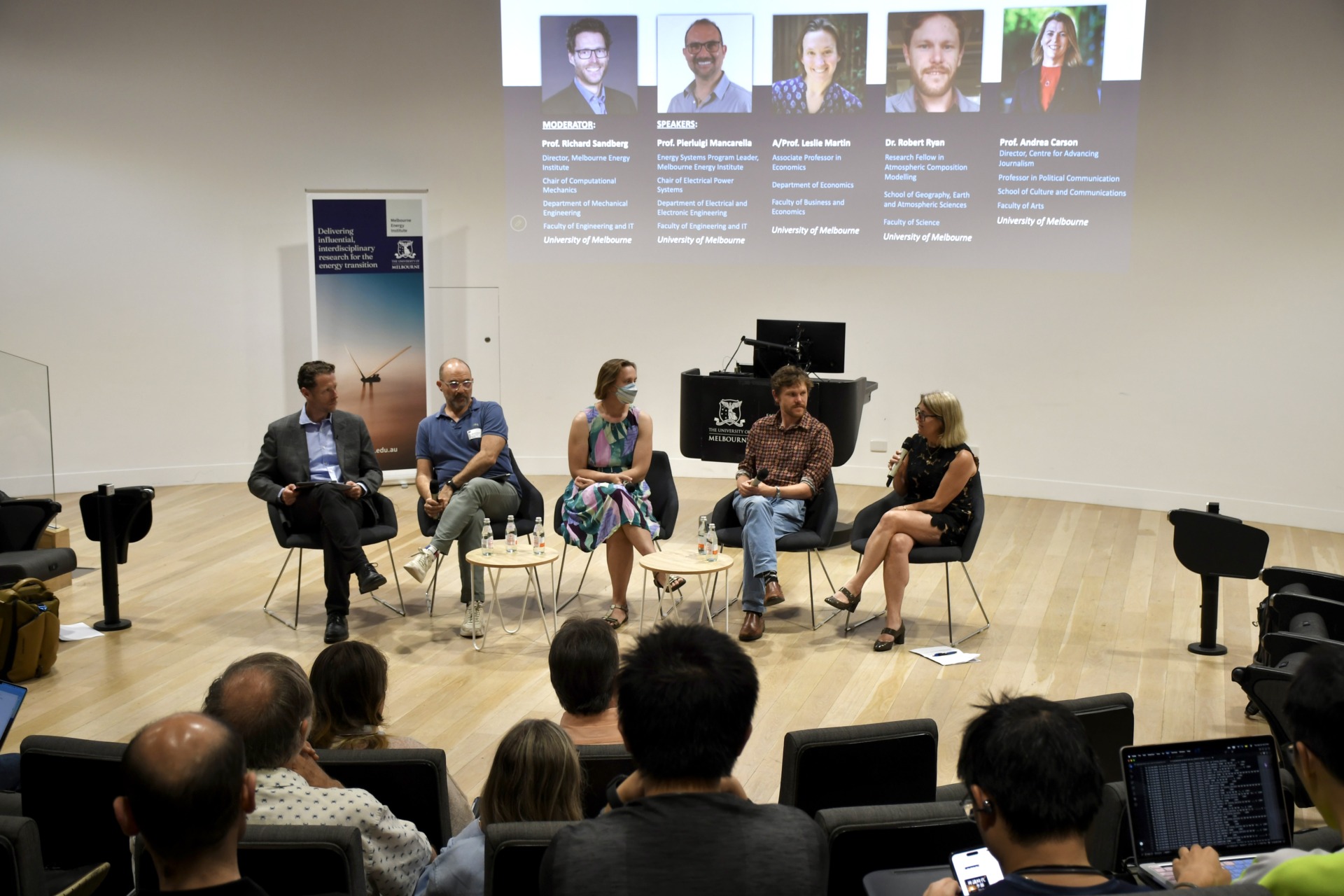
Ryan was one of four researchers who spoke at a Melbourne Energy Institute forum last Thursday, examining between them the pressures Australia’s data centre boom could place on electricity infrastructure, household energy costs, air quality and climate, and public trust.
The discussion came five weeks before the Victorian election, with the Greens calling for a moratorium on new developments and the Labor government announcing planning requirements, including a 150-metre buffer between new facilities and homes.
Australia has about 165 operating data centres, with more than 225 further projects under consideration, according to Melbourne Energy Institute director Professor Richard Sandberg, who moderated the event. Their combined operational capacity is projected to more than double by 2030, he said.
Data centres could be built within two years, while major transmission infrastructure could take a decade, said Professor Pierluigi Mancarella, chair of electrical power systems at the University of Melbourne.
Planners, he said, must decide how much infrastructure to build without knowing how many proposed data centres will proceed.
“Either you build too much or you build too little and you will miss lots of opportunities,” Mancarella said.
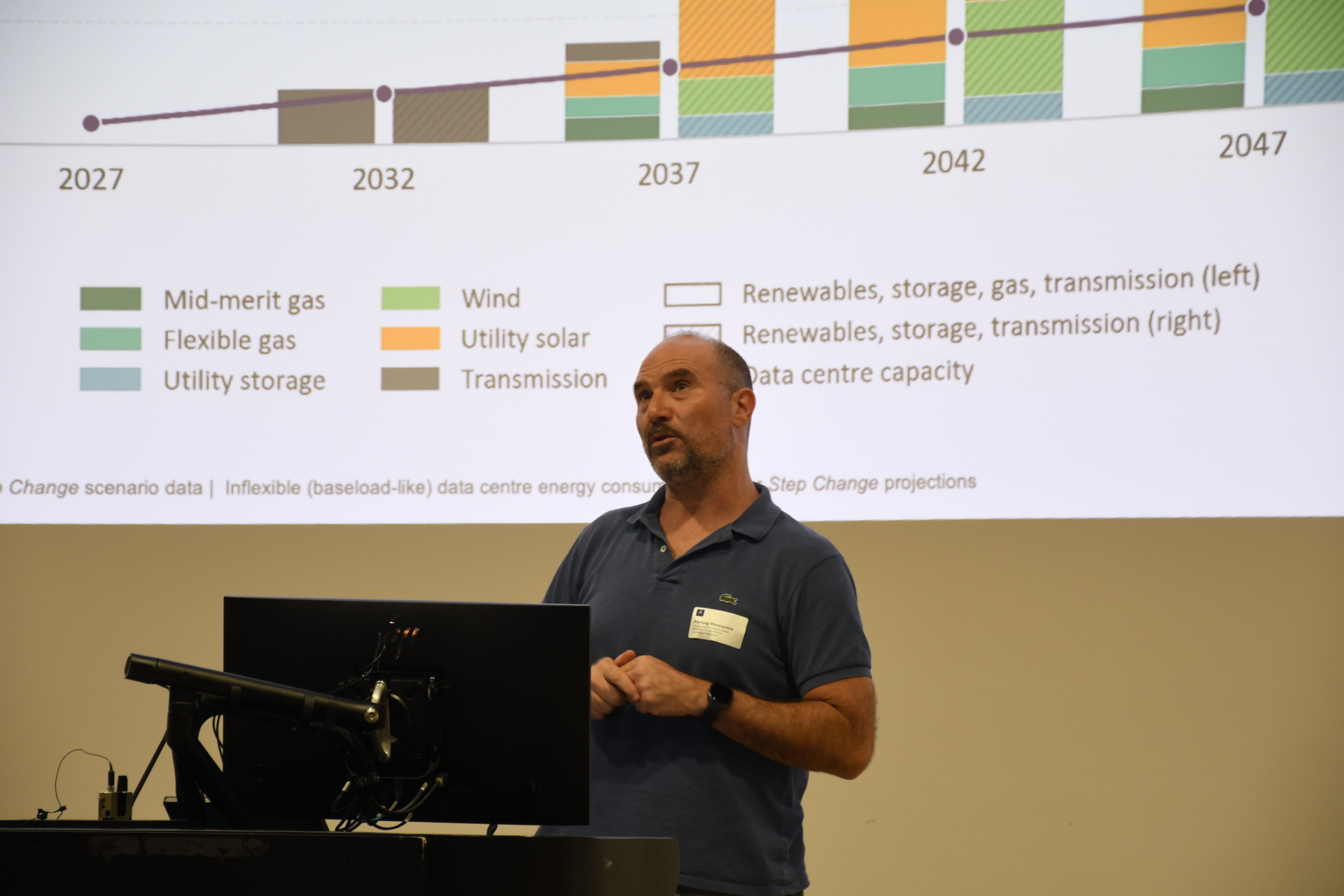
“We go to one of the most fundamental philosophical problems in the history of humankind”: Professor Pierluigi Mancarella on the chicken-and-egg problem of planning a grid for data centres that may never be built. Photo by Preeshita Shah.
His modelling suggested that locating data centres closer to renewable energy zones, rather than concentrating them around major cities, could reduce pressure on the electricity system.
Shifting some computing activity away from peak demand periods could also reduce the amount of new electricity generation required, he said.
“This is not an academic exercise,” Mancarella said. “This is equivalent to many many billions that could be saved.”
But who pays for it is another question.
Australia’s electricity market does not fully charge users for the congestion they impose on transmission networks, said Associate Professor Leslie Martin, an environmental economist at the University of Melbourne.
As a result, some costs associated with data centre development could be spread across other electricity users, she said.
Martin warned that those costs could fall on households least able to absorb them, including renters and apartment dwellers who cannot install solar panels or batteries to reduce their bills.
She was also sceptical that data centres would shift their demand to cheaper times, saying she had seen “very little evidence of price sensitivity” in how they operate.
Martin questioned whether the speed of the industry’s expansion was in the public interest.
“They are fighting for market share across themselves,” Martin said of the two competing AI companies, OpenAI and Anthropic.
“It is a race that is not ours as a society.”
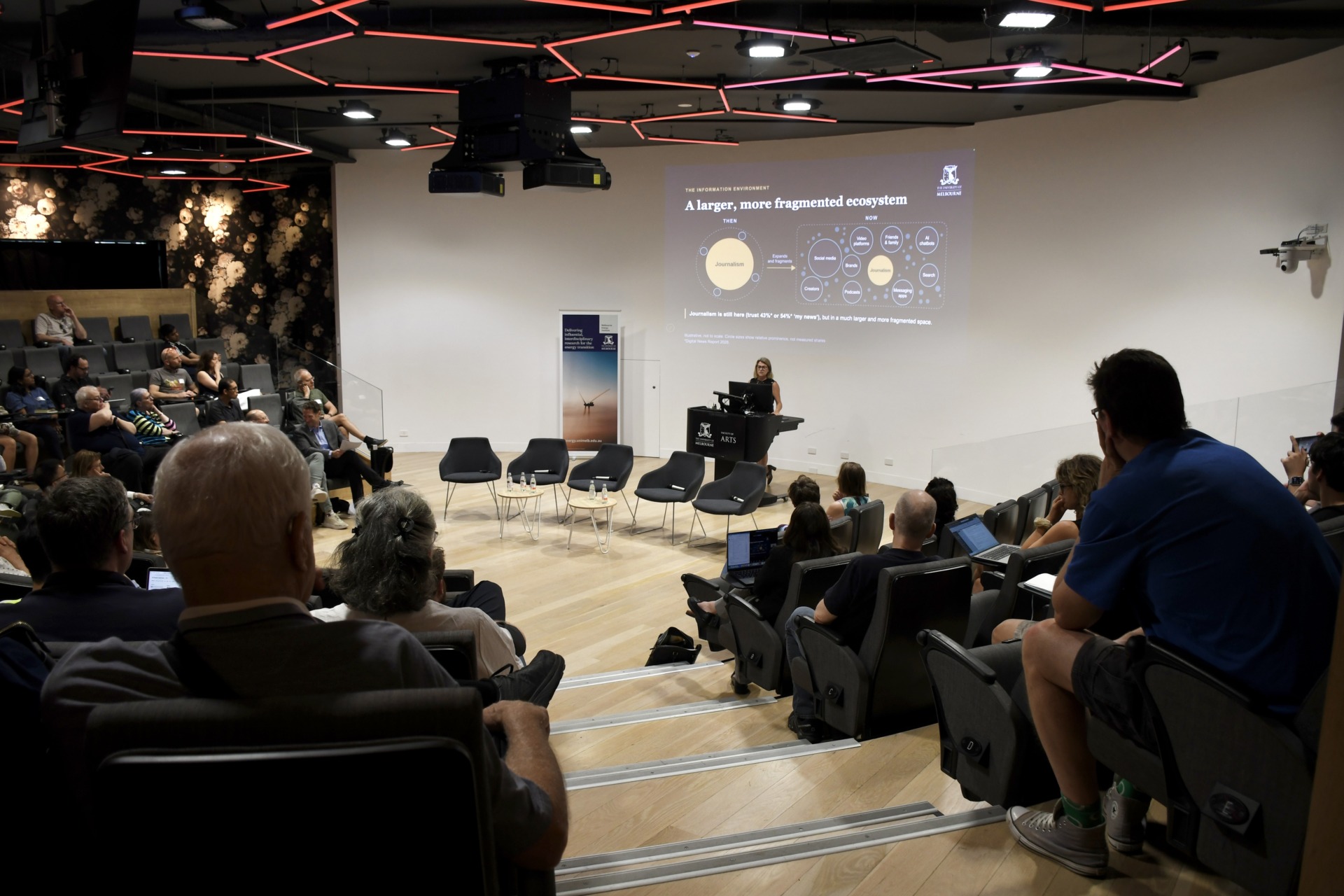
Professor Andrea Carson presents early research on how data centres are discussed on Facebook and Instagram to a full Forum Theatre in Parkville. Photo by Preeshita Shah
The growing concerns are also shaping public debate, according to Professor Andrea Carson, a political communication researcher and director of the Centre for Advancing Journalism and Information Integrity, which publishes The Citizen.
Carson presented preliminary research examining almost 130,000 Facebook and Instagram posts about data centres, with civic backlash and demands for public oversight among the most prominent themes.
Government agencies, business media and investor accounts largely promoted infrastructure expansion, while individuals and general technology or science pages shared stories of protests, local bans and moratoriums, she said.
Carson cautioned that social media activity was not representative of public opinion, particularly when organised groups were trying to influence the debate.
The industry had become a focus for broader anxieties about artificial intelligence, employment and economic insecurity, Carson said, responding to a question during the panel discussion.
“Data centres become a flashpoint because of the physical manifestation of them, where you can point to something, where you can’t really point to AI, but you can point to the data centre that is powering AI,” she said.
The researchers were speaking at the inaugural event of the Melbourne Energy Institute’s Energy Conversations series, held at the Forum Theatre in Parkville on 22 October.
For Ryan, limited information about generator testing schedules and emissions made it difficult to assess the cumulative health impacts of the boom on surrounding communities.
“We’ve got to start asking these questions before we make the investment,” he said.