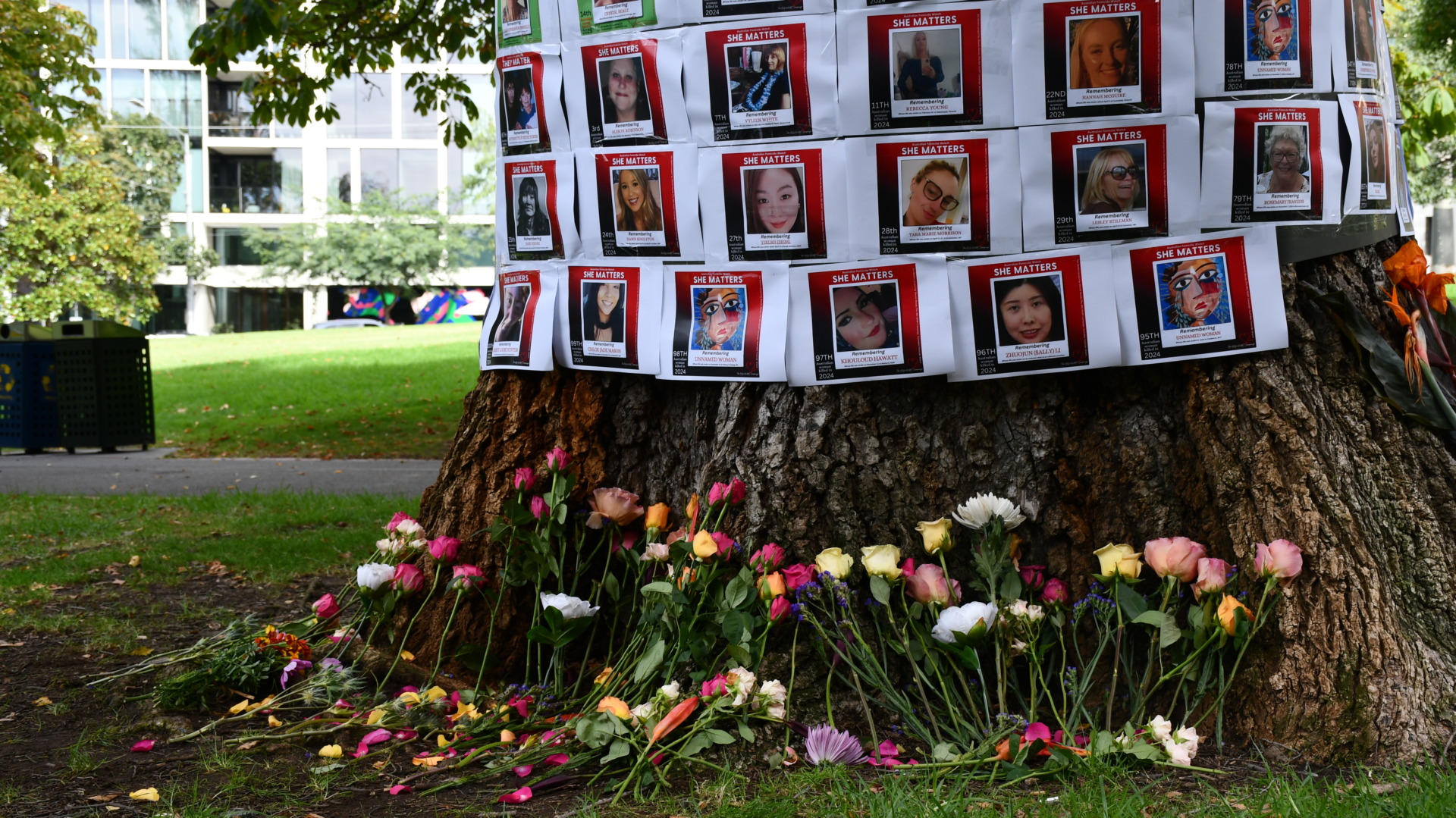
On Saturday, organisers, speakers and crowds in their hundreds turned out at 14 rallies scheduled in cities and towns across Australia demanding more funding for frontline gendered violence services, and calling on political leaders and lawmakers to commit to ending violence against women.
The She Matters: Stop Killing Women rallies were organised by journalist and femicide researcher Sherele Moody. She initiated a project to count and highlight the deaths of women from violence more than a decade ago, and while she has succeeded in bringing fresh focus to the emergency, Moody argues that authorities are still failing to fully track femicide.
She highlights neglect of some particular categories of incidents. They include violence committed by someone outside the family context but known to a victim in some way; non-family violence stalking offences; suspicious vehicle deaths; and deaths by suicide linked to cases of family violence.
“Too many women falling through the cracks,” Moody argues.
“We get a distorted figure from the government. They say we’re doing what we need to do for this little pile of people, but in fact they’re not covering everyone and they’re not protecting everyone,” she told reporters at Melbourne’s She Matters rally.
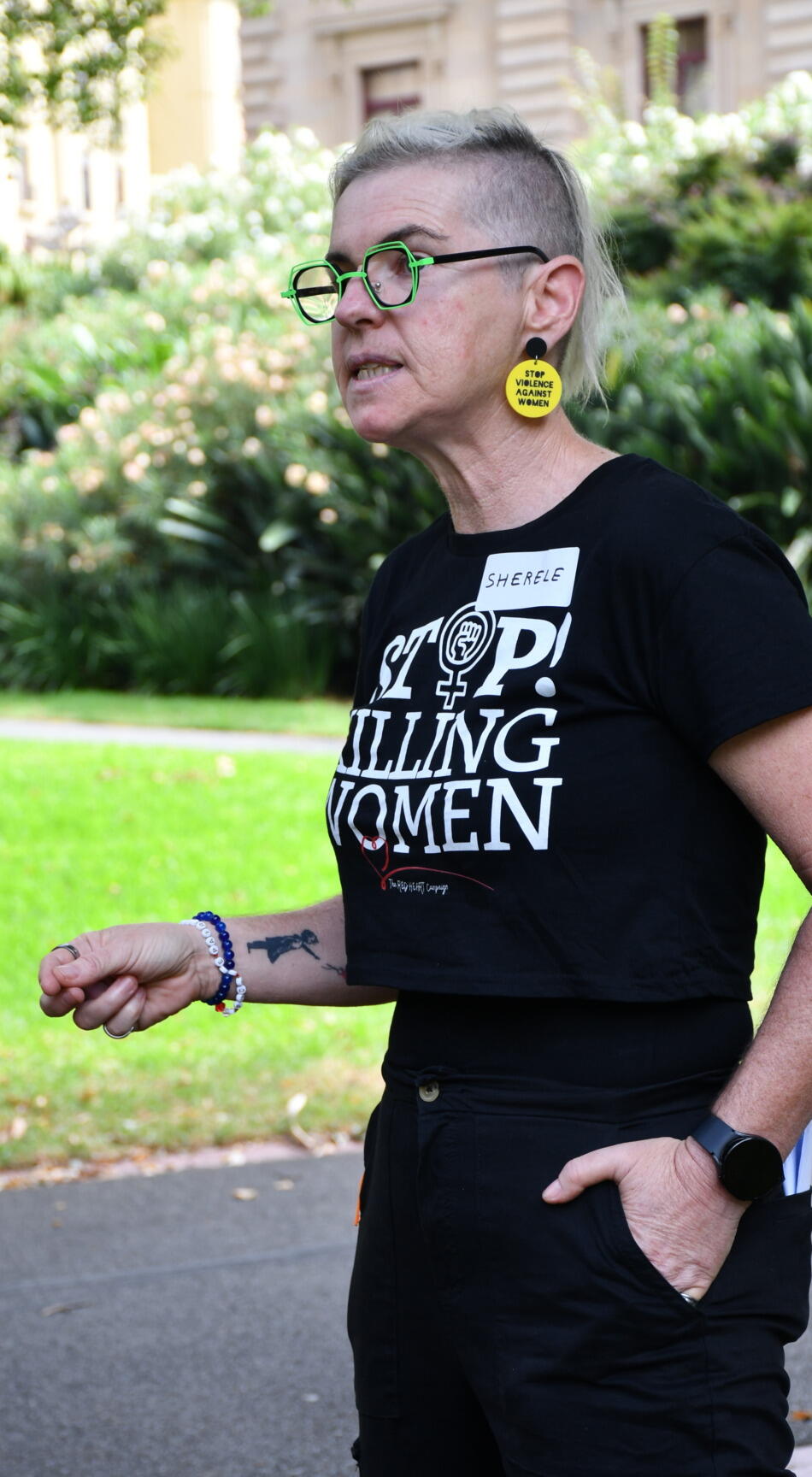
Femicide researcher and rally organiser Sherele Moody. Photo: Ashleigh Wyss
Moody founded the Red Heart Campaign and Australian Femicide Watch in 2015, a memorial which documents the Australian women and children who have lost their lives to violence, including those who are killed overseas.
Since January 2024, 117 Australian women have been violently killed, including 14 this year, according to Moody’s Femicide watch.
Ninety-six per cent of these women were allegedly murdered by a man.
Moody argues that while the killings of Australian women have gained increased public attention in recent years, advocacy remains disproportionately in the hands of women.
“It’s mostly women who are organising the marches. It’s women who are setting up refuge. It’s women who are doing the fundraising, getting other people out of dangerous situations … the people who are not doing this stuff are men,” said Moody.
“Gendered violence is a man’s problem to solve. It’s not a woman’s problem to solve”.
Speakers at the rally, including victim-survivors and the family members of allegedly murdered women, have demanded legislative change, calling for mandatory “life for a life” sentences for murder, strict ankle-bracelet monitoring for high-risk offenders, for courts to close “loopholes” in the “mental impairment” defence.
Other speakers called for greater scrutiny and inquiry into womens’ deaths by suicide in cases of family and domestic violence, with many condemning media outlets for their exploitative reporting on the deaths of their loved ones.
Domestic violence advocate Bianca Unwin, who was among the speakers addressing the She Matters Melbourne Rally, has been campaigning against gendered violence since her sister, 29-year-old mother of two Katie Haley of Melbourne’s North-West, was murdered by her partner in 2018.
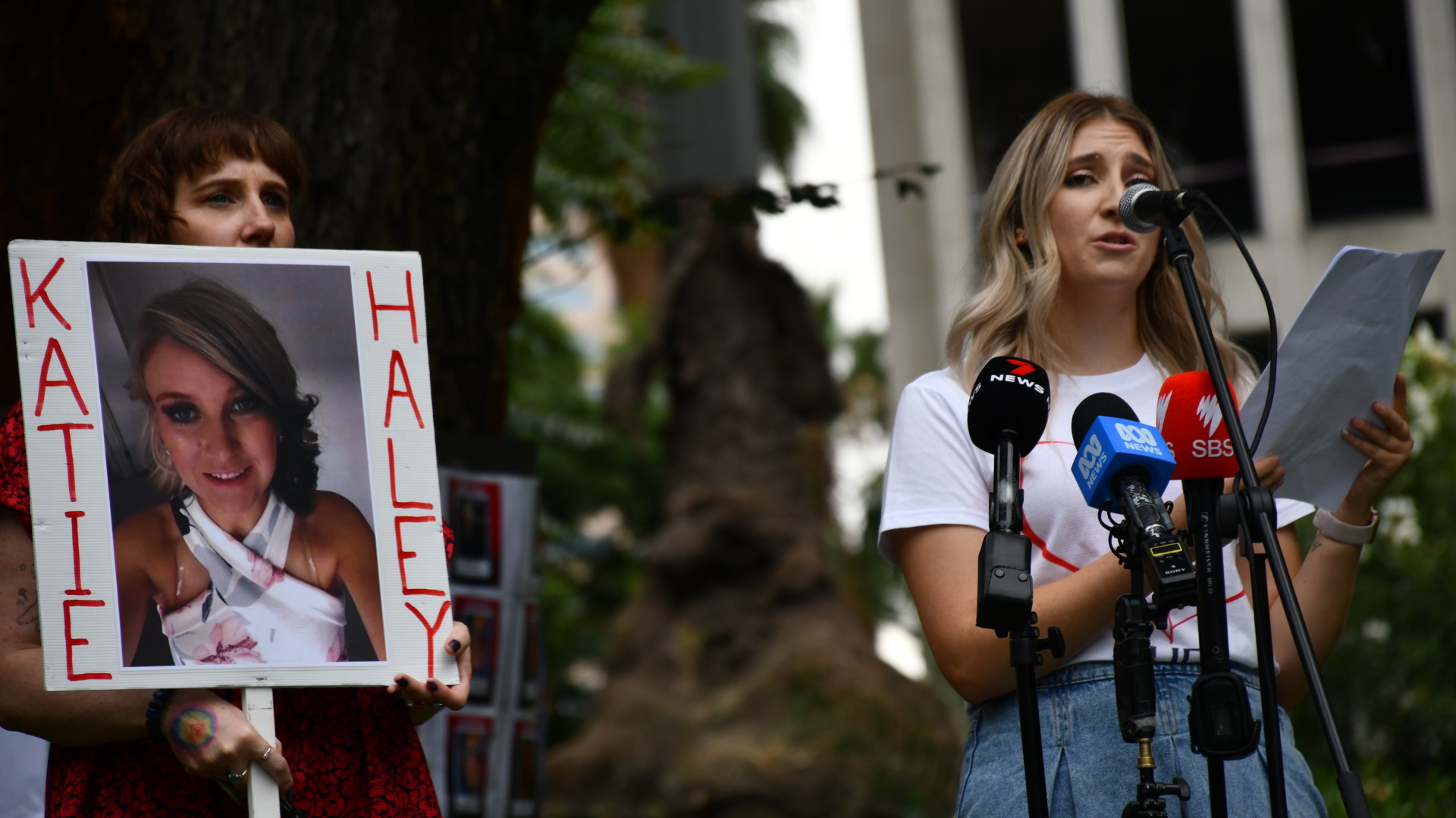
Bianca Unwin (pictured right), a vocal advocate against gendered violence since the 2018 murder of her sister Katie Haley, stands alongside artist Dans Bain (pictured left), who holds a portrait of Katie. Photo: Ashleigh Wyss
“Women are stalked, terrorized, beaten, strangled and murdered, and every time [the government] act[s] like it’s a shocking tragedy, like we couldn’t see it coming. But we all can see it coming,” said Unwin.
“Every woman killed because she wasn’t believed, because she wasn’t protected, because her abuser’s tactics weren’t taken seriously. That is the blood on the hands of this system.”
Unwin called on the Victorian Parliament to criminalise forms of coercive control following legal precedents set by New South Wales and Queensland.
Coercive control is a form of domestic abuse involving an ongoing pattern of emotional abuse, controlling behaviours, restricted autonomy, stalking and harassment.
Coercive control remains widely misunderstood by the broader public as the justice system and media have traditionally framed domestic violence as a series, or isolated instances of physical and sexual abuse, according to the work of journalist and gendered violence advocate Jess Hill.
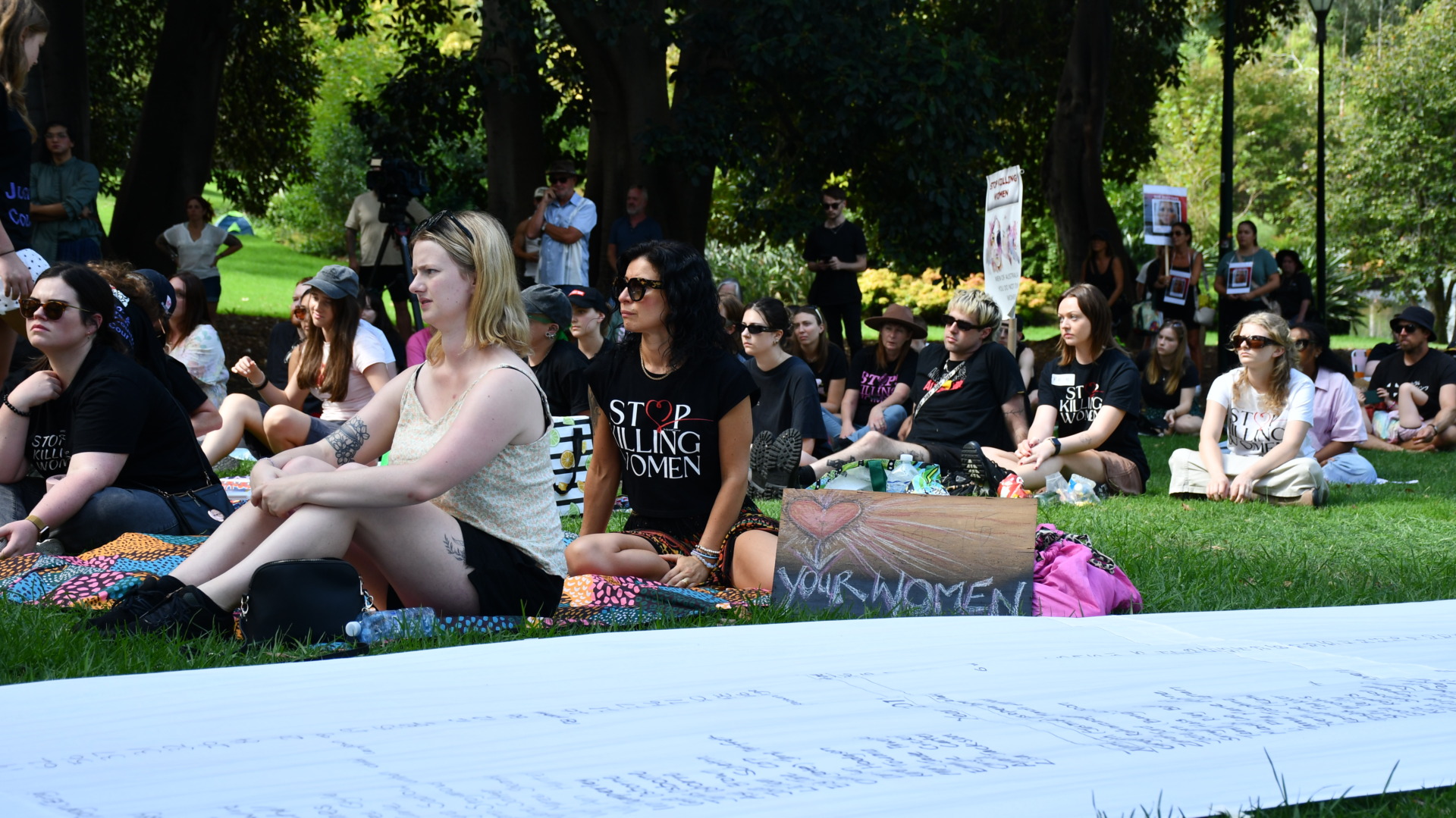
Attendees listen to speakers, many victim-survivors and the families of allegedly murdered women, at Melbourne’s She Matters: Stop Killing Women rally. Photo: Ashleigh Wyss
Unwin said many women murdered by an intimate partner were “victims of coercive control long before they become victims of homicide”.
“Enough with the inquiries, enough with the excuses, enough with the performative outrage from our politicians who pretend to shed a tear when another woman is murdered, but do absolutely nothing to stop it from happening again,” she said.
“We don’t need more vigils… We need action.”
If you or someone you know is experiencing, or at risk of experiencing, domestic, family or sexual violence call 1800RESPECT on 1800 737 732.
If you are concerned about your behaviour or use of violence, you can contact the Men’s Referral Service on 1300 766 491 or visit www.ntv.org.au.
In an emergency, call 000.