
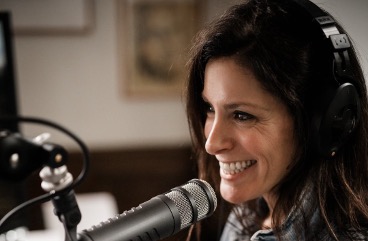
Anna Logacheva, co-host of the French podcast Cash Confidences and co-founder of the B2B content agency Spicy Lemon, launched her finance podcast just over 12 months ago to “help women take charge of [their] financial independence” with expert advice.
“It’s really 100% for women … not at all for men. We’re not aiming to attract male followers at all,” she said.
Logacheva’s background isn’t finance — she studied literature and film and grew up with the idea that finance was too complicated and not for her — according to an interview by Enerfip.

Anna Logacheva and Mariana Mergulhao, hosts of Cash Confidences. This is the podcast’s cover photo. (Photo supplied by Anna Logacheva)
Cash Confidences is part of a growing trend in France of podcasts produced by women and specifically for women — particularly in the area of finance.
The pioneer
Solenne Niedercorn is one of the pioneers of French finance podcasting, aimed specifically at women. She is the founder and host of two podcasts — Finscale and more recently From Within: The Soul of Business — with over two decades of experience in the finance industry. She hopes her podcasts shed light on the constantly shifting world of finance.
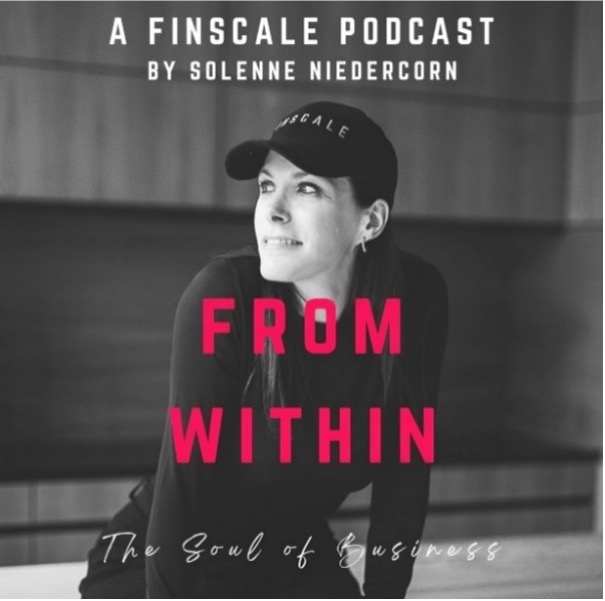
Solenne Niedercorn’s From Within podcast cover. (Photo supplied by Solenne Niedercorn)
Niedercorn’s original finance-focussed podcast — Finscale — didn’t begin with a feminist agenda.
“I actually adapted to this industry that doesn’t highlight women,” Niedercorn said.
Yet by taking the microphone five years ago, Finscale became part of the podcasting industry’s growing presence in the French media landscape. Finscale now has over 300 episodes and is listened to in over 100 countries.
“I’m the grandma of podcasting,” she said.

Solenne Niedercorn
The “Golden Age” of podcasting
Podcasts as a medium started to peak around 2015 through to 2019, and then again during the COVID-19 pandemic: “… because there were a lot of people at home…yearning for connection and wanting to put their ideas out into the world,” said Dr Corey Martin, lecturer at the University of Melbourne and host of the podcast Maiden Australia – which tells the forgotten stories of women who “defied the system and challenged the status quo”.
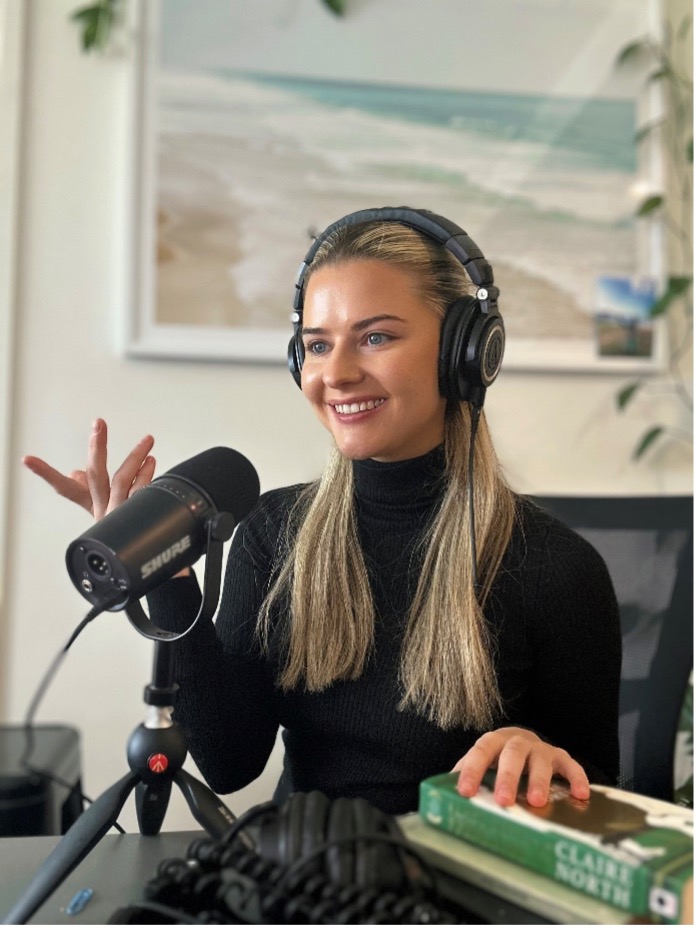
Dr. Corey Martin, host of the podcast Maiden Australia (Photo supplied)
“It’s not just another medium… it has a richness to it,” said Martin. It was “the Golden age of podcasting” where people really got excited because it was a new medium, she said.
Solenne Niedercorn believes podcasts create a unique intimacy with listeners, “I have people who really trust me,” she said. “You really have an influence.”
This intimacy reshapes the traditional expert-audience dynamic.
Martin agrees there is something very comforting in listening to the voice of another person. “There’s no medium that does intimacy like podcasting.”
According to data in a 2022 article on the marketing website Antidote, podcasts particularly appeal to women, who listen more to podcasts than men.
In France, women are also increasingly likely to produce or host a podcast. In 2019 Lory Martinez, a Colombian-American podcast producer based in Paris, France, claimed “35% of the top 200 podcasts on France’s Apple Podcast data are produced or hosted by women compared to just 10% in the US.”
A 2025 CSA (Consumer Science & Analytics) and ACPM study in France found that 44% of the French population listened to podcasts in 2024. While data from Statista shows between 2019 and 2024 the “frequency of podcast listening in France” jumped from 22 percent in 2019, to 42 percent in 2024.
The rise of what industry experts call the “Femmissance” in podcasting illustrates how women are reshaping the audio space.
As SiriusXM’s 2024 Trend Report defined, “Femmissance” is encouraging women everywhere to speak up and demand a seat at the table. A clear example of this is in the podcasting world, according to SiriusXM.
“We’re seeing more and more women having conversations with one another in a very private way, but in public,” Martin said.
Women and finance
One area that stood out to Anna Logacheva is that, in France, nobody discusses money from a psychological angle.
“When you talk about “money trauma,” it scares everyone,” she said.
Cash Confidences stands out for blending the psychological aspect of finance with the educational one.
“I think there’s a real need to bring in more emotional discourse around money, because it is emotional.”
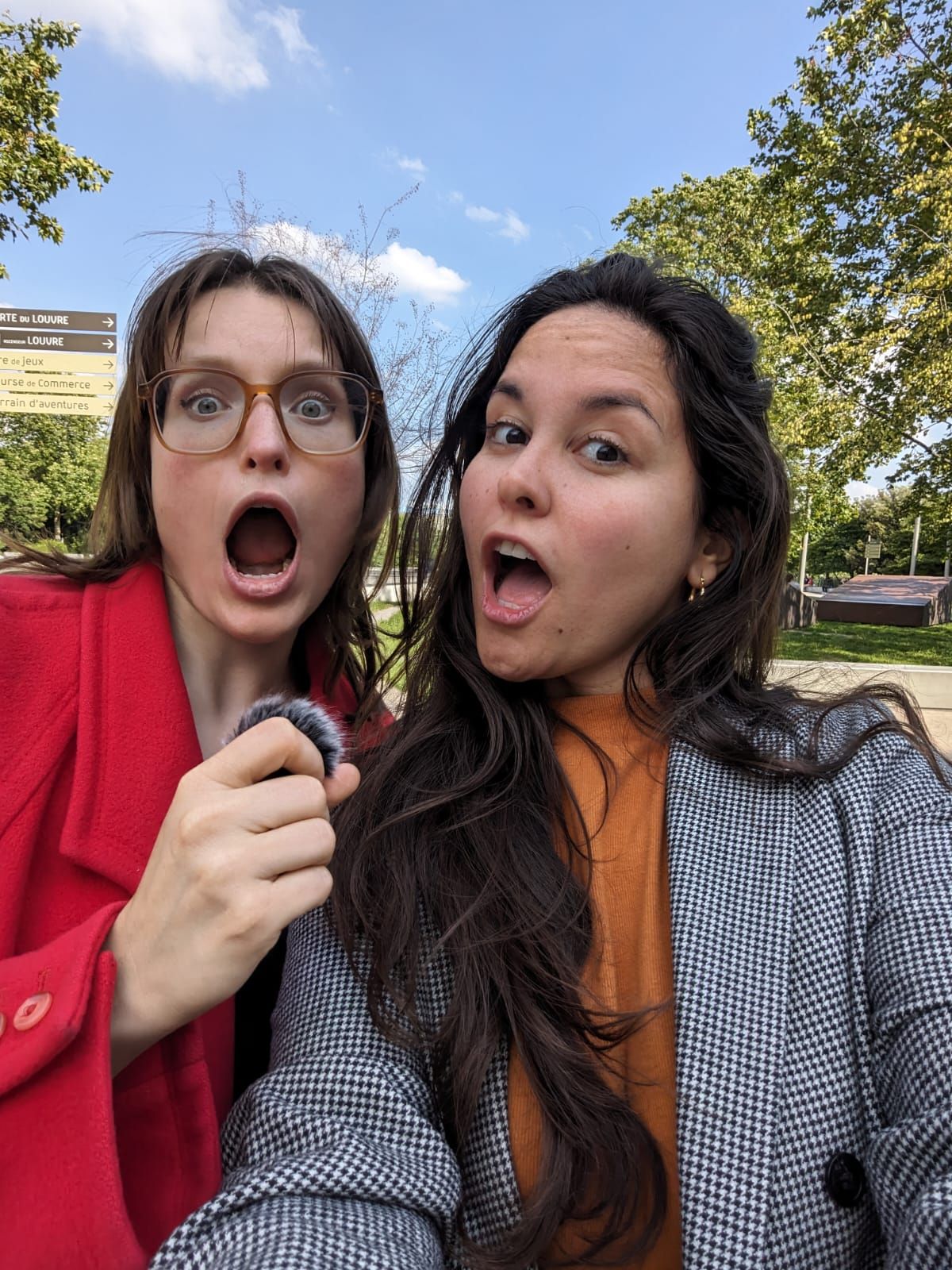
Anna Logacheva and Mariana Mergulhao, hosts of Cash Confidences. (Photo LinkedIn)
Martin believes women’s unique voices have often been silenced in the traditional media, but podcasts, with their intimate and longform nature, offer something revolutionary for women.
“There’s time for women to speak to one another without interruption and in a space that isn’t mediated or governed by an institutional kind of guideline or parameters, or by men,” said Martin. “Financial education has rarely been targeted at women.”
“I think for the first time we’re able to hear different perspectives and different women’s experiences, and women aren’t ashamed of sharing that in a public way where they perhaps would have been 20 years ago.”
—Dr. Corey Martin
Logacheva agrees the boom in podcasting resulted in a “completely uninhibited language” around several issues, particularly women’s health.
“Today, I think we’re heading toward something similar in finance,” she said.
Niedercorn observed that women connect more easily with someone who looks like them.
“Finance influencers for women are all women,” she said. “Women who don’t have access to finance are more reassured listening to other women because those women know how to use the right words. It’s absolutely necessary to preserve a woman’s financial independence and that requires an effort to gain knowledge about finance, how to manage all of that.”
Finance remains a “Boys Club”, but podcasts are changing things
However, deeper cultural constraints still limit women’s participation in the financial discourse. In 2024 in France, women represented 60% of the workforce in finance, but only only 31% of senior executives in finance are women and 7% of financial companies have a woman at their head.
Gunther Capelle-Blancard, Professor in Economics at the University of Paris 1 Panthéon Sorbonne and research associate at the Paris School of Business, said this is “the paradox” of France’s finance industry.
“If you think… of the image you have of finance, that imagery is filled with men,” he said.
Access to the conversation, let alone leadership, remains uneven, but women are rewriting the terms of participation in France through podcasts.
“Learning how women have been able to live independently… and sharing that experience on a mass scale… I imagine that it would have made quite a difference to many people’s lives to be able to hear that,” Martin said.
She argues there needs to be more women’s stories and more female role models in finance and business.
“We’ve kind of evolved on the basis of men’s storytelling,” she said. “There has been limited visibility of what financial empowerment looks like for women.”
Capelle -Blancard believes anything that helps make women visible in the industry is positive: “There need to be more women. We need to build role models… it’s a good thing, because getting rid of the stereotypes mainly happens through example.”
Laetitia Vitaud, French author, speaker and expert on the future of work with a feminist perspective, said podcasts create a universe, “a safe place” for women.
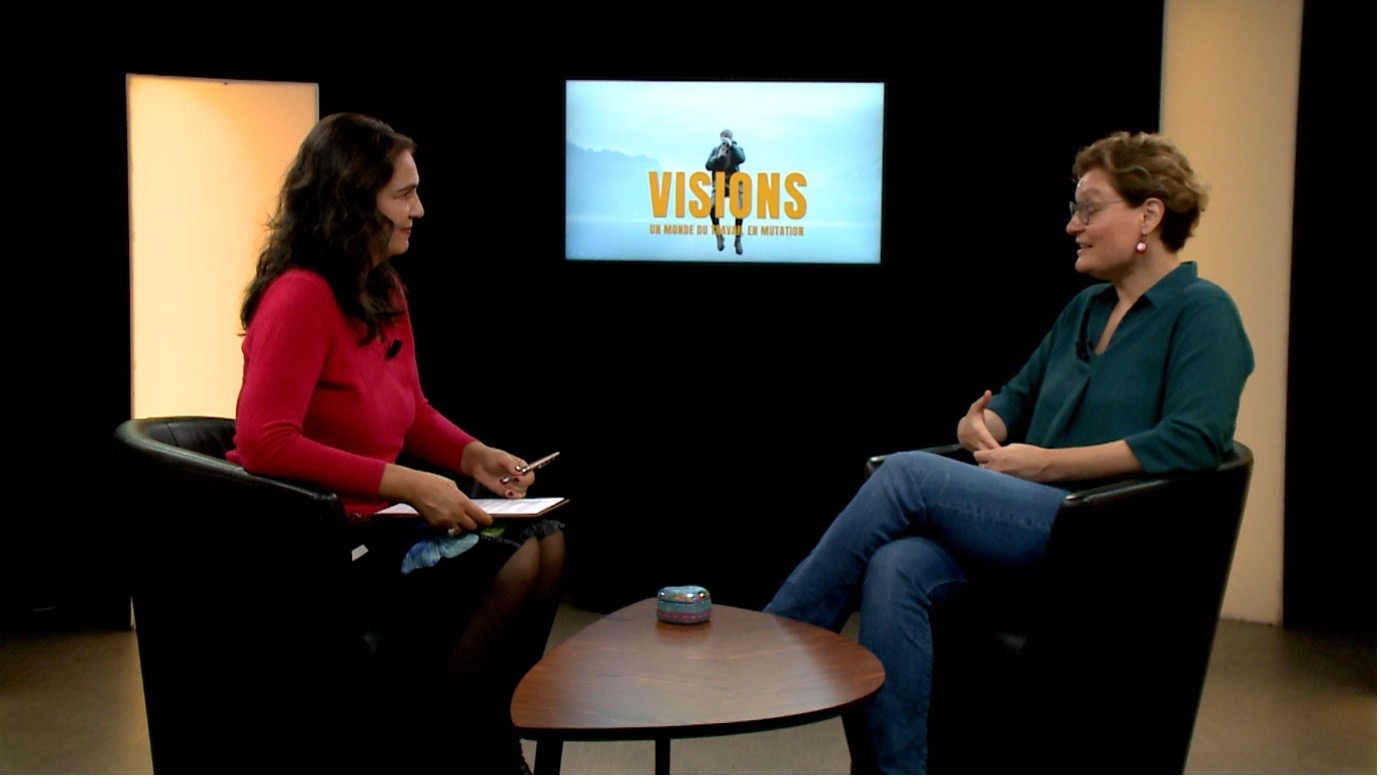
Laëtitia Vitaud, seated on the right during an interview. (Photo supplied)
“The world of finance is very male dominated, somewhat exclusive and sometimes frankly hostile or not welcoming to women,” she said.
Being in a space with more women, Vitaud said: “… you feel better, you feel welcomed, and you feel like your questions will be listened to without being treated like a fool or mocked.”
Challenging the status quo
Adrien Chaltiel, French entrepreneur, investor and founder of Eldorado, a platform connecting startups with funding opportunities, podcasts were one of a number of “innovative formats” giving women a voice.
“In the financial sector, we’re seeing women’s voices emerge to challenge the norms, share experiences, and demystify topics long seen as elitist or masculine,” he said.

Adrien Chaltiel, founder of Eldorado.co (Photo supplied by Adrien Chaltiel)
In France, podcasts have become a powerful and necessary tool for women’s voices to be heard and this is not confined to finance.
Across the French audio industry, initiatives such as Women & Podcasts have emerged to show the power of women’s voices in reshaping public discourse.
“The beauty of podcasts is that there is a podcast on everything,” Dr. Corey Martin said. You can find someone that has “a vested interest” on something, and that is what makes the medium “so amazing”.
She also believes the lower barriers to entry are a big reason why a lot of women starting podcasts and setting their own rules.
Chaltiel is not surprised this appetite for engagement and change in financial literacy for women has taken hold in France.
“When I speak of France as a “revolutionary” country, I’m referring to our political and social culture, which is deeply shaped by a history of protest, intellectual debate, and a desire for change,” Chaltiel explained.
These women, Chaltiel explained are speaking to audiences who sometimes feel excluded from traditional expert discourse,.
“Women who are creating finance podcasts today are doing real educational work,” he said. In France, we see “a real movement of empowerment through financial education”, he said. “What’s specific to France is probably the “activist” and collective dimension of certain projects.” Although, he observed, this trend isn’t only in France.

Adrien Chaltiel participates on podcasts as a guests. “For those who want to learn, equip themselves, and get inspired, it’s a very effective channel.” (Photo supplied by Adrien Chaltiel)
“The difference is that France tends to politicise these initiatives more directly, linking them to broader societal debates, especially around inequality and patriarchy.”
Women are finding “a way of claiming space in an ecosystem that is still largely male-dominated”, he said.
Women-led finance podcasts offer women fertile ground to express themselves without the socially and culturally constructed barriers of traditional media.
Logacheva sees podcasting as a unique medium. She said the advantage of podcasting is that there are so many formats and hosts who share “their own personal relationship with money and the solutions they want to offer, that you have enough options to find the one that fits you”.
Martin said generally speaking women do spend differently to men, yet they’ve long been silenced in the public discourse of finance. She believes the growth of women-led finance podcasts is helping women build security and autonomy and confidence “but in their own power”.
“Why would we listen to men’s finance podcasts if our finances are completely different?” Martin said.
Breaking the silence around money
Despite podcasts giving women a space to speak in the finance industry, there is a cultural discomfort around talking about money in France.
Logacheva explained in France there’s always been little public conversation about money.
“As a socialist state where the government is supposed to provide for basic needs, retirement, healthcare, money has historically had a bad image… and that’s even more true among women.”
Niedercorn agreed. “Finance, especially in France, is very taboo,” she said. “If you dare ask your neighbour how much they make, it’s a disaster.”
Even in women-led finance podcasts aiming to demystify money and make finance more accessible for women, the taboo runs deep.
In the first season of Cash Confidences, Logacheva and her co-host, Mariana Mergulhao, talked to successful women about their relationship with money.
“I don’t think that really works, because you’re listening to someone who’s already made it and you don’t know what they went through to get there,” argues Logacheva.
To make these conversations feel more accessible, she and Mergulhao tried a format where women shared their questions and an expert answered them.
However, they ran into the same taboo —“money is still so hard to talk about”.
“It’s very hard to find women willing to share their questions” publicly and “open up about those real problems”, Logacheva said. “It’s not the kind of subject where people feel comfortable expressing themselves, which is what’s difficult.”
Beneath this silence around money lies a fundamental difference in how women and men engage with finance.
Logacheva observed that many women experience what is called “the good student syndrome”. It means that women learn less by acting than through documentation and theoretical learning, she explained. The advantage of podcasting to satisfy women’s need for a theoretical framework is that you can make very specific episodes on concrete problems, Logacheva said.
“You identify real -life issues women face and then you can very easily create podcast episodes that explain the theory behind those issues.”
Logacheva said women really want to first understand the theory, and to master it, before taking action. Women experience this “much more than men, really, a lot more”.
This experience is reflected in the attitude of ‘Victoria’ [who declined to include her last name due to privacy concerns], a trained pharmacist who is an avid finance podcast listener.
“Everything related to finance and money is kind of taboo, we don’t talk about it easily,” said Victoria. “Hearing people talk about it helps me, it helps reconcile me with the topic. I’m someone who overthinks a lot and want to be sure before acting, so that really helped me move forward.”
— Victoria
“Sometimes I tell myself…you’re asking questions that aren’t legitimate, but hearing similar questions and reasoning kind of legitimises it and that’s reassuring too.”
While podcasts like Cash Confidences are helping women talk about money and investments, the challenge remains knowing what to do with it. Figures still shows a financial literacy gap between men and women in France.
Understanding the ‘financial literacy’ gap
Only 10% of all respondents in an Allianz study have high levels of financial literacy in France, and 56% of the French population seeks professional financial advice. According to a 2024 Mastercard study, this number rises to 69% when only looking at women who seek financial advice. As 35% of women in France feel less supported by those in their inner circle, they are more likely to turn to professional advice.
A paper published in the Journal of Economic Behavior & Organization found a persistent gender gap in which men do better than women in financial literacy.
In Femmes et Finances, economist at the Paris School of Economics, Luc Arrondel, defines ‘financial literacy’ as the knowledge of basic financial concepts and the ability to perform simple calculations.
Arrondel writes that financial education programs and institutions have emerged in France because of an awareness that raising financial literacy levels among young people and women had become a public policy issue. Particularly because financial education can help reduce the gender-representation differences by improving financial literacy, notably among women.
The same paper in the Journal of Economic Behavior & Organization also found higher financial literacy commonly leads to greater financial wealth, a higher likelihood to invest, better retirement planning and less anxiety about financial matters. This demonstrates the importance of financial knowledge for women’s long-term well-being.
According to an OECD report on Women and Financial Education, women need more than men to be sufficiently financially literate in order to effectively participate in economic activities and make financial decisions.
Podcasts have become an important way to financially educate women, especially young women 25-34, according to Podmust.
Logacheva observes women-led podcasts offer a new path to women’s financial literacy by teaching them in a way that resonates with them, through relatable content grounded in theory and explanation.
From podcasts to practice — investing with confidence
Logacheva argues women can build confidence through podcasts that offer interactive learning of finance and investment strategies.
“If you stick to more theoretical and general courses on financial education, your impact is smaller because you stay in generalities. You’re not really giving them [women] the keys to take immediate action,” Logacheva said.
To respond to this need for real-world application, she co-developed the Challenge, an additional tool launched alongside their podcast, Cash Confidences. “It brings the podcast’s message to life,” she said.
The Challenge is a free, two -month training program designed to support 50-60 women as they transition from saving to investing, by combining something more interactive, with regular resource sharing and webinars, she said.
The goal is to help these women make their first investment, Logacheva said.
“By the end of the Challenge, nearly all the women from the first Challenge have invested in various platforms,” she said.
But she noticed with the Challenge that women constantly question their knowledge. “If I’ve understood everything, it means I’ve missed something.”
This is something Victoria also experienced when making financial decisions. “I’m doing research but I’m unsure, I don’t want to make mistakes .”
“On one hand, there’s a need for reassurance, and on the other, just a desire to master the subject as a whole,” Logacheva said.
Luc Arrondel’s work on financial literacy echoes Logacheva’s concerns about women’s financial confidence. His research showed that France’s low financial literacy levels are not just because of a lack of financial education, but also to lower financial self-esteem and limited exposure to adequate information.
Arrondel found that women tend to rank their financial knowledge lower than what it actually is, whereas men tend to overestimate theirs.
Adrien Chaltiel agreed: “We see a gap in confidence and financial culture between men and women.”
Yet, despite this lack of confidence, women who invest end up getting higher returns and make bigger profits than men, which has also been pointed out by experts who have appeared on the Cash Confidences podcast.
“The woman, in the end, is very well-informed about the issues, she is much more cautious, and she diversifies more, so naturally, the results and returns are higher,” Logacheva said.
“It’s not about investing on a whim but about investing for a project with a clear strategy behind it,” … which is exactly what Logacheva is trying to do through the Challenge.
A 2021 JP Morgan study on Women and Investing found that France is among the countries with the lowest proportion of female investors and almost half of French women have no investing plan at all. Women are also less comfortable taking risks in France, as 31% are least comfortable taking risks.
Yet that same JP Morgan study found women who invest are better financially informed. This reflects Logacheva’s observation that women want to be better financially aware before investing.
Still women’s financial ability is continuously questioned.
“It’s constantly repeated that we don’t understand the subject, that it’s complicated,”said Logacheva. So, naturally, women might think, “maybe I don’t understand everything if it seems complex”.
Financial literacy is not only about understanding, it’s also about how financial concepts are taught.
Finance podcasts speak ‘gendered’
According to Logacheva, the biggest difference between finance podcasts made by men and those made by women is “always the level of complexity”.
Finance podcasts implicitly tailored to men are more complex and use a lot of “buzzwords” because it’s assumed that what men enjoy.
“They never try to oversimplify,” she said.
Podcasts made for women are all about “tiptoeing” and explaining every word, she said.
“It’s assumed women won’t get or engage with that kind of content,” she said, so it’s reserved to men.
“On one hand you see a desire to overcomplicate something that isn’t that complex, to make it sound more exciting for a male audience. On the other, you see a tendency to oversimplify to make it more accessible to women. It’s almost like a cockfight on the male side of finance, and a maternal tone on the women’s side, if you exaggerate both ends.”
Laëtitia Vitaud argues women are turning on their mics and rewriting the “boys club” financial narrative to one that is more inclusive.
“When you have ways of communicating about finance in a “boys club” way, it cultivates jargon, and an exclusive environment and this excludes people because of the way finance is talked about,” she said.
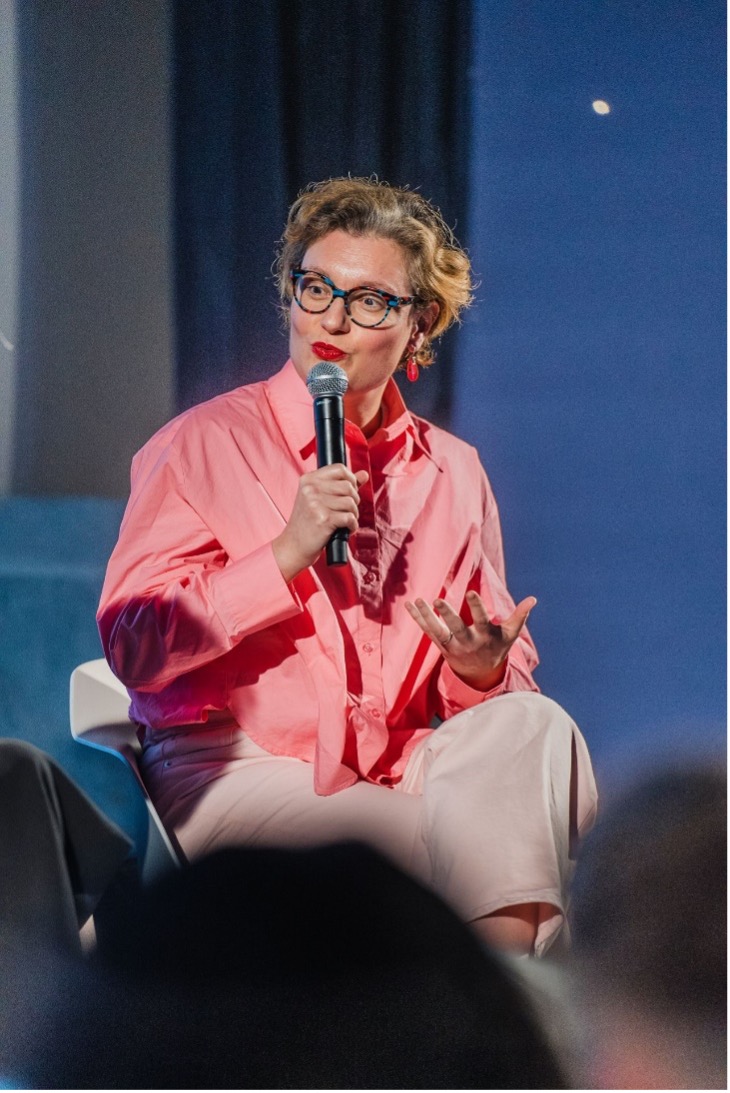
Laëtitia Vitaud (Photo supplied)
Parity on paper but disparity in practice
Despite efforts to make financial content more inclusive, finance podcasts reflect a broader divide in audience engagement.
Although Niedercorn’s podcast, Finscale, is for everyone, her audience remains predominantly male.
“Even if I feature women, invite women, I myself am a woman… it feels like women aren’t interested in these topics.”
This gap in interest is cultural. Though Niedercorn hopes her podcast contributes to building more female role models in the finance industry, she argues there are still fewer women in high-level positions in finance, “so of course, they’re less interested… some are, but it’s still a guy’s business”.
Niedercorn feels form her observation that in finance, “women are less passionate about their careers [while] … men really invest in their careers, their professional development, learning stuff. They’re passionate about their careers.”
This difference is rooted in how society defines success. Success is often tied to ego, money, power and ‘climbing the ladder’, but for women “we also need to value things like the emotional balance of your children”, Niedercorn said.
“Until we change people’s “hard drive” and replace those values with something other than money, power, and social success, it’ll be hard to go against what’s already established.”
On top of that, Niedercorn said, the content for women and men is super gendered. “Girls’ ‘content’ is all makeup, clothes, etc., but not topics like finance.”
“Finance isn’t a sexy field for women,” she admitted.
Gunther Capelle-Blancard argues more female role models in finance will inspire more young girls to choose that career path. But Adrien Chaltiel disagrees: “… we can’t just say once we have more role models, the problem will be solved.”
Despite some progress, traditional finance sectors are still heavily male-dominated, Niedercorn said.
While the financial sector happens to have a larger proportion of women at the lower hierarchical levels, this decreases drastically as you climb the hierarchical ladder, she observed.
Niedercorn tries to invite women on her podcasts for balance, “… which is complicated because there aren’t a lot of women executives in finance.”
Capelle-Blancard acknowledges there have been improvements for women in the finance industry in France, but they are largely due to the implementation of “stricter laws” compared to in other countries. Although women are more numerous in directing committees, “It didn’t happen spontaneously. It’s the law that imposed it,” he said.
Christine Lagarde, French politician, lawyer, the first female finance minister in France and currently President of the european Central Bank, wrote in Femmes et Finances, that France is the first country to legislate on political parity and has introduced gender quotas to increase the proportion of executive women.
“Despite the progress that has been made, the financial sector is riddled with obstacles for women,” Lagarde wrote. “They continue to face barriers that limit their access to financial services, equal pay and leadership positions.”
“Yet the benefits of true gender equality are clear: improved economic performance, greater stability and better environmental stewardship. A multi-dimensional approach is needed. Mandatory measures such as quotas are necessary. But they must be accompanied by a profound change in attitudes. It is vital that men be fully aware of their role in the home and that young women’s self-confidence be strengthened.”
— Christine Lagarde, President of the European Central Bank
Laëtitia Vitaud argues there needs to be more than a top-down approach to the problem.
“It’s nice to focus on women at the top of organisations. There’s been progress, but there’s no trickle-down effect, no magic where it suddenly spreads across the rest of society.”
Vitaud argues although increased diversity initiatives over the past twenty years, such as quotas and the Copé Zimmermann law — mandating more gender diversity at the board level — as well as laws on the feminisation of leadership positions to increase the number of women in major banks and financial institutions… “There are glass ceilings, and the bars on the ladder are broken for women.”
“Just because there are more women at the top doesn’t mean there are more women at every level,” Vitaud said. “It’s easy to add chairs around the table. It’s much harder to ensure that all the rungs of the ladder are there and that women can progress.”
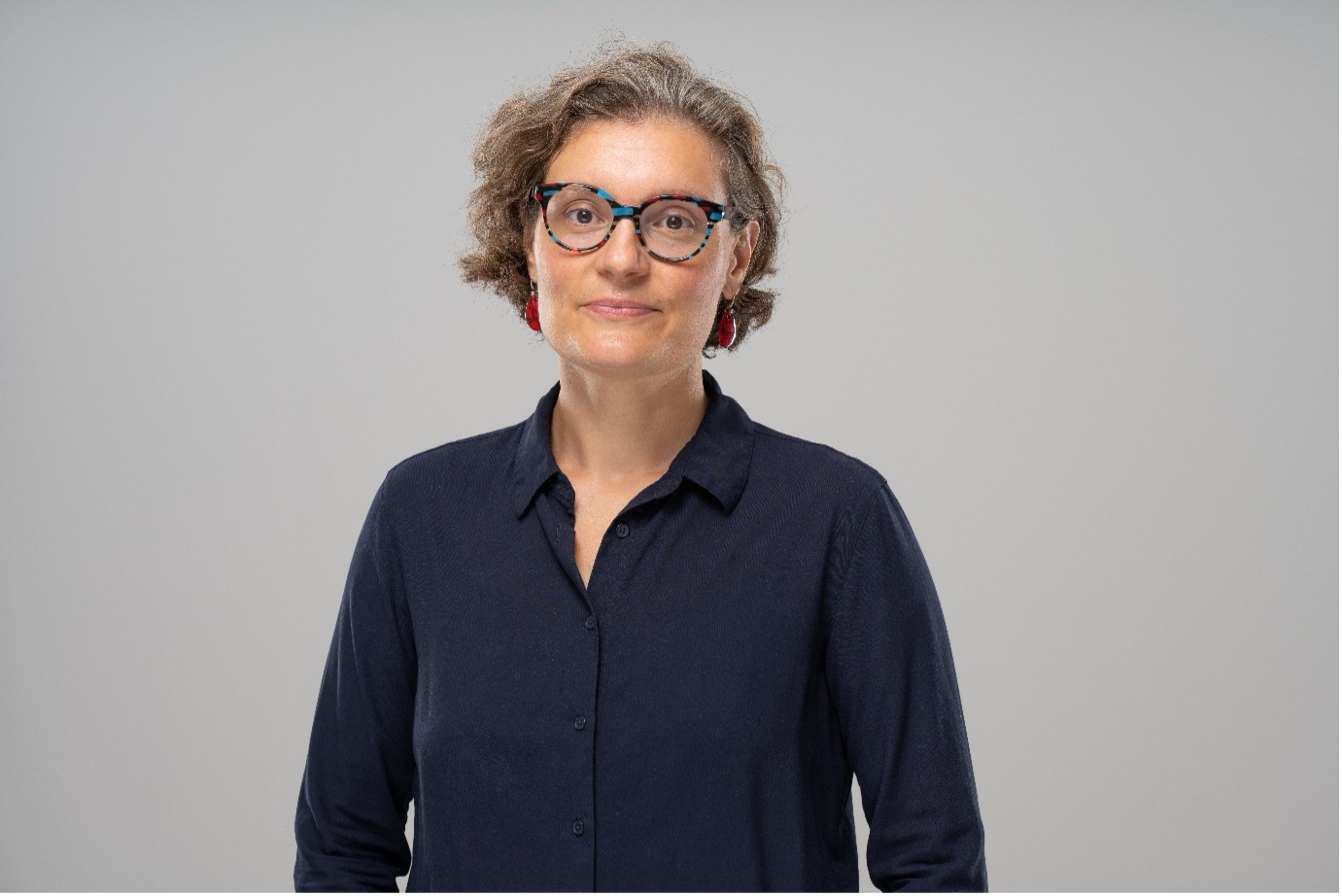
Laëtitia Vitaud argues “…just because there are more women at the top doesn’t mean there are more women at every level.” (Photo supplied)
Do gender-friendly finance podcasts simply reinforce stereotypes?
Dr. Corey Martin explained traditional audio mediums have always highlighted the male way of doing and saying things. “When the radio came to be, women were absolutely by under no circumstance allowed to speak on air.”
This historical exclusion still shapes today’s podcasting atmosphere, where women often feel the need to tailor their narratives to fit into the broader discourse.
Dr Corey Martin, women’s voices have historically been excluded from mainstream media. (Photo supplied by Dr. Corey Martin)
Logacheva said, “Any financial podcast aimed at a female audience, before even launching the finance podcast, you ask yourself: What will my tone be? How should I adapt it to my audience? ” But with “male” finance podcasts, no one questions how to address the topic, she said.
Logacheva criticised some finance podcasts for explaining concepts in a ‘gendered’ way.
“We’re not providing the same level of knowledge, we’re thinking this isn’t for them (women). It’s like going back to the education system from 100 years ago, with separate schools for boys and girls.”
Logacheva found these assumptions — where the main financial platforms don’t even think women have the money or the knowledge to invest — carried into the real-world when she approached several investment platforms to finance her Challenge program and her podcast, Cash Confidences,
“The main obstacle we faced was that most investment platforms don’t even consider women to be their target,” she said. “That’s a huge bias.”
Chaltiel agreed: “… many financial tools were designed by and for men, without consideration for women’s specific life trajectories”— such as, motherhood, part-time work, longer life expectancy.
Women are starting podcasts to get rid of the stereotypes and bringing new ways of doing and different ways of viewing performance and business growth, Chaltiel explained.
“It’s about bringing another vision… [but] … we can’t just replicate the support we’ve given men for years in wealth management. We have to adapt to this target audience, particularly in terms of education, providing the same level of information to women”.
Vitaud acknowledges there has been progress.
The old way for banks to communicate with their clients, the whole “I have a meeting with my banker…where is your husband? That doesn’t happen anymore. It’s over”, she said.
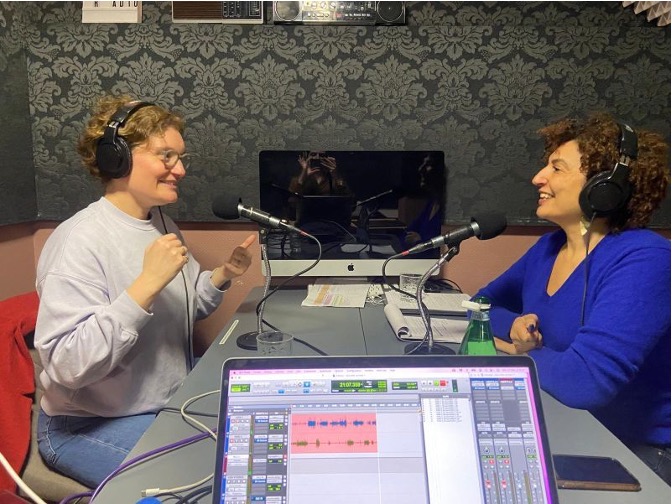
Although Laetitia Vitaud is not a host herself, she appears on podcasts as a guest. Vitaud, on the left, and Marielle Lieber-Claire, host of the podcast SPEECH SOCIETY, on the right. (Photo supplied by Marielle Lieber-Claire)
There’s been an evolution from communication, marketing and usage perspective that has normalised addressing women, Vitaud observed, and she credits the women who’ve create content in the field of personal finance as having influenced this shift.
In Femmes et Finances, Capelle-Blancard writes that major banks have started marketing campaigns specifically for women and developed so called “gender-friendly funds” to promote diversity and inclusion.
However, he argues they are still quite rare so, despite improvements in inclusivity in the finance sector, gendered marketing raises concerns.
“The idea of “gender-friendly” funds should be to break gender stereotypes, not introduce new ones,” he said.
These funds are not a bad initiative, he argues “… but we shouldn’t expect overperformance or greater resilience”. They should exist because we think it’s good, not in the hope of making even more money because of their inclusive nature argument, he stressed.
In fact, Capelle-Blancard explained in his article that “gender-friendly” strategies do not necessarily show a better financial performance. He found that between 2019 and 2024, these funds have underperformed.
Logacheva also voiced similar concerns about podcast hosts filtering the information that is being disseminated based on whether it is for a female or male audience.
“To what extent are we perpetuating existing clichés, and even reinforcing biases about women and investment?” she said, acknowledging the fact that these finance podcasts are called “finance podcast for women” shows a huge gap still exists.
For example, when Logacheva launched the Challenge in her podcast to help women take the first step in investing, she admitted they didn’t think to jump straight into “crypto, very risky stuff”. “That’s the kind of reflection and bias we had when launching our podcast.”
A new angle in finance podcasts
Chaltiel sees ‘women-led’ financial podcasts as a new form of activism. “For those who want to learn, equip themselves, and get inspired, it’s [podcasts are] a very effective channel,” he said.
Niedercorn’s newer podcast From Within: The Soul of Business podcast, mirrors what Chaltiel said about the power of podcasts to inspire.
“I have access to a population of men who have no content about meaning in business. Generally, all content around meaning, depth, etc., is very gendered, again, it’s only for women,” Niedercorn said.
She wanted to have people come on her From Within podcast to talk about the meaning they bring to their business. “… when a man speaks and it’s heard by other men, it will resonate more than if a woman says it.” Niedercorn said this is because “… you relate to people of the same gender”.
This effort in From Within to make content more inclusive and to humanise business, mirrors a broader shift and goal in podcasting. Women-led finance podcast channels have found a way to democratise ‘money talk’ and reflect on human economic ideas, by talking about vulnerabilities and inclusivity.
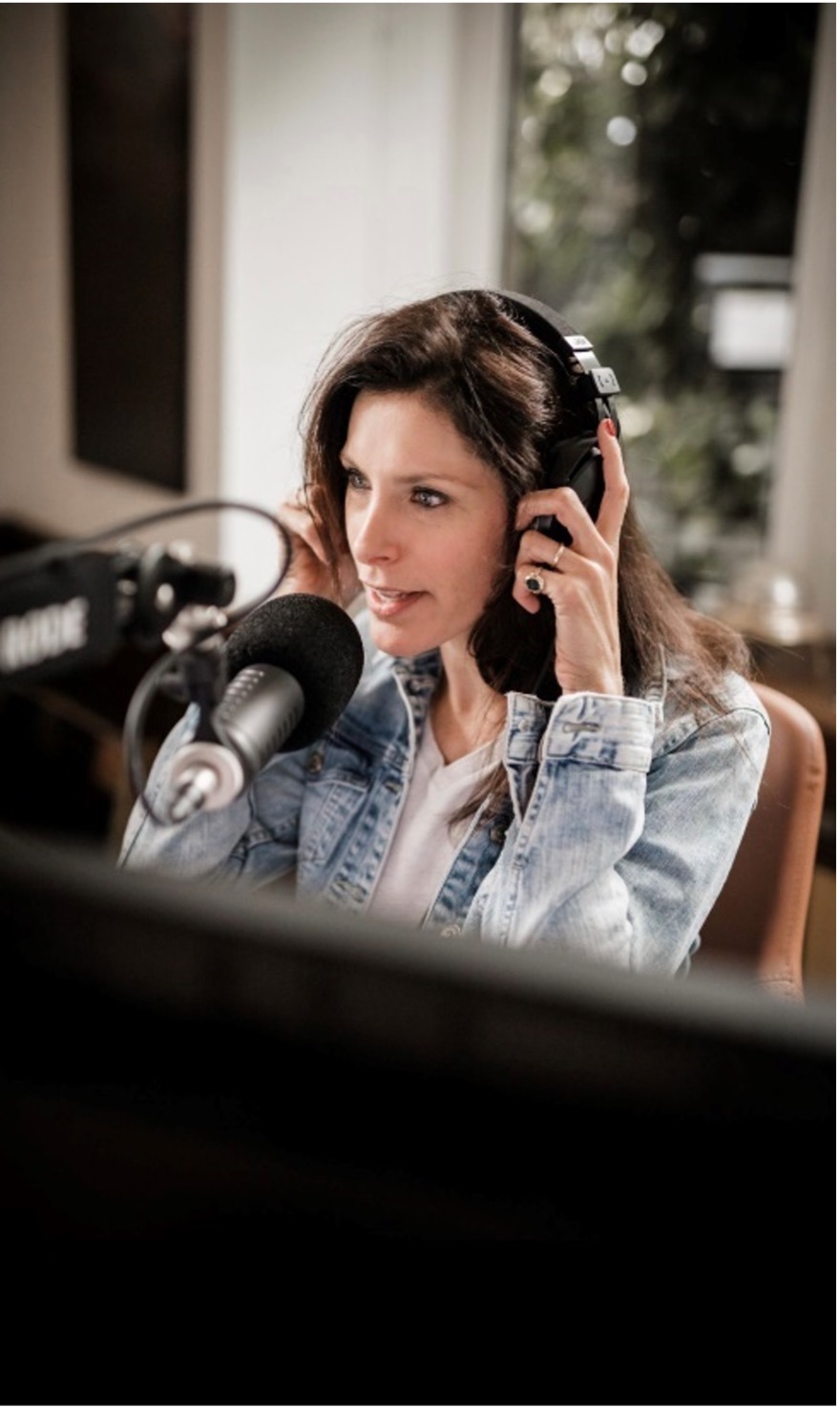
Solenne Niedercorn recording for the Finscale podcast (Photo supplied)
What still holds women’s voices back
According to Martin, women’s voices are still more scrutinised than men’s.
While women have used an opportunity presented by podcasts to break away from the “conditioning of traditional media” where male voices were the standard, Martin argues men’s ideas continue to filter through. Even though women “are eventually allowed into these spaces more and more” the male voice still dominates the public arena and is “infused in our language, in a way of thinking about the world.”
In finance, it means men’s perspectives are heard, but women are still asked to justify theirs.
“So many men would just be so much more comfortable than what a woman would be picking up a microphone,” Martin said. That is because men just assume that people will want to listen to what they have to say, “because they haven’t faced the same level of criticism”, she argued.
According to Martin, that’s why podcasts have become so important for women’s empowerment, especially in finance. Podcasts give women a way to take the mic and decide on their own script without pre-established rules. “They’re setting the guidelines and they’re setting the parameters,” Martin said.
The audience can also judge women more harshly than men, particularly male listeners.
“As audiences, we develop implicit biases as well. If we’re not used to hearing a particular voice then when we do hear it, we are more likely to scrutinise it,” she explained.
Although podcasts have broken “that mould” for women to speak on air “… we probably do have a far way to go until men are willing to listen to the voices of women,” Martin acknowledges. She believes women’s voices are more scrutinised than men’s and that’s why “so many women feeling things like imposter syndrome… when it comes to podcasting”. This is especially the case when speaking about topics that have historically only been discussed by men.
Logacheva said, trying to simplify finance talk too much ends up minimising the women on her podcast. “That’s also how you reinforce imposter syndrome,” she said.
Although Martin celebrates podcasts as “a starting point to have women be able to listen to other women… where previously we probably would have only been able to listen to men or media that was governed by men”, she still finds the medium quite polarising because “… audiences can be more selective with what they listen to.”
“I don’t think it’s the Golden age anymore. Unfortunately, I think it’s turning more corporate,” Martin warned.
The risks of podcasts becoming increasingly monetised
Niedercorn said her podcast started as just an idea to fill a gap and she gave no thought to monetising it, but Martin has raised concerns about “… the monetisation and the intersection of money and podcasts.”
She argues podcasting is a grassroots medium where everyone can speak freely but warns monetising podcasts can mean “… these podcasts are going to be driven by corporate greed…and so the content of the podcast it’s in their best interest to sell products.”
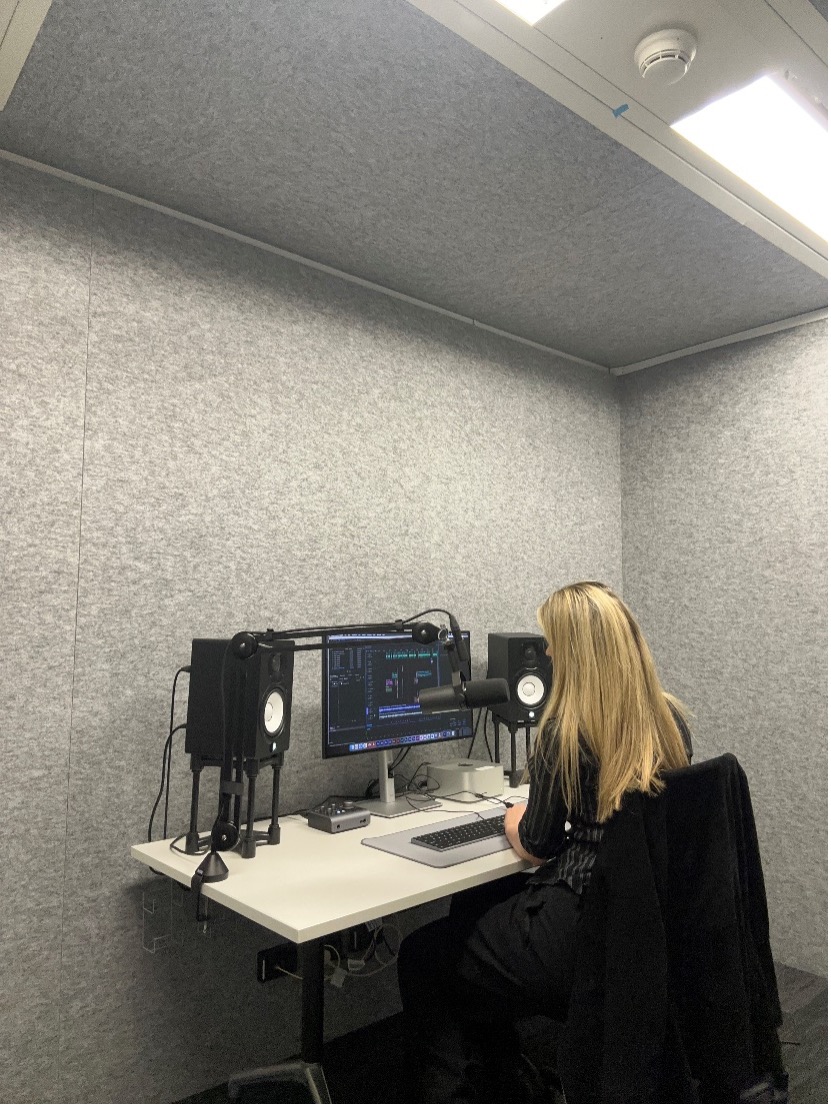
Dr Corey Martin producing her podcast. (Photo supplied)
“In my opinion… a lot of the times when the very popular women-led, influencer-led podcasts play ads they tend to reinforce power structures in an unhealthy way,” she said.
Independent podcasters are the heart of the medium, “that’s how it started,” Martin said. She would “love” to see more independent podcasters return to prevent podcasts from becoming too linear and polarised, she said.
Martin is concerned that increased commercialisation will change the narratives of these podcasts into something that benefits these corporations and if that happens, podcasts then lose “… [their] essence… as this… unfiltered sort of medium.”
Why women-led podcasts are crucial for the future of finance
While there are limitations to the medium, Martin believes women-led finance podcasts have the potential to rewrite the financial narrative for women.
“We have been ostracised for so long, so we actually have to… build our own way,” she said.
For Victoria, finance podcasts were that needed push that made her take concrete steps into the finance world since she started listening to these podcasts in 2021.
“Compared to my sister, for example, we had the same financial upbringing, and I’ve definitely moved on to something else thanks to these podcasts,” she said.
She found that finance podcasts explain concepts in a way that is accessible whereas finance, in her experience “… seems like a field designed to keep people in the dark.”
She argues women-led finance podcasts “normalise women being financially agentic because it’s spoken about… in such a casual kind of manner.”
Martin explained, having a woman listening to another woman talking about investments shows them that they can do it too.
“This isn’t like some revolutionary thing… you can also be financially independent,” she said.
Laëtitia Vitaud acknowledges women-led finance podcasts’ broader impact.
“There are pioneering podcasts that have a strong influence and have tackled subjects that weren’t addressed by traditional media,” she said.
“When you look at newspapers today… they don’t really care much about topics like women’s finances or money. They think they’re speaking in a neutral way, but they’re only talking about men.”
“This is why women on financial podcasts is incredibly important,” said Martin. They are “… a beautiful starting point and that could lead to potentially…more and more women in positions to educate even further and to have even more reach.”