At 2.30pm, like clockwork, it’s all hands on deck at East Trentham Wildlife Shelter on the boundary of the Wombat State Forest.
For the second time that day, three volunteers syphon warm formula into glass bottles and settle down to feed 11 eastern grey joeys, each orphan swaddled in a makeshift pouch fashioned from a fleece-lined dog bed and kept warm hanging by a wood-burning stove.
Out in the yard, weaning kangaroos compete with opportunistic wombats for bowls of pellets. Further down the paddock a mob of 30 “wildlings”- roos in the process of soft release into the wild – materialise from the bush like hungry kids called in for dinner when bales of hay are tipped into feed troughs.
Before the epic feeding routine is even half done, Manfred Zabinskas turns up nursing a tiny polyester pouch. Inside is a “pinkie”, a rosy, furless baby joey just scooped from her dead mother’s pouch after a dog attack.
“It’s the running costs that kill us,” Zabinskas remarks, in between phone calls to try and find someone with capacity to care for the new arrival.
“We’ve got less wildlife carers and more wildlife coming in. And it’s not uncommon to have 10 rescues waiting for us when we get up in the morning.”
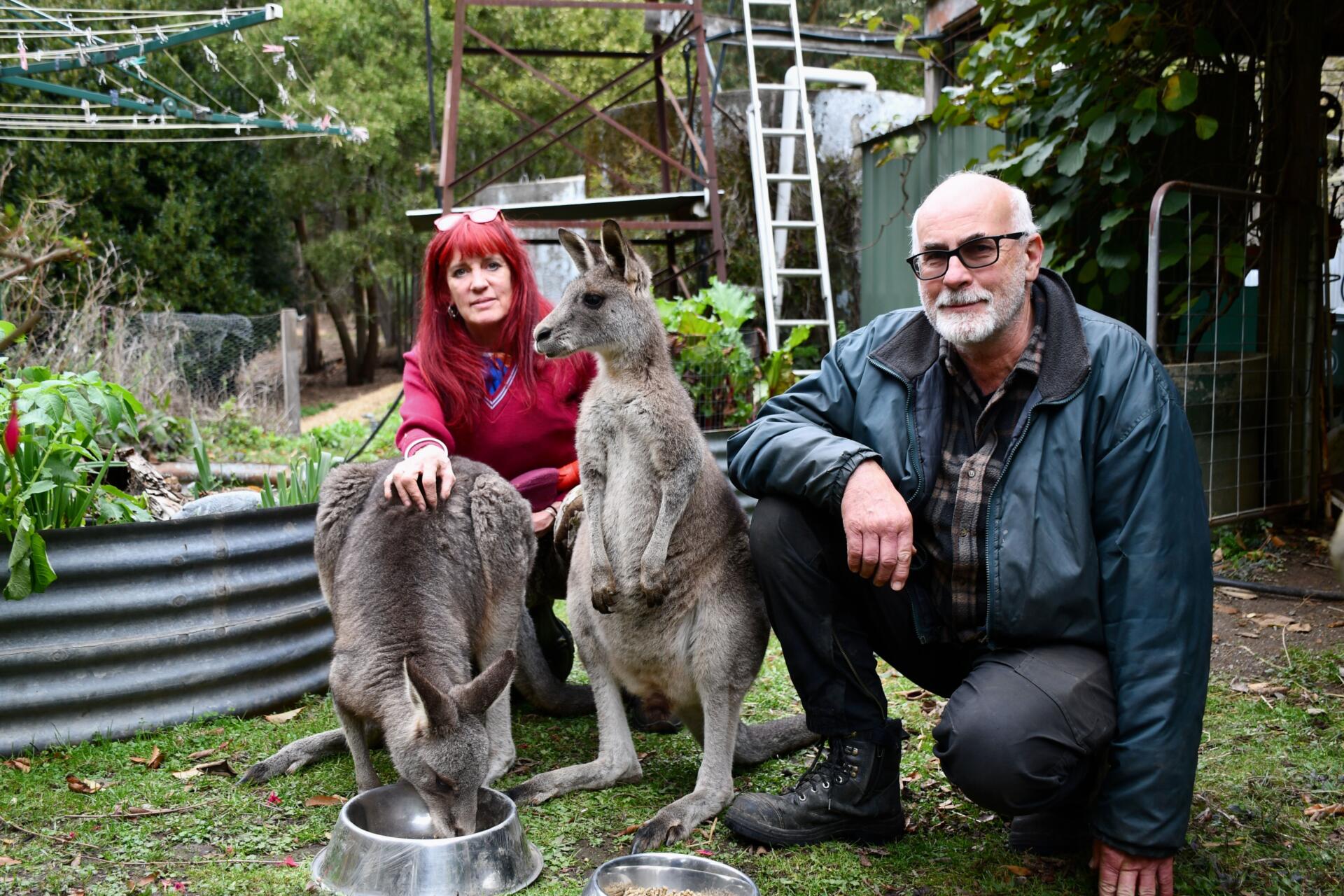
Manfred Zabinskas and Helen Round with adolescent kangaroos Arthur and Pan. On their second ever date, the pair who now operate Five Freedoms Animal Rescue and the East Trentham Wildlife Shelter, rescued a Kangaroo who became trapped on the side of the freeway in Thomastown. Photo by Ashleigh Wyss.
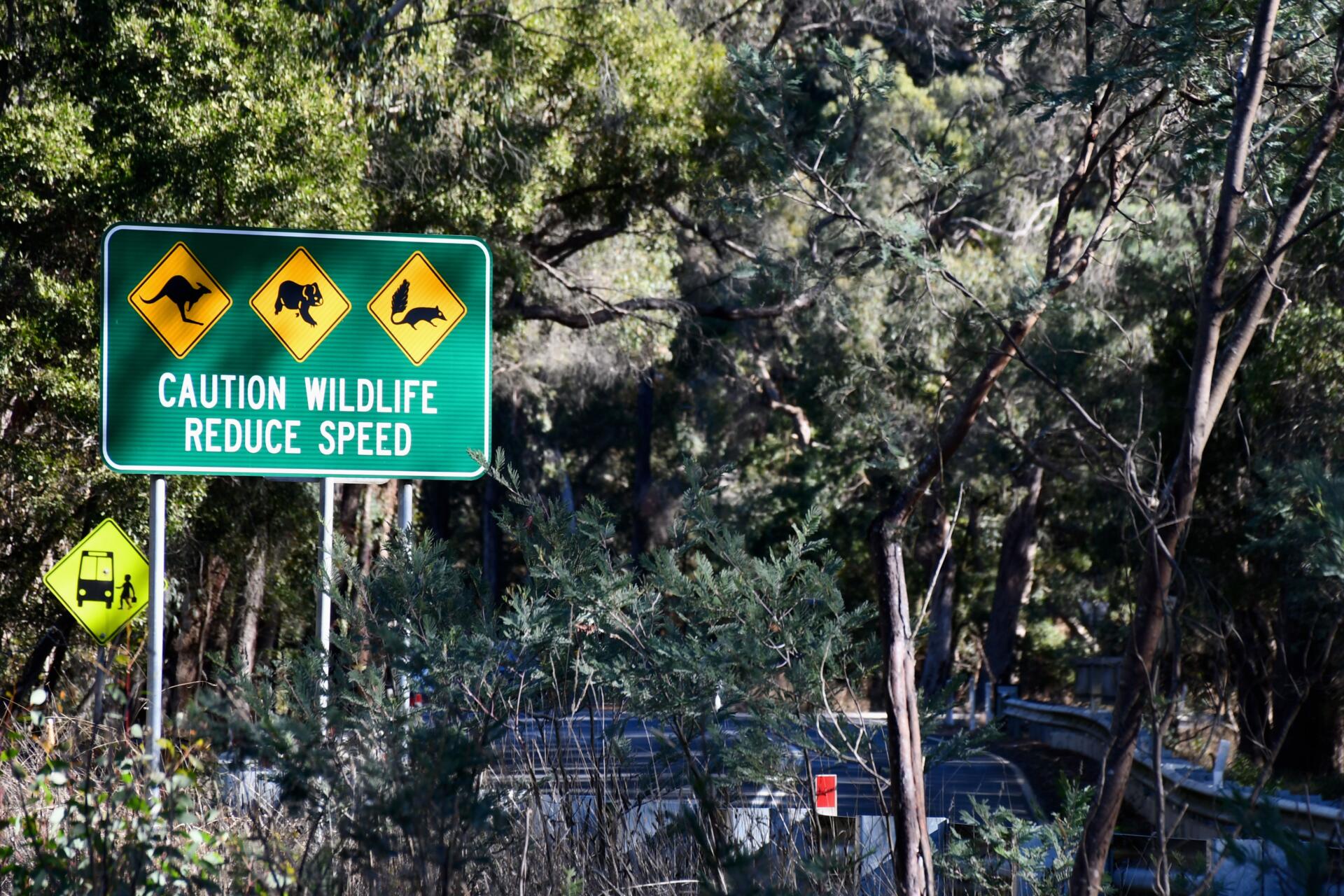
Most of the casualties are caused by vehicles, with an estimated 10 million animals struck and killed on Australian roads every year. For the survivors, care often falls to shelters like this one – volunteer-run, largely self-funded and perpetually on call.
The Macedon Ranges, just north of Melbourne’s sprawling northern boundary, is one of Victoria’s wildlife collision hotspots. Local residents have initiated a petition calling for the equivalent of a gold coin donation from every Victorian driver to support overburdened wildlife carers.
One of six Macedon Ranges locals driving the petition, Rhonda Gibbard, says it was initiated by residents exhausted by a perceived increase of animal carcasses left on local roadsides.
While there is no centralised system for tracking wildlife road deaths in Victoria, Wildlife Victoria, the state’s leading wildlife emergency response service, recorded 50,000 native animal deaths between 2018-2023, with a 24 per cent rise in wildlife road strikes between 2022 and 2023. In 2024, Wildlife Victoria responded to 13,642 cases involving animals hit by vehicles.
With around 5 million vehicles registered in Victoria, Gibbard says a $2 levy could generate over $10 million in annual funding, offsetting costs routinely borne personally by volunteer carers.
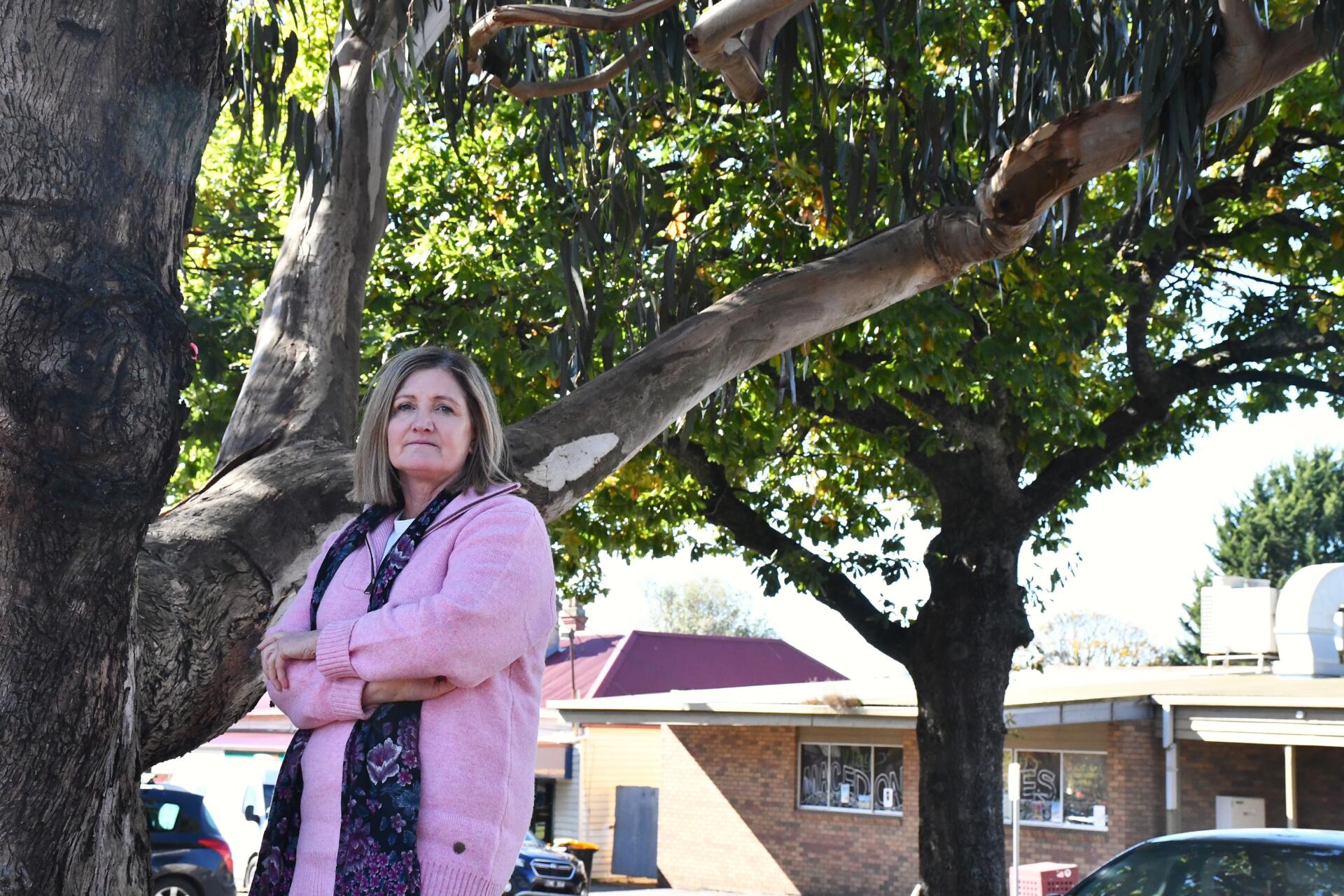
Petition leader Rhonda Gibbard, who is a routine donor to shelters across the Macedon Ranges, says she is in awe of the sacrifices made by wildlife rescuers. “I really feel for the carers and the rescuers as much as I do for the animals, but I know they care about the animals as much as I care about changing the system.” Photo by Ashleigh Wyss.
She recognises any payment is “in itself is a little bit contentious, because people don’t want to have any tax or levies or anything else on them, but I really believe that a road user should be helping to alleviate the burden”.
Victorian wildlife rescue relies on a volunteer workforce, its members often paying substantial out of pocket costs. For many, it also involves unpaid work that can also be physically, and emotionally demanding, if not devastating.
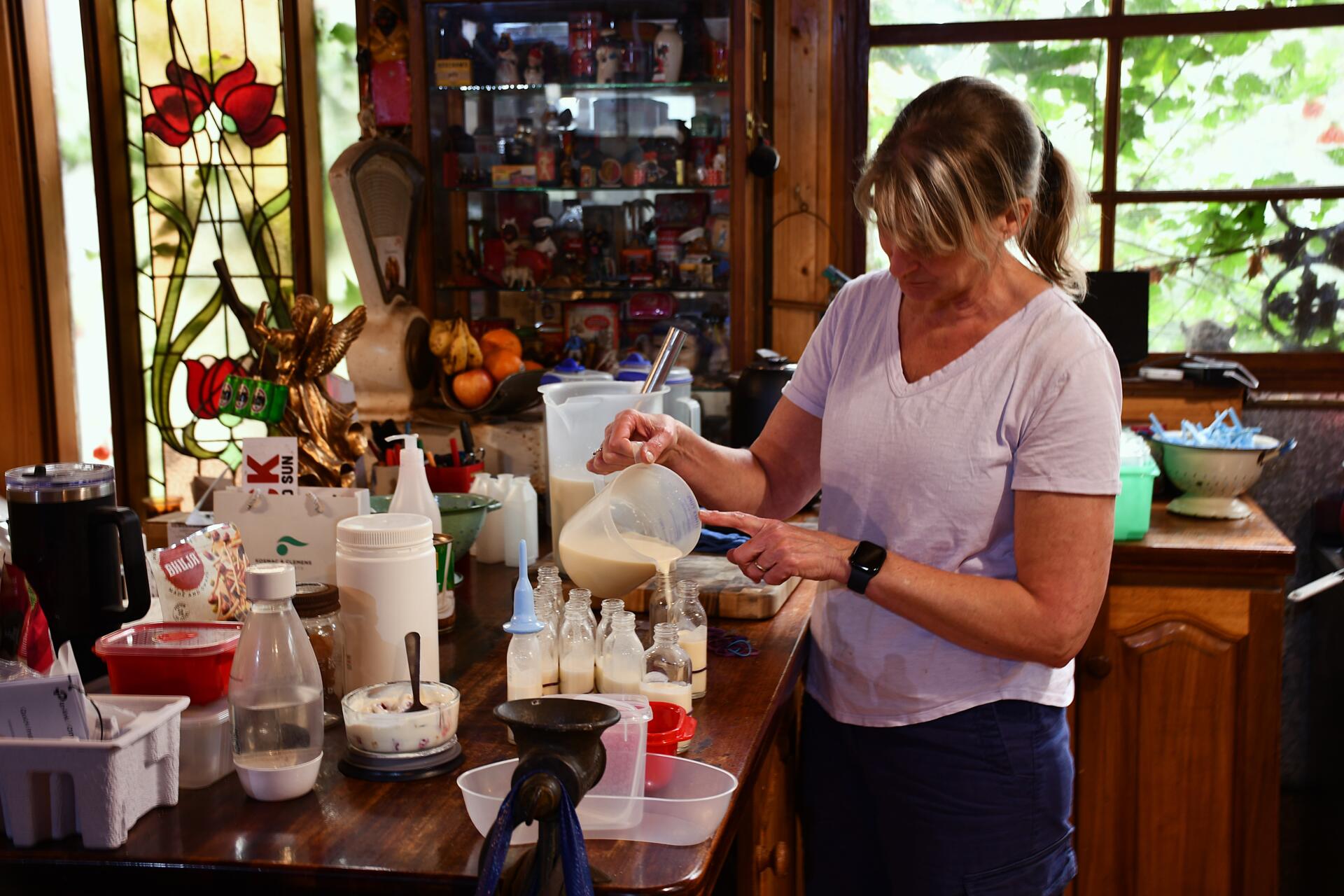
Veterinarian and volunteer carer Lisa prepares bottles for hand-reared joeys in Zabinskas’ kitchen. Photo by Ashleigh Wyss
In Victoria, rescuers can apply for funds through The Wildlife Rehabilitator Grants Program which offers up to $3,000 per successful applicant for shelters, and $2000 for foster carers. But it’s a competitive program, with no guarantee of ongoing support.
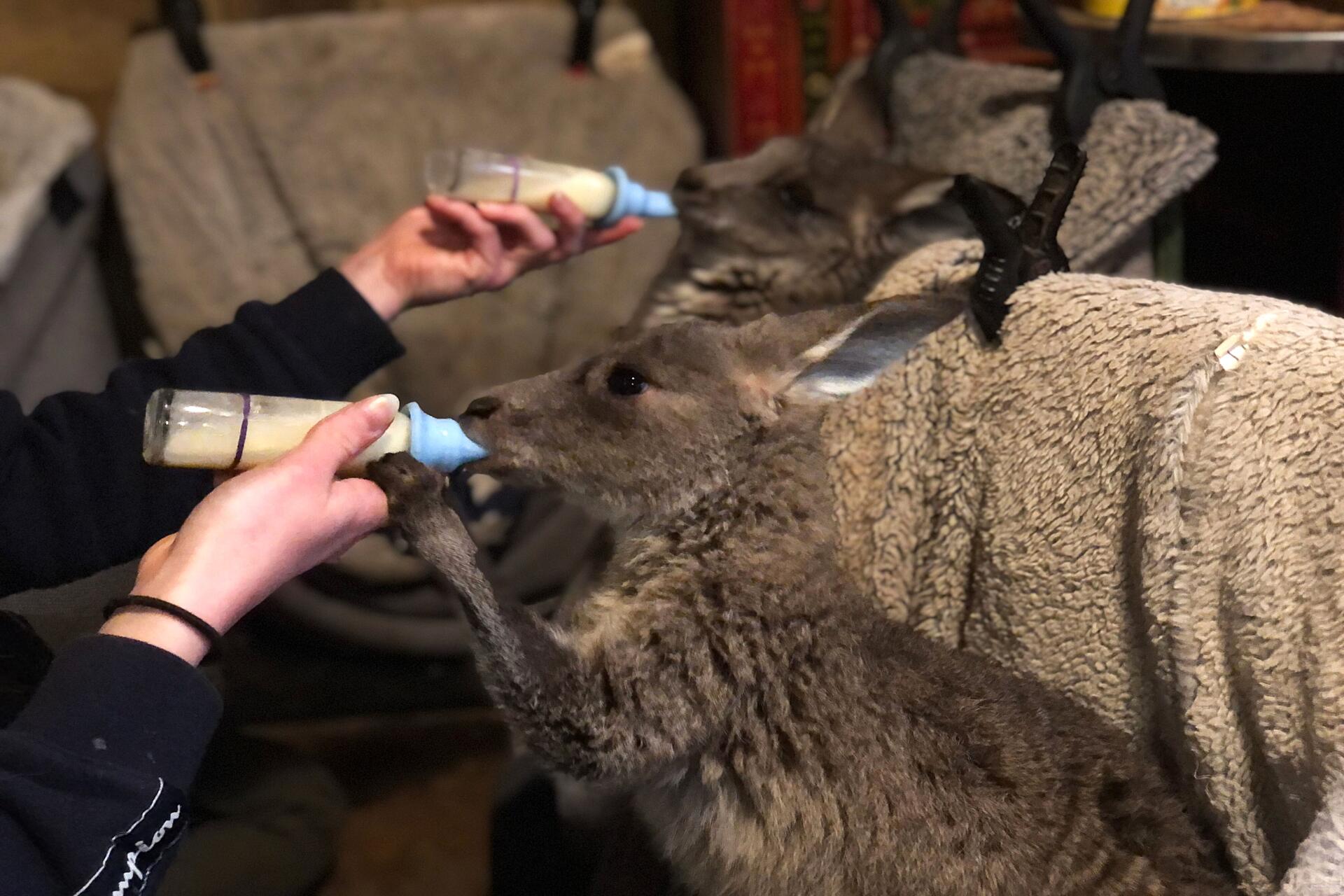
Aline Laukoetter, one of the shelter’s live-in volunteers from Germany, bottle feeds two hungry joeys who require around four to six bottles a day. Photo by Ashleigh Wyss
In 2024, the East Trentham shelter received a targeted wildlife grant from the Department of Energy, Environment and Climate Action (DEECA), only the second time in Zabinskas’ years as a carer that he hasn’t had to rely on donations and contracts relocating animals to pay the bills.
Thousands of dollars are spent on sedatives and medication, pouches and blankets, maintaining enclosures, transport costs, vet bills including CT scans and x-rays, as well as euthanasia equipment.
Zabinskas, a wildlife rescuer of 33 years and the former vice president of Wildlife Victoria, says his shelter’s annual running costs exceed $45,000, with $10,000 going on kangaroo milk formula alone.
This budget doesn’t factor in one-time purchases, like the cost of the property his home shelter rests on, which he describes as part of a “lifetime commitment to provide the best care and rehab for our wildlife”.
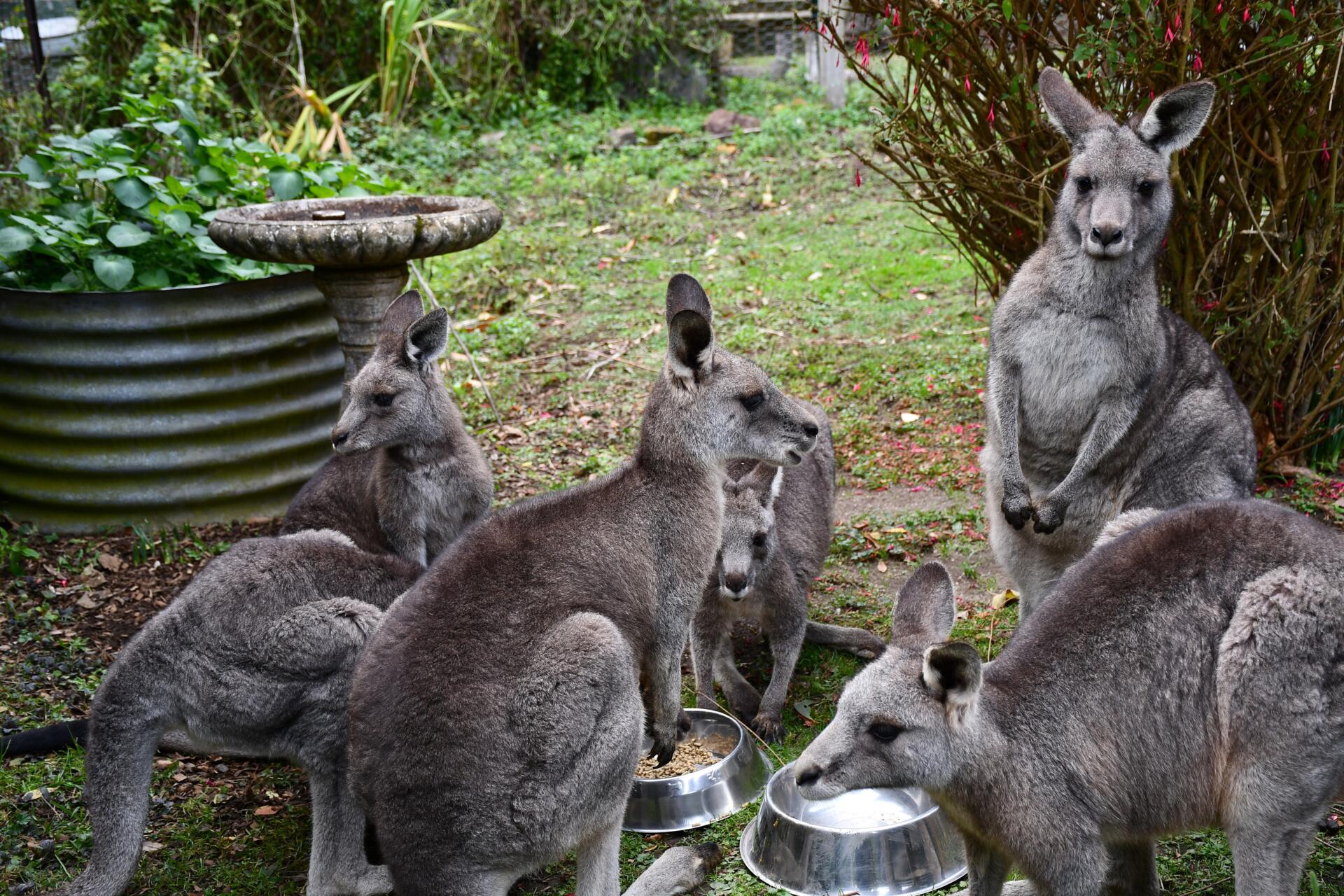
Kangaroos chomping on pellets. Zabinskas says he has a particular love and sympathy for eastern grey kangaroos because of their fragility, subject to habitat loss, malnourished by drought, hit by cars “en masse”, caught in fences, attacked by dogs or subject to culls: “I have an extra soft spot, because I really, really think they need our help because they get treated so badly in our environment,” he says. Photo by Ashleigh Wyss
Helen Round, Zabinskas’ partner in life and wildlife rescue, says government funding falls short of the true value of the sector, citing research from 2017 that values rescuers’ yearly economic contributions at $6 billion.
“The important thing is the bulk of the animals that come to us come because of roads from car strikes. So, the levy makes perfect sense to try and mitigate the damage that they’re doing,” says Round.
“Because a kangaroo crossing a road is not crossing a road, it’s a road crossing the kangaroo’s habitat.”
Beyond crushing financial burdens, Zabinskas and Round argue an absence of government support demonstrates a lack of recognition of the psychological burden rescuers carry.
“There is absolutely no doubt every single wildlife person I know suffer reasonable levels of PTSD. It is incredibly traumatic,” says Zabinskas.
“Wanting to help wildlife. It really does expose you to some of the most horrific things you’ll ever see and the losses are great. We lose way more animals than we can save, or we get called out to very, very many more animals that need to be euthanized.”
“I can’t even imagine how many people I know over the years that have had emotional breakdowns, that have completely burned out and have had to stop caring for animals, and even some that have suicided. It is a really, really tough gig, so the financial burden just adds to that.”
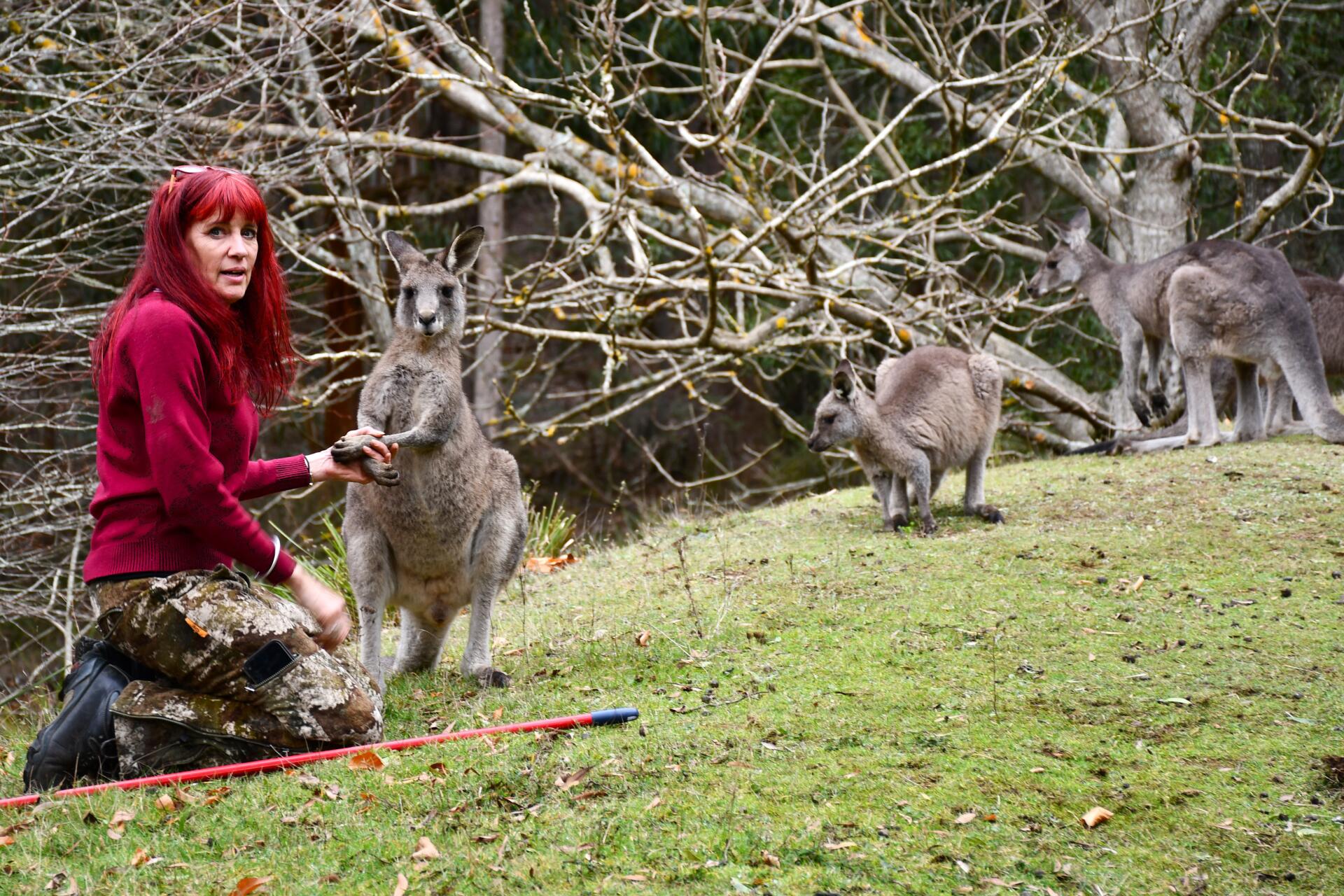
Helen Round, a human repository of facts about and colourful names for their roo rescues, says while orphan joeys need nurturing, this does not hinder their release: “Roos that I have raised and released, if I see them out in the bush- and they know me. I’m pretty recognizable. I’ve got an annoying voice and bright red hair- but if they see me out in the bush, they’re gone. They’re wild.”
Out on their property, Round calls each kangaroo by name – there’s Kevin Bacon and Matilda, Weet and her daughter Bix.
She gestures toward Lord Farquad, a young male kangaroo. His mother, Princess Fiona, named for her ogre-like small ears, died recently.
“We have our hearts broken so much, and we get no support from the government, and we get no training. We get told what we’re doing wrong, but we don’t get told what to do.”
With the 2024/25 grant money now almost exhausted, Zabinskas and Round are back where they started.
Dr Helena Bender, a behavioural ecologist from the University of Melbourne, says while support for shelters and rescuers is important, a driver levy is unlikely to address the root of the problem.
“This is equivalent to an ambulance at the bottom of a cliff where people or animals have fallen off and are injured,” she says.
“To reduce wildlife-vehicle collisions, contact between vehicles and wildlife must be reduced.”
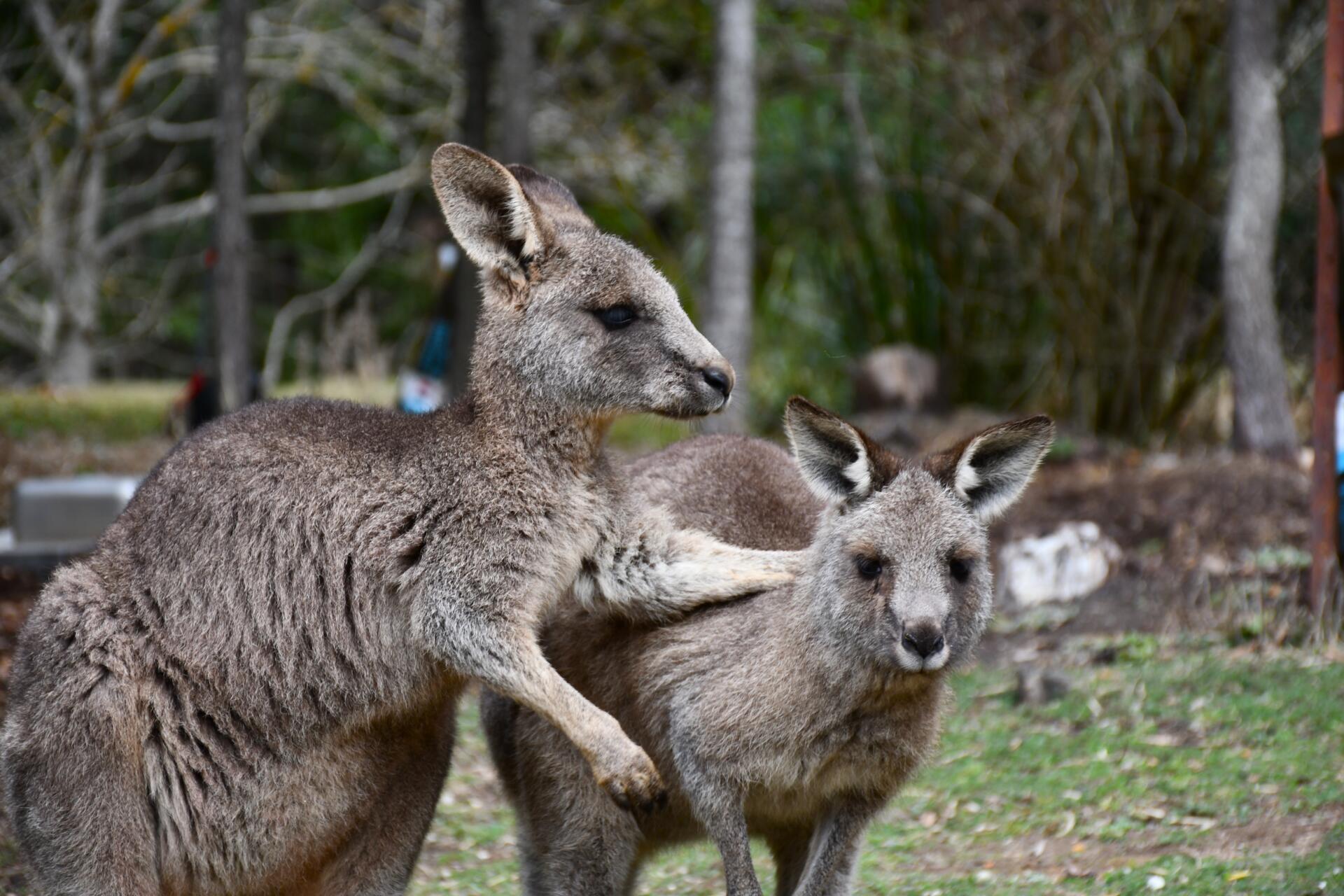
Juvenile kangaroos Mrs Misty (left) and Marvin (right) were attached like velcro. According to Round, kangaroos do not mate for life, but they can be “mates for life”, Photo by Ashleigh Wyss.
Dr Bender says investment in strategies that actively prevent collisions is critical.
Among the most effective are fencing combined with wildlife crossing structures such as underpasses or overpasses, which allow animals to cross roads safely.
Traditional wildlife warning signs fail to prevent collisions or get drivers to slow down.
Dr Bender says other mitigation measures such as high-pitched wildlife whistles and virtual animal detection systems using lights and noise, have also not yet proven to be effective at deterring animals from roadsides or, crucially, influence driver behaviour.
“Drivers changing their behaviour, by slowing down, can make a big difference not only to wildlife but in protecting their property and their lives,” she says.
Animal Justice Party MP Georgie Purcell, who sponsored the road levy petition, says areas experiencing population growth would benefit from biodiversity sensitive development.
“Australia and Victoria are really stuck in the past in terms of things like wildlife crossing overpasses and underpasses and ensuring that there is provision for biodiversity corridors through peri-urban landscapes,” says MP Purcell.
“It’s hoped that we can advocate successfully via the petition and inquiry [into wildlife roadstrike in Victoria] to make these a reality.”
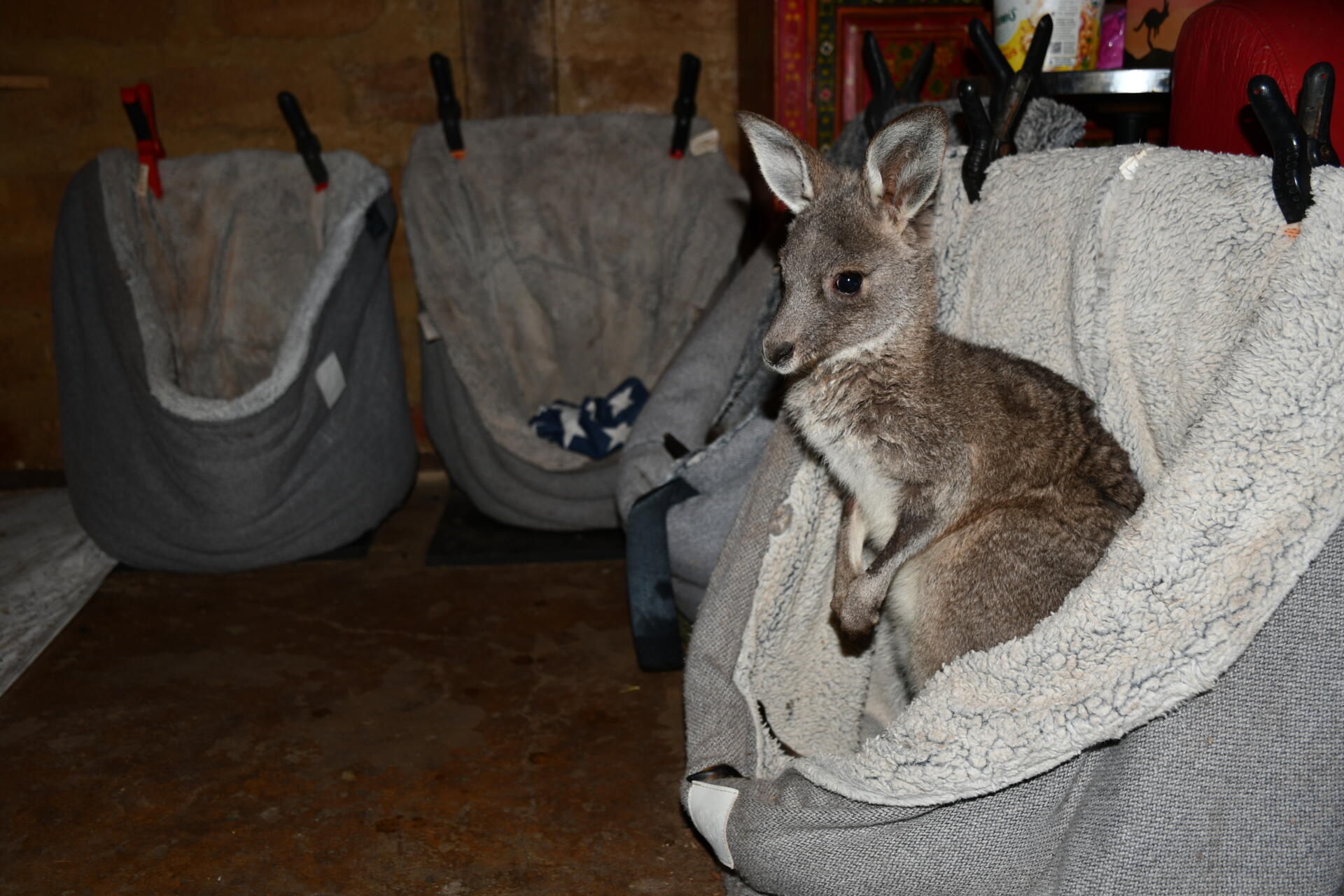
Joey “Kevin Bacon” was rescued from Sedgwick, Victoria. ““To have an eastern grey joey that you’ve saved, that is so vulnerable, that’s just lost its mother, that’s terrified, and you’re holding it in your lap, and they’re looking up and staring into your eyes, and they’ve got these most incredible, beautiful, big eyes- and as the days go on, you can actually see the fear draining out and them building up a confidence and comfort with you… I think that’s the thing is that I was blown away by,” says Zabinskas. Photo by Ashleigh Wyss