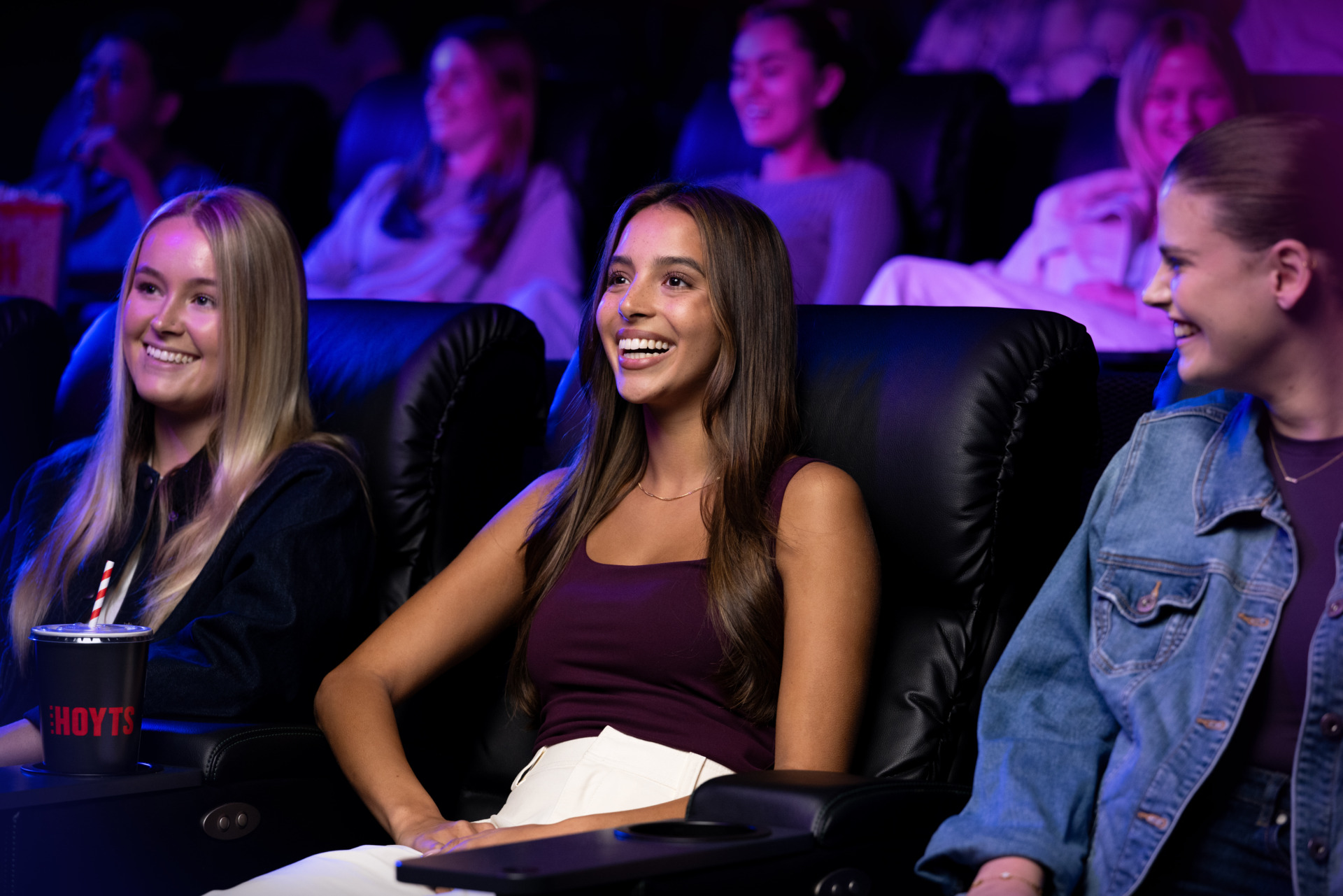
As the credits rolled and the audience of a Monday morning HOYTS screening of Michael started making their way out of the theatre, one person stayed behind.
In the back row, reading the credits, was Belinda Palmada. She had seen the film three times now, each in a different premium cinema format: Gold Class, IMAX, and now “APEX”.
APEX is HOYTS Cinemas’ branding for its new extra-large LED screens, a 21-metre version of which was recently opened in Melbourne Central. The chain also has a new 24.9-metre-wide LED cinema screen in Perth.
The APEX push is part of a global trend, according to cinema historian David Kilderry, in which movie theatres are replacing traditional projectors with direct-view LED technology with self-illuminated micropixels.
“It’s literally an LED TV screen,” Kilderry said.
The LED cinema technology is catching on around the world, perhaps most notably at Las Vegas venue the Sphere, which has a 157-metre curved LED screen, accommodates up to 20,000 people and features 4D effects including wind, scent, and moving seats.
While Australia is still a long way from anything like the Sphere, HOYTS’ APEX venture is the first time LED cinemas of this size have been commercially available here.
Independent Cinemas Australia chief executive Nick Hayes, who saw a presentation of the APEX screens at a cinema convention in April, said it was “a remarkable technology”.
“You’re talking like million-dollar screens there, where a normal projector set-up in an average suburban auditorium would cost about 80 grand,” Hayes said.
He said there were no special requirements for a film to be LED compatible. It will play if it is a DCI-compliant film in 2K resolution, which is an industry-standard certification created by the major Hollywood studios.
After watching Michael at HOYTS Melbourne Central’s APEX screen, Palmada said she would “definitely” suggest it over “traditional” formats, due to what she saw as the better picture quality.
However, she said APEX still “does not compare to IMAX” as that screen was larger, offered better sound, and let you experience more of the film.
Queensland University of Technology screen industries expert Dr Ruari Elkington said audiences do not “feel” a good screen in the same way they do good sound.
“When people go see a Dune film and a sandworm emerges, people want to feel that in their chest cavity,” Elkington said.
Australia is home to the second- and third-largest IMAX screens in the world, with Germany (Leonberg) in the top spot, followed by Melbourne and Sydney, according to Guinness World Records.
Lines have been drawn among moviegoers over what makes a “real” IMAX experience, however. The IMAX Palmada frequents at Melbourne Central is referred to by some enthusiasts as “LieMAX”.
Kilderry said there was “real IMAX and the LieMAX, which is the one that Village and HOYTS are installing”.
“Multiplexes [large movie theatres with multiple screens] often don’t have the height required to replicate a true IMAX experience,” he said.
What made a “proper IMAX screen so impressive”, according to Kilderry, was the larger field of view, patented speaker systems and screen that extended lower than the first row of seats, which he said Victorians can only find at IMAX Melbourne in Carlton.
Although cinema technology is advancing, Kilderry said not everyone welcomed the change, with many old-school viewers unhappy with the move from film to digital.
“Taking projection away altogether is something that they’d be even more horrified about,” he said.
Hard-to-reach markets among people aged 15-35, according to Kilderry, were more likely to embrace LED technology and want to try it out.
And then there’s the cost. A standard adult ticket without additional seating upgrades at HOYTS Melbourne Central starts at $24.70, compared to $32 in APEX and $38 in IMAX.
Hayes said going to the cinema has “got to be affordable for everyone,” and that splurging for an LED experience was best suited for action/adventure spectacle movies where seeing brighter colours matters.