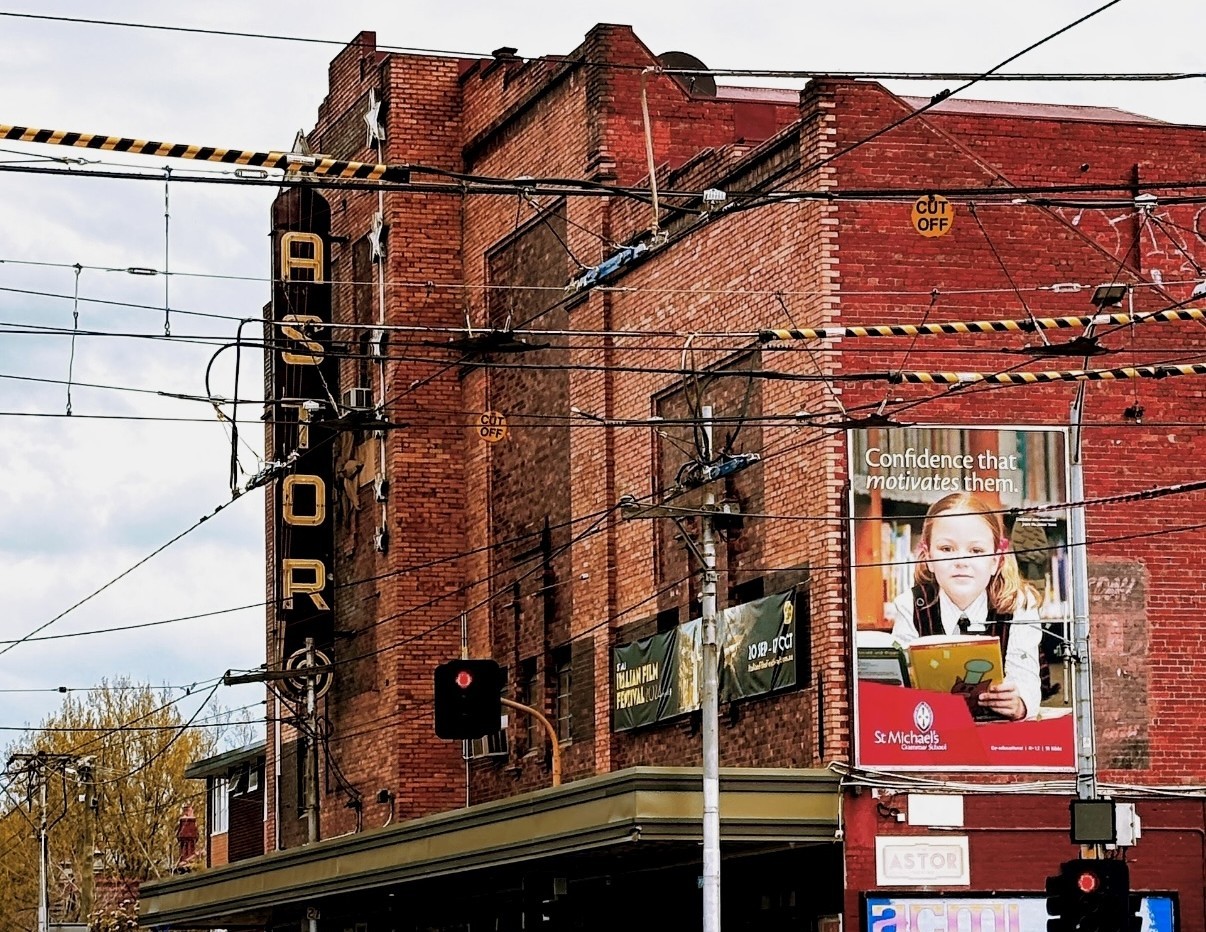
When filmmaker Michael Graves walks into St Kilda’s Astor Theatre, he’s returning to a ritual that’s shaped his life for decades.
Graves has been coming to the Astor for more than 30 years. Today, he is here with his mother watching The Muppets Take Manhattan (1984), a film his late grandmother once took him to see.
“It’s kind of like the wheel’s turned full circle,” he says.

Michael Graves, a screenwriter and regular visitor to the Astor Theatre. Photo by Verna Du.
“I’ve grown older, she’s grown older. But when you take out an old film, it takes you back, and you become more cognizant of the passage of time and things hit you differently.”
After seeing Kermit and the gang, Graves and his mother were meant head into the next screening, Labyrinth (1986), 20 minutes later.
But once he starts talking about the Astor, he’s in no hurry to stop.
Graves describes movie-going as a ritual, a “passing of the torch” from one generation to the next.
That sense of continuity is part of what makes the Astor Theatre more than a historic building. As streaming makes film more private, the Astor remains a place where theatre is still shared across generations.
Opened in 1936, the Astor is one of Melbourne’s last continuously operating single-screen cinemas, listed on the Victorian Heritage Register. Known for its rotating program of cult classics and rare 35mm and 70mm screenings, it preserves traditional projection in a digital era.
It is widely regarded as a cultural landmark in Melbourne’s film scene, standing out for its Art Deco style and historic interior and maintaining an old-Hollywood cinema experience.
But it hasn’t all been smooth sailing. In 2014, the Astor faced possible closure due to a lease dispute and operational uncertainty. The situation triggered a large-scale public response, with thousands of supporters signing an online petition to protect the culturally significant site.
Under strong public pressure and industry attention, Australian cinema chain Palace Cinemas ultimately took over operation. The Astor avoided closure and has continued to operate to this day.
For Graves, what the theatre offers is not just a film but “a sense of occasion and event”.
He notes that classic films like Labyrinth, now 40 years old, are rarely screened elsewhere. If audiences want to see them beyond watching at home, he says, the Astor is often the only option.
“Cinema needs to be seen in a cinema,” Graves says.
“Like a musical needs to be seen on a stage. A funny film seems funnier when you are with 500 other people laughing at the same jokes as you are.”
Seeing it on a big screen with lots of other people who are interested in the film, he says, creates “a real sense of occasion”.
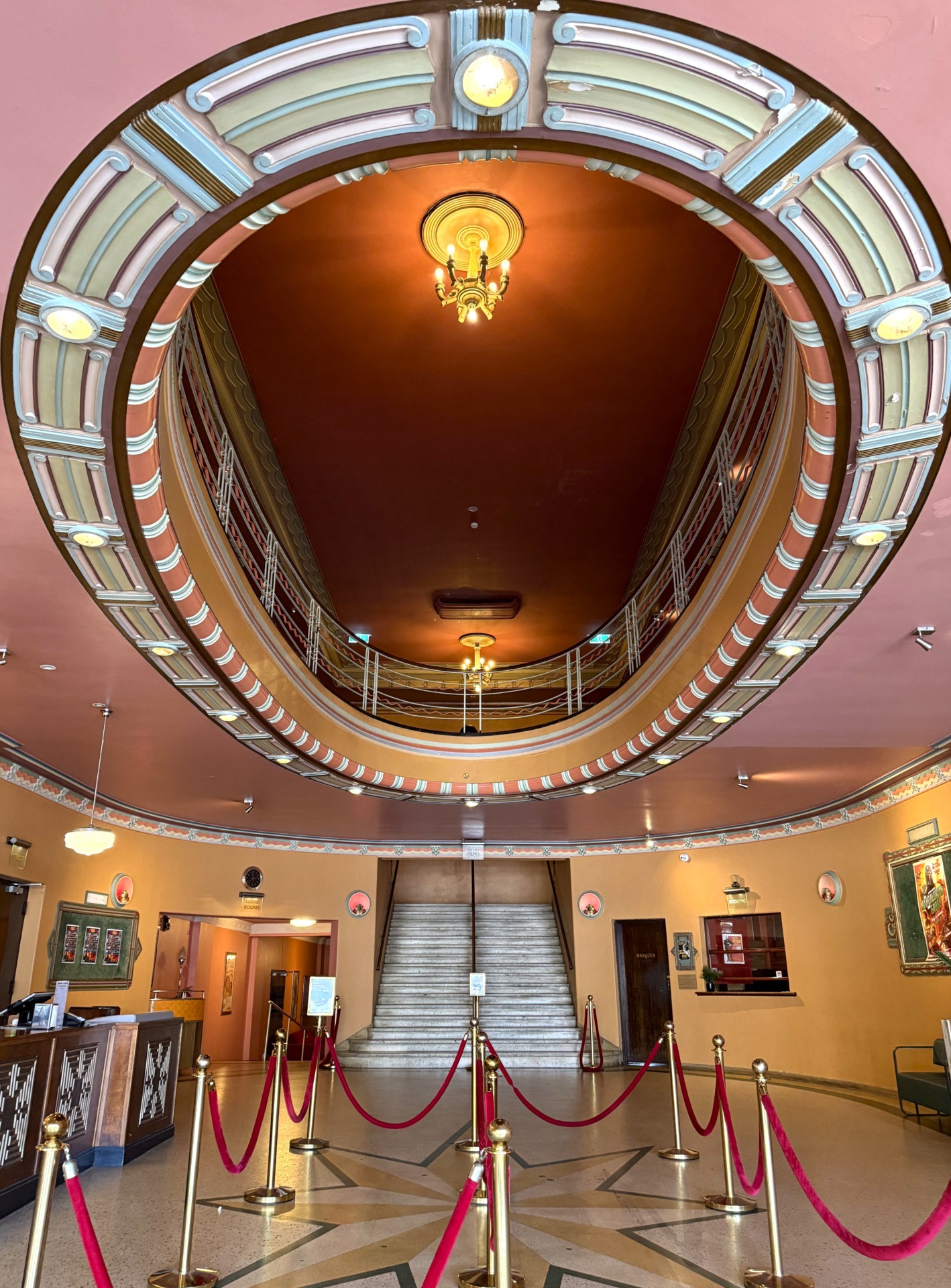
The Astor’s foyer still reflects its historic character, with original decorative features and a grand interior layout helping preserve the feel of an earlier cinema era. Photo by Verna Du.
That collective quality is built into the theatre itself. The Astor still retains its golden curtains, dress circle and many original fixtures. It was built before television, video and streaming. At that time, going to the cinema was an event in itself.
The Astor’s official history notes that many original elements remain because of its heritage protection, while its current programming continues to mix older formats and modern technology.
Its audience is also being reshaped by a younger generation.
Connor Wilson has worked at the Astor for five years. He says the theatre differs from most cinemas because of its focus on older films and its single-screen format.
“We focus on retrospective, classic content,” Wilson says.
“We did the Taylor Swift Eras Tour here for a bit. That crowd was very different from our usual, it was a lot of younger girls coming in for that.”
For Graves, that fusion of the old and the new is how cinema culture continues at the Astor.
“There’s a sense of community and a sense of binding everyone together through what we are collectively watching and experiencing,” he says.