Twenty-two-year-old Tibetan woman Luobuzhuoma stood at the edge of the grassland, gazing at the distant snow-capped mountains. The wind carried the tinkling bells of yaks. It was a beautiful scene, but to her the mountains were more than pretty views.
“They’re alive,” she said. “The deities our ancestors have revered for generations.”
When the outdoor brand Arc’teryx collaborated with internationally-renowned artist Cai Guo-Qiang to set off fireworks in the Himalayas in September, Luobuzhuoma was outraged.
“Those weren’t just fireworks,” she said. “They disturbed the sacred mountain.”
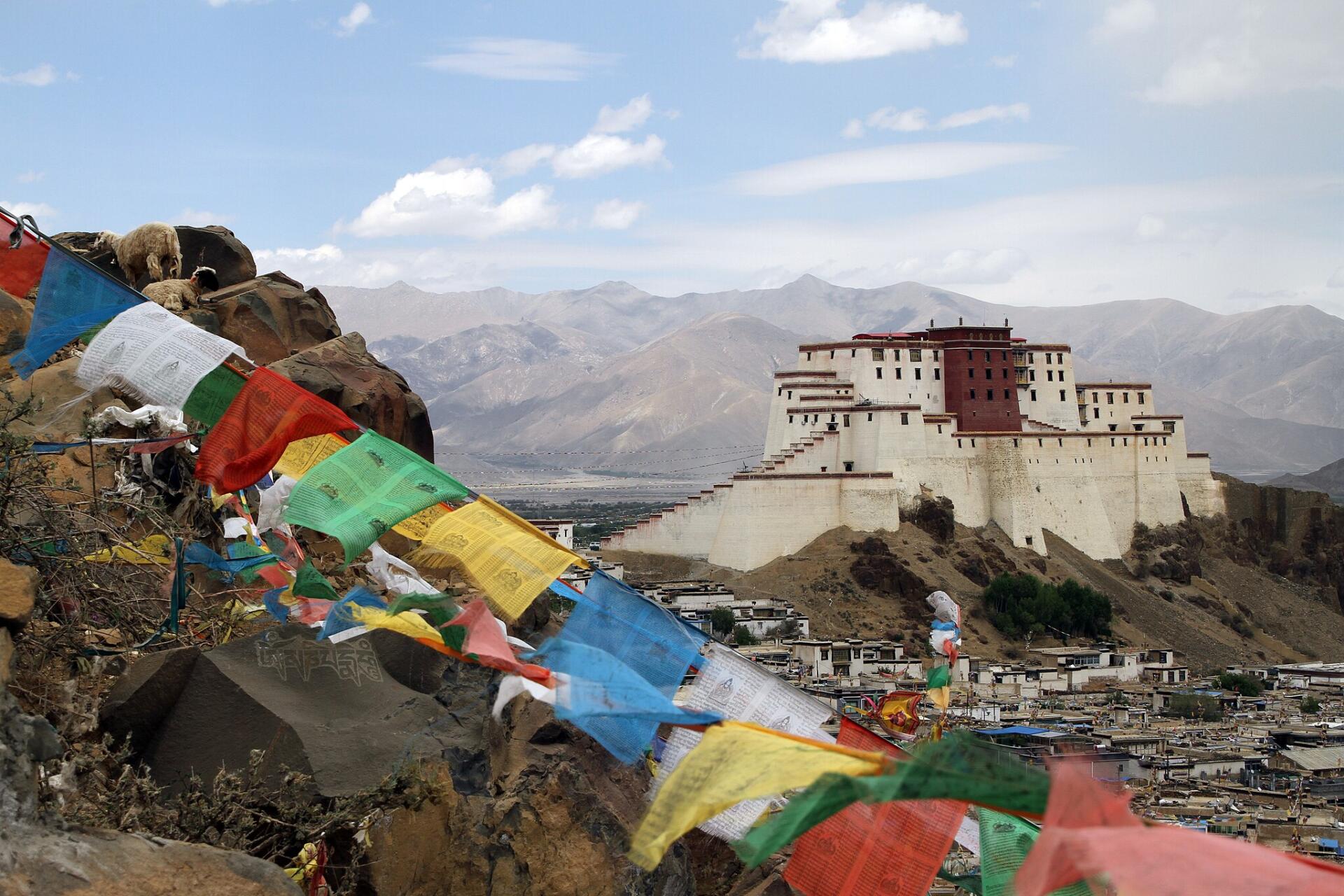
The daytime fireworks event, called Rising Dragon, was set at more than 5,000 metres and affected 30 hectares of grassland in Tibet’s Shigatse region, a gateway to Himalayan peaks like Everest. It featured coloured smoke and pyrotechnics, like many of Cai Guo-Qiang’s other projects, lasting for almost one minute.
Videos of the display are not available on Arc’teryx or Cai Guo-Qiang’s official channels, though they remain hosted online by some users.
Arc’teryx—which has since apologised—is headquartered in Canada but owned by Finnish parent company Amer Sports, Inc., a subsidiary of Chinese multinational corporation Anta Sports Products Ltd.
Event organisers claimed materials used in the fireworks display were eco-friendly and would naturally decompose. But in China, many people remained concerned about potential impacts on the environment and local culture.
Luobuzhuoma was born in a rural area south of the mountains, where she grew up surrounded by yaks and grasslands.
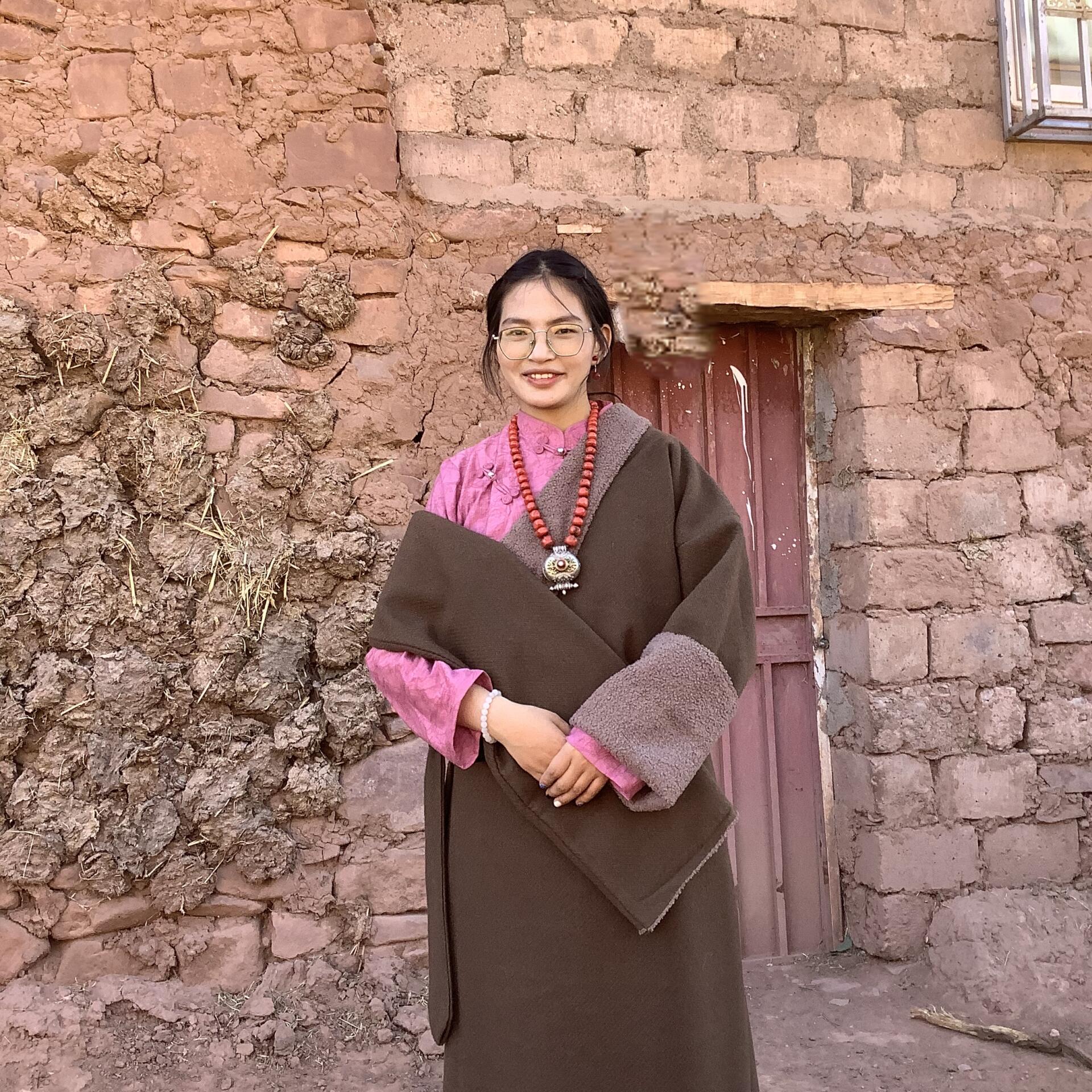
Luobuzhuoma standing in front of her home. Photo supplied by Luobuzhuoma.
“We’re used to living in the simplest way,” she said.
“In summer, we take the cattle to the mountains. In winter, we weave woollen blankets and make butter tea. We depend on the mountains, the grass, and the heavens.”
She remembered the news reports from the night of the event, showing smoke along the snowy border.
“My heart was beating fast at that moment,” she said.
“We Tibetans coexist with nature in humility, cherishing every inch of land and water as sacred spiritual homelands that must not be desecrated.
“To many Tibetans, setting off fireworks in the Himalayan region gravely violates this reverence and respect for nature.”
It was not just Tibetan locals who were disturbed by the event.
Chengdu resident Yihui Liu spends every available holiday mountain hiking. Yihui feared the fireworks display may have long-term ecological impacts, because the plateau’s harsh climate meant that things decomposed extremely slowly, and even so-called “biodegradable materials” might take decades—or even centuries—to break down.
“I used to think that Arc’teryx respected nature,” Yihui said.
“This is precisely why, as a hiking enthusiast, I’ve consistently purchased their products—even though they come at a premium price. That moment when they set off fireworks felt like they’d forgotten who they were.”
Arc’teryx has previously touted its eco-friendly policies. The “Who We Are” section of brand’s website states “Arc’teryx is founded on the idea that there is always a better way … Connecting with the mountains is our reason for being, and our inspiration”.
Some experts believed the recent controversy in Tibet also reflected the increasingly intertwined reality of art and business on a global scale.
University of New South Wales professor of Chinese contemporary art Paul Gladston said such collaborations were becoming common.
“This can be seen as a mutually beneficial relationship,” Professor Gladston said.
“The company gains cultural capital, especially in attracting Chinese young people who increasingly value an outdoor lifestyle.
“The artists, in turn, receive financial support from the enterprise. This is actually a modern version of art patronage.”
However, Professor Gladston said the fireworks display might be regarded as a form of “corporate greenwashing”, with little artistic merit.
“It could be both art and marketing,” he said. “Personally, I don’t think this collaboration is very interesting.”
The event also stirred up buzz in the advertising industry. Yujia Xu, account executive at a Chinese advertising agency that works with major brands such as Adidas, said she did not consider the fireworks display an effective brand event or marketing.
“As the artistic interpreter of the entire incident, Cai Guo-Qiang had a greater say, but he failed to take on the responsibility of guiding the event in the right direction,” Yujia said.
“Brands don’t really have much say in fireworks shows anyway, and this one didn’t even get them any decent exposure. It was just a failed social art experiment, plain and simple.
“From the perspective of advertising, the feelings that this event brought to people are completely contrary to the core of the Arc’teryx brand.”
“This is a disaster, and it will undoubtedly lead to a loss of customers for Arc’teryx,” Yujia said.
For Luobuzhuoma, no matter how intense the debate, everything had changed.
“When I saw the smoke rising from the mountain top,” she said, “I didn’t feel proud, only a sense of loss—as if that sacred mountain no longer belonged to us.”
Arc’teryx and Cai Guo-Qiang did not respond to requests for comment.
In a 21 September social media statement, Arc’teryx acknowledged the fireworks display was “out of line” with its brand values.
“The event was in direct opposition to our commitment to outdoor spaces, who we are, and who we want to be for our people and community,” the brand stated. “We are deeply disappointed that this happened, and apologise, full stop.”
“We’re addressing this directly with the local artist involved, our team in China, and will change the way we work to ensure this doesn’t happen again. Our expectation is that everything we do reflects our environmental ethics, and we have no tolerance for actions that do not align. We have already begun efforts to mitigate the environmental and social impacts of this event.”
Cai Guo-Qiang issued a similar statement via his official WeChat account.
China’s state-run national broadcaster, China Central Television (CCTV), has since reported on an investigation by Shigatse City into the event, which has led to the dismissal of several local officials.