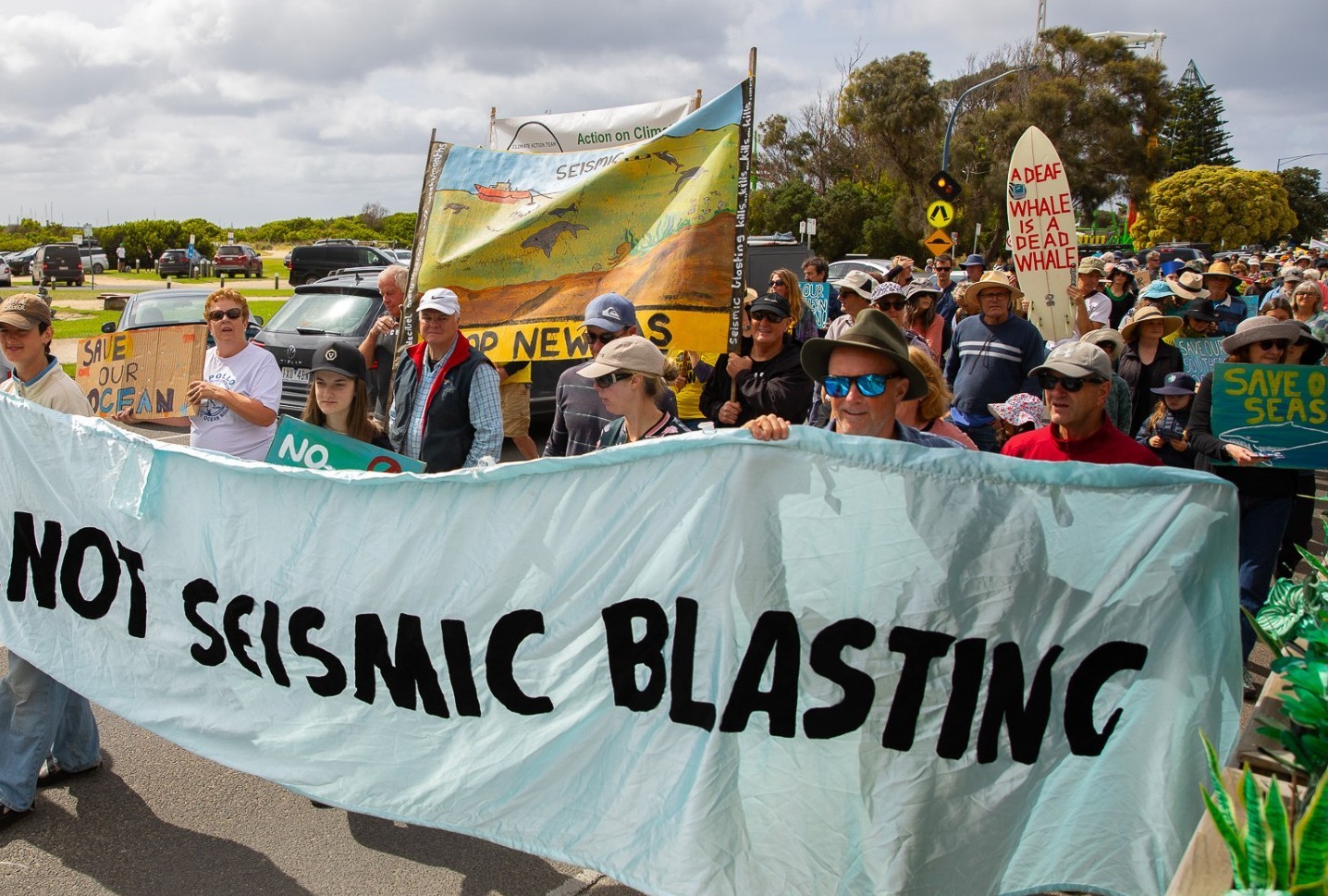
A grassroots coastal campaign has claimed its second victory in two years over offshore oil and gas expansion, after Australia’s regulator refused a multinational’s plan to survey 2,750 square kilometres off Victoria’s south-west coast.
Seismic surveys use arrays of underwater airguns that fire repeated high-intensity blasts—among the loudest human-made noises in the ocean—sending shockwaves deep into the seabed to locate oil and gas.
Scientists have found the noise can disrupt communication and migration in whales and dolphins, alter behaviour in fish, and damage the sensory systems of marine life from seabirds to krill.
Geo-tech company Civil Geotechnical Consultants (CGG) had planned to fire the blasts for up to 60 days in waters between Warrnambool and Port Fairy that fringe southern right whale nursery grounds and pygmy blue whale feeding areas—both endangered species protected under federal law.
Last week, Australia’s offshore regulator, the National Offshore Petroleum Safety and Environmental Management Authority (NOPSEMA), refused the proposal—only the fifth time in its 13-year history that a seismic plan has been outright rejected.
The regulator had previously sent the proposal back four times for revision, amid almost 15,000 public submissions, before ultimately refusing it.
Fight for the Bight organiser Ben Druitt has been campaigning against the survey.
“For years we were told this project wasn’t a question of if—only how and when,” Druitt said.
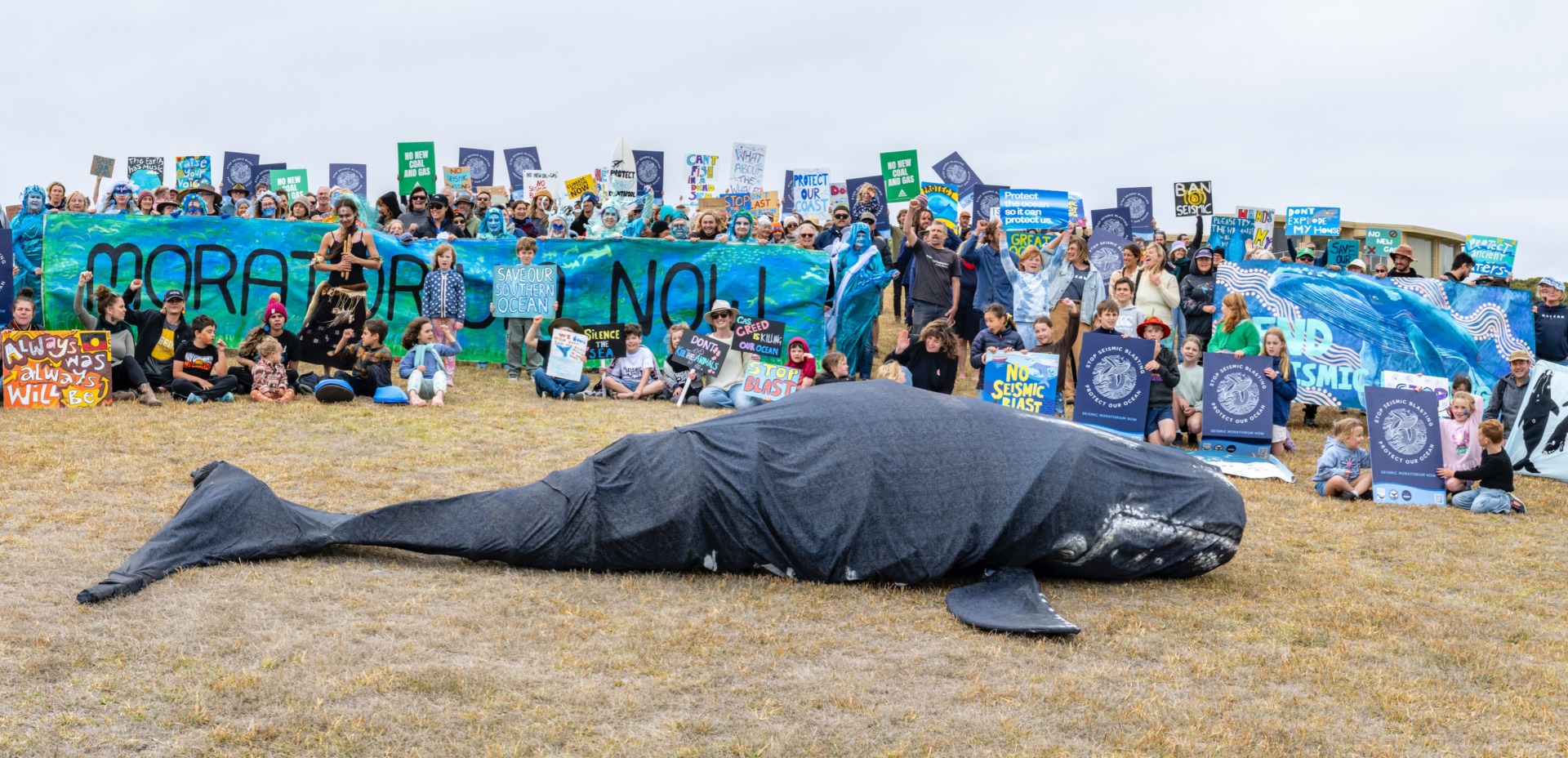
A rally against CGG’s proposal at Logan’s beach last year, where southern right whales nurse their calves between May and October. Warrnambool, VIC. Source: Rodney Harris Photography
Companies can typically revise plans indefinitely until regulatory standards are met.
“Refusals are uncommon, which makes this outcome meaningful,” Druitt said. “[It] reflects sustained effort from communities, councils, citizen scientists, and Indigenous custodians standing up for Sea Country … It’s an unequivocal win.”
Druitt is part of a grassroots movement that has swelled over the past five years in towns along the Great Ocean Road. In 2024, data giant TGS and drilling company SLB abandoned plans to seismic blast a stretch of southern ocean the size of Tasmania, after a stream of street marches and ocean paddle-outs were organised in protest.
Otway Coastal Environment Action Network (OCEAN) founder Lisa Deppeler, who staged many of the protests, said it was the group’s second big win against seismic blasting.
“It shows that the science doesn’t support allowing companies to seismic blast, especially around endangered species like southern right whales,” Deppeler said.
When concerned Port Fairy local Carli Reeve examined CGG’s initial environment plan, she was struck by the limited assessment of the region’s little penguin colonies, noting that five of the seven known breeding sites within 30 kilometres were not mentioned.
In a 16-page report submitted to CGG, Reeve brought together scientific studies and local expert advice, showing penguins moved further from their colonies when seismic activity occurred within 100 kilometres.
Druitt also lodged two dissenting reports, identifying what he described as inconsistencies in the company’s assessment of predicted impacts on whales and their primary food source, krill. In particular, he questioned CGG’s revised acoustic modelling of potential impact zones for marine life.
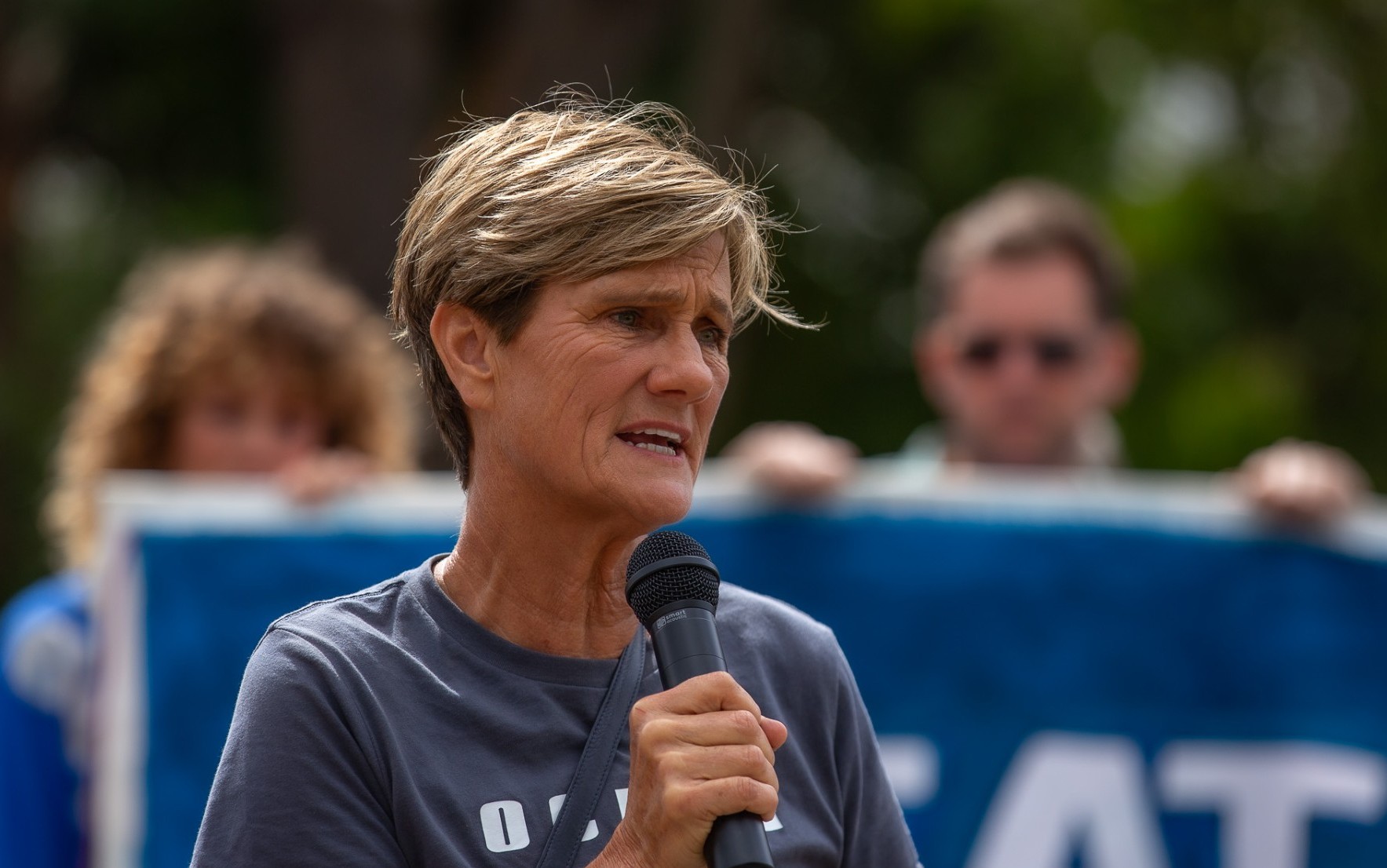
OCEAN founder Lisa Deppeler rallies a crowd of protesters against seismic blasting plans in the Otway Basin, 2024. Source: Amber O’Meara Noseda, Great Ocean Photography
The company’s earlier modelling predicted whales could be injured within 22.5 kilometres of the blast. In its latest submission, that radius had shrunk to 4.3 kilometres—despite no changes to the proposed survey zone, only a switch to a different acoustic modelling contractor.
Reeve also flagged the modelling for little penguins, noting the expected zone of behavioural disturbance had been reduced from 77 kilometres to 10.6 kilometres.
In its final decision letter, NOPSEMA stated the company’s two acoustic studies produced “materially different evidence”, and that those differences were “not adequately evaluated, reconciled, or justified” in its environment plan.
It concluded that uncertainty was therefore embedded across impact assessments and proposed controls, leaving no guarantee that underwater noise impacts could be managed to “acceptable levels”.
NOPSEMA’s previous decisions to delay approval also cited multiple shortcomings in the company’s assessment of impacts on little penguins, whales and krill—directly reflecting many of the issues raised in Reeve’s and Druitt’s submissions.
“We’ve shown that it’s possible,” Druitt said. “That scrutiny matters, standards matter, and participation in regulatory processes matters.”
A spokesperson from Klarite, the consultancy that prepared CGG’s environment plan and led community consultation on its behalf, said the outcome had not been anticipated but that the team “respects the rigor of the Australian regulatory framework”.
“Our planning involved strategic adjustments to the survey area and timing to account for biologically important areas, ensuring operations were conducted with a deep respect for the ecological values of the region,” the spokesperson said.
In December 2025, NOPSEMA approved a separate marine seismic survey off Dongarra, Western Australia, also prepared by Klarite for Pilot Energy. That plan has since drawn criticism for overlapping commercial fishing grounds subject to bans introduced in January amid concerns over declining demersal fish stocks.
While under assessment, Pilot Energy’s proposal received 25 public submissions during the 30-day public comment period required for environment plans. CGG’s rejected proposal drew 14,879.
A spokesperson for NOPSEMA said the regulator “acknowledges the high level of public and community interest in this [CGG’s] proposal, including submissions received during the public comment period, which were considered as part of the assessment process.”
“That’s the difference,” Deppeler said. “Because of community pressure, companies are going to have to work a lot harder to get their environmental plans passed here.”
She said the outcome was significant because the federal government recently announced that five new offshore areas in the Otway Basin—covering 2.5 million hectares—will be opened for petroleum exploration.
Last month, more than 1000 people floated on surfboards beyond the break at Torquay’s main beach to protest the Otway Basin’s released areas. Days later, the government extended the public consultation period to 20 February.
“Protecting marine ecosystems requires ongoing vigilance and engagement,” Druitt said. “This is a step forward, not the finish line.”
When Reeve woke to news of the grassroots campaign’s most recent victory, she went straight to the coast to take in the waters she had spent two years defending.
“I was looking at the ocean and it was huge,” she said. “The swell was coming in big and it was raging. The ocean was raging. And I thought, ‘Yes!’ It matched exactly what I was feeling.”