From hidden to visible: Campbell Harrison’s transformation
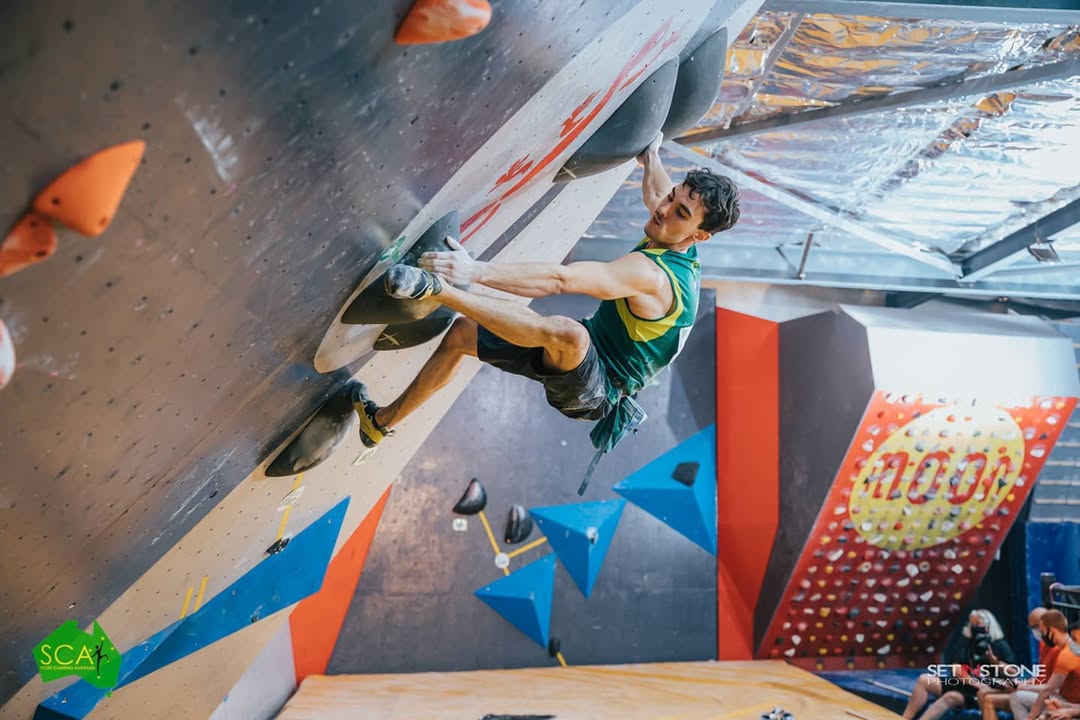
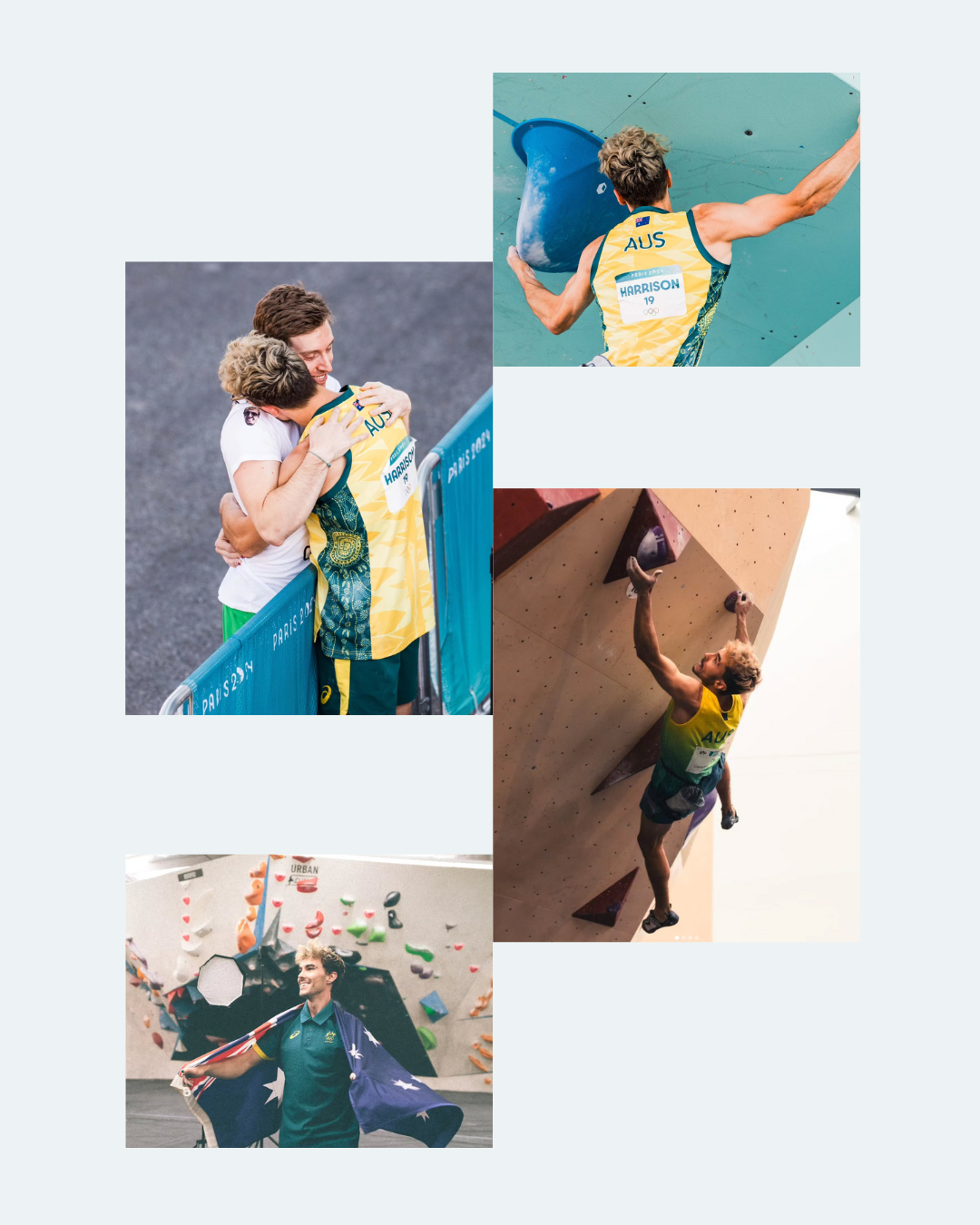
Campbell Harrison, Australia’s top-ranked sport climber, made history at the 2024 Paris Olympics, becoming only the third Australian to compete in Olympic climbing—he finished 19th.
His achievement was all the more notable after becoming the first Australian Olympian to publicly ‘come out’ as gay in 2021.
Harrison grew up in a sporting culture dominated by rigid ideals of masculinity and often adjusted his behavior to meet those expectations, but over time he realized he didn’t need to hide his identity as a gay man.
“I think the most powerful decision that I made was just stop keeping the secret. It wasn’t a big announcement, basically, I just decided to stop hiding.”
— Campbell Harrison
The roll of role models
Harrison was not alone on his journey.
According to statistics, the number of openly LGBTQI+ athletes competing at the highest levels of many sports is on the rise with a total of 199 competing in the 2024 Paris Olympics – a new record. Recently, former AFL football Mitch Brown came out as bi-sexual conceding the “weight of hiding his sexuality contributed to his decision to retire aged 28.
However, Harrison was ultimately inspired by one of his coaches on the national climbing team who was an openly lesbian woman.
She helped him to gradually realise the power of representation — that coming out is not just self-affirmation but also a source of strength for others.
“She was living this really cool, successful life, and she was really proud of who she was … that just did so much for me to take pride in who I was.”
— Harrison recalled.
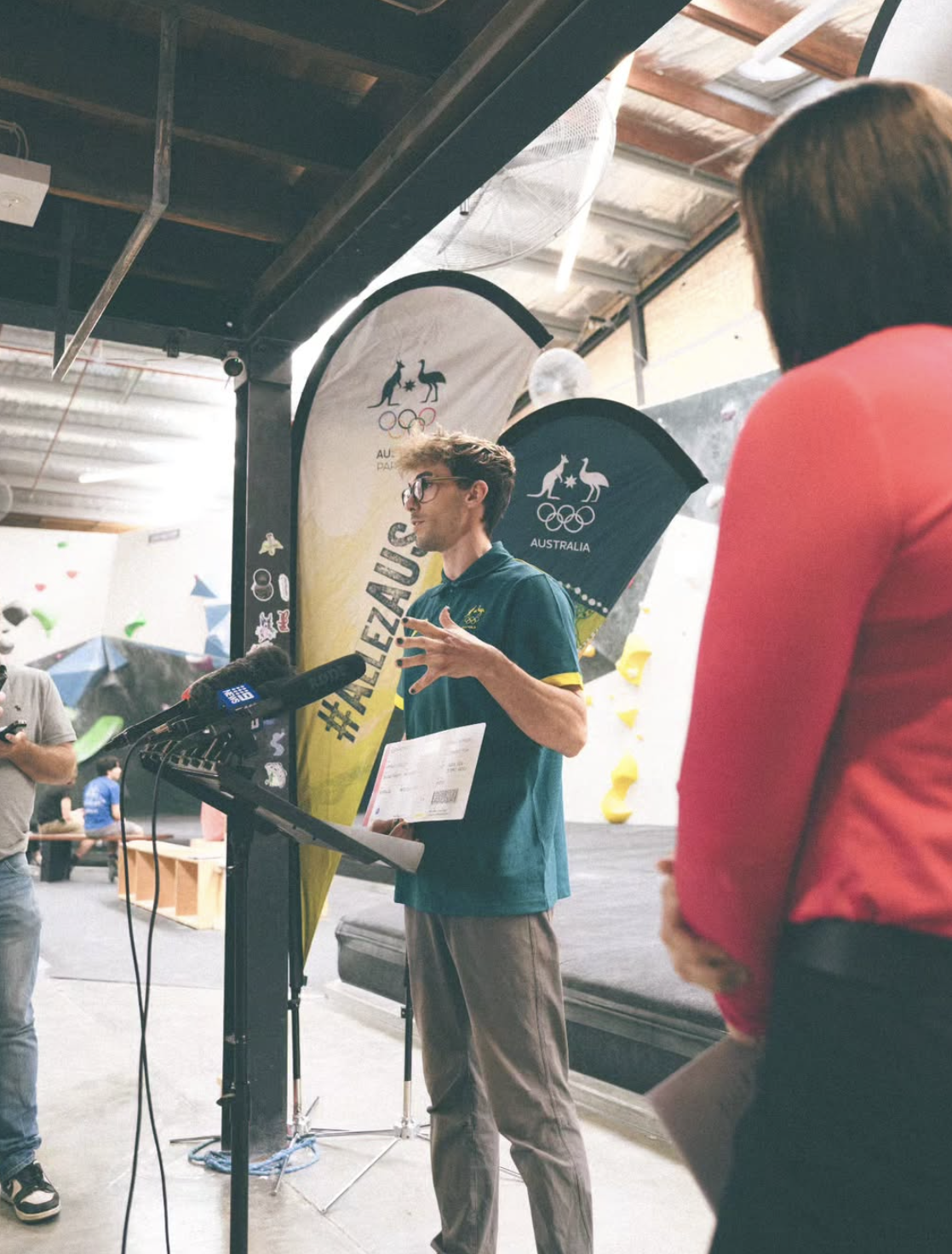
Photo posted by @campbell_harrison547 on Instagram
This belief drove Harrison to actively engage with queer community groups — such as ClimbingQTs and Sweat With Pride — that foster a culture of inclusion and affirmation for LGBTQI+ people. He encourages younger LGBTQI+ individuals to embrace their identities and has gradually become an advocate for greater inclusivity in sport.
This dual significance — of personal representation as a symbol of strength, and of community belonging — is also supported by research data.
In Australia, according to the Free to Exist report, jointly produced by Swinburne University, RMIT University, the University of South Australia and VicHealth, 53% of LGBTQI+ youth have witnessed discriminatory behaviour, while 40% experienced it directly. Additionally, 57% of young people said that friend referral, supports, and LGBTQI+ friendly environments would encourage them to participant in sports.
It is through such support mechanisms that the LGBTQI+ community is gradually reshaping a sense of belonging and visibility within sporting spaces, by engaging in broader and more inclusive forms of participation.

Australia now has over 100 LGBTQI+ sports clubs, covering a wide range of disciplines from soccer, volleyball, and swimming to rock climbing and rugby. These organizations not only provide spaces for training and social connection, but also compete at representative levels in mainstream sporting events — slowly dismantling the traditional barriers around gender and sexual orientation in sport.
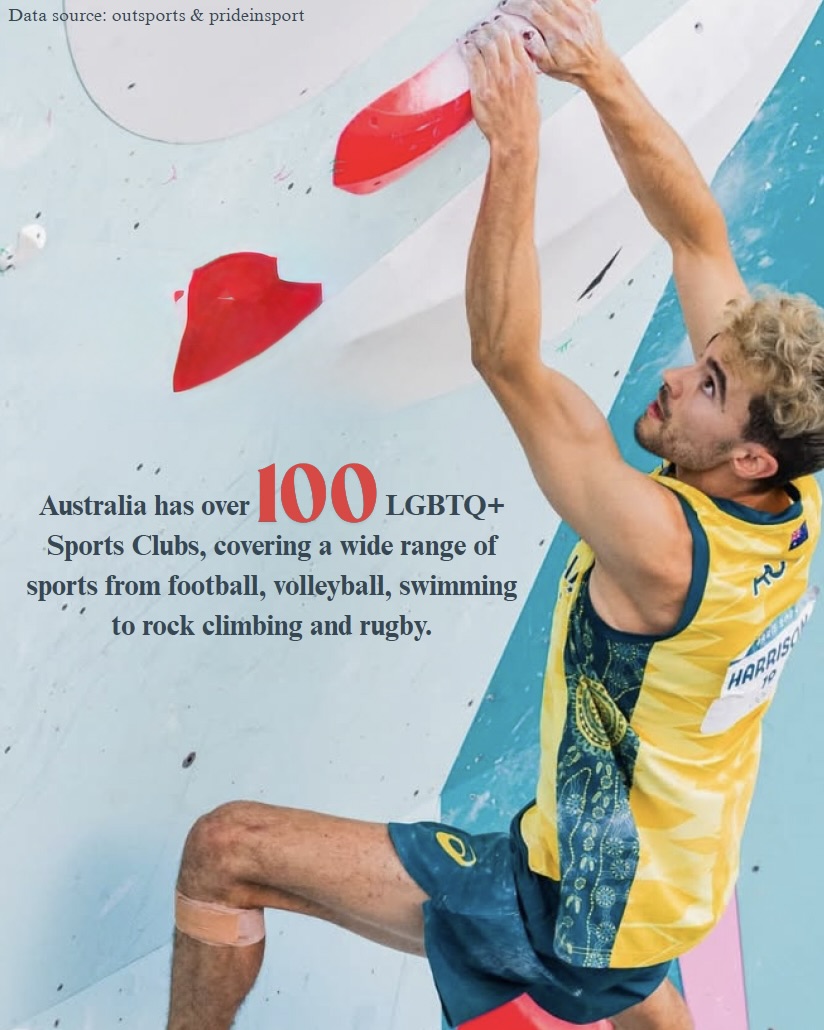
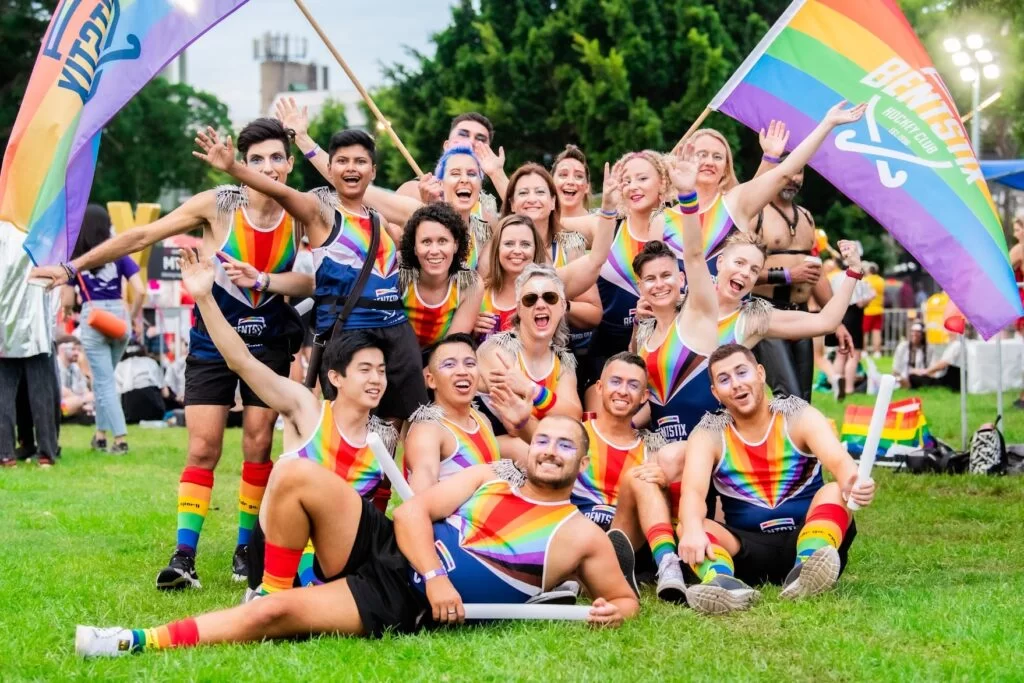
Photo: A Modern Gay’s Guide
“The bottom line of it all is just basically that queer people exist, and we’re a part of the human experience … we should be a part of the conversation and shouldn’t be like invisible,” said Harrison.
Moving beyond the ‘safe space’ of individual sports
“My initial reasons for choosing climbing were simply that I liked it more than the other ones. But I think climbing, as a new sport, gives us a really good framework to build an inclusive environment, compared to a lot of other sports,” Harrison said.
Over time, his choice became a deeper journey of self-discovery, allowing him to reclaim control over his body and embrace freedom of expression in an environment without rigid norms or gendered expectations.
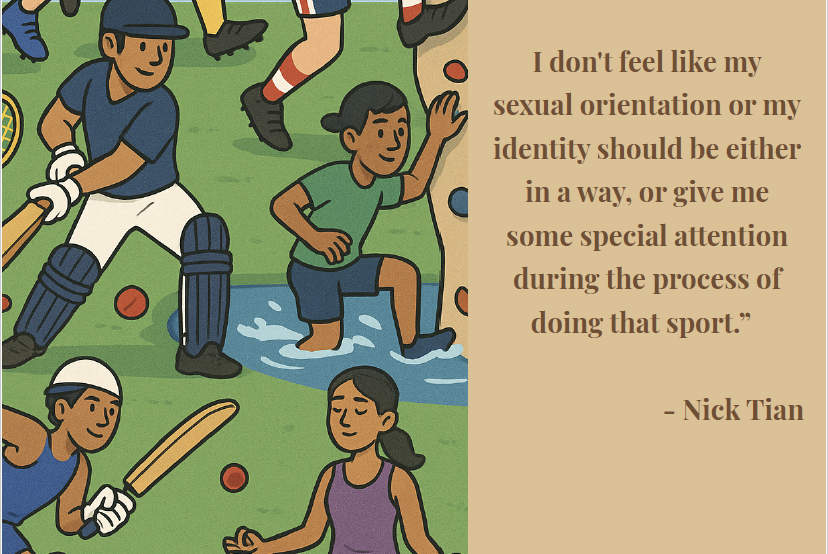
Queer athlete, Nick Tian, a climbing and martial arts enthusiast, also believes climbing isn’t about proving who is braver, but quietly exploring the body without interruption.
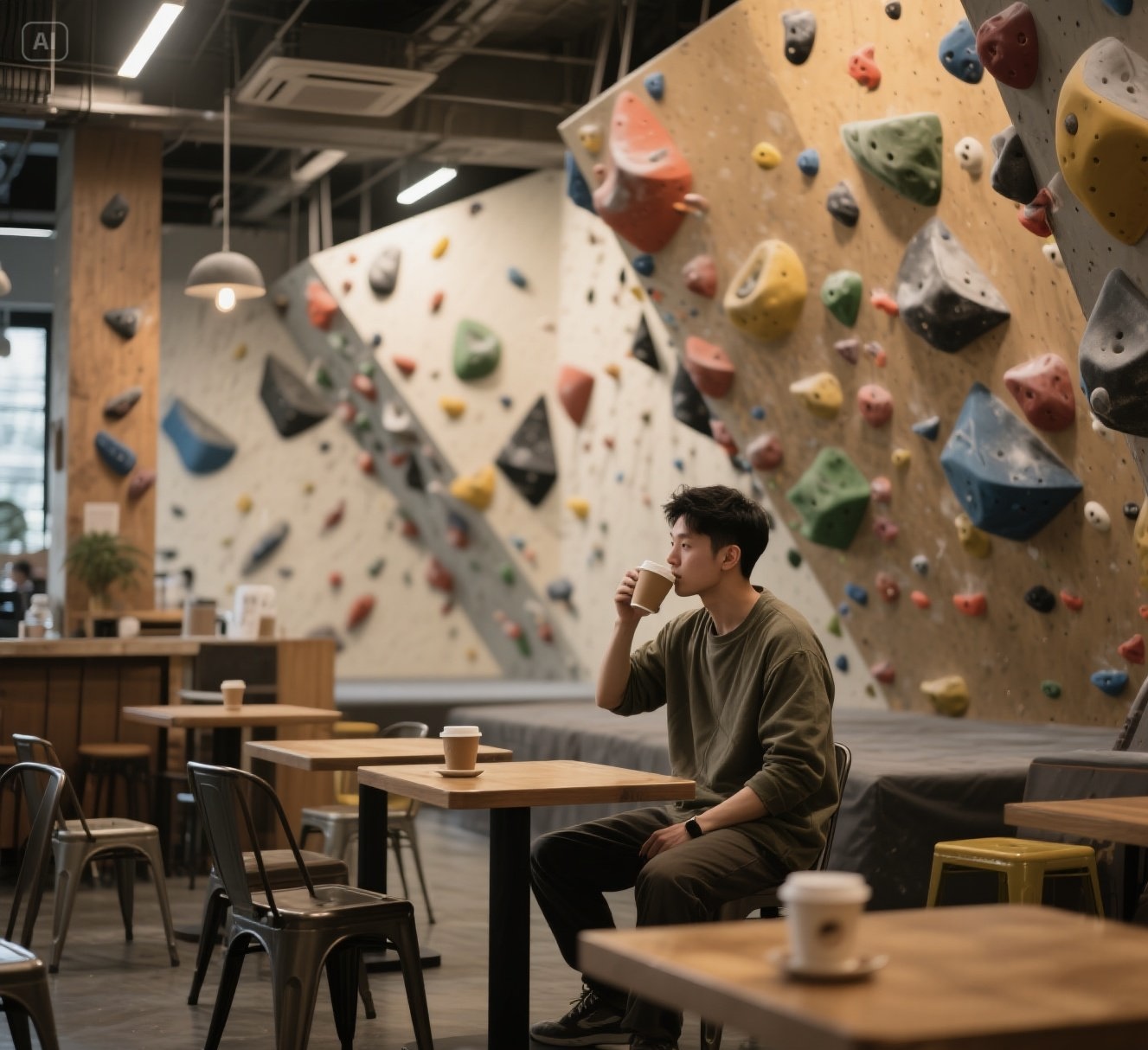
Listen – below – to Nick Tian talk about why he loves to climb.
A study by Flinders University in Australia found that many LGBTQI+ adolescents prefer individual sports, not merely for a sense of safety, but because such activities offer a greater sense of control. They allow young people to move beyond the disciplining gaze of the group and freely express their gender and identity.
This highlights another dimension of individual sports: rather than a withdrawal from society, they offer a way to reconnect with oneself and redefine one’s relationship with the body and its rhythm. Through movement, fatigue, and rest, individuals come back to the rhythm of their own bodies.
As Harrison said:
While the safety and autonomy found in individual sports is precious for queer athletes, the real challenge lies in weaving that same unremarkable belonging into team sports. Both Harrison and Tian agree that true inclusion is not about carving out safe corners but dissolving the need for them altogether.
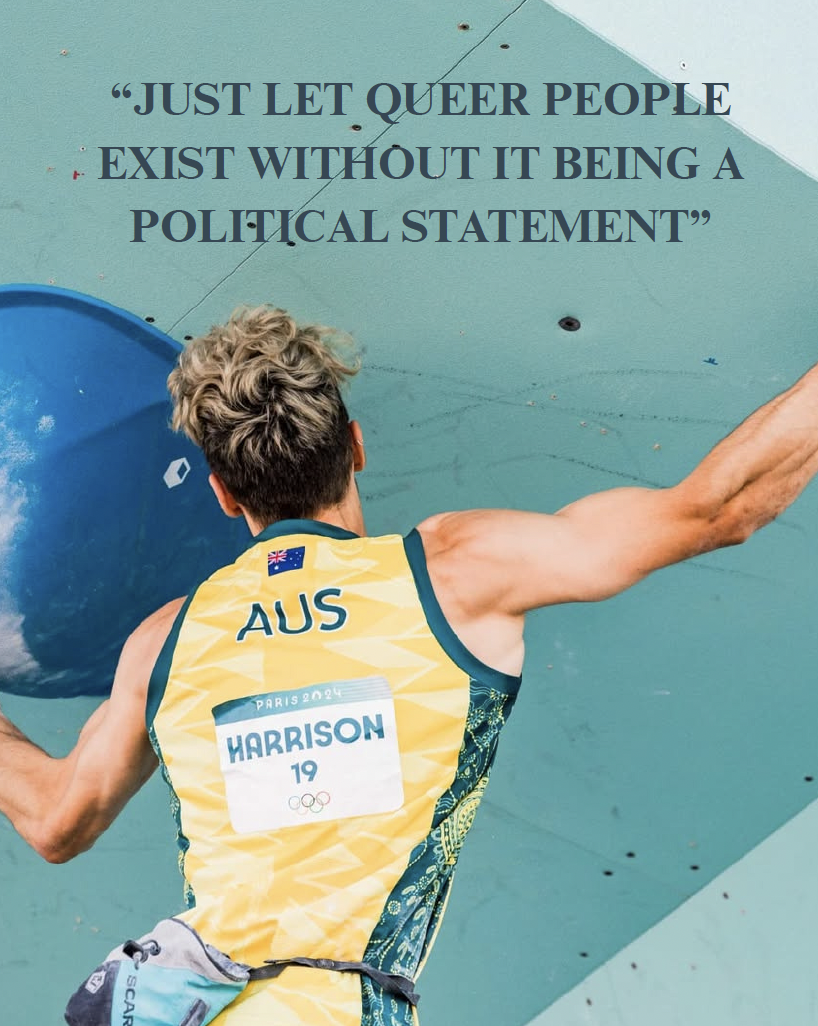
When minority groups can share their lives naturally like anyone else and no longer need to regard personal identity as a political statement, it is the sign that society has truly achieved understanding, Harrison said.
Tian agrees his choice of sport should not be dictated by his sexuality but that sport should be a place where everyone can explore their bodies and release their emotions.
“I am gay, but that has nothing to do with my choice of sport. I get into that environment for the sake of training for that particular sport.”
— Nick Tian
He hopes queer individuals will choose their sport out of love.